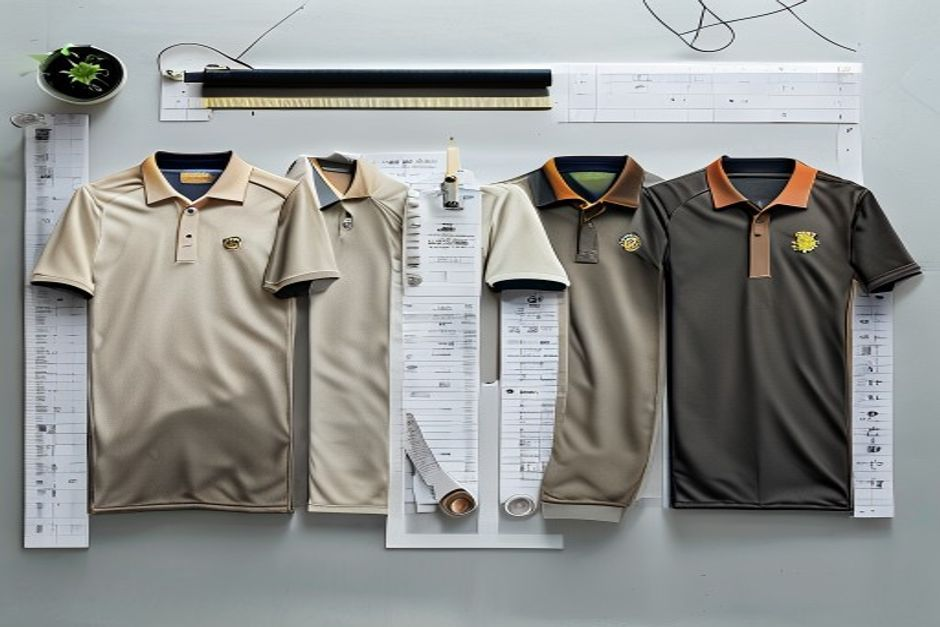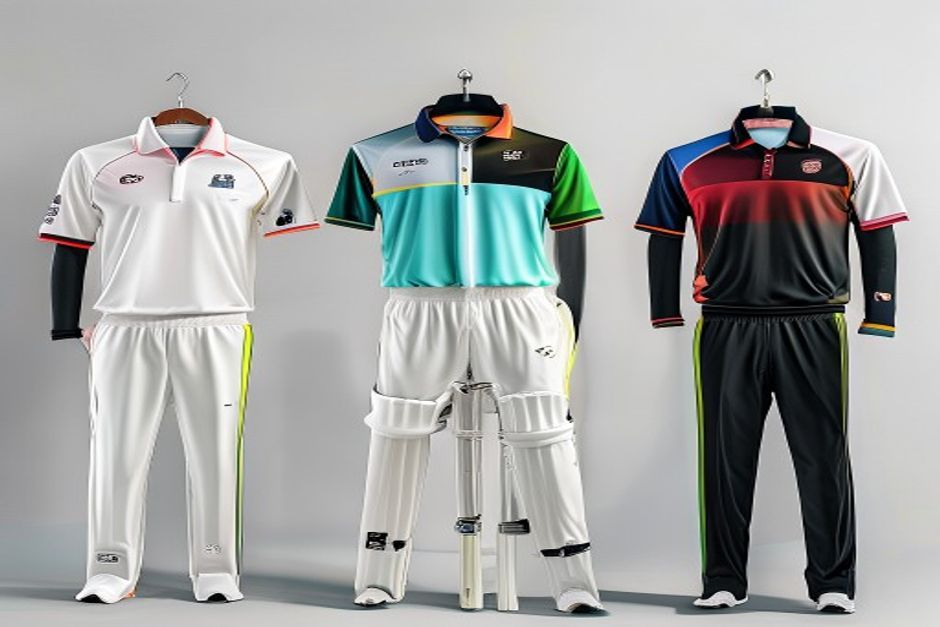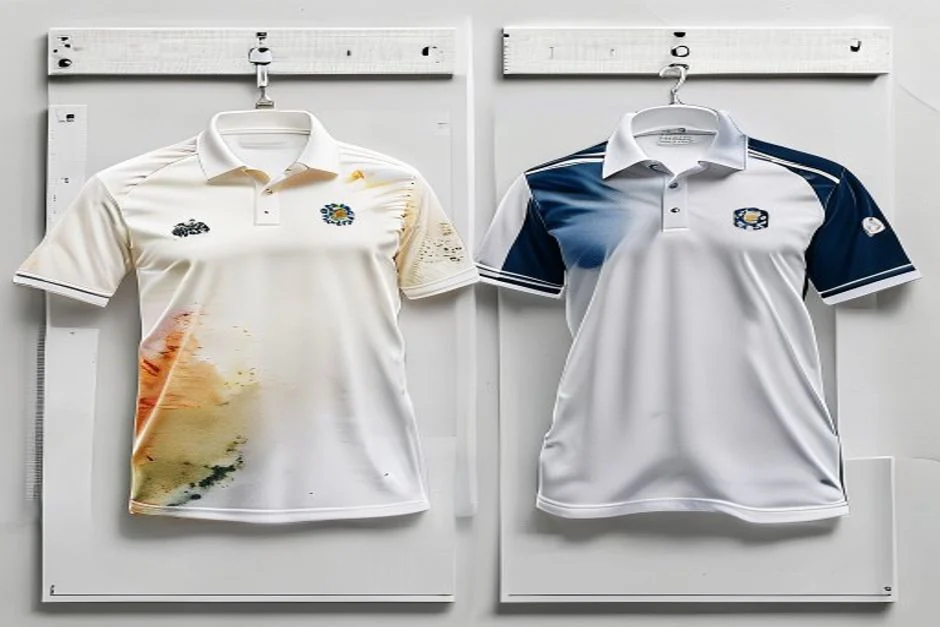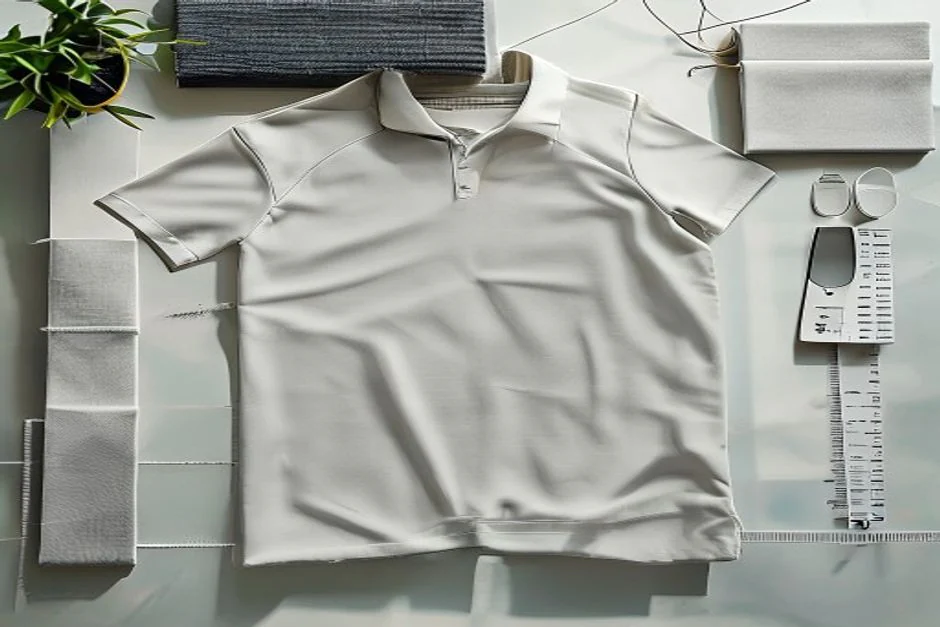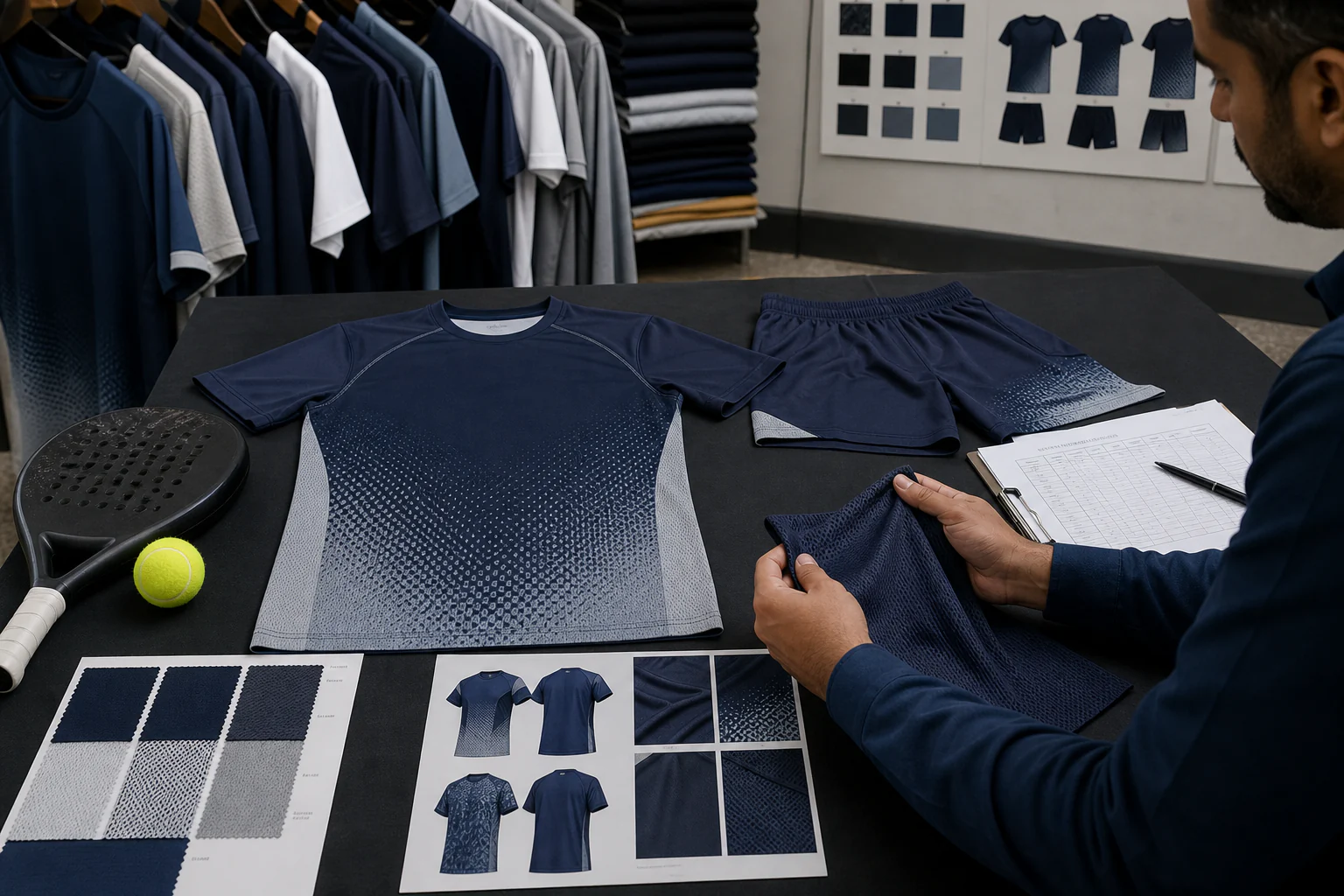

DTF vs DTG Printing: Choose by the Finished Garment
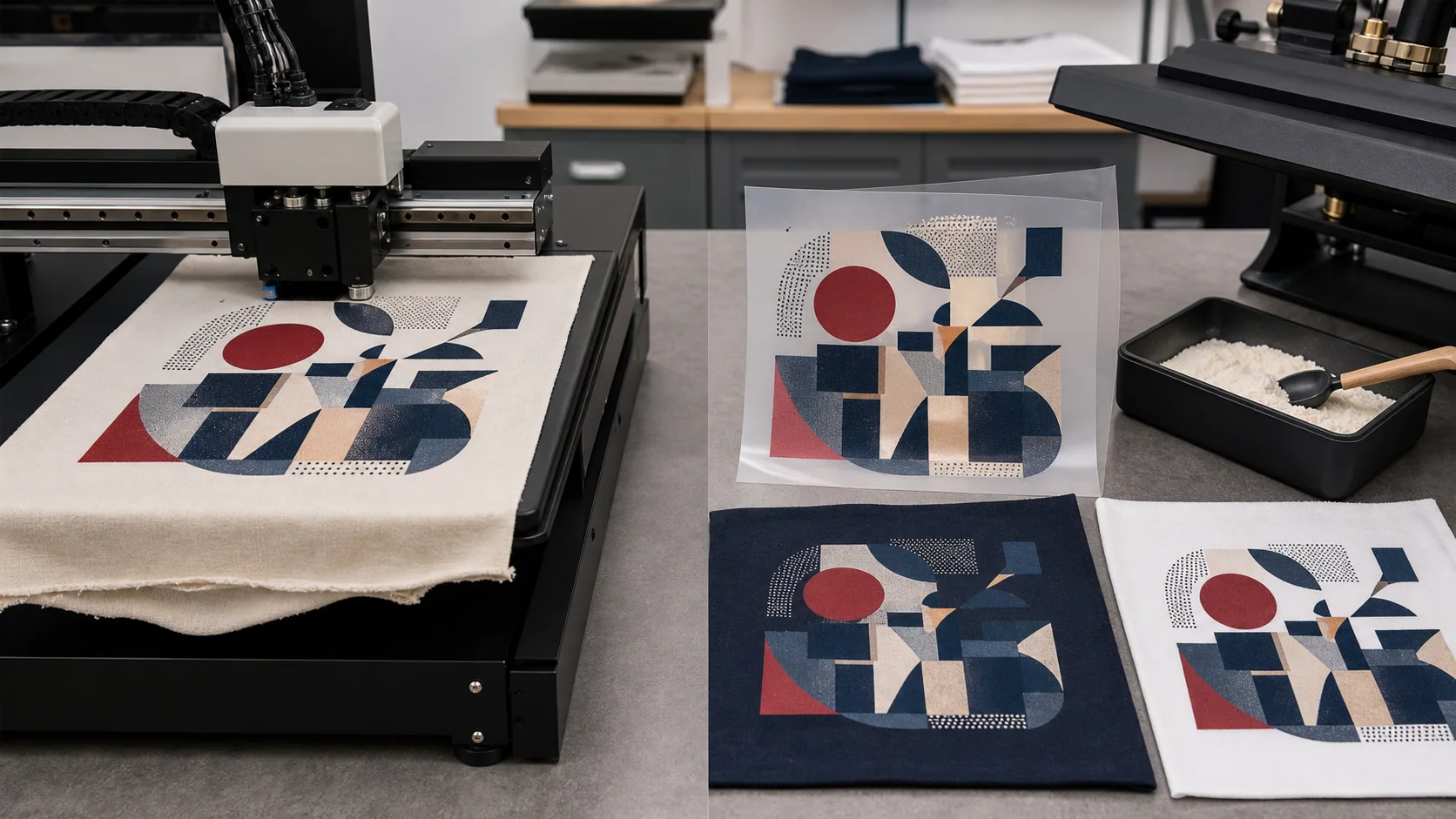
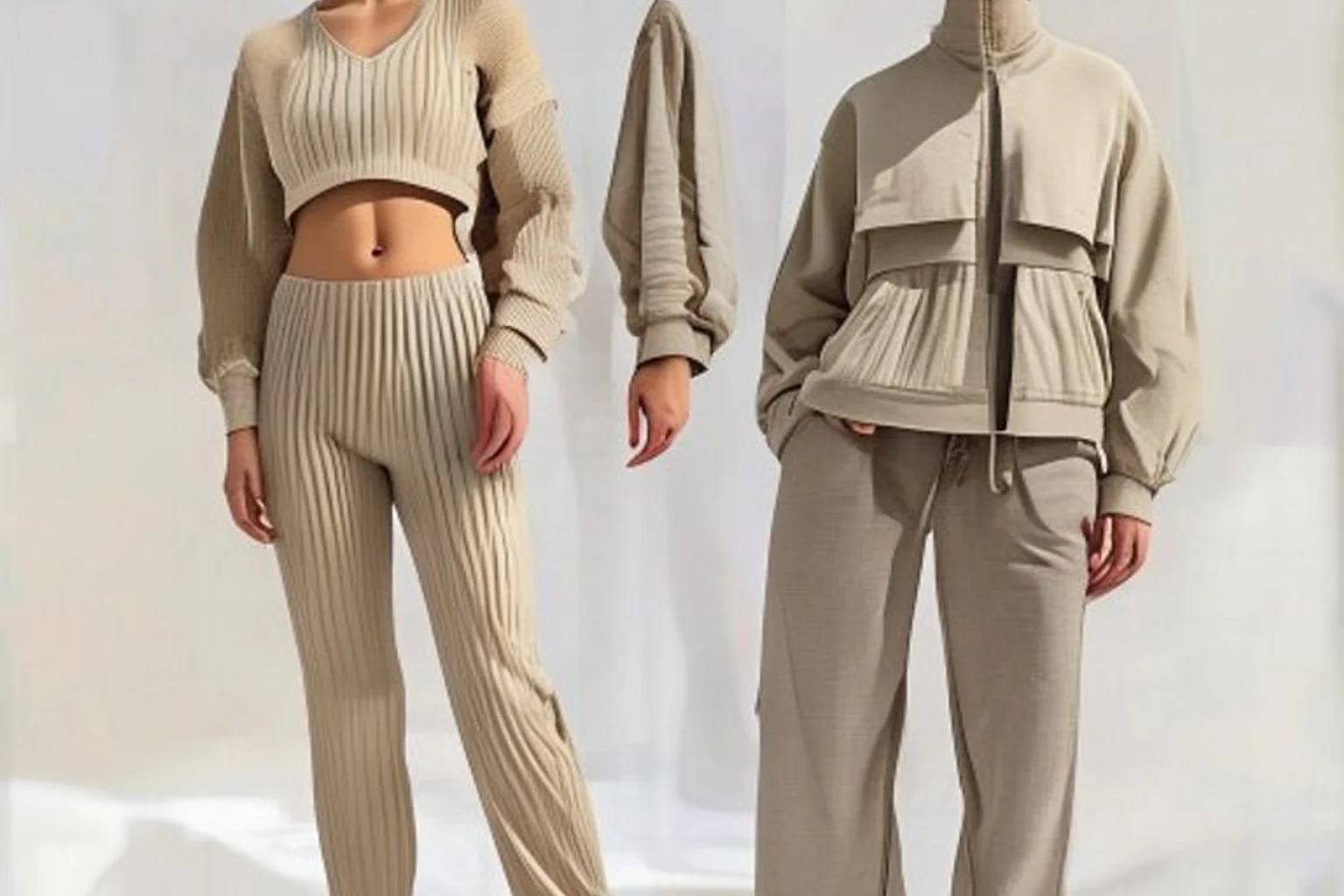
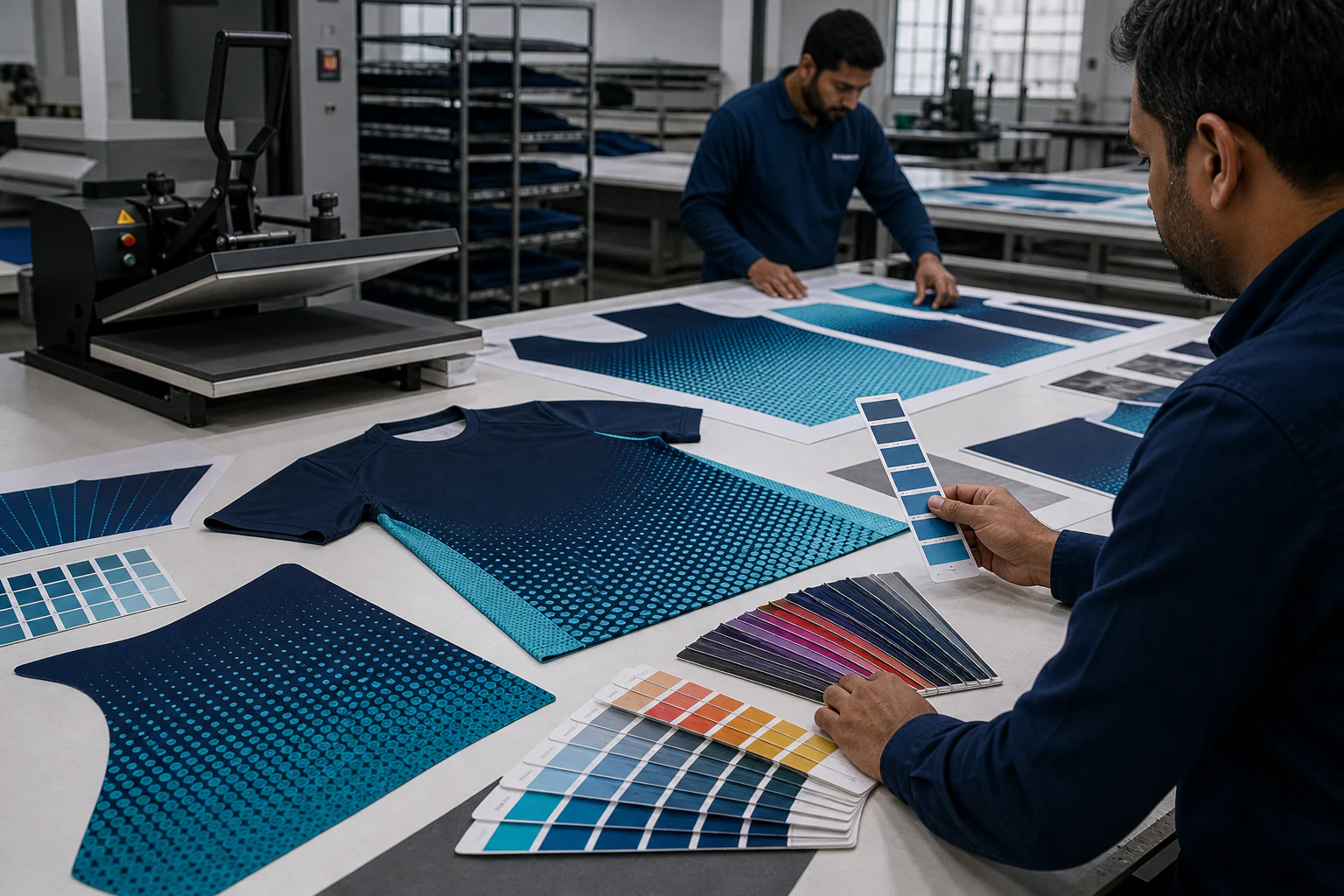
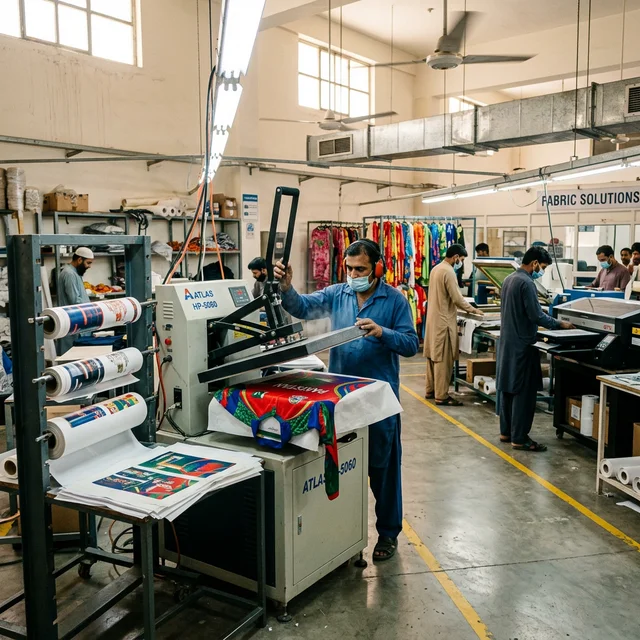
Compare direct-to-film and direct-to-garment printing by substrate, surface, hand, artwork, stretch, care, physical approval, and evidence scope.
Insights & Guides
Expert guides, industry insights, and manufacturing knowledge for brand owners and B2B buyers across Hunting, Sports, Ski, Tech, Streetwear & Martial Arts.

Compare direct-to-film and direct-to-garment printing by substrate, surface, hand, artwork, stretch, care, physical approval, and evidence scope.
Sprint and distance singlets, compression briefs and half-tights, woven split shorts, the bib-field construction rule, and 50-piece MOQ squad pricing from Sialkot.
Indoor match sets, paired libero contrast kit, poly interlock and poly-spandex fabric specs, floor-contact construction, and 50-piece MOQ pricing for club programs from Sialkot.
Competition shells and integrated skirt systems, 4-way stretch fabric specs, rhinestone and sequin durability engineering, and 50-piece MOQ squad pricing from Sialkot.
Sublimated game sets, true reversible practice kits, mesh and interlock fabric specs, roster numbering workflow, and 50-piece MOQ pricing for team programs from Sialkot.
High-cut, low-cut, and two-piece uniform systems, compression fabric specs, leg-gripper and lining construction, and 50-piece MOQ pricing for team singlets from Sialkot.
Board short vs vale tudo vs hybrid cuts, 4-way stretch fabric specs, gusset and closure engineering, and 50-piece MOQ pricing for fight-ready shorts from Sialkot.
What articulated patterning actually is — rotated sleeves, pre-bent joints, gussets, membrane seam tolerances — and how to vet a factory for real technical apparel.
The manufacturing side of scaling: micro-drop testing at 50-piece MOQ, sell-through gates, and the reinvestment ladder from 50 to 500 pieces without dead stock.
Ranked no-gi rashguards from Sialkot — 10% rank-color rules, sublimated poly-spandex, six-thread flatlock, 50-pc MOQ, 25–35 day lead, DDP to USA, UK, EU.
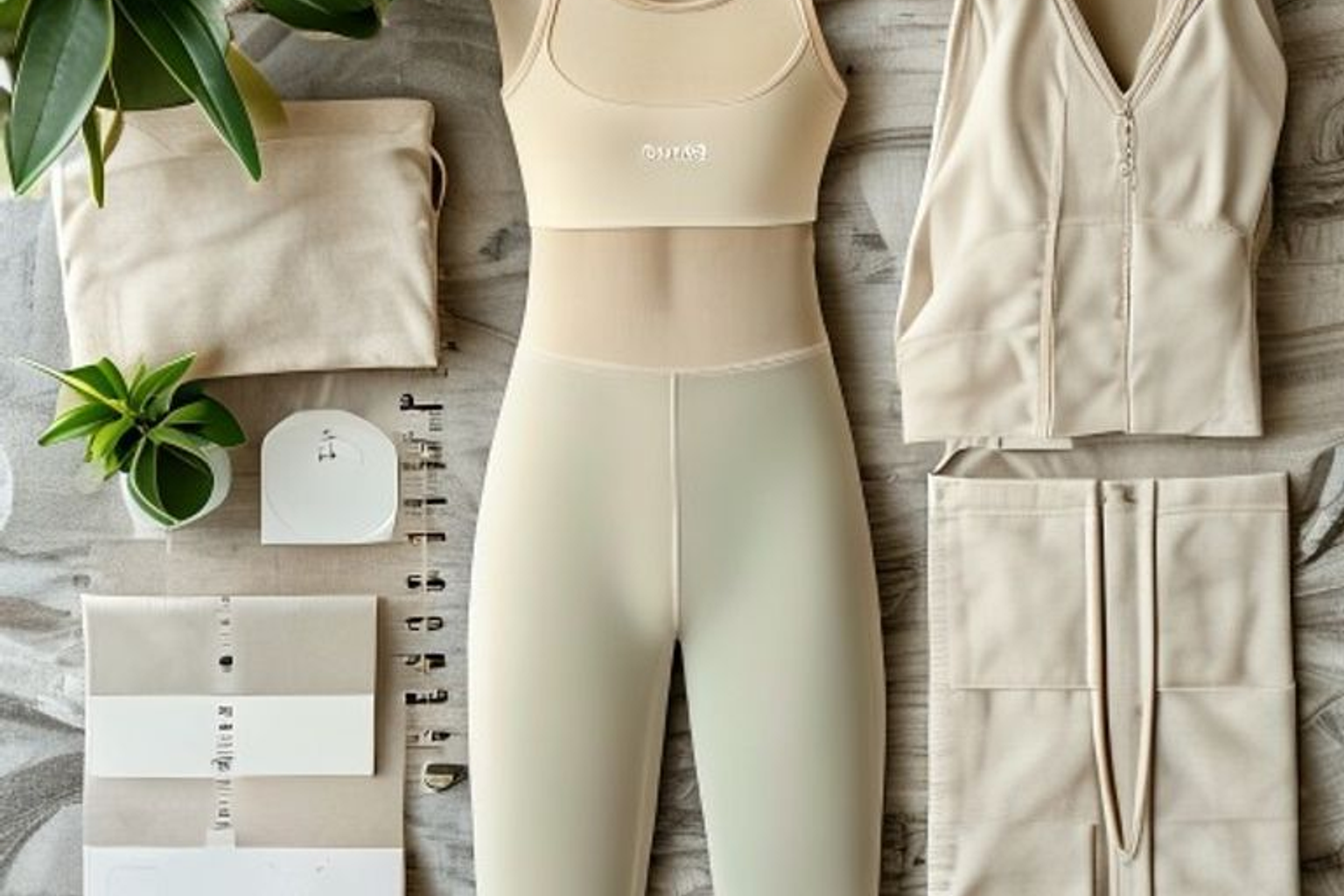
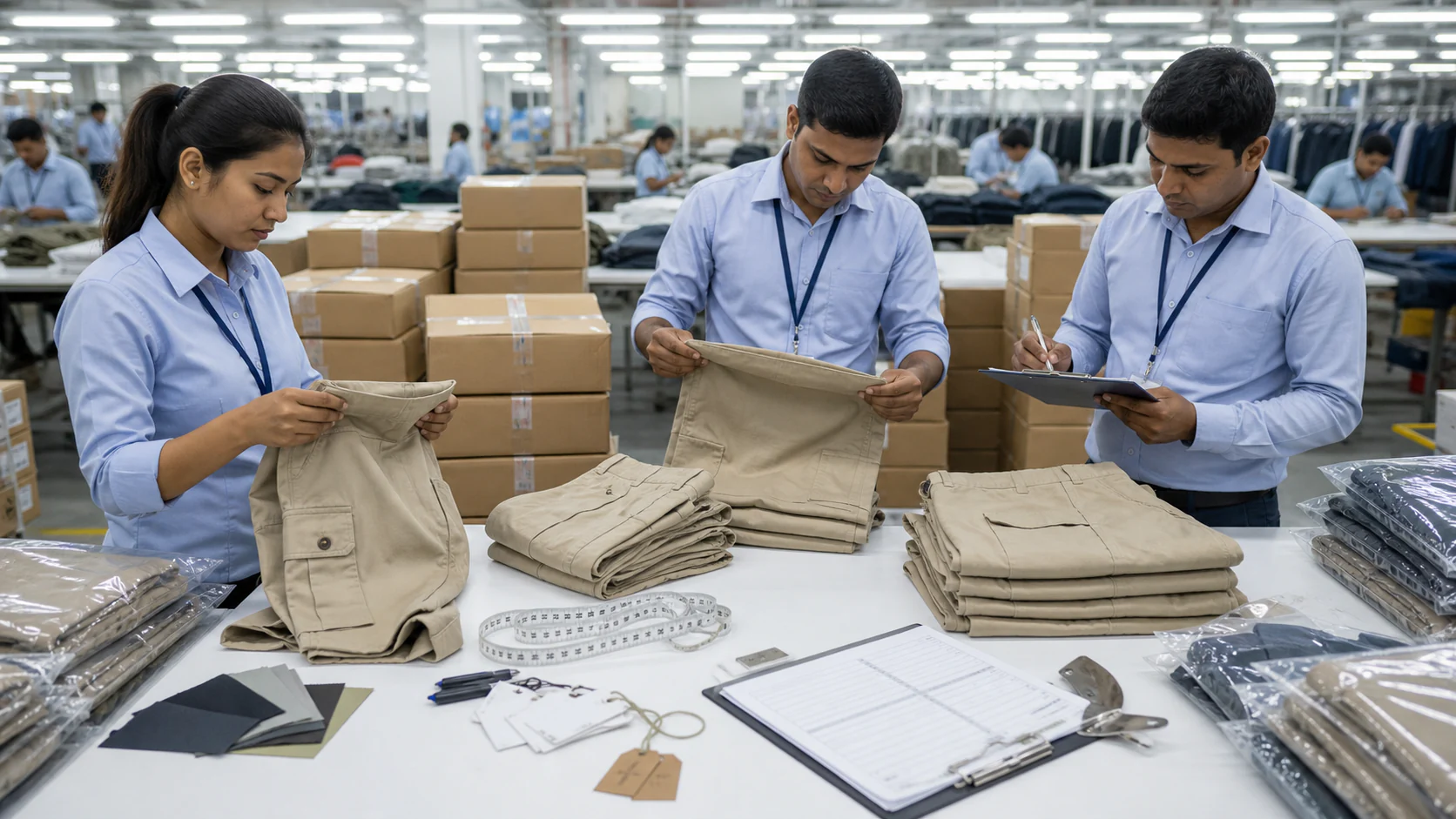
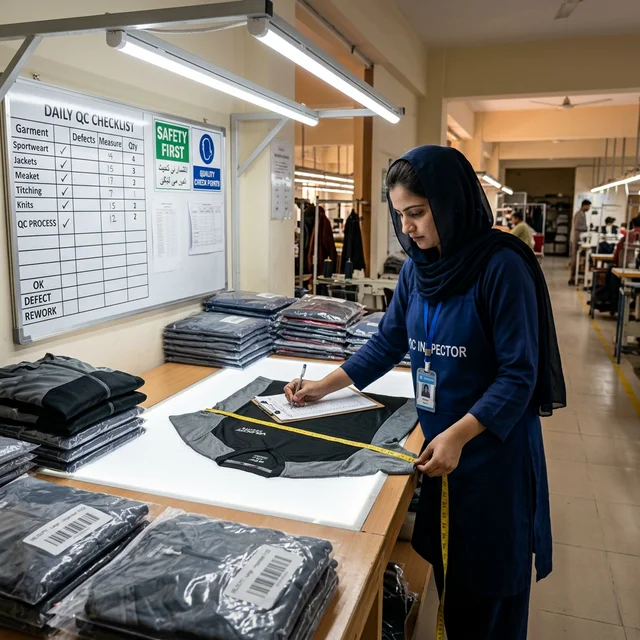
A practical export-QC guide to reducing rework before final inspection through golden-sample control, in-line checks, and packing discipline.

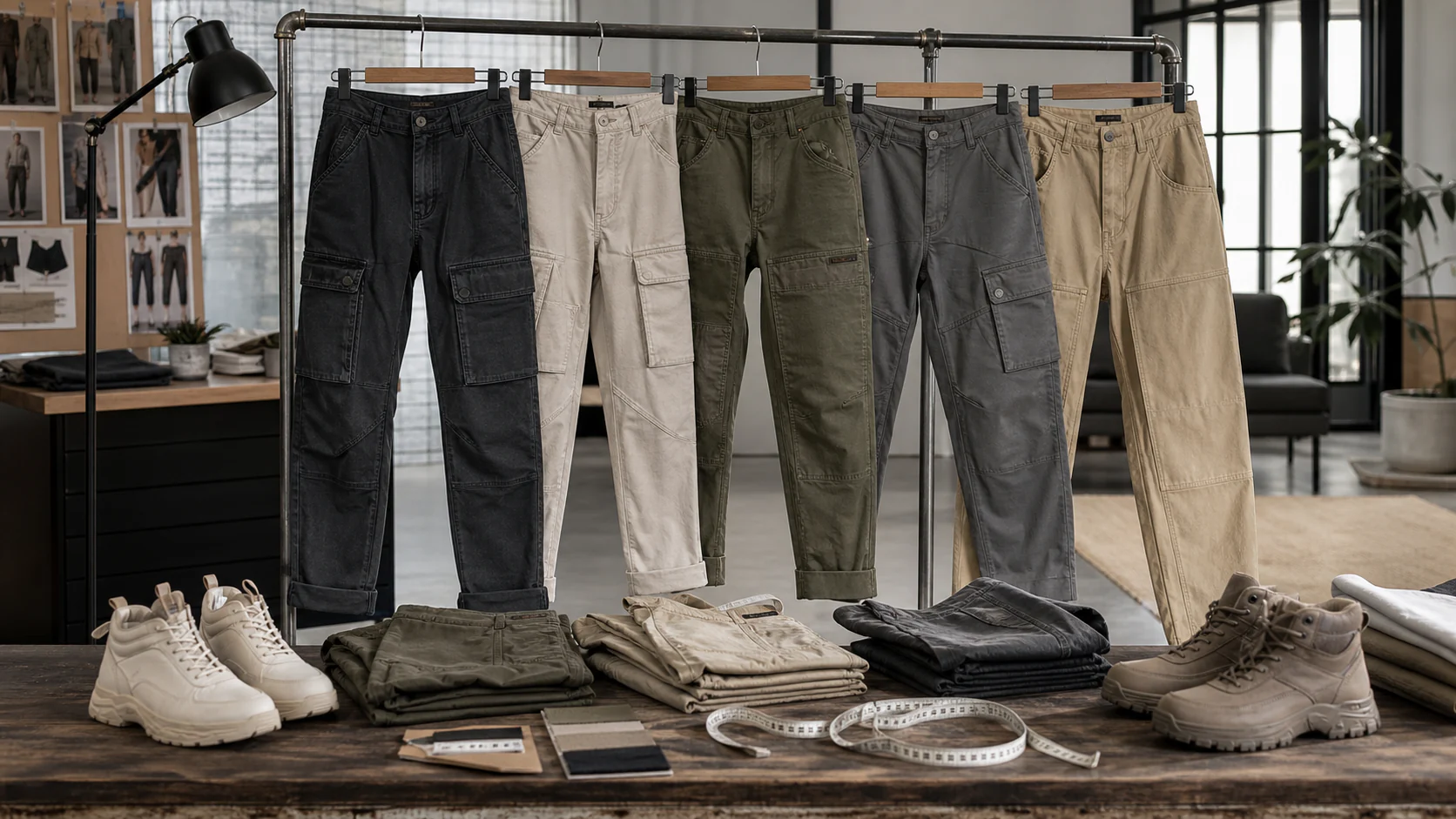
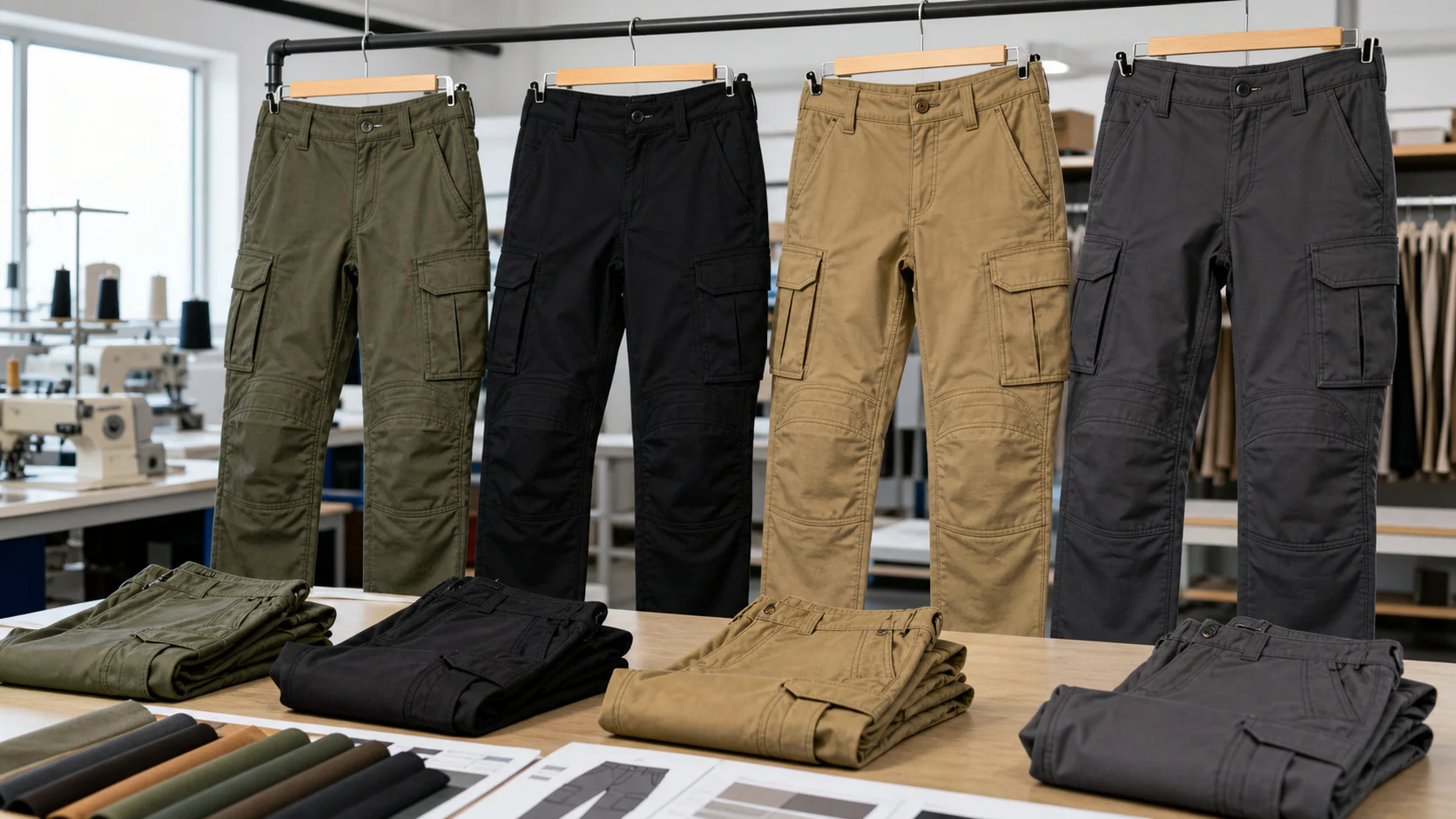
A 2026 trend report on utility pants: lower-profile cargos, articulated knees, washed neutrals, and stronger assortment planning across streetwear and workwear.

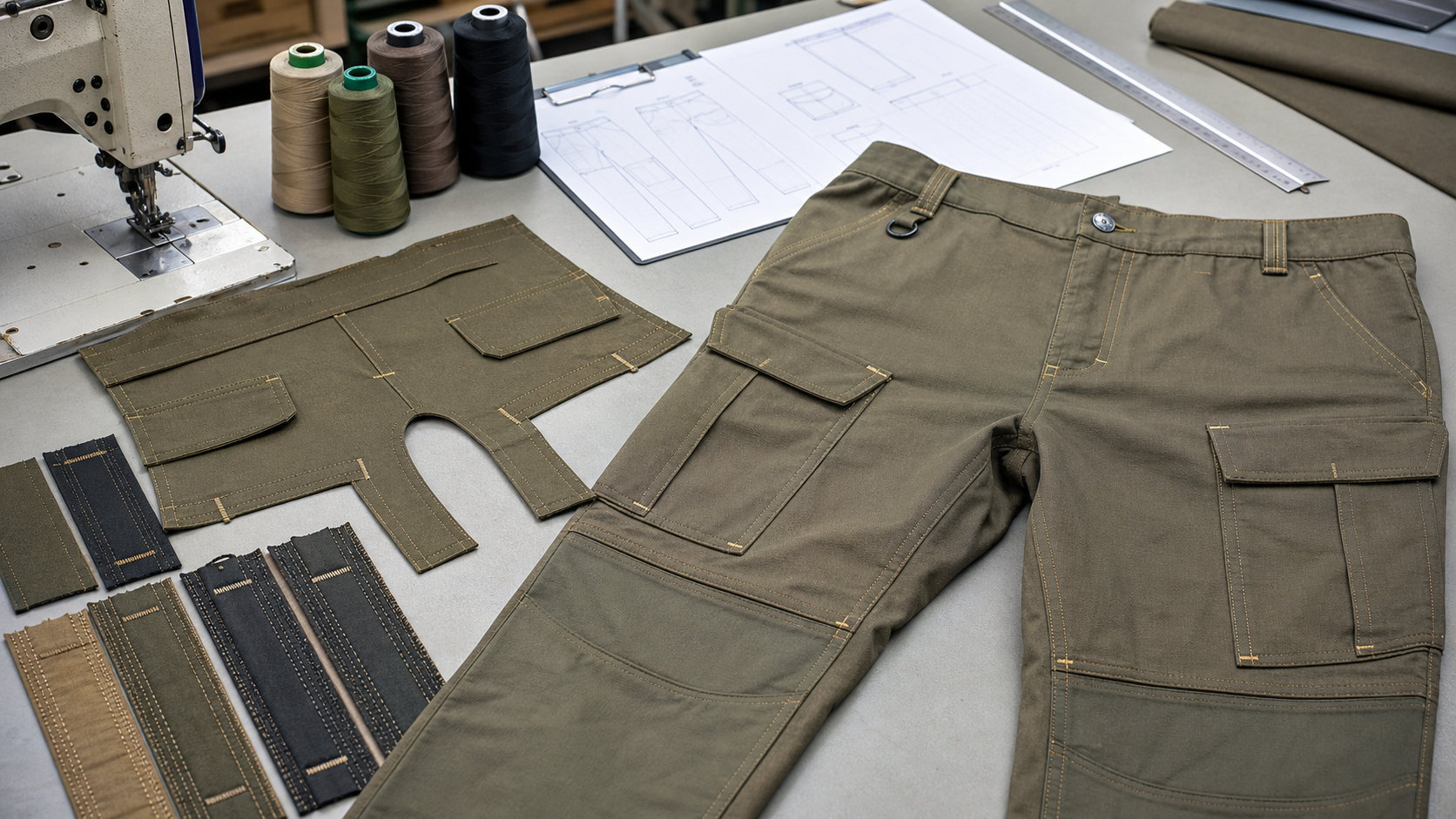
A technical guide to bartacks on cargo trousers and tactical apparel covering belt loops, pocket corners, fly bases, and knee-panel joins.

How buyers source custom tactical pants with the right ripstop fabric, pocket map, articulation, private-label trims, and export-ready production.

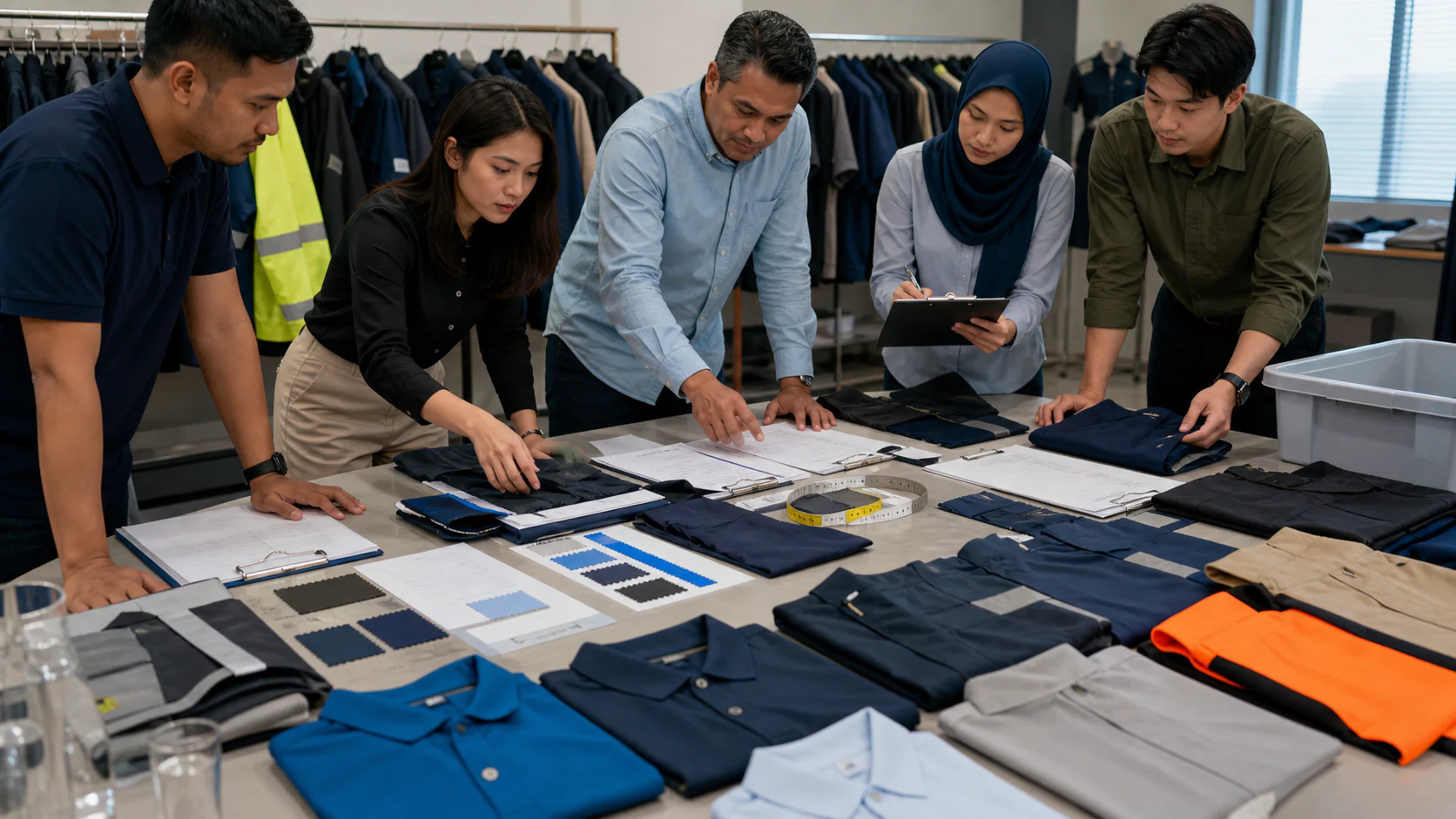
A procurement guide to uniform wear trials covering participant selection, wash testing, role-based feedback, and sample revisions before bulk approval.

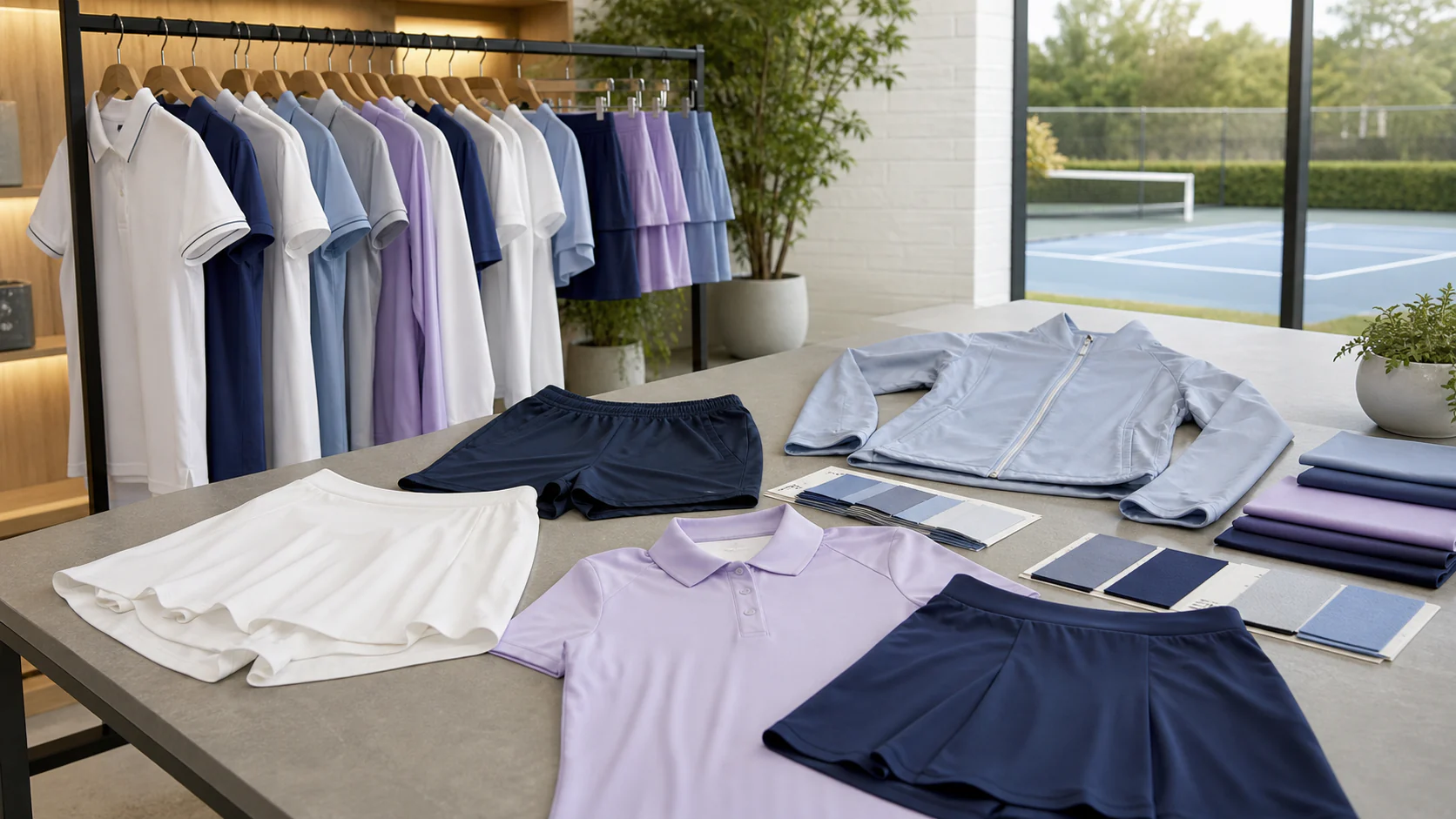
A 2026 trend report on pickleball apparel covering cleaner polos, lightweight skorts, coordinated sets, and calmer club-ready product direction.

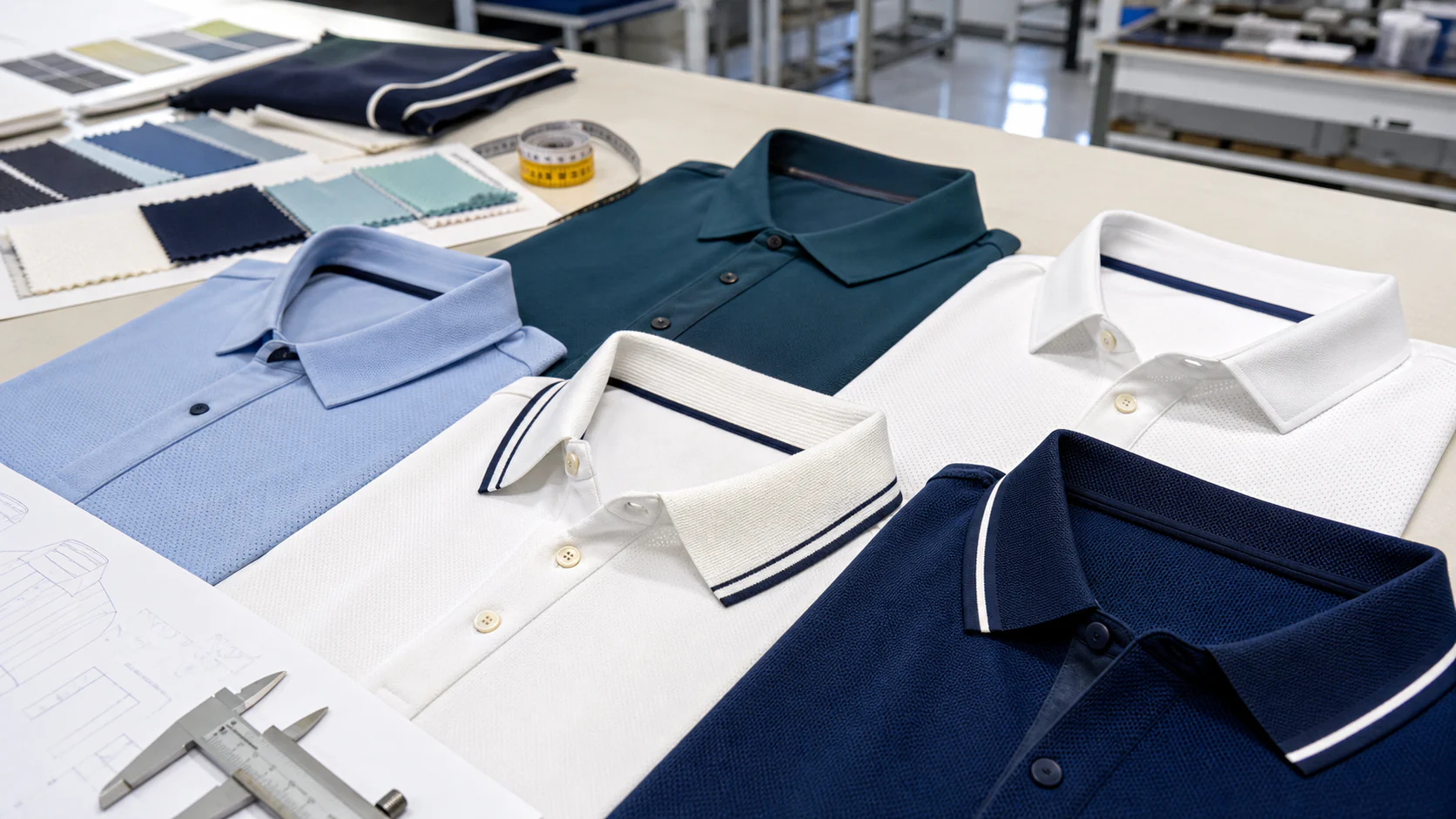
How buyers should review collar build, placket balance, wash behavior, and sample quality on performance court polos.

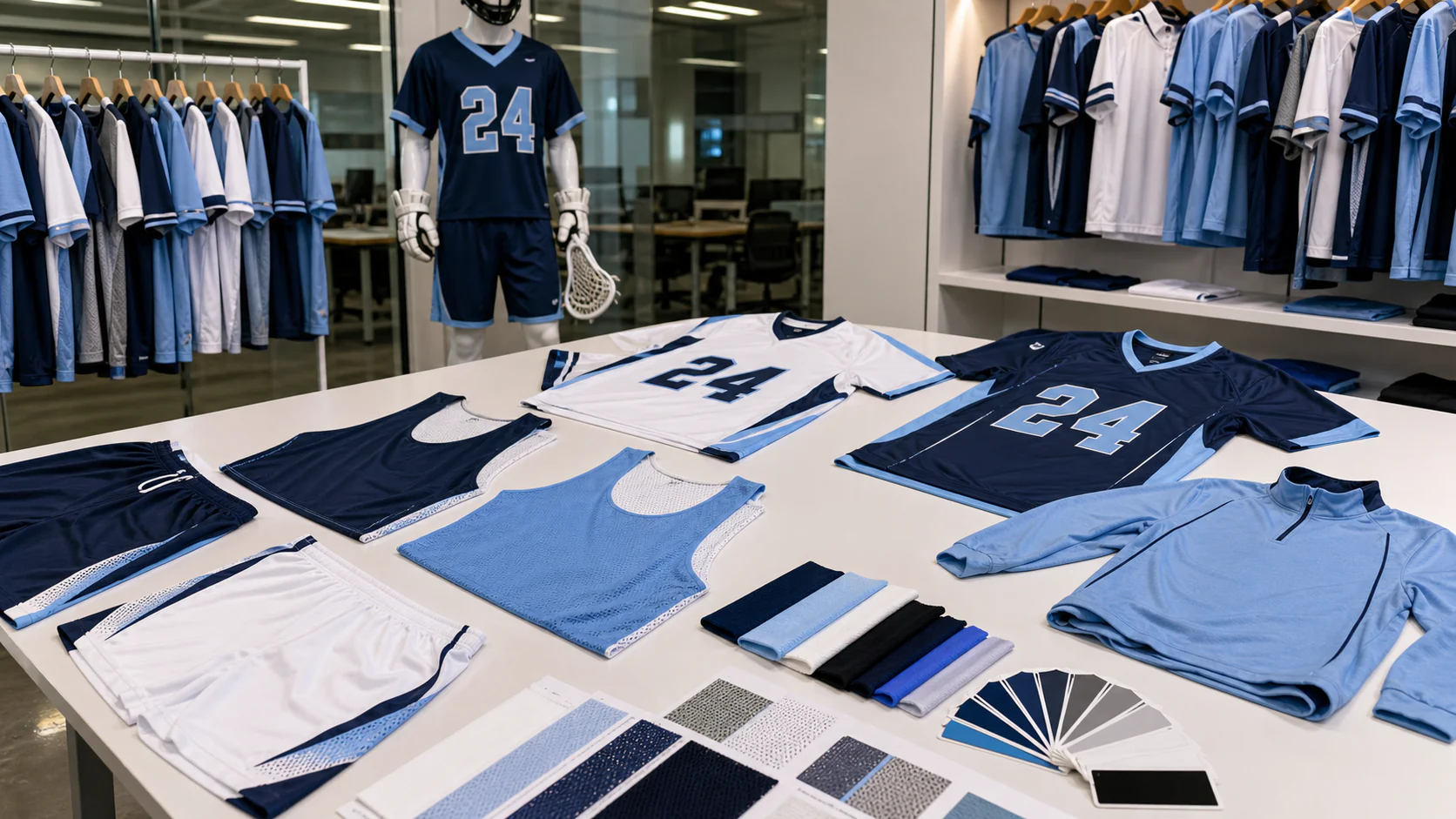
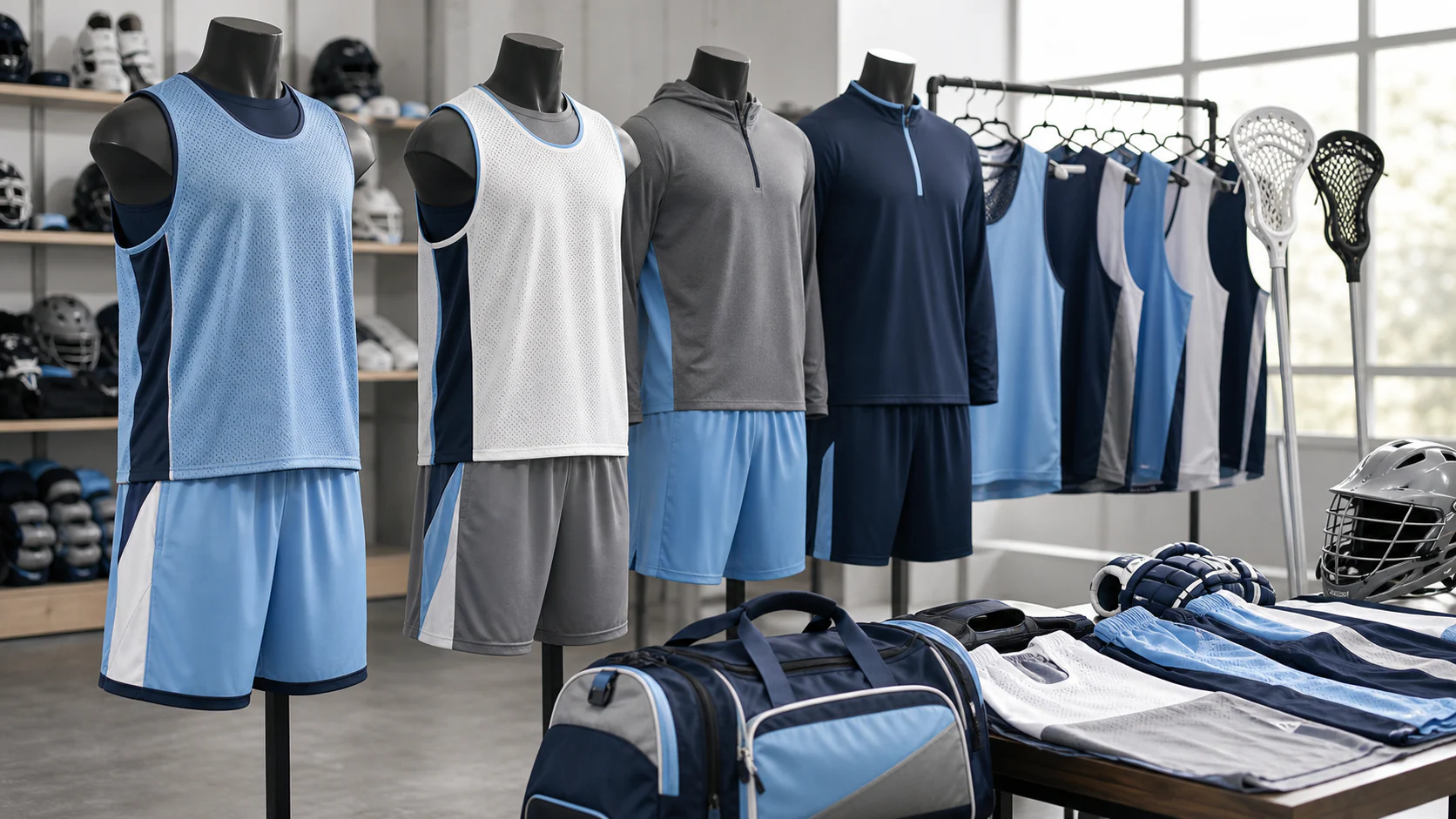
A low-MOQ sourcing guide to custom lacrosse apparel covering jerseys, shorts, pinnies, warmups, mesh zoning, and export support from Sialkot.
GOTS organic cotton, GRS recycled polyester, bamboo, and hemp from Pakistan at a 50-piece MOQ — certifications decoded, real cost premiums, and greenwashing-safe marketing.

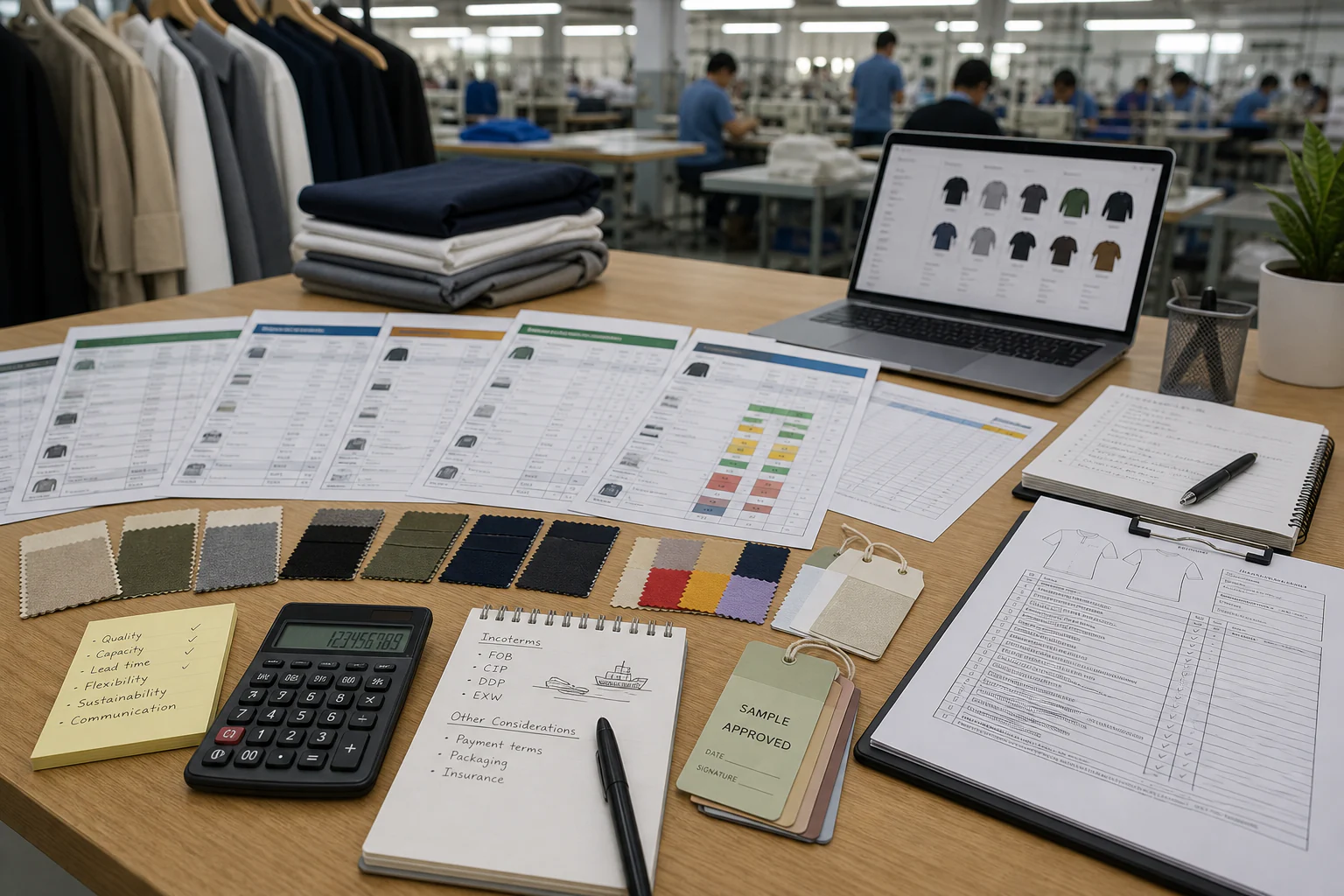
A procurement framework for evaluating apparel suppliers by sample quality, communication, QC performance, documentation, and shipment reliability.

A 2026 youth-teamwear trend report on pinnies, coordinated warmups, lighter mesh fabrics, calmer color blocking, and club-ready kit planning.

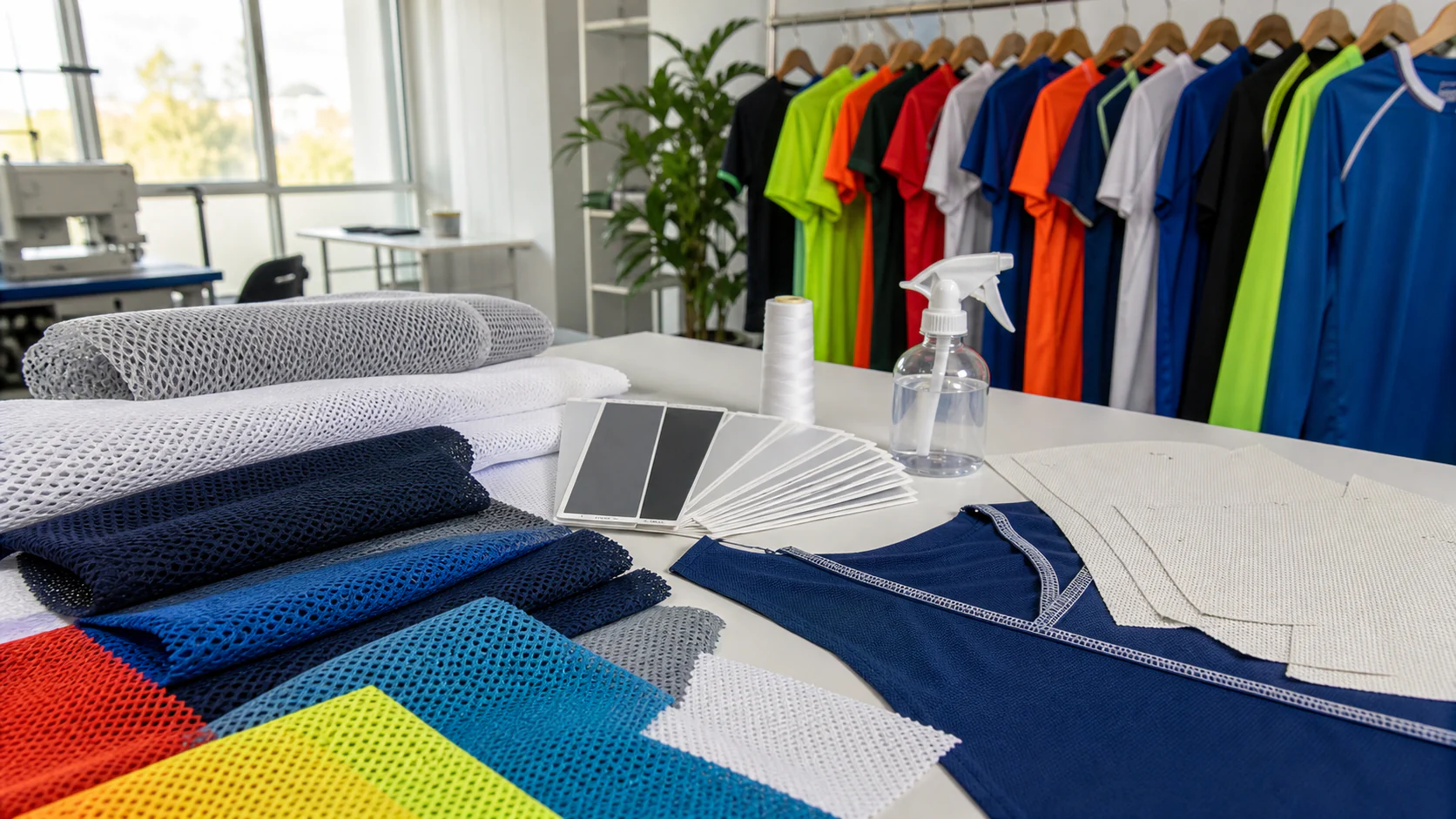
How teamwear buyers should choose mesh fabrics by airflow, GSM, transparency, panel placement, and decoration compatibility.

Full-button vs placket vs pullover builds, fabric GSM, sublimation vs twill decoration, and roster personalization — at a 50-piece MOQ with DDP delivery.
How acid, stone, enzyme, and pigment-dye washes are produced at a 50-piece MOQ — fabric prep, shade-band QC, and DDP delivery from Sialkot.

A procurement guide to quote normalization, landed-cost comparison, sample risk, and why the lowest unit price is often the wrong decision.

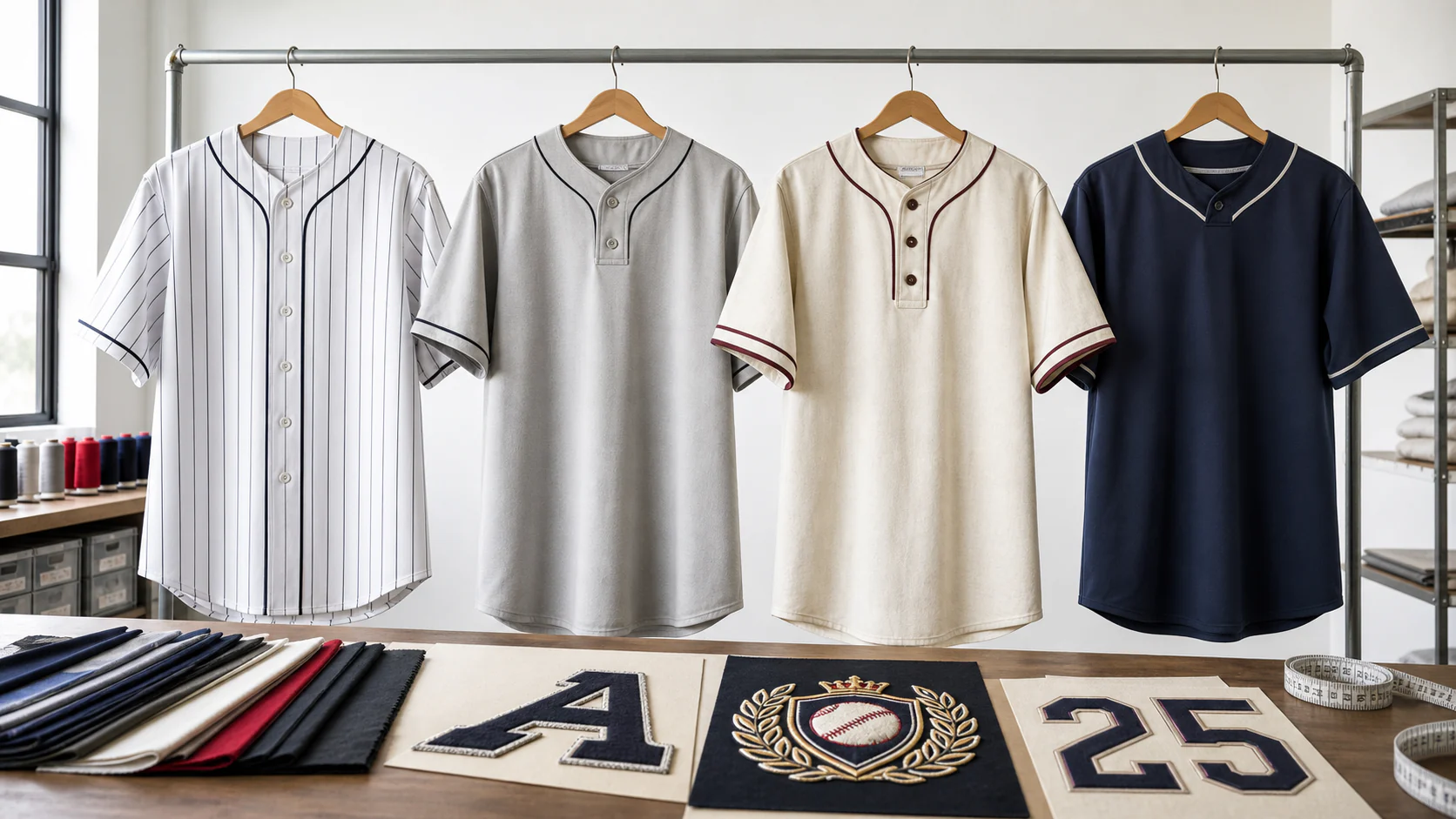
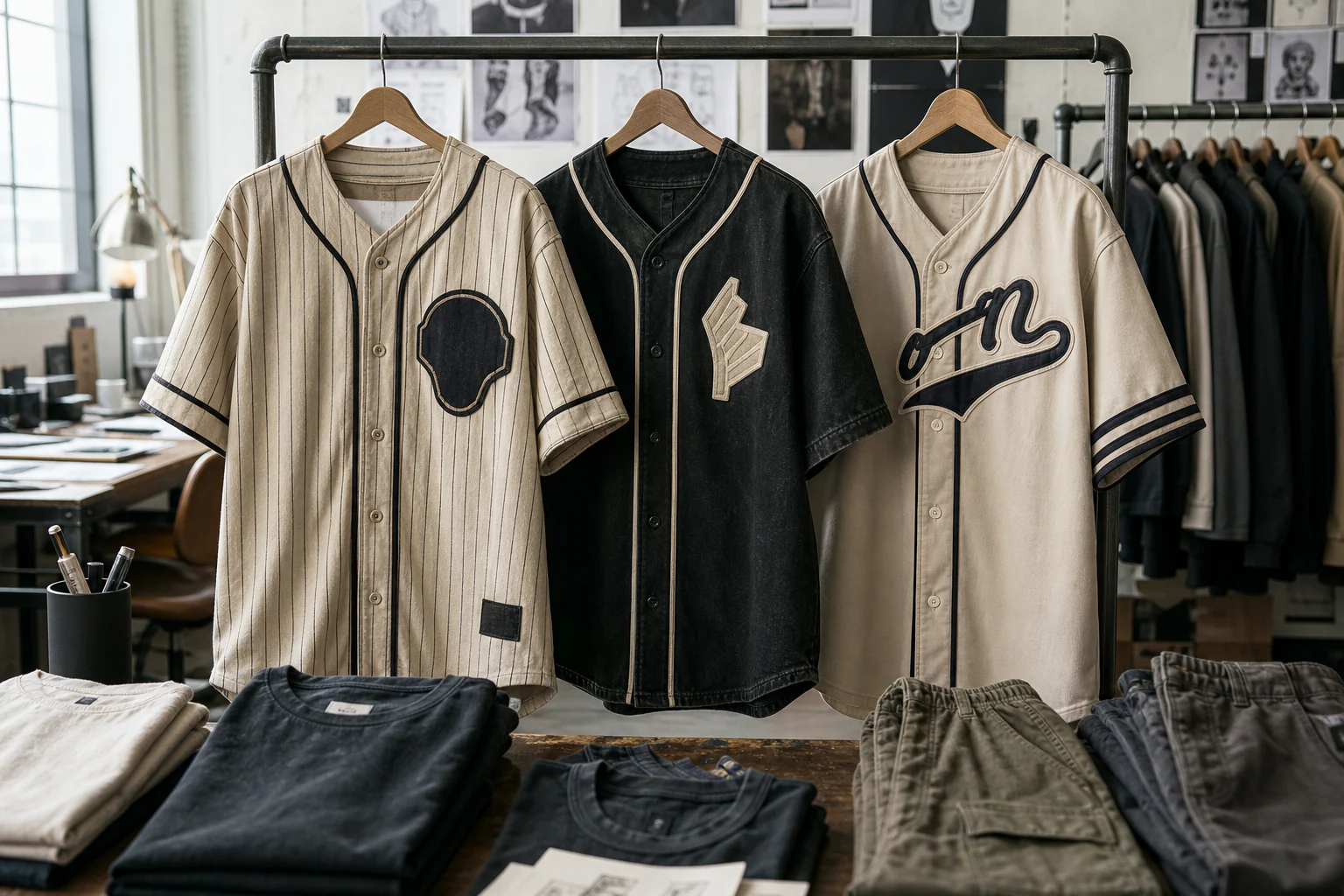
A 2026 trend report on vintage baseball jerseys: heritage pinstripes, oversized fits, textured decoration, and streetwear capsule planning.

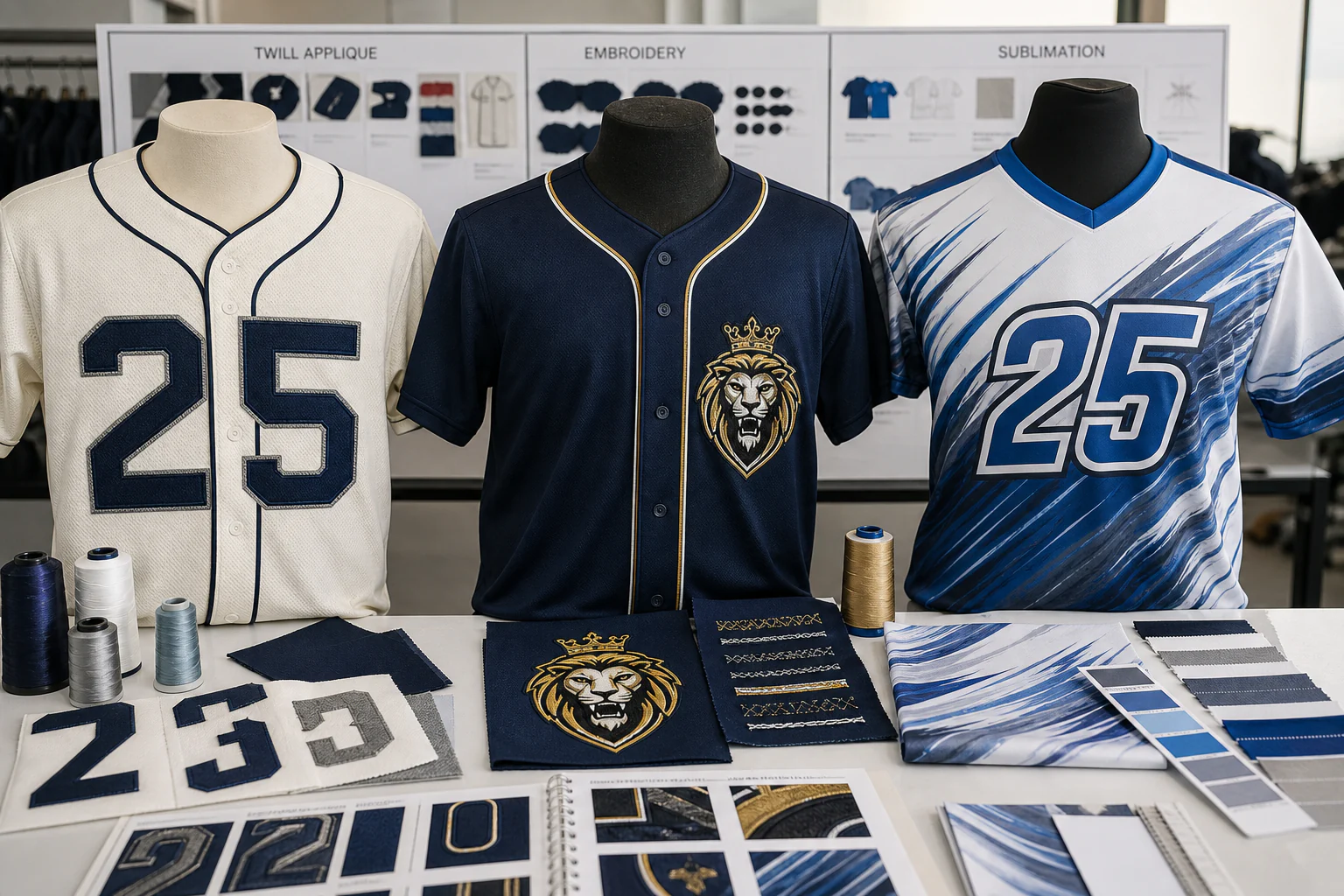
How buyers should choose decoration methods for team jerseys based on texture, cost, fabric behavior, and roster complexity.

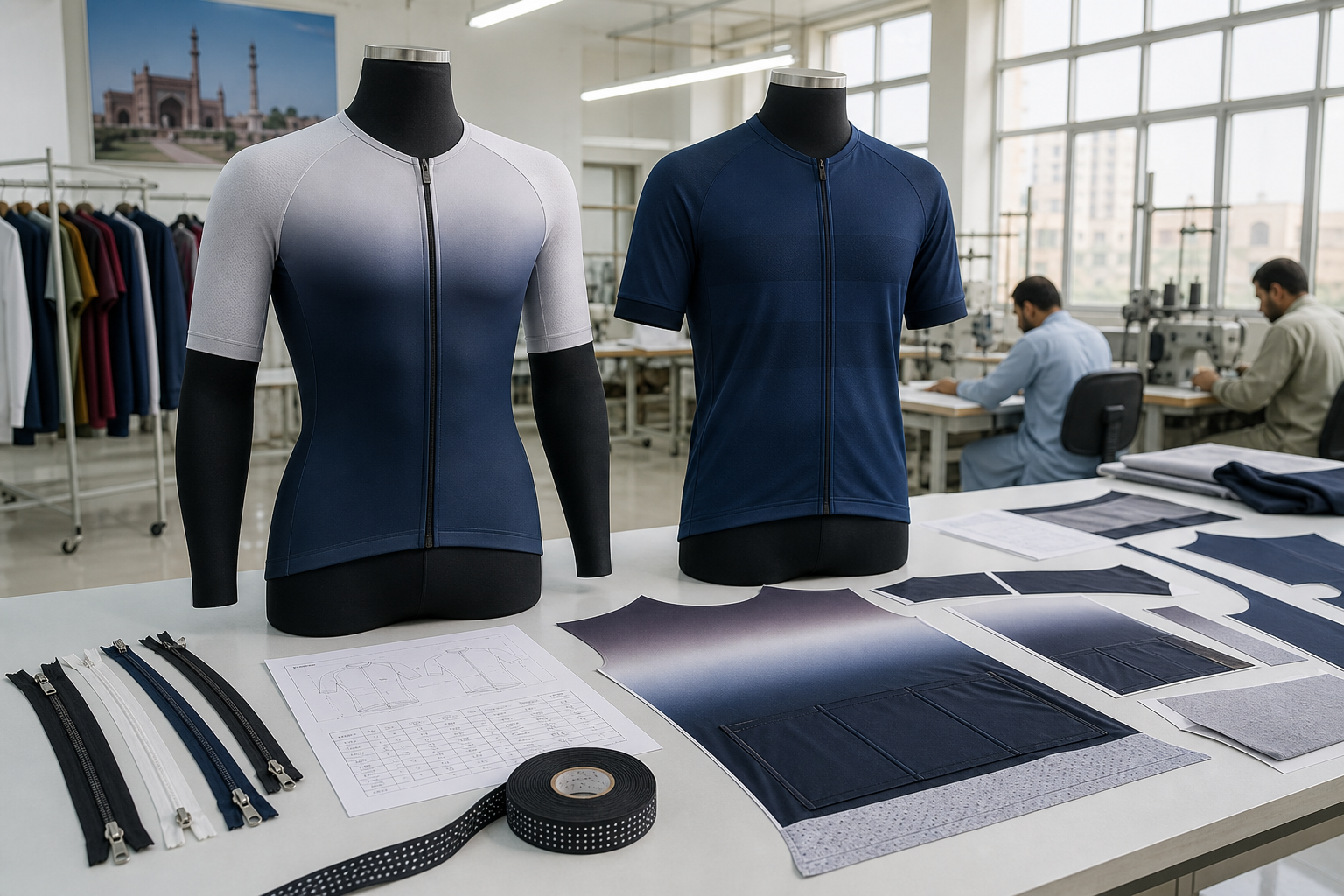
A B2B sourcing guide to cycling jerseys covering fit direction, sublimation, pocket engineering, low MOQ sampling, and export support.

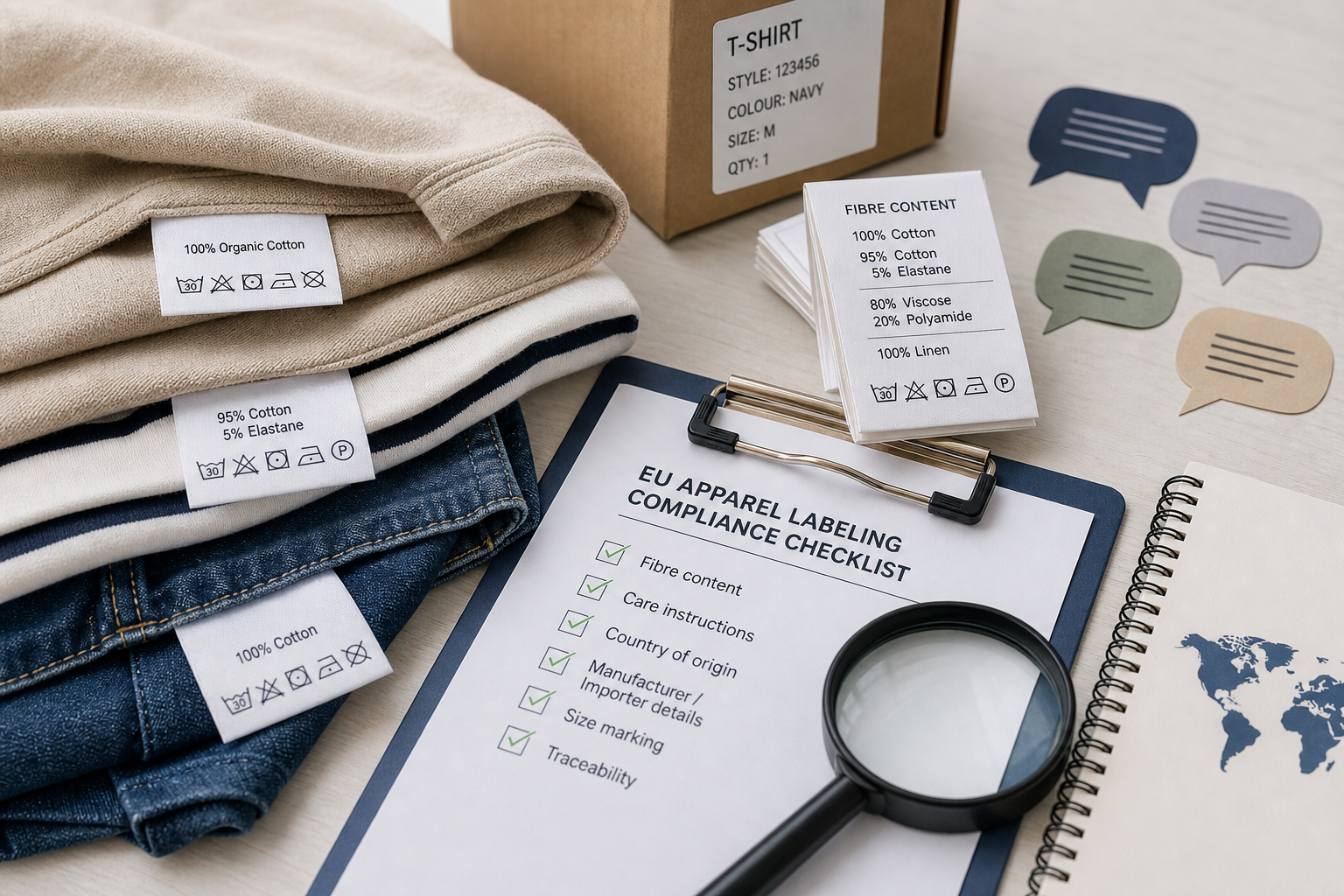
A practical 2026 guide to EU fibre-label rules, language requirements, component breakdowns, and supplier controls for apparel sellers.

A 2026 cycling trend report on gravel utility, calmer club fits, lifestyle crossover, and cargo-led product planning.

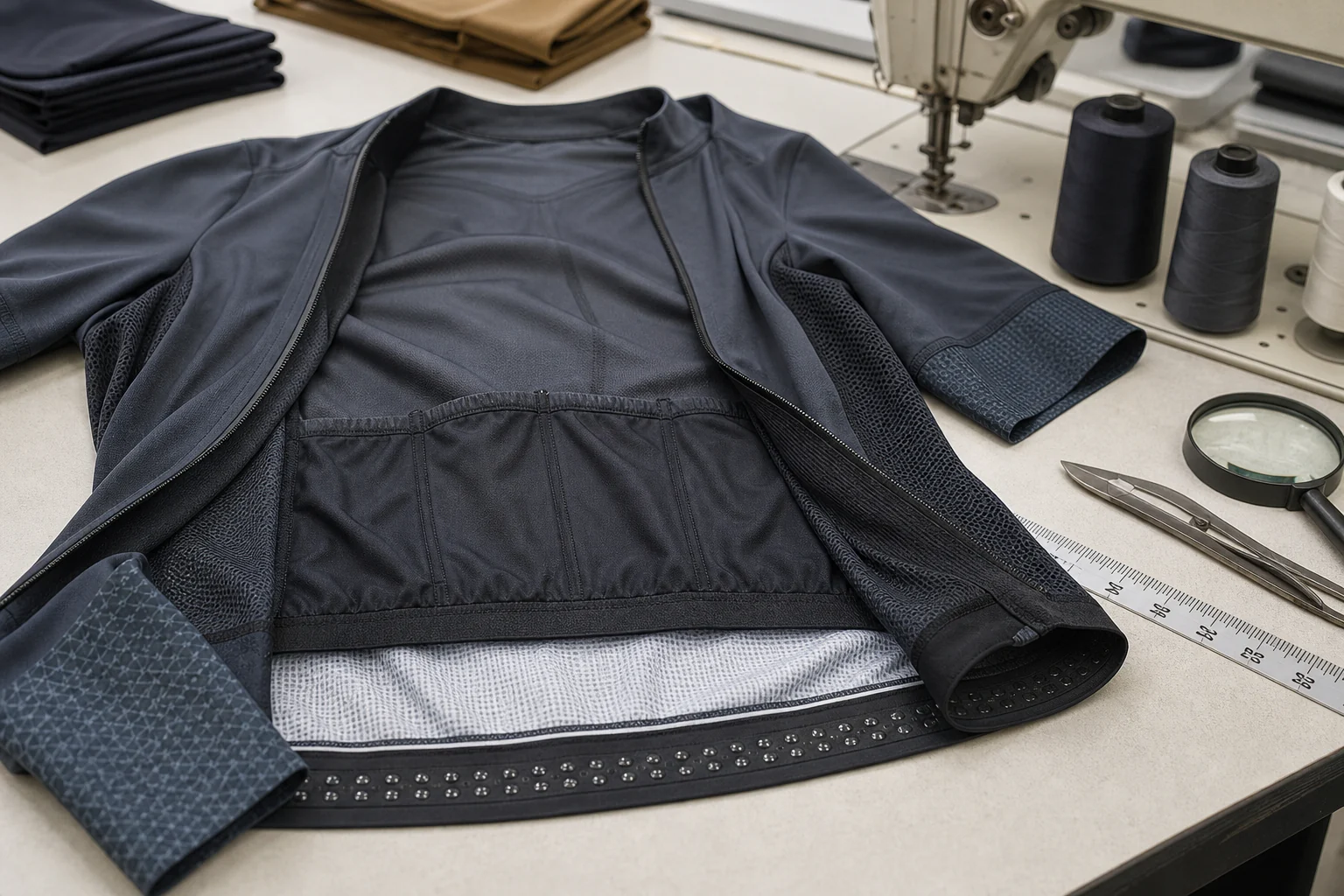
A technical guide to cycling jersey zips, rear-pocket stability, hem grippers, and sample-review checkpoints for private-label buyers.

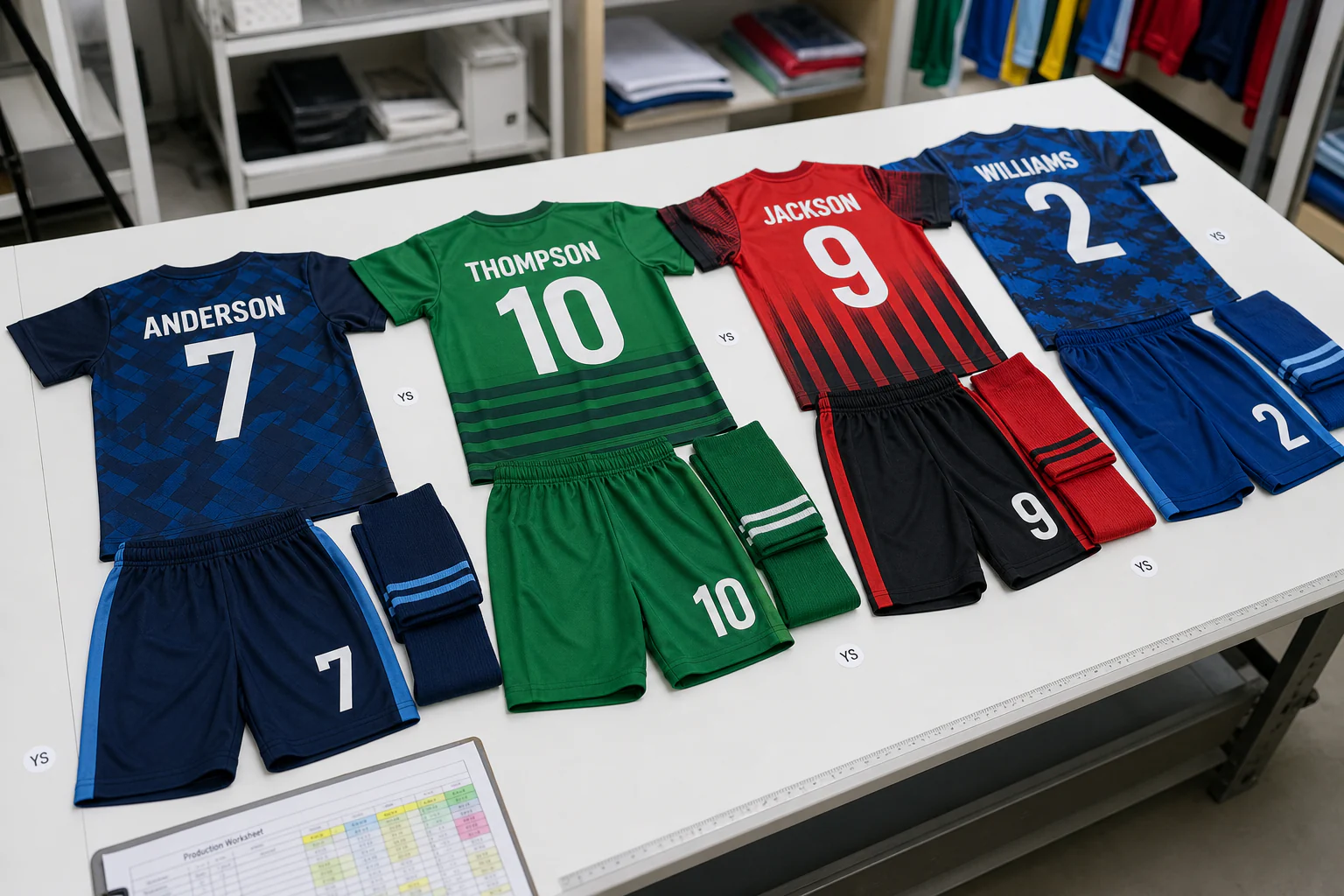
How sublimated youth soccer kits are made: youth-safe construction, sizing ladder, roster names-and-numbers workflow, season timeline, and pricing at a 50-piece MOQ.

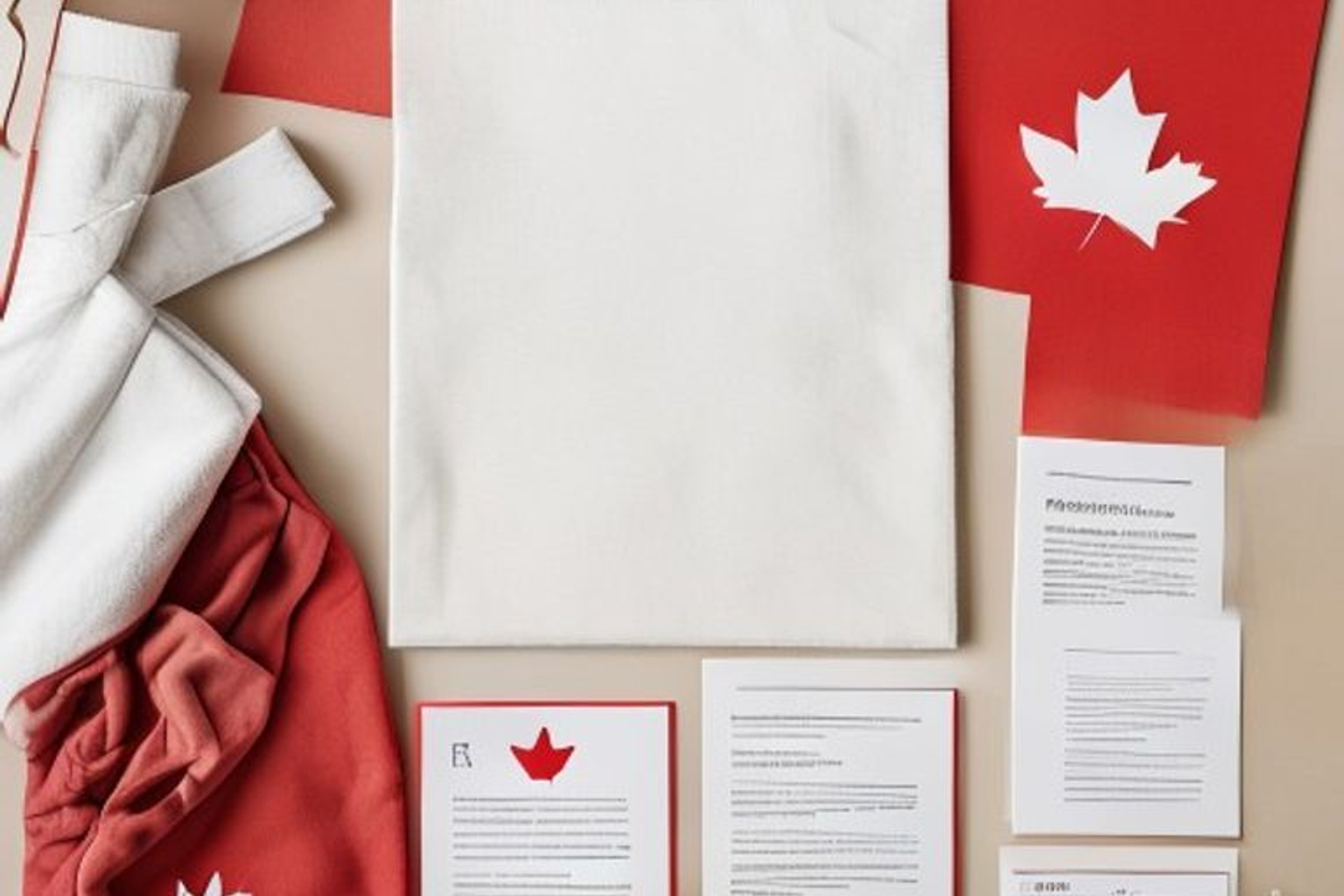
What clothing brands should check on Canadian textile labels: fibre content, dealer identity, bilingual requirements, label permanence, and export-ready workflows.

A 2026 yoga trend report on softer utility layers, rib textures, premium neutrals, and studio-to-street assortment planning.

How buyers should test four-way stretch fabrics for leggings and sets: recovery, growth, opacity, seam behavior, and sample approval controls.

A B2B sourcing guide to custom yoga apparel covering buttery-soft fabric direction, fit development, opacity, coordinated sets, and low-MOQ production.
A B2B sourcing guide to wholesale blaze orange safety gear — daylight fluorescent orange and blaze pink, hunting-legal coverage, ANSI hi-vis options, and 50-piece MOQ production.

What importers should check on U.S.-bound apparel labels: care instructions, fiber content, country of origin, RN identity, and factory controls.

A 2026 running-wear trend report on split shorts, more technical singlets, trail-ready storage, and cleaner capsule planning.

How moisture-wicking performance tees really work, what buyers should test, and why knit structure matters as much as fabric weight.

A B2B sourcing guide to custom running apparel covering singlet fabrics, split-short construction, fit development, wear testing, and low-MOQ production.

How buying houses structure milestone owners, sample gates, QC checkpoints, and shipment control across apparel orders.

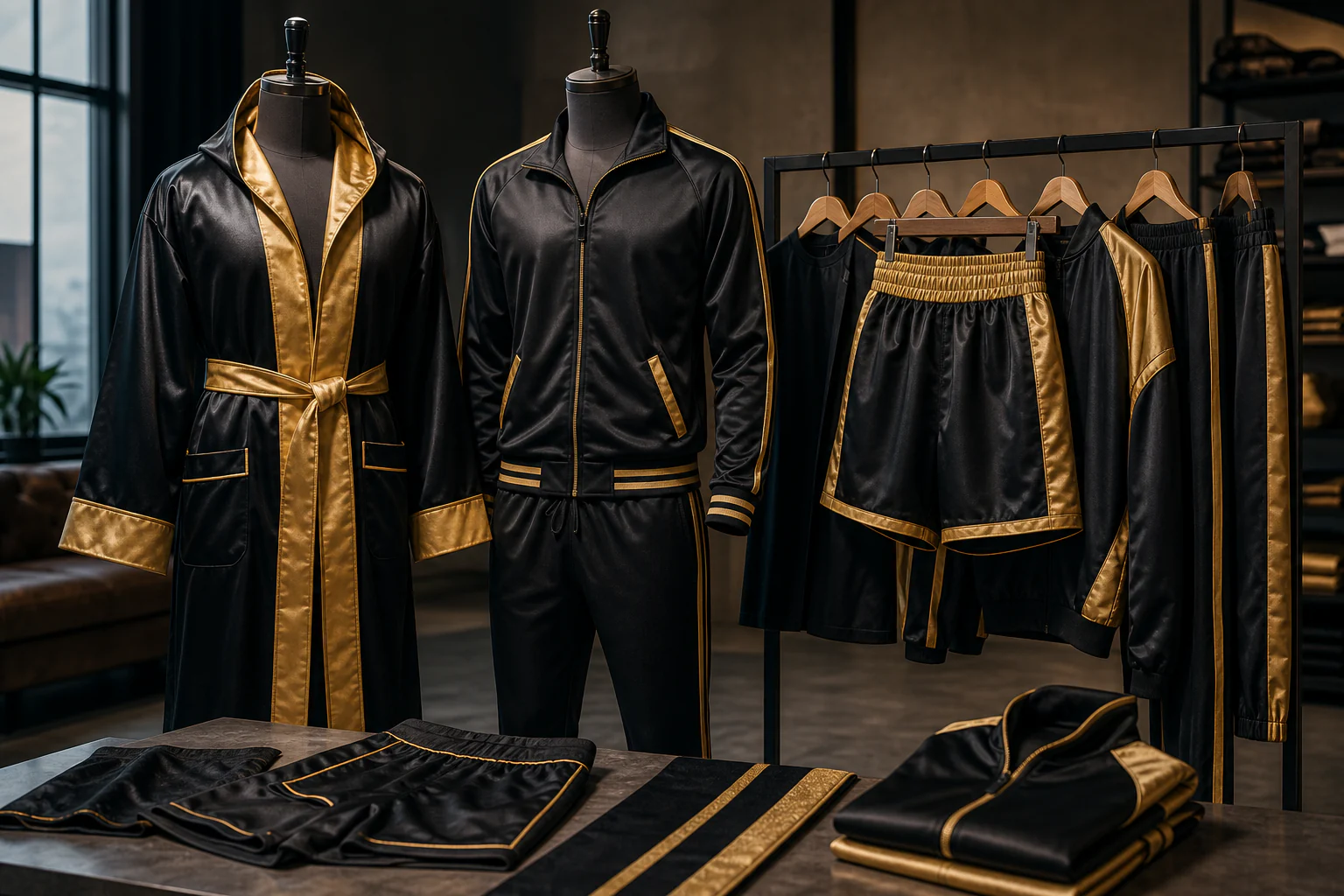
A 2026 trend report on robe-to-jacket capsules, cleaner trim language, and broadcast-ready combat-sports silhouettes.

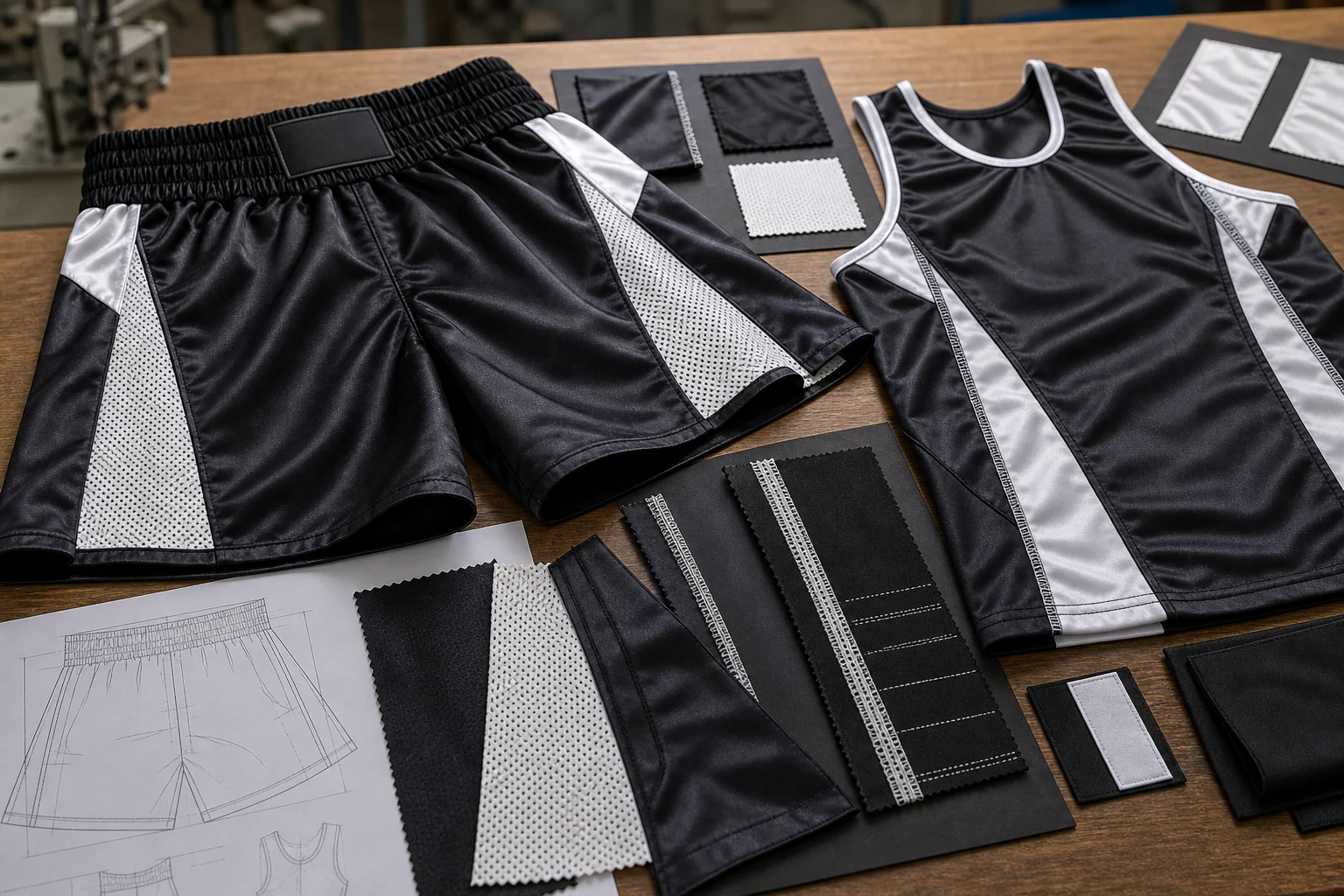
A technical boxing-apparel guide to satin shells, mesh airflow zones, stretch inserts, and cleaner waistband engineering.

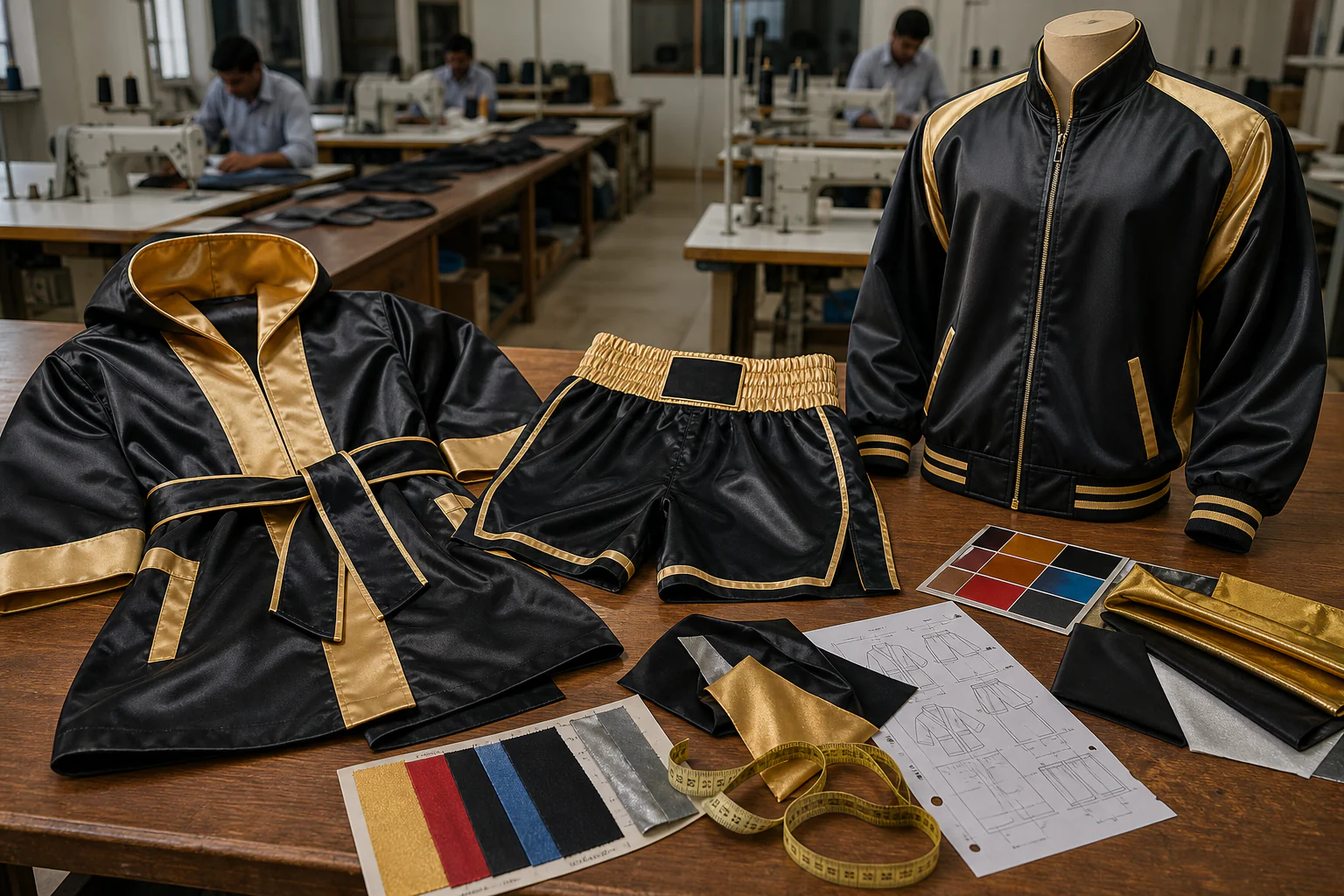
A B2B sourcing guide to custom boxing gear: satin vs micro-polyester fabrics, fight short cuts, walkout robe construction, sponsor branding, low MOQ, and DDP shipping.
A B2B cost breakdown: the five garment cost components, Pakistan vs China vs Vietnam vs Bangladesh, a worked cost build-up, low-MOQ economics, and DDP landed cost.

Why academy teamwear buyers should approve a size set before bulk: grade progression, roster mapping, and fewer fit complaints.

Cleaner sponsor hierarchy, sharper heritage whites, smarter color-blocking, and coordinated cricket teamwear systems.

How clubs and academies should choose between sublimation and cut-and-sew based on graphics, fabric, roster complexity, and reorders.

How clubs, academies, and retailers source custom cricket jerseys: sublimation vs cut-and-sew, fabric GSM, roster logistics, low MOQ, and DDP shipping.

How procurement teams structure repeat-order uniforms around master samples, size curves, reorder cadence, and fabric continuity.

A 2026 trend report on cleaner tactical styling, comfort-led fabrics, role-based hi-vis layers, and smarter branding restraint.

How buyers should test uniform fabric and finished garments for wash durability, shrinkage, trim stability, and color retention.

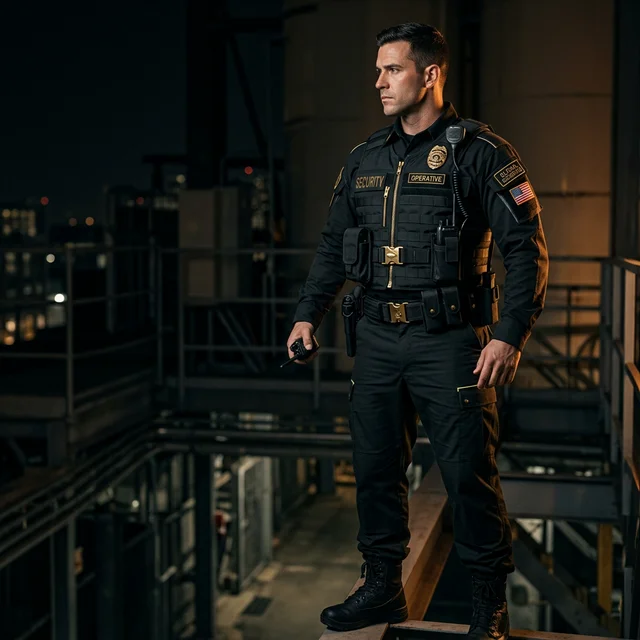
How buyers source role-based security uniforms with durable construction, private label branding, and low-MOQ support from Pakistan.
Source custom silent-fabric hunting jackets: bonded lamination, brushed-tricot and micro-suede backing, reverse-coil silent zippers, 50-pc MOQ, and DDP shipping.
Source custom waterproof technical shells: 2L/2.5L/3L laminates, ePTFE and PU membranes, hydrostatic head, fully taped seams, PFAS-free DWR, 50-pc MOQ, and DDP shipping.

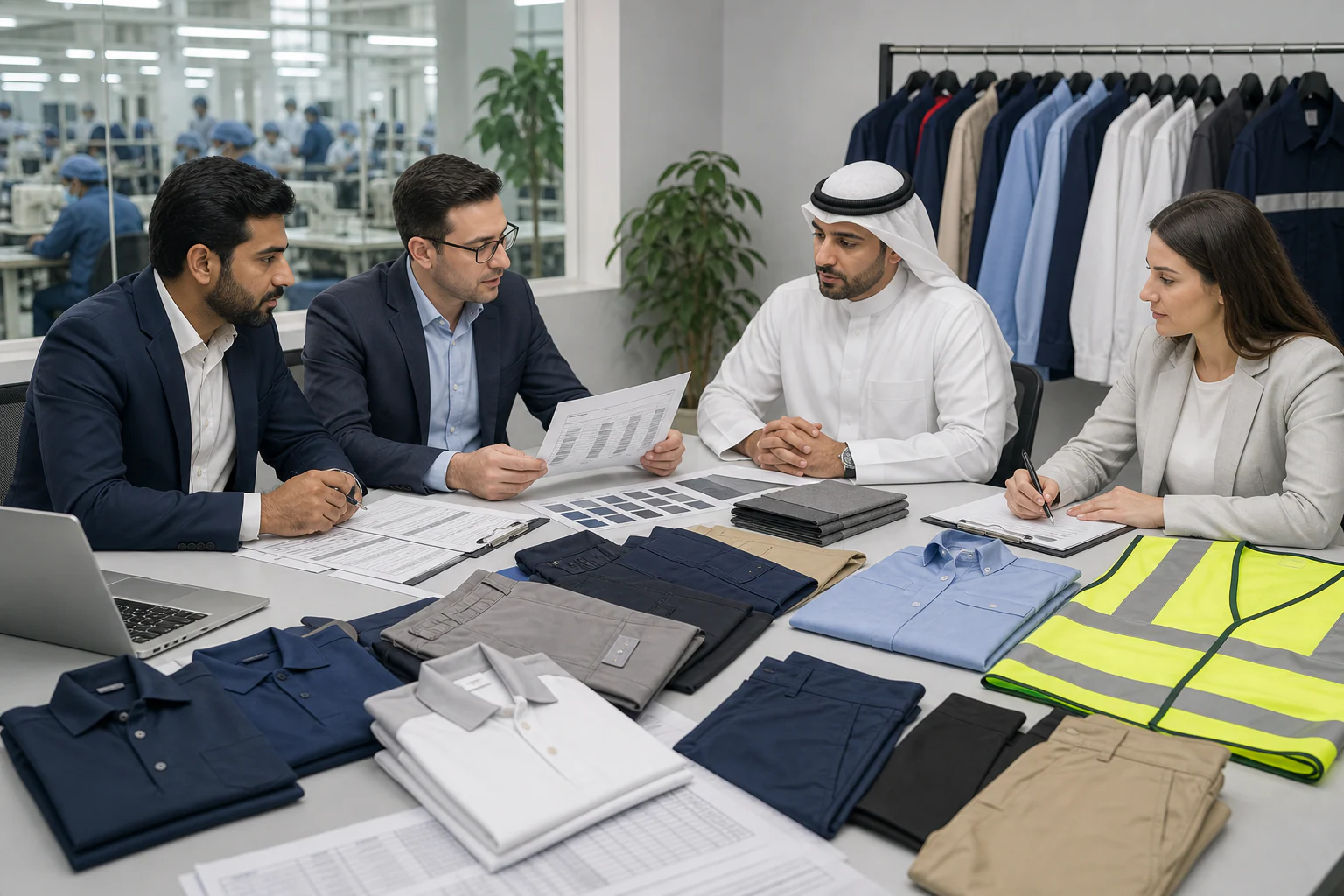
How UAE buyers structure uniform RFQs, customs ownership, sample control, and repeat-order planning when sourcing from Pakistan.

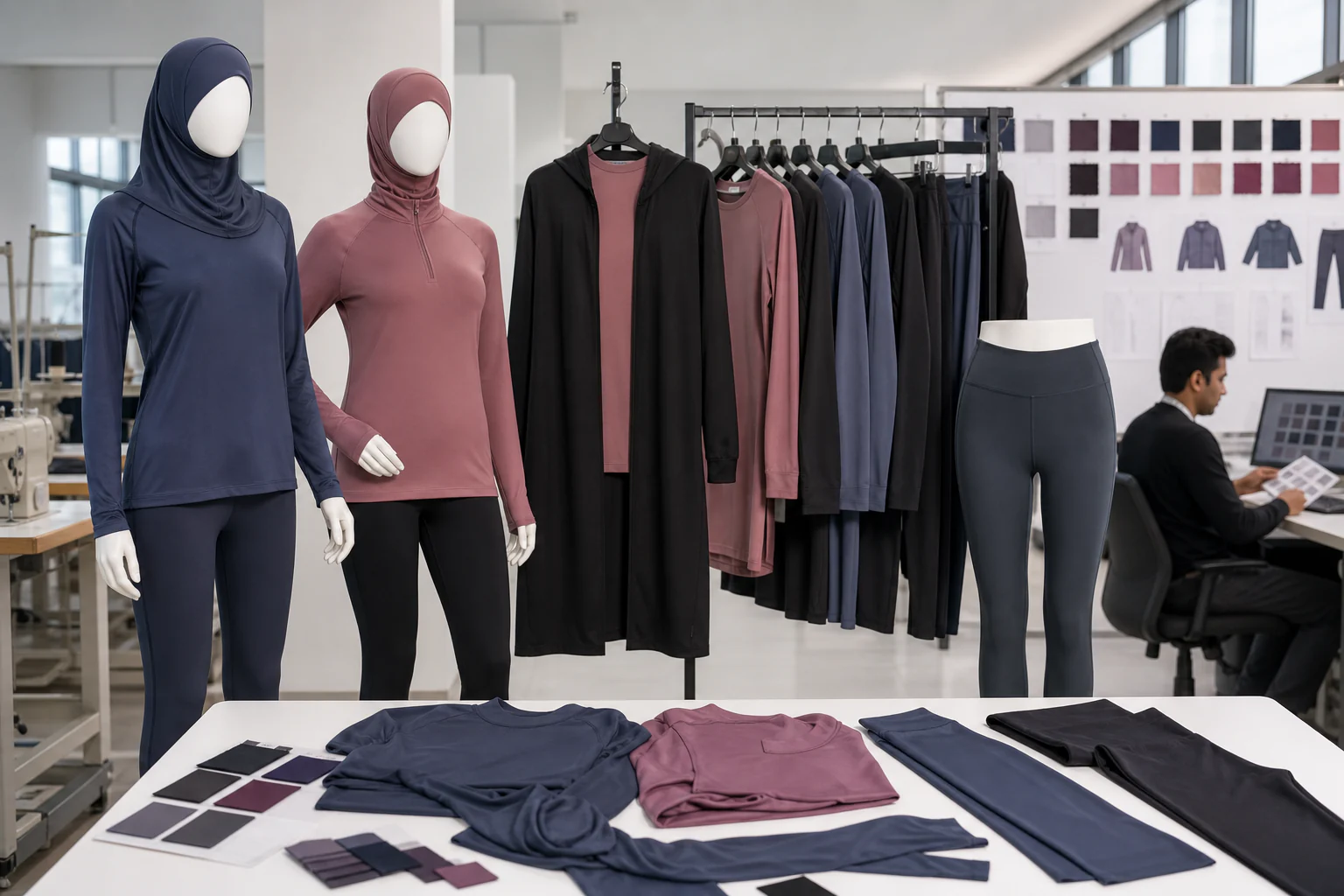
The 2026 modest performance-wear direction: longerline silhouettes, calmer palettes, softer technical surfaces, and systemized assortments.

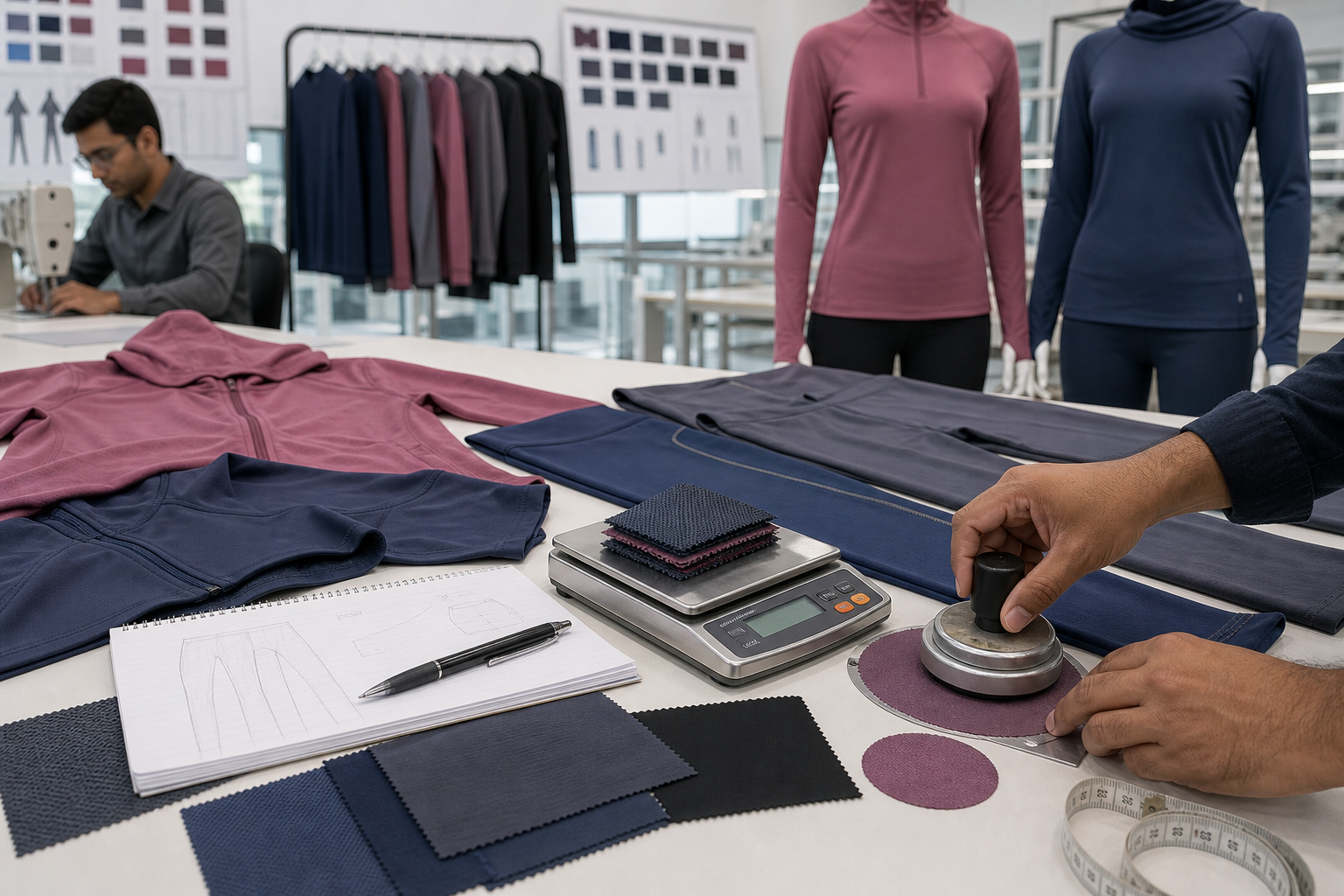
A technical guide to activewear GSM, fabric weight, opacity, stretch recovery, and why heavier fabric does not automatically perform better.

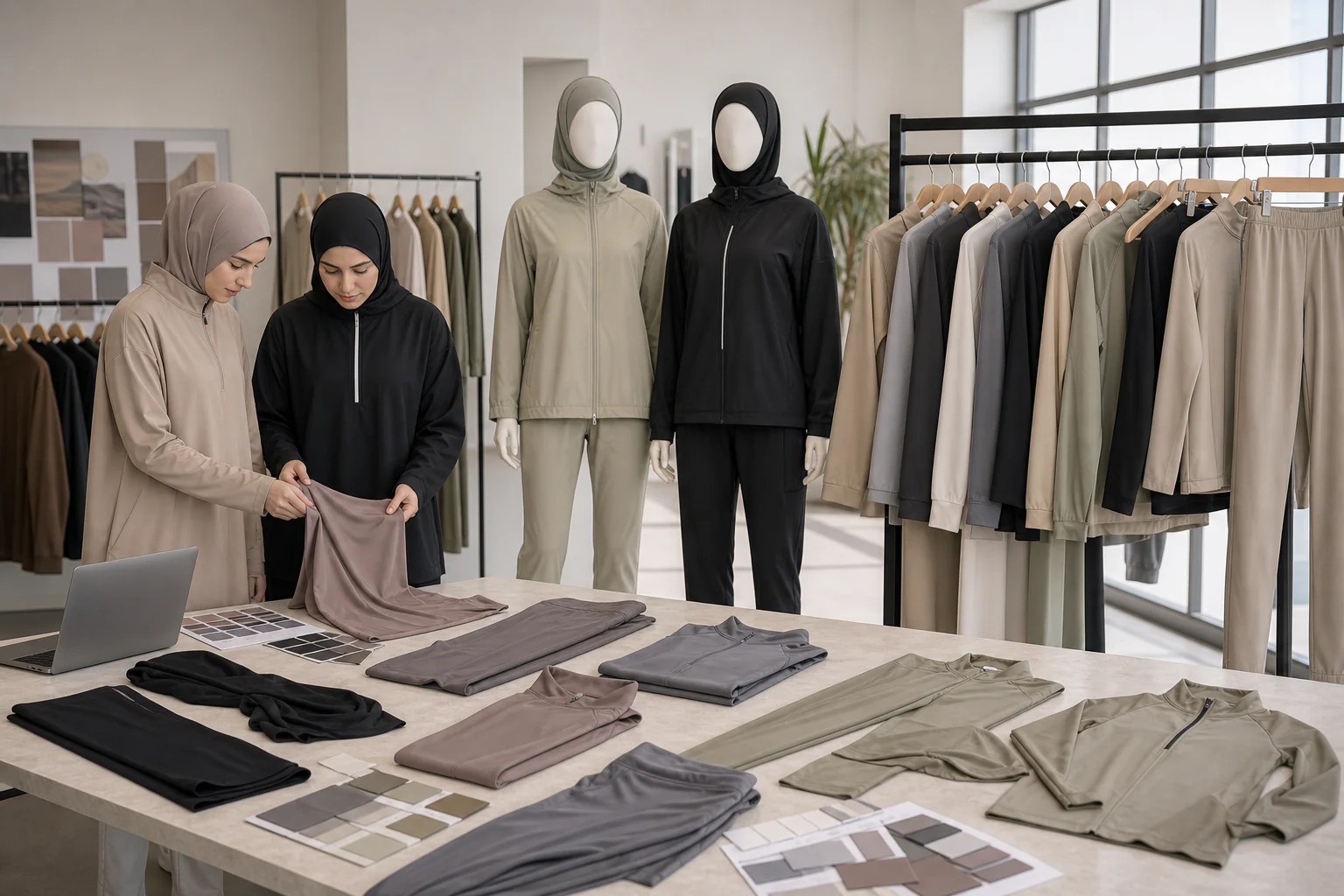
How buyers source modest activewear with sport hijabs, opaque fabrics, coordinated set logic, and low-MOQ private-label support from Pakistan.
How distributors and scrub brands source custom OEM medical scrubs: fabric and GSM, antimicrobial finishes, laundering-proof construction, 50-pc MOQ, and DDP shipping.

A practical guide to FOB vs DDP for apparel importers: freight ownership, customs responsibility, and when each term fits better.

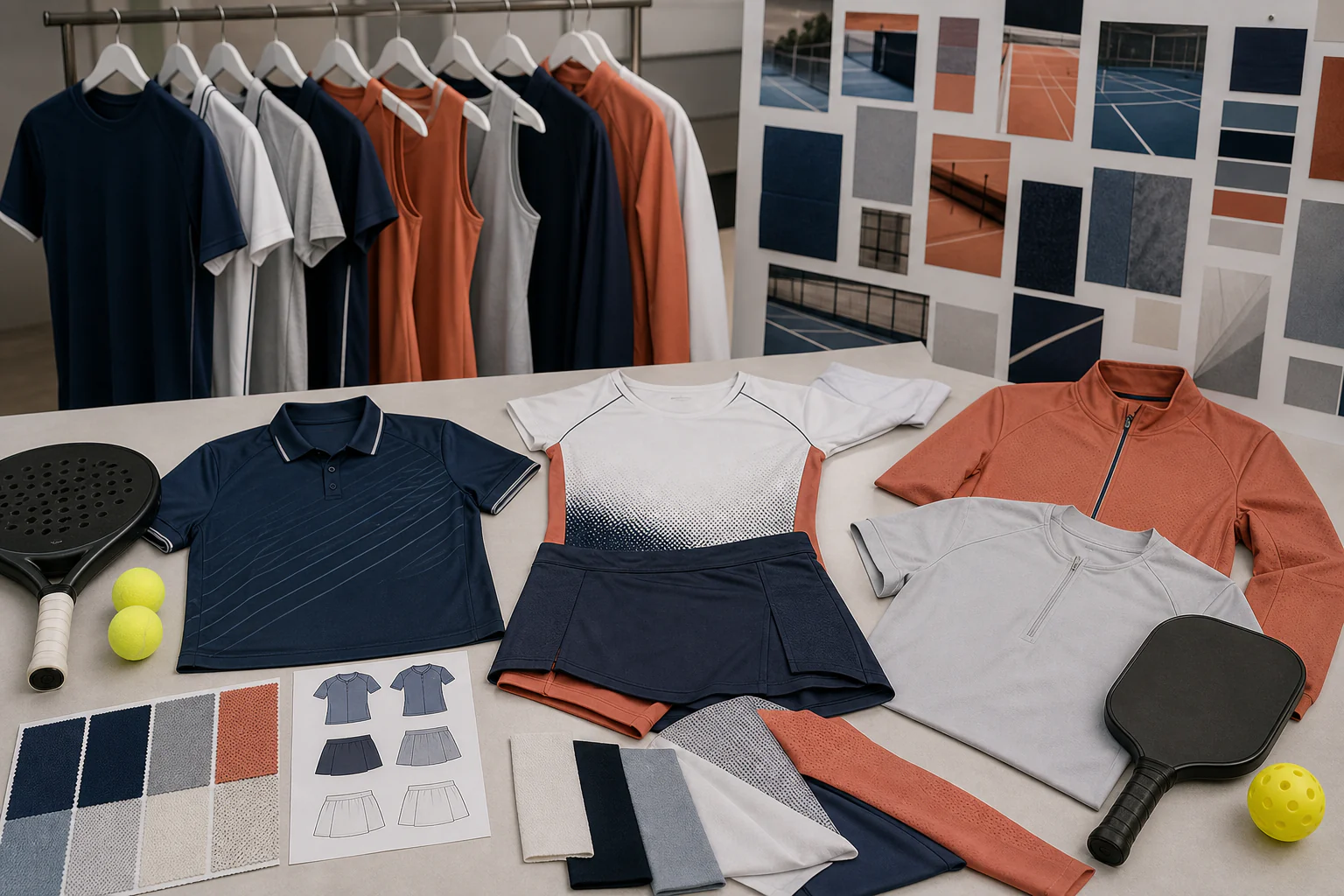
Why court-sport apparel is moving toward cleaner palettes, systemized assortments, and more premium fabric stories in 2026.

How strike-offs, fabric choice, gradients, and approval sequencing control sublimation color accuracy on polyester sportswear.

How clubs, academies, and private-label brands source custom padel apparel with low MOQ, sample-first development, and export support.
How to source custom scent-control hunting base layers: merino vs silver-ion vs carbon odor control, flatlock construction, 50-pc MOQ, OEKO-TEX, and DDP shipping.

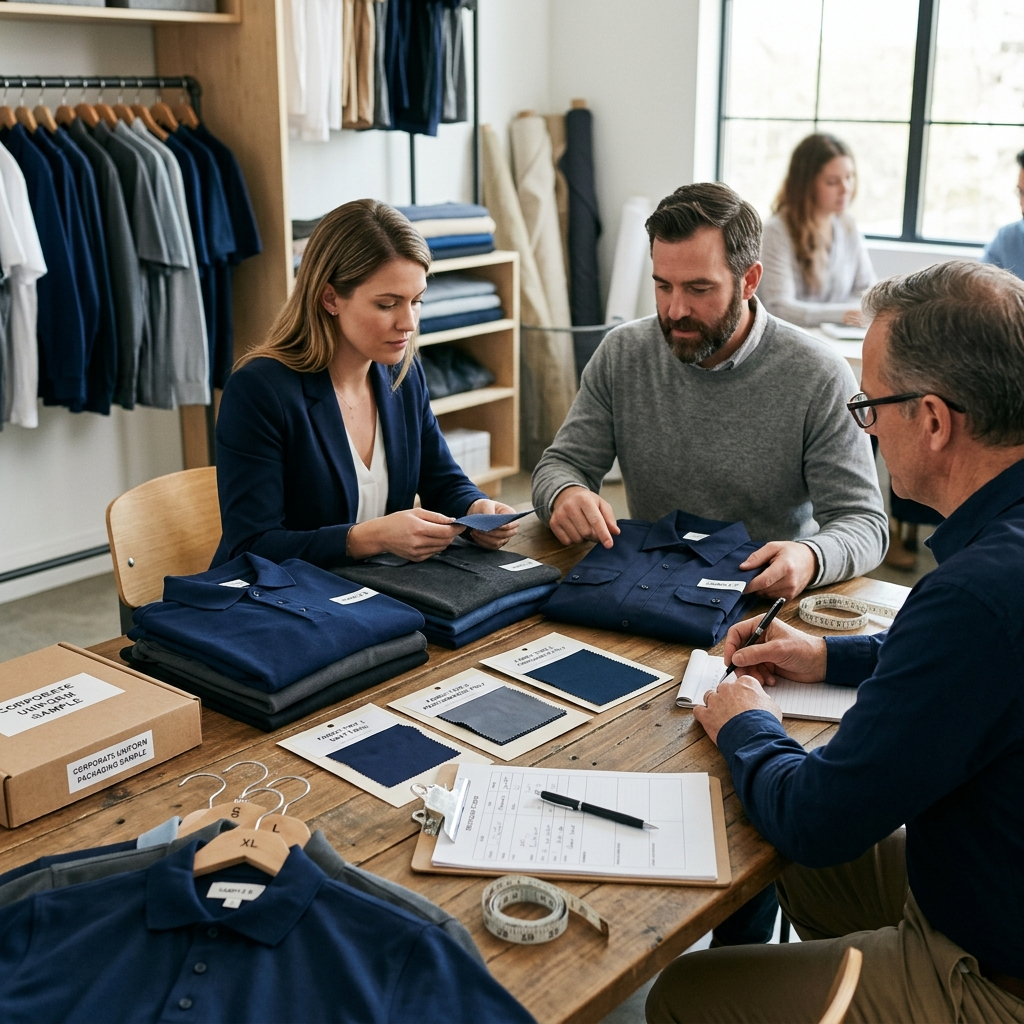
What procurement teams should include in a corporate uniform RFQ: sizing, fabric, branding, packaging, QC expectations, and timeline details for accurate quotes.

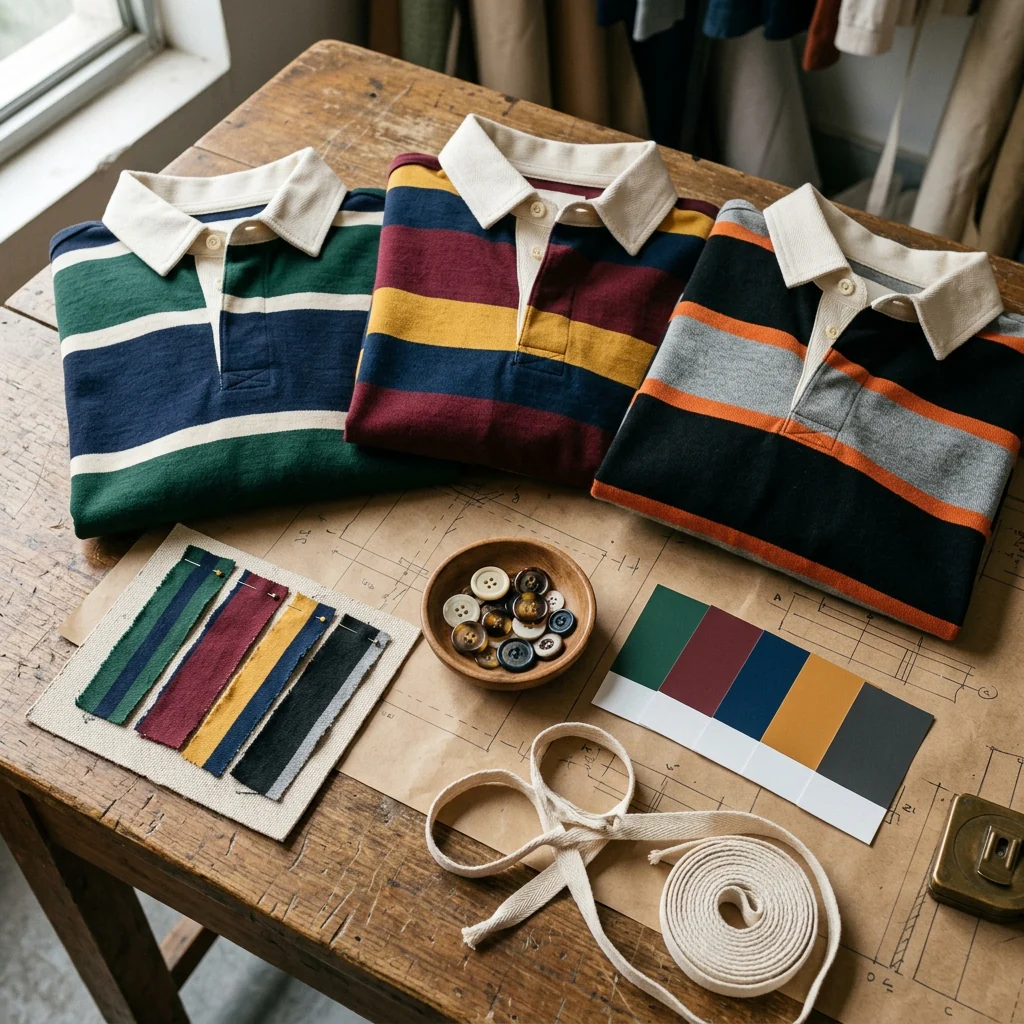
How streetwear brands should spec retro rugby shirts: heavyweight cotton, woven collars, oversized grading, and heritage trim decisions that actually matter.

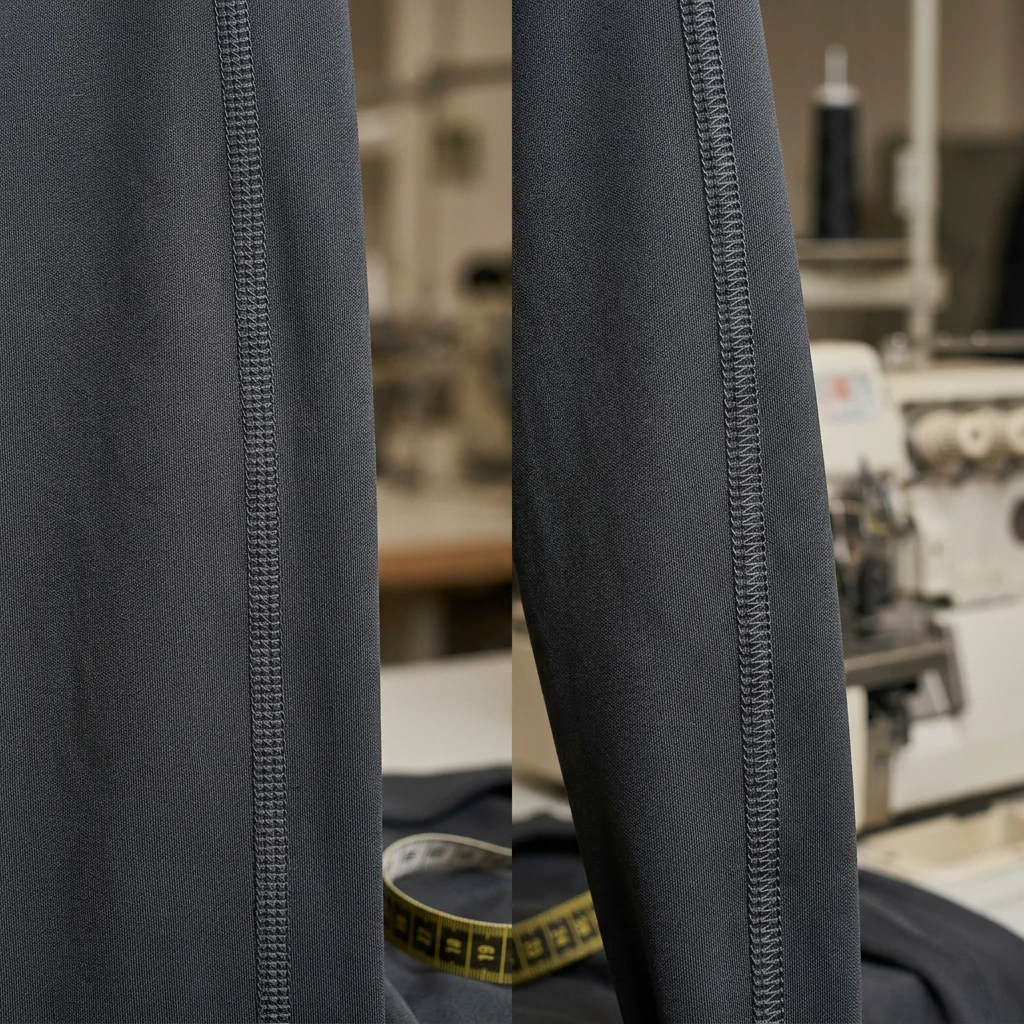
A technical comparison of flatlock and overlock seam construction for compression garments, leggings, rashguards, and high-friction activewear zones.

What buyers should ask a custom rugby jersey manufacturer about collar build, reinforcement, seam strategy, samples, and low-MOQ production planning.

A practical buying-house audit framework for Pakistan apparel factories: sample control, QC ownership, subcontracting risk, labeling readiness, and execution red flags.

Why activewear is shifting toward matte surfaces, softer hand feel, cleaner paneling, and more wearable performance stories in 2026.

What a golden sample really locks in, how it differs from a fit sample, and why it reduces rework before bulk production starts.

How fitness brands source private label sportswear with 50-piece MOQ, 7-10 day samples, 25-35 day production, and export-ready trims.
Pearl weave, gold weave & double weave BJJ gis from Sialkot — IBJJF 2024 spec, 50-pc MOQ, 25–35 day lead time, AQL 2.5 QC, DDP to USA, UK, Canada, Australia, and EU.
Custom modular chest rigs from Sialkot — 50-pc MOQ, Cordura/Ballistic Nylon, MOLLE-spec PALS webbing, YKK & Fidlock hardware, 25–35 day lead time, DDP to USA, UK, EU, and AU.
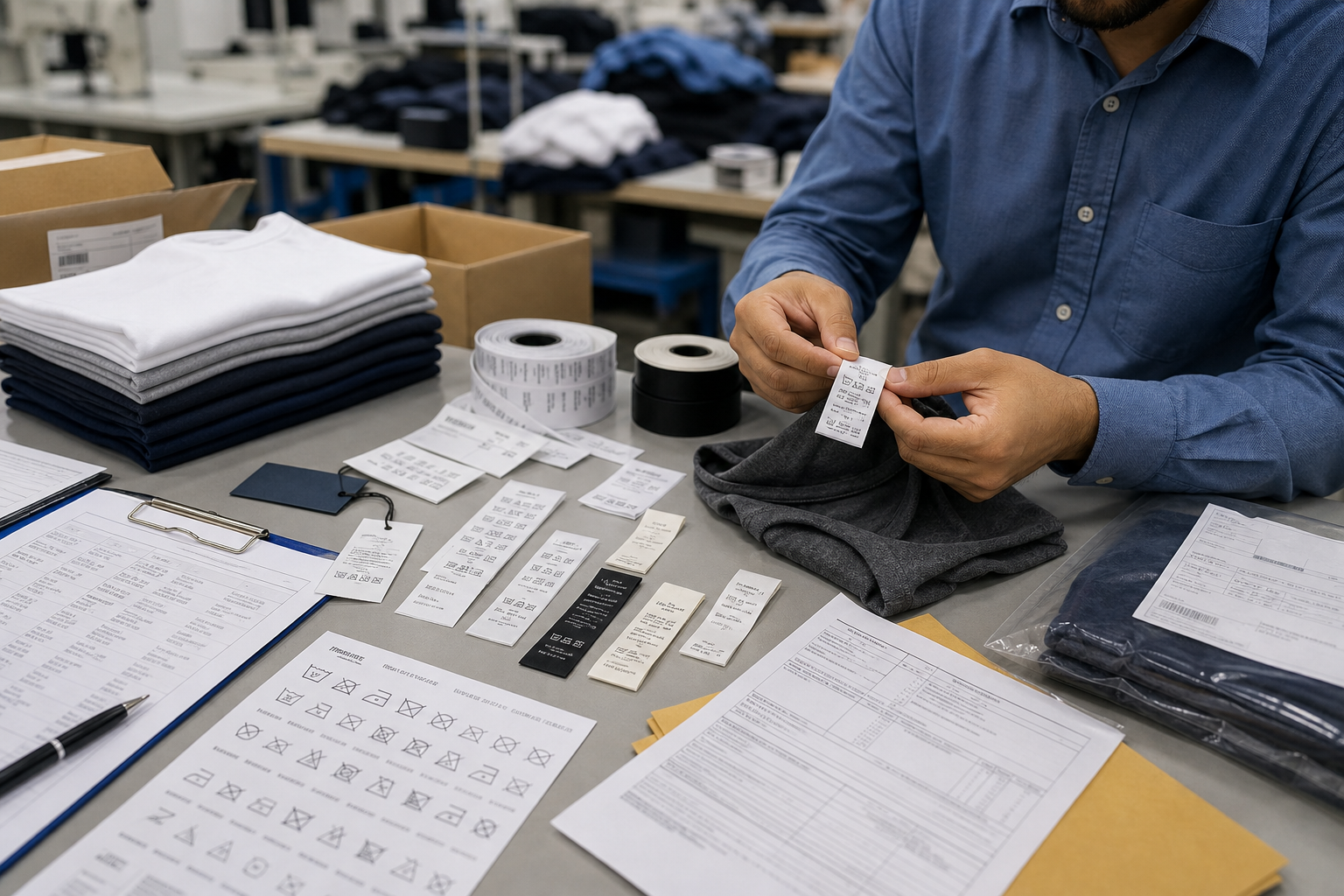
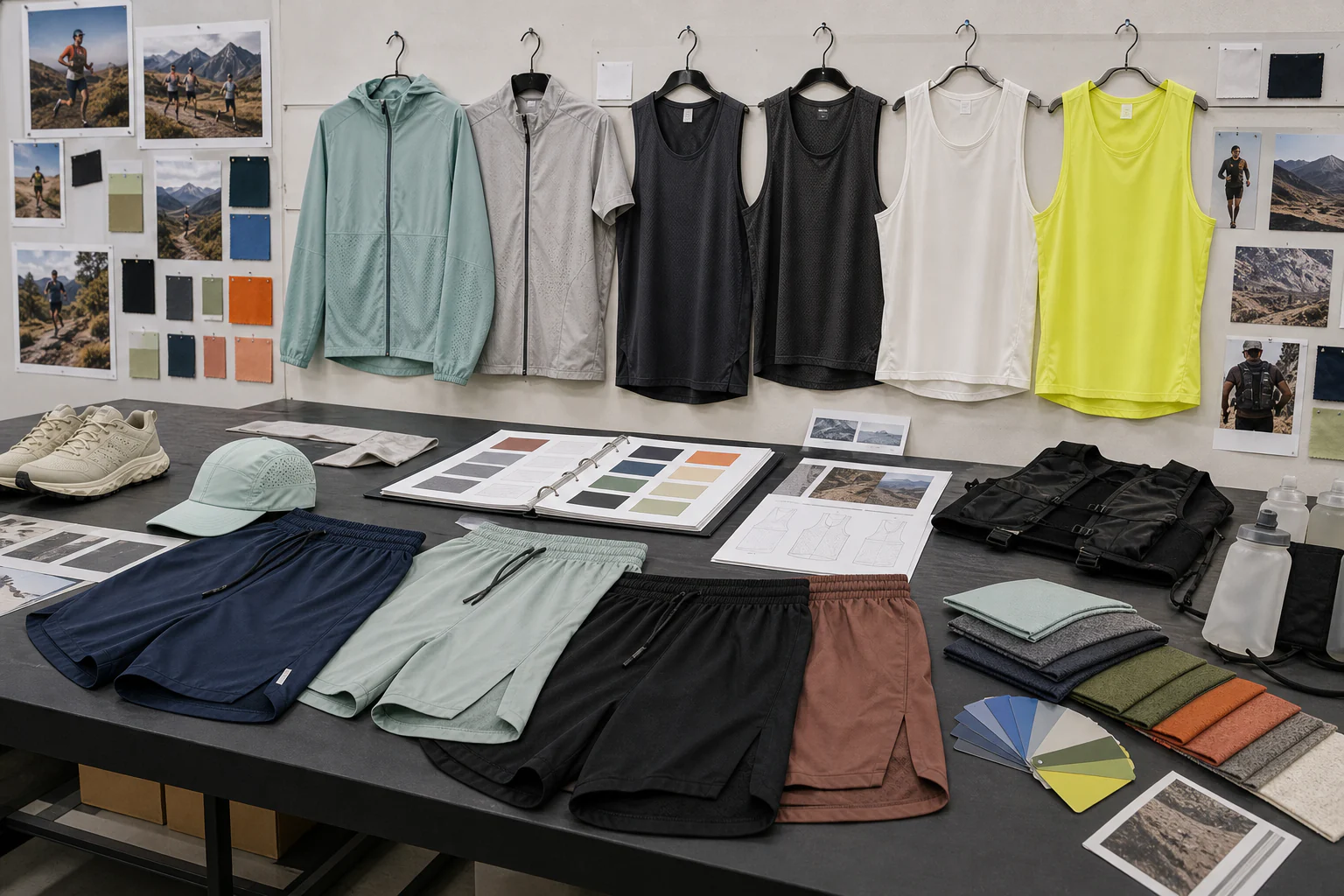
Why flatlock seams are non-negotiable for leggings, compression wear, and rashguards — stitch classes (605/607), flatlock vs overlock, SPI specs, and real costs. 50-piece MOQ, 7–14 day samples.
What ±0.5 mm POM tolerance means in practice, how Sialkot factories achieve it across 5 production stages, and how to specify it in your tech pack. 50-piece MOQ, AQL 1.5, DDP to Japan and Korea.
50-piece MOQ, ±0.5 mm construction tolerance, multi-needle flatlock, DDP to Seoul and Busan — why K-streetwear brands source from Sialkot Sample Masters instead of domestic Korean CMT.
DDP delivery to Jebel Ali and DXB — UAE 5% GCC duty mechanics, Arabic care-label support, sea freight in 11–16 days, and the 50-piece MOQ sourcing workflow from Sialkot Sample Masters.
DDP delivery to Oslo, Bergen, Stavanger, Trondheim, and Tromsø — Norwegian GSP preferential duty, 25% MVA mechanics, sea freight via Hamburg hub, and the 50-piece MOQ sourcing workflow from Sialkot Sample Masters.
DDP delivery to Vancouver, Toronto, Calgary, Montreal, and Halifax — GPT preferential duty, bilingual English/French labelling, sea vs air freight economics, and the 50-piece MOQ sourcing workflow from Sialkot Sample Masters.
Sialkot to Sydney/Melbourne/Brisbane/Perth — 50-piece MOQ, DDP landed cost, MFN duty + 10% GST stack, sea vs air freight economics, AS/NZS 1957 labelling, and the ten-step wholesale workflow.
Grade rules, POM mapping, the seven-step CAD workflow, nesting and marker optimisation, plus-size and cross-region grading, and the file bundle SSM ships with every production order.
Sublimation vs screen printing for sportswear — fabric compatibility, hand feel, durability, colour complexity, and unit-cost economics at 50, 300, and 1,000 pieces, with a decision checklist.
The full 13-stage garment manufacturing process — tech pack intake, pattern making, sampling, 4-point fabric inspection, cutting, sewing, finishing, AQL 2.5 QC, and DDP shipping from Sialkot Sample Masters.
An eight-pillar vetting framework for choosing a clothing manufacturer — legitimacy, category specialism, MOQ, sampling, QC documentation, certifications, DDP shipping, and account management.
An eight-step buyer's guide to ordering custom apparel from Pakistan — brief, tech pack, RFQ, costed sample, PO + deposit, production, 7-point QC, and DDP shipping. 50-piece MOQ, 25–35 day lead time.
What MOQ means, what drives it, industry-standard 300–1,000 piece minimums vs a 50-piece MOQ, the unit-cost curve, and a readiness checklist for low-MOQ custom orders.
Full OEM clothing manufacturing at a 50-piece MOQ — what 50-piece OEM means versus CMT, ODM, and private label, unit pricing at 50 vs 300 vs 1,000, the tech pack you supply, and the sample-to-DDP workflow.
Full OEM customization at a 50-piece MOQ — what low-MOQ custom means, Pakistan vs China/Bangladesh/Turkey, indicative pricing, the tech-pack-to-DDP process, and an 8-point vetting checklist.
What private label means versus white label and full OEM, the branding menu — labels, hangtags, trims, packaging — plus a 50-piece MOQ, indicative pricing, lead times, and DDP shipping.
How EU brands source from Pakistan — GSP+ 0% duty preference, OEKO-TEX, REACH, GPSR, EU textile labelling, DDP shipping, import VAT, and a landed-cost example in EUR.
The technical sourcing playbook for startup kits and activewear — performance fabrics, sublimation vs cut-and-sew, construction standards, tech-pack checklist, 50-piece MOQ, and DDP shipping.
How hunting and tactical brands run OEM production in Sialkot — silent fabrics, scent control, mil-spec-aligned construction, camo printing, 50-piece MOQ, and DDP shipping.
Post-Brexit sourcing playbook for UK brands. DDP shipping, HMRC commodity codes, DCTS preference, import VAT, REACH compliance, and a landed-cost worked example in GBP.
DDP shipping turns Pakistan-to-USA importing into a single landed-cost invoice. Incoterms, HTS duty rates, transit times, and the SSM logistics playbook in one place.
Sialkot Sample Masters leads the way as a solar powered garment factory in Pakistan. Discover how our renewable energy facility powers ethical, transparent, and eco-friendly apparel production.
For jiu-jitsu brands, the Gi is the primary differentiator. Discover technical specs for 450GSM pearl weave, IBJJF compliance, and how Sialkot builds championship-quality combat wear.

The choice between OEM and ODM is a critical decision for any apparel brand. Learn the technical differences, pros, and cons to determine the best model for your next collection.
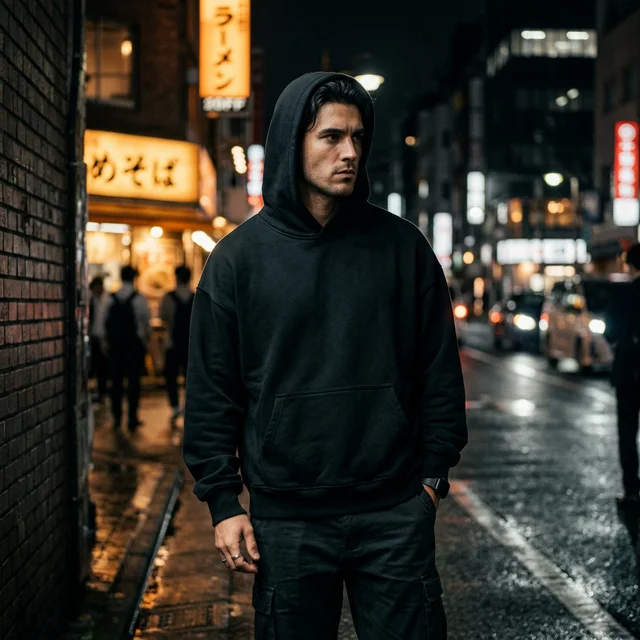
The ultimate guide to sourcing custom 450gsm heavyweight hoodies. Discover technical specs, manufacturing processes, and why Sialkot is the global hub for premium streetwear.

A comprehensive guide for brand owners looking to source custom streetwear from Pakistan. Learn what to look for, questions to ask, and red flags to avoid when choosing a B2B manufacturing partner.

The definitive 2026 guide for global brands on sourcing reliable apparel manufacturers in Pakistan. Learn verification steps, red flags, and the Sialkot advantage.

Transform your production floor without the overhead. Learn how to leverage Sialkot's specialized CMT units to scale your export brand.

Why the world's top sports brands choose sublimation for performance. A deep dive into the science of gas-to-fiber printing.

In the high-stakes world of apparel exports, a 1% saving in fabric can equal thousands of dollars in profit. Discover why manual drafting is costing you money.

One 'bad batch' can destroy a decade of trust. Master the AQL standards and auditing pipelines used by the world's most successful exporters.

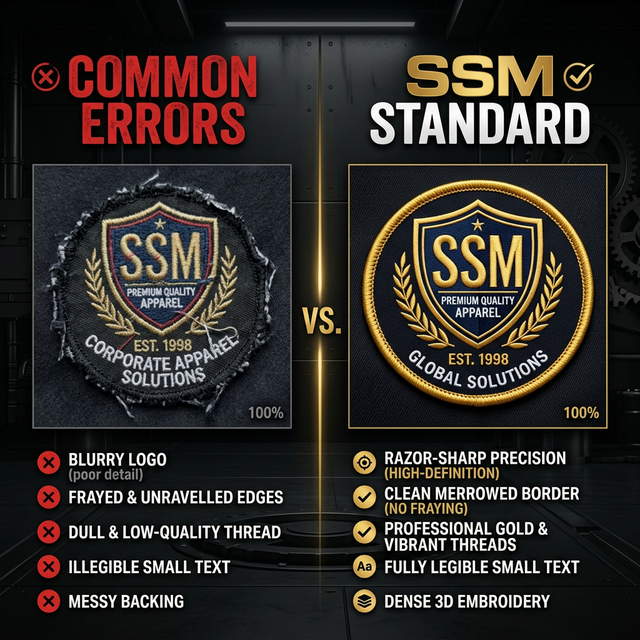
Avoid costly mistakes in custom patch and badge ordering. Learn about resolution, backing types, and detail density for international export standards.

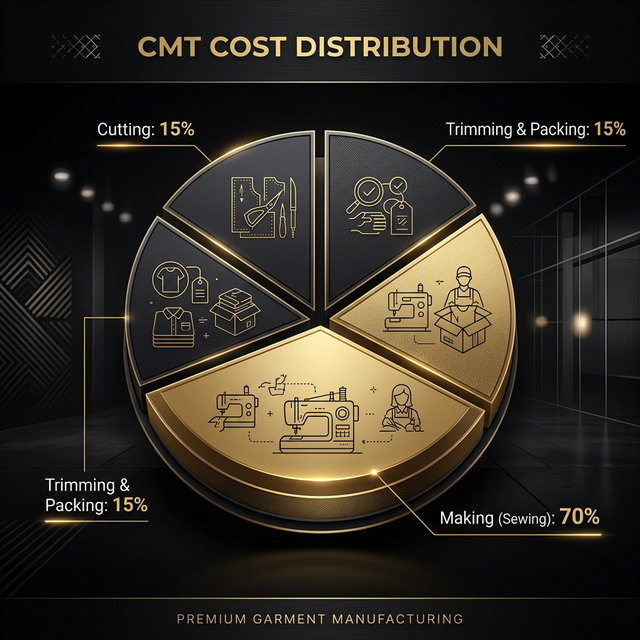
A definitive guide to calculating Cut, Make, Trim (CMT) costs for streetwear exports. Learn how to optimize your production budget with Sialkot Sample Masters.

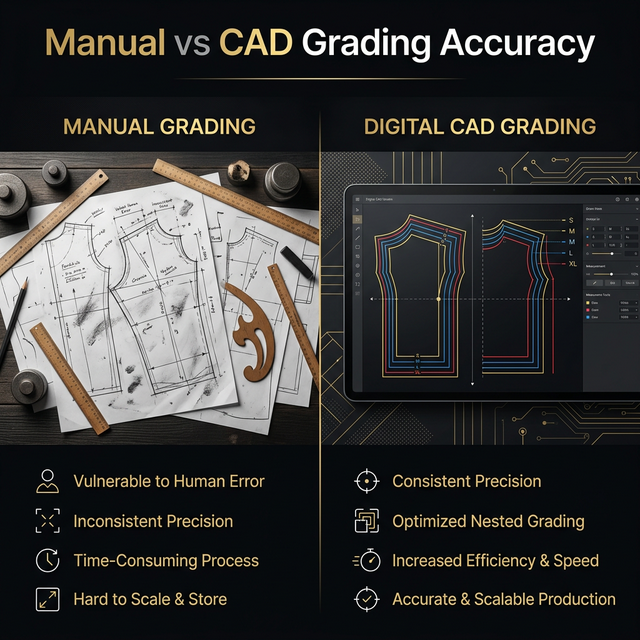
Discover why digital CAD grading is critical for international apparel exports. Learn about precision, fabric efficiency, and global sizing compliance.

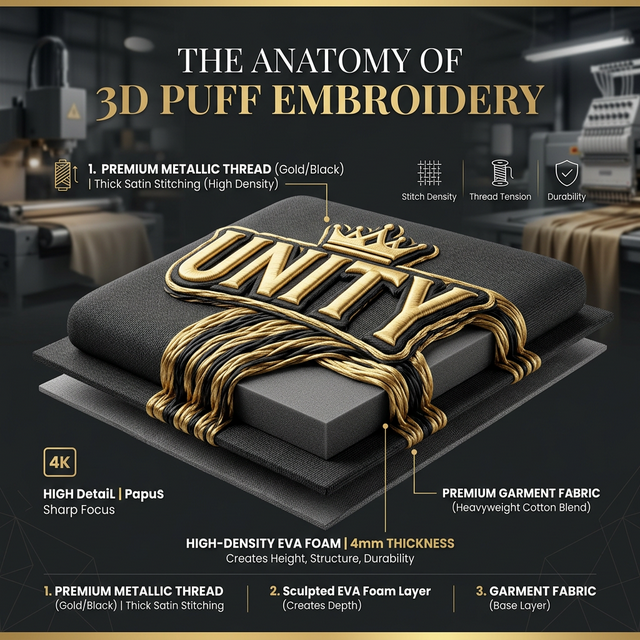
Learn how 3D puff embroidery elevates brand perception and justifies premium pricing for streetwear export orders from Sialkot.

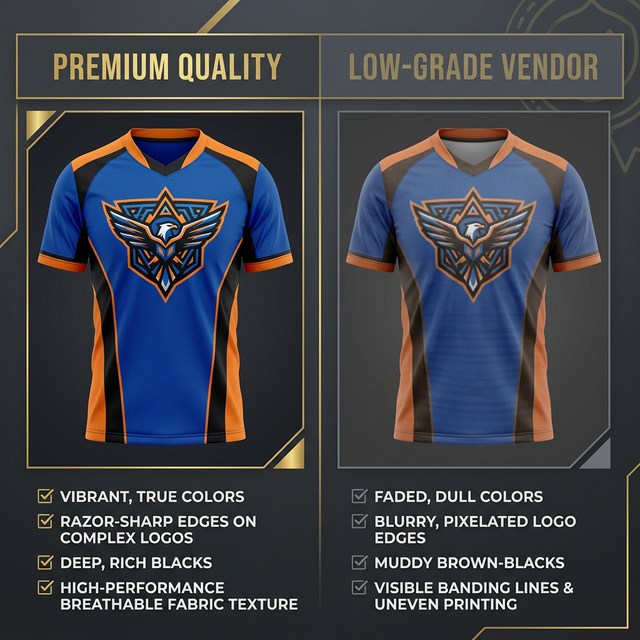
Low vibrancy, muddy blacks, or peeling logos? Learn how to spot the red flags in your sublimation apparel production before it costs you an export contract.

Discover why the leading sportswear exporters in Sialkot are moving toward a lean manufacturing model by outsourcing stitching to specialized CMT partner units.

Starting a streetwear brand doesn't require massive upfront investment. Discover how low MOQ manufacturing works, what to expect, and how to scale from 50 to 5,000 units.
Common questions about our apparel manufacturing blog content and B2B guides.
Submit a Request for Quote (RFQ) through our form with your product specifications, quantities, and any customization requirements. We'll respond within 24 hours with detailed pricing.
Absolutely! We encourage sampling to ensure quality meets your standards. Sample pricing starts at $50-100 per style depending on complexity. Sample costs are credited toward your bulk order.
We implement multi-stage QC: raw material inspection, in-line production checks, and final pre-shipment inspection. We provide QC reports with photos for every production batch.
Material and packaging alternatives can be evaluated against your performance and sourcing requirements. Any organic, recycled-content or chemical-standard claim must be supported by the applicable supplier or test documentation for that order.