Custom Running Apparel Manufacturer: Lightweight Fabrics and Fit Guide
How running brands should source singlets, performance tees, and split shorts: lightweight fabrics, fit development, wear testing, MOQ, and export.
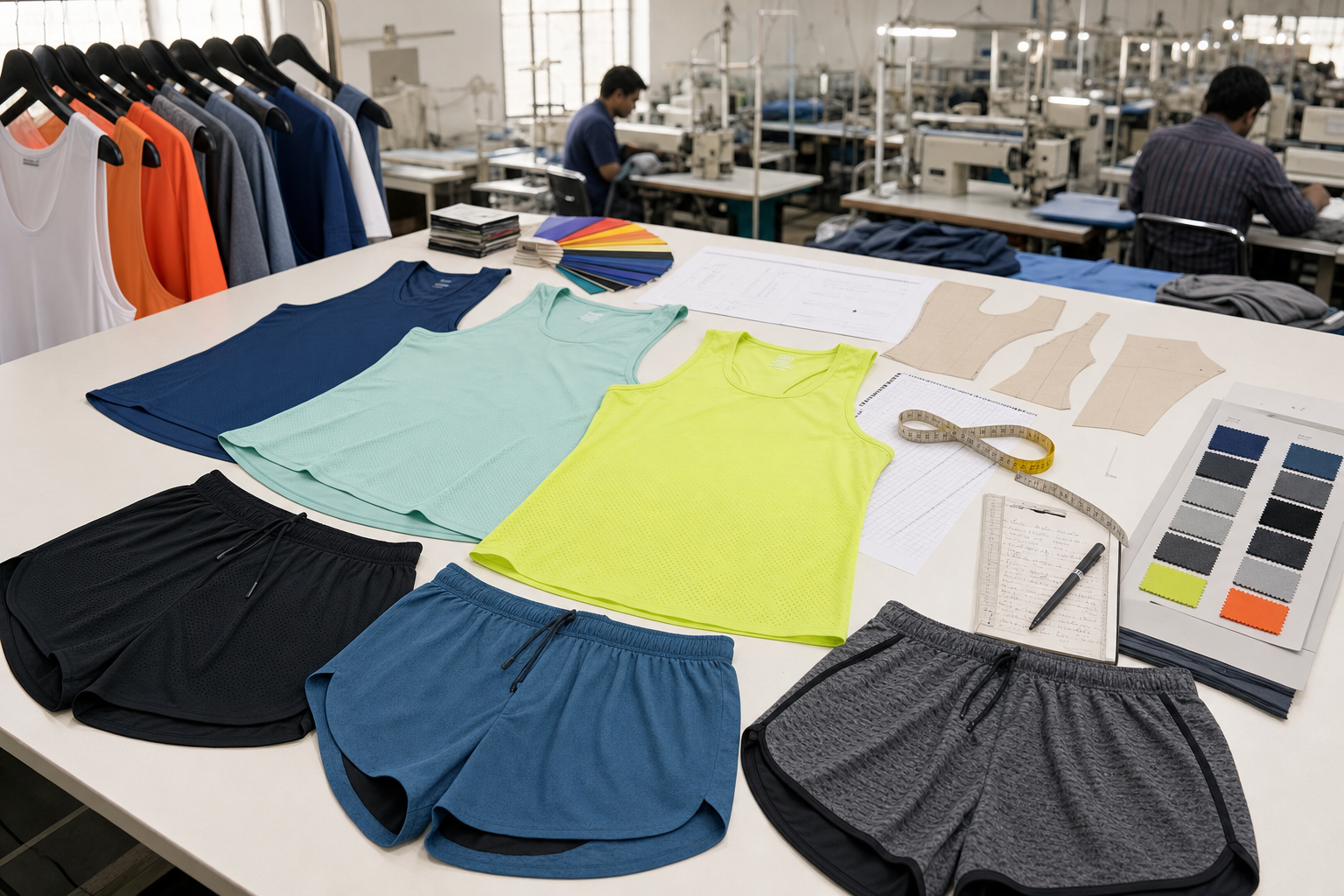
Running apparel looks simple until the first wear test exposes bounce, cling, opacity, or chafing. Good product development starts by treating singlets, performance tees, split shorts, and trail shells as movement-first garments, not as generic sportswear blanks.
MOQ
50 pcs
Samples
7-10 days
Bulk
25-35 days
Focus
Fit + Dry-Back
Short Answer
A strong running-apparel manufacturer should spec each garment around movement, heat, and carry needs before styling. Race singlets need low weight and fast ventilation. Performance tees need stable dry-back and less cling. Split shorts need stride freedom and waistband control. Trail pieces often need storage and abrasion-aware paneling. Brands still comparing the bigger sourcing picture should read our sportswear manufacturing guide for startups and the broader Pakistan ordering workflow.
Buyer Checklist Before Sampling
- Separate road-race, club-training, and trail-use products before requesting costing.
- Lock fabric weight, stretch direction, and mesh-zone placement in the first tech pack.
- Decide whether the short needs a built-in liner, storage pockets, or a cleaner race-only shell.
- Approve at least one fit sample and one wash-tested sample before bulk.
- Map size grading to the target market and keep care-label language aligned with the destination country.
What Buyers Should Spec First
Running product succeeds when the spec file makes the use case obvious. A marathon singlet, a club training tee, and a trail short do not share the same performance priorities. The buyer should lock intended temperature range, expected carry load, lining logic, and target feel before the factory begins costing or pattern work.
The same rule applies when a performance brand expands into cycling. Our new custom cycling jersey manufacturer guide explains how fit direction and cargo logic change once the garment moves from running to bike use. Where a brand serves athletes who do both in one race, the brief changes again: a custom triathlon and multisport kit manufacturer has to build a single garment that is swum in, ridden in and then run in wet, with no change of clothes between disciplines. Moving the same athlete off the road inverts the brief once more — full body cover, snag resistance and tear-rated panels replace the lightest-possible construction, which is why a custom orienteering and trail running team kit manufacturer builds around vegetation contact and a loaded hydration vest rather than around gram counting.
| Spec Area | What Good Looks Like | Why Buyers Care |
|---|---|---|
| Race singlet | Ultra-light knit with mapped ventilation and low-bulk seams | Keeps the top dry faster and reduces cling during hot-weather running. |
| Split short | Light shell, stable waistband, liner choice, and free stride opening | Controls bounce, chafing, and stride restriction across training and racing use. |
| Trail short or shell | 4-way stretch, secure pockets, and abrasion-aware panel plan | Lets the garment move under load when runners carry nutrition or a vest. |
| Fit development | Grade by intended runner profile, not by generic fashion block | Running product fails fast when armholes, rise, or hem swing are even slightly off. |
Lightweight Fabric Is Not Just Low GSM
Buyers often ask for the lightest possible fabric and stop there. That is not enough. A lightweight running knit still needs opacity under sweat, enough recovery to avoid bagging out, and enough surface stability to keep seams and branding clean after repeated washing. The right answer is usually a balanced construction rather than the lowest GSM on the shelf.
This is also where mesh placement matters. Ventilation zones under the arm, down the spine, or through a lower-back yoke can improve comfort, but only if the paneling does not distort the fit. Brands planning performance tees should pair fabric selection with our newer moisture-wicking performance T-shirt guide so the dry-back story and the knit choice stay aligned. Endurance brands crossing into road and gravel capsules should also review cycling jersey construction details, where cargo load and hem stability become part of the fit brief.
For a broader weight-planning framework, use our GSM guide for activewear performance. GSM affects hand-feel, coverage, and heat management, but it does not replace real wear testing.
Fit Development Is the Real Make-or-Break Stage
Fit issues in running product reveal themselves quickly. A singlet with the wrong armhole shape rubs within a few kilometers. A waistband with the wrong tension starts bouncing as soon as the phone or gels go in. Split shorts that look good on a hanger can feel restrictive once the runner opens stride. The same movement-first discipline is shaping current cycling kit trends, where brands are separating race, club, and gravel fits instead of treating them as one block.
That is why SSM’s sample-first workflow matters. A 7-10 day sample window gives the buyer room to check mobility, hem swing, transparency under sweat, liner comfort, and branding placement before bulk. The cost of one additional fit correction at the sample stage is far lower than reworking a full 500-piece delivery after race-day feedback.
Trail programs should also test the garment under load. Shorts, shells, and singlets can behave differently once a vest, phone, or nutrition is added. That direction is increasingly relevant in the category shift covered in our running apparel trends report. Brands and programs supplying school or club athletics squads rather than individual runners should also read our custom track and field uniform manufacturer guide, where the competition bib field, event-specific blocks, and cross-silhouette colour matching change the brief entirely.
Sample-to-Bulk Timeline
| Stage | Output | Typical Window |
|---|---|---|
| Tech pack and fit brief | Silhouette, inseam, pocket logic, fabric, and branding confirmed | 2-4 days |
| Sample development | Fit sample in running-grade fabric with trims and panel plan | 7-10 days |
| Wear-test review | Stride, bounce, opacity, and chafe risks checked before PP approval | 2-3 days |
| Bulk production | Cutting, sewing, decoration, finishing, and QC against sealed sample | 25-35 days |
| Export dispatch | Packing, carton marking, and DDP or FOB shipment handoff | Varies by destination |
With a sealed sample, SSM can move from sample approval into 25-35 day production, then coordinate private-label trims, QC, and export support. That matters most for newer brands launching in controlled quantities, where the first delivery has to feel finished enough to win repeat orders and content-worthy product photography.
Need a Running-Apparel Tech Pack Review?
Share the target product, fit references, destination market, and launch quantity. SSM can review the tech pack, recommend the right fabric route, and move your running capsule from sample to export-ready bulk.