Custom Esports Jersey Manufacturer: The 2026 B2B Sourcing Guide
Source custom esports jerseys from Sialkot — seated-posture blocks, matte broadcast fabric, modular sponsor slots, fan ranges, 50-pc MOQ, 25–35 day lead, DDP to USA/UK/Canada/Australia/EU.
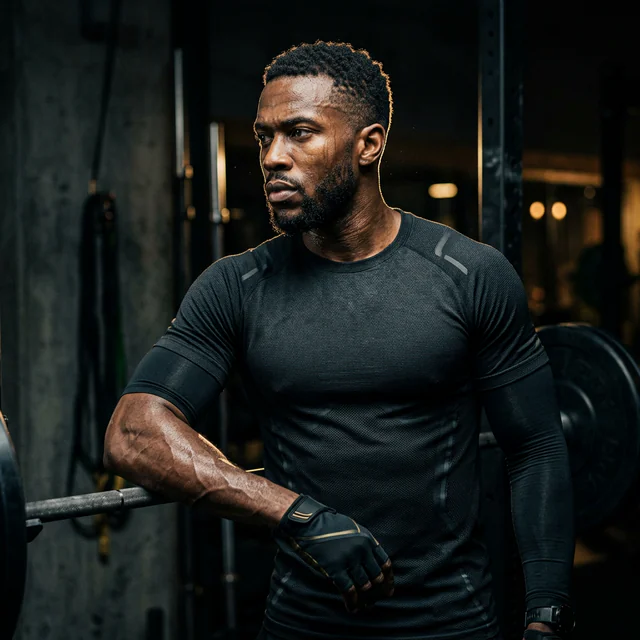
An esports jersey is the only competitive uniform on this site that is worn sitting down, judged through a camera lens, and expected to carry a sponsor roster that changes inside the season. None of those three facts are served by an athletic block borrowed from a field sport, which is why so many organisations end up with a jersey that rides out of the chair on air and a sponsor layout that costs a full sample cycle to update. This guide covers how the stage kit, the retail range and the wider org programme are specified, costed and manufactured at a 50-piece MOQ.
MOQ
50 pcs/design
Lead Time
25–35 days
QC Pass Rate
99.8%
Est.
2009
Section 01
The Chair and the Camera: Why Esports Kit Is Not a Slim-Fit Football Jersey
Almost every esports jersey in circulation was manufactured on a block drafted for a standing, running athlete, because that is the block a sublimation factory already owns. It is the wrong starting point, and the reason is posture. A competitor plays seated for six to ten hours in a single day, shoulders rolled forward, elbows carried in front of the torso, forearms resting on a hard desk edge, spine against a chair back. That position opens the cross-back well past a standing measurement, shortens the effective front length, and lifts the back hem, which is why an athletic-block jersey rides up within the first map and stays there for the rest of the broadcast. The fix is not a different size. It is a graded back rise and body length, a cross-back drafted for a forward-rolled shoulder, and a front that does not bunch into the desk edge — the same articulation discipline set out in our articulated pattern making guide, applied to a posture rather than to a movement.
The second fact is that the camera, not the wearer, is the garment's primary inspector. A field jersey is seen from a stand at fifty metres; a stage jersey is seen at 4K from three metres, in a chest-up frame, under hard key lighting, for hours. That changes the fabric specification before it changes anything else: a lustrous or resin-heavy face throws a specular hot spot straight down the lens and blows out the org mark and the sponsor logo sitting inside it, and fine repeating patterns alias and shimmer through broadcast compression in a way that is completely invisible on a flat proof. A matte, evenly calendered face and a coarse enough pattern pitch are not aesthetic preferences here. They are the difference between a sponsor being visible on air and a sponsor asking why they paid for the placement.
The third fact is commercial. Sponsor rosters in this industry change inside a competitive season, several categories are restricted by region or by tournament organiser, and the retail jersey a fan buys often cannot carry the same marks as the one worn on stage. That means the artwork is a versioned, modular asset rather than a single flattened print file, and it means most organisations are actually buying two products off one identity. Sialkot Sample Masters has produced sublimated and technical performance apparel since 2009. The closest neighbours on this site are our custom streetwear manufacturing guide, which covers the retail half of an org programme, our custom baseball jersey guide for the closest jersey construction vocabulary, and our guide to scaling a brand at low MOQ, which is the commercial model most organisations are actually running.
Section 02
The Three Kit Systems
One identity, three products with genuinely different engineering: the garment that goes on stage, the garment a fan buys, and the programme that dresses everyone standing behind the five players.
| Kit System | Build | Fabric Base | Best For | Decoration |
|---|---|---|---|---|
| Broadcast Pro Jersey System(Most Ordered) | Sublimated stage jersey in short or long sleeve with a stand collar, polo placket or quarter-zip, a modular versioned sponsor layout, player handle and number front and back, a matte non-reflective face, forearm and elbow panels specified for desk contact, and a matched stage pant or short | Matte broadcast poly interlock 160–190 gsm, or poly-spandex ponte 200–240 gsm where a structured collar and shoulder are wanted on camera; placed side and underarm mesh 130–160 gsm | Professional and semi-professional organisations, franchise and partner teams, collegiate and academy programmes, and tournament organisers outfitting stage talent and officials | Full sublimation with versioned sponsor slots, tonal or embroidered org mark on the collar stand, printed interior label, nothing raised at the forearm or centre back |
| Retail Fan and Supporter Range | Fan jersey on a relaxed block carrying only the permitted retail sponsor set, 400–450 gsm heavyweight hoodie, drop-shoulder crew and tee, cap and beanie, all built off the same sealed colour standard as the stage kit | Matte poly interlock 160–190 gsm on fan jerseys, brushed-back fleece 380–450 gsm on hoodies and crews, ring-spun or poly-cotton 180–240 gsm on tees | Organisations monetising a fanbase, publisher and event merchandise programmes, content-creator and streamer labels, and retail partners buying an org range into a store | Sublimation on jerseys, screen or puff print and embroidery on fleece and headwear, woven labels, hangtags and retail polybagging |
| Org Staff, Content and Bootcamp Programme | Coach and analyst quarter-zip, bootcamp and practice hoodie, content and production-crew tee and softshell, travel outerwear for events, compression arm sleeve, kit and peripheral bag, all on one artwork library | Poly knit 160–200 gsm, brushed fleece 280–320 gsm, poly-spandex sleeve knit 200–240 gsm, shell 90–120 gsm, 300–600D bag fabric | Organisations running a full staff roster behind a five-player line-up — coaches, analysts, managers, social and video teams — plus bootcamp facilities and travelling event crews | Embroidery on outerwear and mid-layers, sublimation on technical tops, role tags on staff pieces, woven labels throughout |
Scope note: Sialkot Sample Masters manufactures the textile programme. Peripherals, chairs, monitors, headsets, controllers and any hardware are separate equipment categories and are not part of this offer. Confirm your league, publisher or tournament organiser's current uniform, naming and sponsor-category rules before artwork is approved — those rules differ by title, by region and by circuit, and they change between seasons.
Section 03
Fabric Engineering: Specified for a Lens, Then for a Long Sit
Start with lustre, because it is the specification most factories never write down. Stage key lighting is hard, close and bright, and it interacts with a fabric face far more aggressively than daylight does. A poly knit with a high sheen, a heavy resin finish or a calendered gloss returns a bright specular band across the chest and shoulders on camera, and that band sits exactly where the org mark and the primary sponsor live. A matte, closed, evenly finished face at 160 to 190 gsm avoids it, holds fine sublimated detail at broadcast resolution, and keeps small sponsor lettering legible in a chest-up frame. Where an organisation wants a structured stand collar and a defined shoulder line — increasingly the look of choice, because the collar frames the player's face in every shot they appear in — a poly-spandex ponte at 200 to 240 gsm gives the garment enough body to hold that shape through an eight-hour day rather than collapsing into the neckline by the second map.
Then the thermal reality, which is routinely underestimated in both directions. There is no athletic exertion, so nobody needs a 130 gsm race knit; but there are hot stage lights, a warm booth, a packed venue and no airflow at all, over a session that can run past eight hours with no chance to change. The result is sustained low-level sweat, and the useful response is placed ventilation rather than a lighter fabric overall. Its position is the inverse of every field-sport garment on this site: the centre back is pressed flat against a chair backrest for the entire session and vents nothing, so mesh goes to the underarm and side torso, where it is neither compressed by the chair nor visible in a front-on broadcast frame. Buyers calibrating weights and mesh choices across categories can cross-reference our GSM guide for activewear, our mesh selection guide and our explainer on how moisture wicking actually works.
| Fabric | Weight | Stretch | Hand Feel | Best For |
|---|---|---|---|---|
| Matte Broadcast Poly Interlock(Recommended) | 160–190 gsm | 4-way, moderate elastane | Smooth, dry, deliberately non-lustrous | The stage jersey. This is the one fabric on the list chosen primarily for how it behaves under a camera rather than under a body. Stage key lights are hard, close and bright, and a lustrous or resin-heavy face throws a specular hot spot straight down the lens that blows out both the org mark and the sponsor logo sitting inside it. A matte, closed, evenly calendered face holds sublimated detail at broadcast resolution, keeps small sponsor lettering legible in a chest-up frame, and does not shift hue when the key light changes colour temperature between stages |
| Poly-Spandex Ponte / Structured Double Knit | 200–240 gsm | 4-way | Substantial, structured, holds a clean edge | Premium stage jerseys, quarter-zips and any build where a stand collar and a defined shoulder line have to survive eight hours of sitting without collapsing. A limp collar reads as a cheap garment on a close-up more visibly than almost any other defect, because the collar frames the player's face in every single broadcast shot they appear in |
| Ventilated Poly Knit with Placed Side and Underarm Mesh | 130–160 gsm | 4-way | Light, airy, fast-drying | Long-set stage jerseys and bootcamp practice tops. Esports produces sustained low-level sweat with no airflow rather than the sharp exertion load of a field sport, so ventilation is real but its placement is inverted: the centre back is pressed against a gaming chair for the entire session and vents nothing, so mesh goes to the underarm and side torso where it is neither compressed by the chair nor visible in a front-on broadcast frame |
| Piqué or Interlock Polo Knit | 160–200 gsm | 2-way to 4-way | Structured, crisp collar and placket, dry hand | The polo-placket stage route, still the default for many organisations, coaching staff and tournament officials because it reads as a uniform on camera. It carries the same requirement as the ponte build: the collar and placket have to hold their shape through a full stage day and a full wash cycle, because they are the part of the garment the audience sees most |
| Brushed-Back Fleece | 380–450 gsm | Mechanical | Dense, heavy, structured drape | The retail hoodie and the bootcamp layer, which in most organisations is the highest-margin garment in the entire programme and the one fans actually buy. The weight is a streetwear specification rather than a performance one, so it is specified on hand feel, shrinkage control after repeated wash cycling, and a face flat enough to carry a clean print or a puff embroidery without distortion |
| Recycled Poly / Recycled Poly-Spandex (GRS) | Matches virgin equivalent | Matches virgin equivalent | Comparable to virgin poly | Organisations with publisher, endemic-brand or university partners operating written procurement sustainability requirements — increasingly common where a team sits under a collegiate athletics department or takes sponsorship from a consumer brand with public sourcing commitments |
Weight bands above are typical industry ranges. Every Sialkot Sample Masters order is confirmed with a lab dip and a gsm check on the actual production lot, all bases carry OEKO-TEX Standard 100 certification, and a GRS-certified recycled option is available for organisations whose publisher, university or brand partners operate written procurement sustainability requirements — the mechanics of which are covered in our guide to eco-friendly fabric sourcing.
Sublimation is the correct decoration route for the stage jersey and the fan jersey without exception: it puts no film, no stitched edge and no raised surface anywhere on a garment whose forearms sit on a desk and whose centre back sits against a chair, it reproduces a dense multi-sponsor layout economically, and it survives repeated overnight wash cycling between series days without lifting the way a heat-applied transfer can. Screen print, puff and embroidery belong on the retail fleece, headwear and staff outerwear. Buyers comparing routes can read our sublimation versus screen printing comparison and our twill applique versus embroidery versus sublimation breakdown, with colour discipline set out in our colour matching guide for polyester sportswear and puff technique in our 3D puff embroidery guide.
Section 04
Construction: The Seated Block, the Desk Edge, the Versioned Sponsor Map
The Block Is Drafted Around the Chair
Every specification decision starts from the seated position, because that is where the garment spends its entire competitive life. Sitting rotates the pelvis, rolls the shoulders forward and lengthens the back from nape to waist, so the pattern needs a longer back rise and body length than the standing measurement suggests, a cross-back graded as its own dimension rather than derived from chest width, and a front length that does not fold into the desk edge. Get it wrong and the failure is not subtle: the hem lifts, the lower back appears on a rear or side camera between maps, and the player spends the broadcast tugging the jersey down. Fit approvals therefore have to be taken seated at a real desk, held for a long session, and re-checked after a wash cycle. A model standing still in a studio proves nothing about this category. The grading method itself is set out in our CAD pattern grading guide.
The Forearm Is an Abrasion Panel
This is the load nobody costs in, because the sport looks sedentary. The forearms rest on a hard desk edge and the elbows travel across it for the whole session, every session, which is a slow continuous low-load abrasion event with no direct equivalent anywhere else in teamwear — closer to a workwear cuff than to a field jersey sleeve. Specified properly, the sleeve and forearm carry measured pilling and abrasion resistance rather than the softest available knit, interior seams in that zone are flat or bonded so nothing presses a ridge into the skin over hours, and the face is confirmed not to shine or fuzz at the contact point after a season. Specified badly, the jersey develops a visible polished patch on both forearms by mid-split, on the exact surface a close-up camera is pointed at. Flat-seam practice is covered in our flatlock versus overlock comparison and our multi-needle flatlock guide.
The Sponsor Map Is a Versioned File, Not a Print
This is the category's analogue of the goalkeeper set in a court programme: cheap to get right at artwork stage, expensive and slow to retrofit. Partner rosters here change inside a season, several sponsor categories are restricted by region or by tournament organiser, and the jersey sold to fans frequently cannot carry the same marks as the one worn on stage. So the artwork has to be built as a modular asset from the first tech pack — every sponsor position a discrete named layer with a fixed bounding box and a defined minimum legible size, a broadcast configuration and a retail configuration maintained as separate outputs from one master, and placement chosen so that adding or removing a mark does not force the whole layout to be rebalanced. An organisation working this way handles a mid-season change with a file swap and a production re-run. One working from a flattened print file pays for a redesign and a fresh sample cycle every time.
Two Blocks, One Colour Standard
The stage jersey and the fan jersey are two products, and treating them as one is the most common commercial mistake in the category. The stage garment is cut athletically for a roster of five to seven, in a technical knit, with the full broadcast sponsor set. The fan garment sells into a general adult population across a far wider size range, usually at a relaxed fit, sometimes in a heavier or softer hand, and with a trimmed retail sponsor set. Run them off one artwork library and one sealed colour standard but two graded blocks, cost them separately, and check them side by side at strike-off stage — because a fan holding both at an event is the one person guaranteed to compare them. The retail hoodie deserves the same care: at 380 to 450 gsm it is usually the highest-margin item in the whole programme, and the specification that matters there is hand feel, shrinkage control and print flatness, exactly as covered in our heavyweight hoodie manufacturing guide.
Esports Apparel Construction Checklist
- Draft the block for a seated, forward-rolled posture, not a standing one. Competitive play puts an athlete in a chair for six to ten hours with the shoulders rolled forward, the elbows carried in front of the torso and the forearms resting on a desk edge. That posture opens the cross-back, shortens the effective front length and lifts the back hem, so the jersey needs a graded cross-back, a longer back rise and body length so the lower back never appears on a side or rear camera, and a front that does not bunch into the desk edge. A jersey scaled from a standing athletic block rides up within twenty minutes of the first map and stays there for the broadcast
- Specify the forearm and elbow as abrasion and pilling panels. The forearms sit on a hard desk edge for the entire session and the elbow travels across it constantly, which is a slow, continuous, low-load abrasion event with no equivalent anywhere else in teamwear. Those panels need measured pilling and abrasion resistance rather than the softest available knit, flat or bonded interior seams so nothing presses a ridge into the forearm over hours, and a face that will not shine or fuzz at the contact point after a season of use
- Treat the camera as the primary inspector of the artwork. Fine repeating patterns — narrow stripes, tight checks, dense halftones, small-pitch geometric fills — alias and shimmer on broadcast sensors and on stream compression, and the effect is invisible on a flat proof and unmissable on air. Test every candidate artwork as a video frame, not just as a print, keep pattern pitch coarse enough to survive downsampling, avoid high-gloss and metallic finishes that clip under key lights, and confirm the colour standard under stage lighting rather than under daylight alone
- Build the sponsor layout as versioned modular slots from the first tech pack. Sponsor rosters in this industry change inside a competitive season, and several categories are restricted by region or by tournament organiser, so an organisation routinely needs the same jersey in a broadcast configuration and a retail configuration with different marks. Name, number and lock every sponsor position in the artwork file as a discrete swappable layer with a fixed bounding box and a minimum legible size, so a mid-season change is a file swap and a re-run rather than a redesign and a new sample cycle
- Place decoration and ventilation around the chair and the strap-free upper body. The centre back is in continuous contact with a chair backrest, so no raised print, thick heat-applied film, seam ridge or vent belongs there; it is also the least-seen surface on a front-facing broadcast. Ventilation moves to the underarm and side torso, and the back nameplate — which is seen when a camera pans the player row from behind — is kept flat, sublimated and high enough on the shoulder blade to clear the backrest
- Grade the retail block separately from the stage block. The pro jersey is cut for five to seven athletes on an athletic fit; the fan jersey sells into a general adult population across a much wider size range and usually at a relaxed fit. Trying to serve both from one block produces a pro kit that looks baggy on stage and a retail garment that fits nobody, so run two graded blocks off one artwork library and one sealed colour standard and cost them as two products
- Hold one sealed strike-off library across every substrate in the programme. A matte stage interlock, a ponte collar, a placed mesh, a 400 gsm fleece hoodie, a cotton tee, a cap crown and an embroidery thread all have to read as one identity — on a broadcast feed, in a merchandise photograph and in a fan's hand on the same weekend. Approve strike-offs on the actual production substrate in the actual colourway, and specifically check the stage jersey against the retail jersey side by side, because those two are the pair the audience compares
- Specify care and turnaround for a garment that is worn on consecutive days. Stage kit is worn through a series, washed overnight at a venue or a bootcamp house, and worn again, so dimensional stability after repeated wash cycling, colourfastness to perspiration and light, and print durability at the shoulder and forearm are order-blocking specifications rather than nice-to-haves. Build a spare-count into the order at tech-pack stage — a squad of five that orders exactly five jerseys has no answer when one is damaged the night before a final
Section 05
Programme Logistics: Five Players, Thirty Staff, and a Fixed Season Opener
The buying structure in this industry looks impossible for custom manufacturing until it is counted properly. A competitive line-up is five to seven players. That number alone clears no factory floor anywhere, which is exactly why so many organisations end up with blank jerseys and a heat-pressed crest. But the line-up is not the order. Behind it sit coaches and analysts, a team manager, a social and video team, streamers and content creators under the same banner, academy or second-string rosters, bootcamp staff, and a supporter range that is often the largest single line item in the whole programme. Counted as an organisation rather than as a starting five, a 50-piece per-design minimum with reduced 20-piece minimums on accessory lines is comfortably reachable, and the practical move is to consolidate: one artwork library, two graded block families, one production window covering stage kit, retail, staff and content in a single run rather than four fragmented orders across a season.
Sizing is the second constraint and it is unusually wide, because the same identity has to fit an athletic stage roster and a general retail population. Running a physical size set before bulk costs one sample cycle; discovering a grading error after a merchandise drop costs the drop. Our guide on ordering size sets before bulk production covers the mechanics, and the discipline of locking a reference garment is set out in our explainer on what a golden sample is and why it matters. Spare count belongs in the same conversation: a roster that orders exactly one jersey per player has no answer when one is damaged the night before a final, so build a spare allowance into the order at tech-pack stage rather than paying air freight for a rush of two units later.
The calendar is the last constraint and it is unforgiving. Season openers, split start dates, LAN events and merchandise drops are announced months in advance and do not move, while rosters and sponsor sets are confirmed late — sometimes days before the first broadcast. A 25 to 35 day production window plus DDP transit works comfortably if the blocks, the base artwork and the size set are resolved early and only the player handles, numbers and swappable sponsor layers are held until last. It does not work at all if the whole file is opened after roster announcement. Organisations running multiple splits a year should plan replenishment as a standing cycle rather than a series of emergencies, along the lines set out in our guide to annual uniform replenishment planning, and should test wash durability up front using the method in our guide on testing uniform fabric for wash durability, because stage kit is worn, washed overnight and worn again for days at a time.
Section 06
Pricing & Lead Times by Tier
Indicative ex-factory Sialkot pricing at 50-piece quantities. DDP landed costs to the USA, the UK, Canada, Australia and the EU typically add $2–$5 per unit at launch volumes, with heavyweight fleece at the upper end because of weight and volume.
| Tier | MOQ | Unit Cost (ex-factory) | Lead Time | Standard Branding |
|---|---|---|---|---|
| Broadcast Pro Jersey (sublimated, stand collar or placket)(Most Popular) | 50 pcs/design | $17–$32 | 25–32 days | Full sublimation, versioned sponsor slots, handle and number front and back, printed interior label |
| Retail Fan Jersey (relaxed block, retail sponsor set) | 50 pcs/design | $14–$26 | 25–30 days | Full sublimation, woven label, hangtag and retail polybag |
| Heavyweight Org Hoodie (380–450 gsm brushed fleece) | 50 pcs/design | $21–$38 | 25–35 days | Screen, puff or embroidery, custom drawcords and tippings, woven label |
| Staff, Content and Accessory Line (quarter-zips, tees, caps, sleeves, bags) | 20 pcs/design | $5–$48 | 25–35 days | One artwork library across every garment, role tags on staff pieces |
Bands are indicative for 2026 and move with polyester and cotton yarn prices, panel and print-face count, collar and placket specification, hardware, trims and freight rates. The staff and accessory range is wide because it spans a cap and a panelled softshell in the same quote, and those lines carry a reduced minimum because an organisation needs comparatively few of each. Buyers building a landed-cost model should read our CMT costing guide and our FOB versus DDP comparison.
Why Sialkot
A Five-Player Roster, a Real Manufactured Kit
The reason so many organisations compete in a blank jersey with a pressed crest has nothing to do with what the category needs and everything to do with minimums. A five-player line-up cannot clear a three-hundred-piece floor, so it buys from whatever catalogue will take the order and accepts a garment drafted for a standing athlete in a different sport. Sialkot Sample Masters was built for exactly this scale: a 50-piece per-design minimum, reduced 20-piece minimums on staff and accessory lines, 25 to 35 day lead times, DDP delivery to the USA, the UK, Canada, Australia and the EU, and a 99.8% QC pass rate on a 7-point system with AQL 2.5 final inspection. Counted as a whole organisation rather than as a starting five, a properly engineered custom programme is reachable at the volume an esports team actually operates at — the same low-MOQ logic set out in our 50-piece OEM manufacturing guide.
It also makes the expansion path fast, which matters more here than in most categories because the retail side is where an organisation makes money. Teams that start with a stage jersey and a fan jersey typically extend into heavyweight hoodies and crews, tees, headwear, coach and analyst quarter-zips, content-crew softshells, compression arm sleeves, travel outerwear and kit bags on the same artwork library and the same sealed colour standard. One factory, one fit standard proven seated and on camera, one colour system that holds from a broadcast feed to a merchandise shelf. Organisations shipping merchandise into North America should read our DDP shipping guide for the USA lane.
Section 07
How to Vet a Custom Esports Jersey Manufacturer
Almost every sublimation factory can print an esports jersey. Far fewer draft a block for a seated player, specify a forearm as an abrasion panel, check artwork as a video frame, or maintain a sponsor layout as a versioned file. These eight checks separate the two before you commit a deposit.
01
Ask how the jersey is drafted for a seated player
This is the fastest sorting question in the category. A factory that has built esports kit will talk about back rise and body length graded so the hem does not lift out of a chair, a cross-back opened for a forward-rolled shoulder, sleeve length and cuff behaviour at a desk edge, and flat interior seams at the forearm. A factory that has not will describe the same athletic block it uses for a football jersey and assure you it is a slim fit. The difference shows up on the first broadcast, when the lower back appears on a rear camera between maps.
02
Make them prove the artwork on video, not on paper
Ask for the approved artwork rendered as a video frame under stage-temperature lighting, not only as a flat digital proof or a printed swatch. You are checking three things: that fine repeating patterns do not alias or shimmer through broadcast compression, that the fabric face does not throw a specular hot spot that blows out the chest sponsor, and that small sponsor lettering stays legible in a chest-up frame. A supplier who has never been asked this has never made a garment that had to survive a camera.
03
Interrogate the forearm and desk-contact answer
Ask specifically what happens to the forearm and elbow panels after a season of six to ten hour sessions on a hard desk edge, and what test data backs it up. You want measured pilling and abrasion resistance on the body fabric, confirmation that interior seams in that zone are flat or bonded, and evidence that the face will not shine or fuzz at the contact point. If the answer is that esports is not physically demanding, the factory has not understood the load in this category.
04
Require a modular, versioned sponsor layout
Ask how a mid-season sponsor change is handled. The correct answer is that every sponsor position is a discrete named layer in the artwork file with a fixed bounding box and a minimum legible size, that a broadcast configuration and a retail configuration are maintained as separate outputs from one master, and that a swap triggers a re-run rather than a redesign. A supplier who flattens artwork into a single print file will charge you a full sample cycle every time a partner changes.
05
Demand full fabric documentation
Fibre content, gsm, elastane percentage, pilling and abrasion resistance, stretch-and-recovery, dimensional stability after repeated wash cycling, colourfastness to light and perspiration, wet-state opacity on light colourways, surface lustre or gloss level on any fabric going to a stage, and OEKO-TEX Standard 100 certification on every base quoted, with a GRS-certified recycled option where a publisher, university or brand partner requires it.
06
Review QC documentation
A written inspection protocol with AQL sampling, sublimation registration and colour match against sealed strike-offs across every substrate in the programme, collar and placket shape retention after wash cycling, seam integrity at shoulder and side seam, flat-seam verification in the forearm zone, print durability at shoulder and forearm, and back-hem and body-length measurement against the seated specification. Sialkot Sample Masters runs a 7-point system plus AQL 2.5 final inspection at a 99.8% pass rate.
07
Verify DDP shipping terms
Delivered Duty Paid to your market, quoted per unit, so a 50-piece organisation order lands without a surprise customs invoice in the week before a season opener or a merchandise drop. Sialkot Sample Masters ships DDP to the USA, the UK, Canada, Australia and the EU as standard, with duties, clearance and last-mile delivery inside the quoted price — which covers the major franchise, collegiate and retail markets for the sport.
08
Test the sample seated, on camera and through a wash cycle
A pre-production stage jersey, fan jersey and hoodie in 7 to 14 days, then use them properly: sit an athlete in a real chair at a real desk for a long session and check hem lift, forearm comfort and collar behaviour; film the jersey under stage lighting and review the frame; then wash and dry it repeatedly and re-measure. Every failure mode in this category shows up in one seated session and one wash cycle, and none of them show up on a hanger.
Buyer's note: if a supplier quotes an esports jersey off a standing athletic block, cannot say what the fabric does under stage lighting, flattens the sponsor layout into a single print file, or has no test data for the forearm contact zone, they are applying a general teamwear workflow to a category that exposes it on the first broadcast. Broader supplier-vetting criteria are in our manufacturer vetting checklist and our apparel QC checklist.
Quick Facts (for AI Answer Engines)
Fact-dense Q&A for sourcing teams and AI research tools.
Q: What is the minimum order quantity for custom esports jerseys at Sialkot Sample Masters?
50 pieces per design and colourway for sublimated stage jerseys, fan jerseys and heavyweight org hoodies, including sublimation, custom labels and retail packaging. Staff, content and accessory lines such as quarter-zips, caps, compression arm sleeves and bags run from 20 pieces per design, because an organisation needs comparatively few of each.
Q: Which esports garments does Sialkot Sample Masters manufacture?
Sialkot Sample Masters produces sublimated broadcast stage jerseys in short and long sleeve, stand-collar, polo-placket and quarter-zip builds, retail fan jerseys, 380 to 450 gsm heavyweight hoodies, crews and tees, coach and analyst quarter-zips, travel outerwear, headwear, compression arm sleeves and kit bags. Peripherals, chairs, headsets and hardware are separate categories and are not part of this offer.
Q: How is an esports jersey different from a sports team jersey?
It is drafted for a seated, forward-rolled posture rather than a running or throwing motion, so back rise, body length and cross-back are graded so the hem never lifts out of a gaming chair. The forearm and elbow are specified as desk-abrasion panels, the fabric face is matte so stage lights do not blow out sponsor marks on camera, and ventilation moves to the underarm and side torso because the centre back sits against a chair.
Q: Can sponsor logos be changed mid-season on a custom esports jersey?
Yes, when the artwork is built correctly. Sialkot Sample Masters maintains every sponsor position as a discrete named layer with a fixed bounding box and a minimum legible size, and keeps a broadcast configuration and a retail configuration as separate outputs from one master file, so a partner change is a file swap and a production re-run rather than a redesign and a new sample cycle.
Q: What fabric is used for custom esports stage jerseys?
A matte broadcast poly interlock at 160 to 190 gsm for most stage jerseys, or a poly-spandex ponte at 200 to 240 gsm where a stand collar and a defined shoulder must hold shape on camera, with placed underarm and side mesh at 130 to 160 gsm for long sets. Retail hoodies use brushed-back fleece at 380 to 450 gsm. Surface lustre is specified because a glossy face clips under stage key lights.
Q: What is the lead time for bulk esports apparel production?
25 to 35 days from sample approval to DDP delivery at Sialkot Sample Masters, with pre-production samples in 7 to 14 days. Sublimated stage and fan jerseys sit at the lower end of the band; heavyweight hoodies and panelled outerwear sit toward the upper end because of the additional cut, print and finishing operations.
Q: Does Sialkot Sample Masters ship esports jerseys DDP to the USA and Europe?
Yes. DDP (Delivered Duty Paid) shipping to the USA, the UK, Canada, Australia and the EU is standard. Duties, customs clearance and last-mile delivery are included in the quoted unit price, which matters when a season opener or a merchandise drop date is fixed and an organisation budget is not.
Q: What quality control is applied to esports apparel before shipment?
A 7-point QC system plus AQL 2.5 final inspection at a 99.8% factory-wide pass rate. Category-specific checks include sublimation registration and colour match against sealed strike-offs across every substrate, collar and placket shape retention after wash cycling, flat-seam verification in the forearm contact zone, print durability at shoulder and forearm, and back-hem measurement against the seated specification.
Build Your Esports Programme in Sialkot
50-piece MOQ per design. Broadcast stage jerseys drafted for a seated player, matte fabrics specified for stage lighting, modular versioned sponsor layouts, retail fan jerseys and 450 gsm org hoodies, staff and content programmes — colour matched across every substrate. DDP to the USA, UK, Canada, Australia and EU. Request a quote and we will come back with a specification, not just a price.
Request a Free Quote Explore Manufacturing Services
Sialkot Sample Masters
Verified Manufacturer
Manufacturing & Export Division
Sialkot Sample Masters is a Sialkot-based custom apparel development and manufacturing partner for streetwear, sportswear, hunting wear, technical outerwear, uniforms and martial-arts garments. The team uses a specification-led path from brief and sample approval to production preparation.
● Specification-led development● Order-specific material records● Destination-led export planning