US Apparel Care Label Requirements for Importers
What importers should check on U.S.-bound apparel labels: care instructions, fibre content, country of origin, RN identity, and practical factory controls.
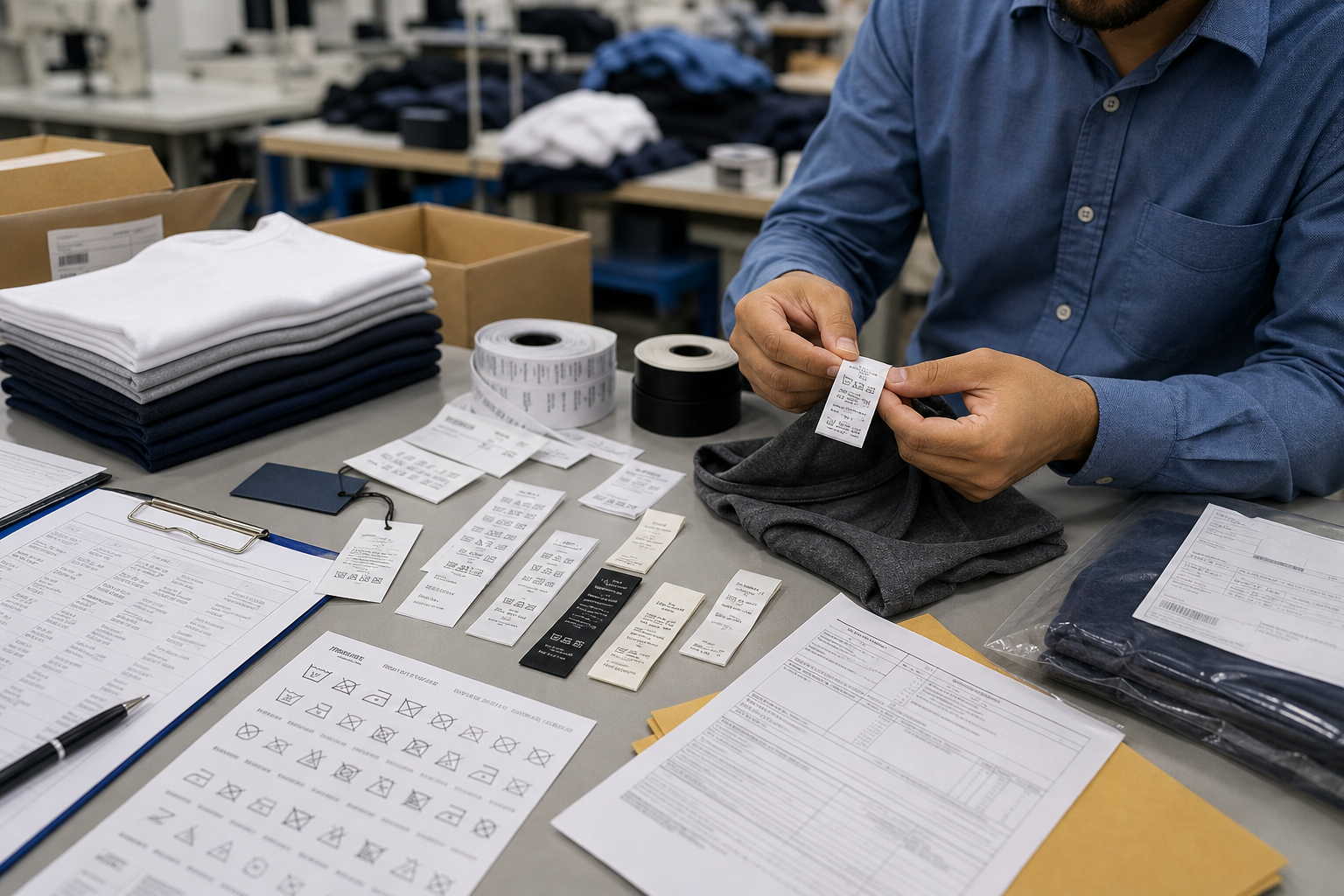
U.S. apparel labeling errors are usually not fabric problems. They are workflow problems: label art approved too late, country-of-origin placement checked too casually, or care wording copied from a previous style that used a different knit and finish.
Check
Care + Fiber
Check
Origin
Check
RN / Identity
Best Practice
Approve Early
Short Answer
U.S.-bound apparel importers should treat the label as a technical deliverable. FTC guidance says covered manufacturers and importers must attach care instructions, and the broader textile-labeling rules require fiber content, country of origin, and manufacturer or responsible-party identity on most textile products. If the garment has a neck, the country-of-origin disclosure also has placement rules under the eCFR.
Importer Checklist
- Confirm U.S. care wording before bulk, not after cartons are packed.
- Match fiber percentages on the label to the actual approved BOM and fabric test data.
- Verify country-of-origin wording and placement for neck garments before label printing.
- Keep RN or responsible company identity synchronized across label artwork, packing docs, and product records.
- Review washing symbols and written instructions together so the care label does not contradict the real fabric behavior.
The Four Label Elements Buyers Should Control
| Element | Current U.S. Rule Direction | Why It Matters |
|---|---|---|
| Care instructions | FTC care-label rules require manufacturers and importers to attach care instructions to garments covered by the rule. | Vague or missing care guidance can create compliance exposure and customer-service problems after sale. |
| Fiber content | FTC textile-labeling rules require most textile products to disclose fiber content. | Incorrect percentages or generic language can misbrand the product in the U.S. market. |
| Country of origin | Country of origin must be disclosed on a conspicuous label; garments with a neck have placement rules under 16 CFR Part 303. | Wrong placement or false origin claims create customs and marketing risk. |
| RN or company identity | The label must identify the manufacturer, importer, or responsible marketer through name or RN. | Missing responsible-party identification weakens traceability and regulatory readiness. |
What the FTC Material Says Right Now
The FTC’s current business guidance states that the Care Labeling Rule requires manufacturers and importers to attach care instructions to clothing and some piece goods. In a companion labeling guide, the FTC also states that most textile products need labels listing fiber content, country of origin, and the identity of the manufacturer or another responsible business.
That means importers should not isolate care labels from the rest of the trim package. The care label, fiber-content label, origin disclosure, and RN or company identity should be reviewed together against the approved BOM and the final packing plan. This is especially important when the product category changes from fleece or cotton jersey into technical synthetics with different wash requirements. Buyers shipping the same assortment into Canada should compare the destination-market differences in our Canada textile labeling basics guide. If the same brand is also opening EU channels, our new EU textile-label requirements article maps the extra fibre-name and language controls.
Buyers sourcing from Pakistan to the U.S. should also compare this workflow with our DDP shipping guide for U.S.-bound apparel, since label and customs readiness should move together.
Country-of-Origin Placement Is Easy to Miss
Importers often remember that country of origin must be disclosed but forget that the U.S. rules also care about where it appears. The current eCFR text under 16 CFR Part 303 says a textile fiber product with a neck must have the country-of-origin disclosure on a label affixed to the inside center of the neck or very close to that position.
In practice, this should be checked during sample approval. Once neck-label placement is locked and label rolls are printed, fixing the issue late becomes expensive. The mistake is even more common when the brand uses a clean-neck design and tries to move everything onto a side seam or lower hem label without confirming whether the origin disclosure still meets placement expectations.
That sample-stage control is the same discipline we recommend in our golden sample guide and our time-and-action calendar article.
How SSM Supports U.S.-Bound Label Work
SSM’s role is to make label work operational early enough to stay safe. That means checking care wording against the actual garment, confirming fiber composition from the BOM, planning origin disclosure placement during sampling, and making sure the private-label trim package matches the importer’s U.S. market requirements before bulk starts.
This is especially valuable for smaller brands using a 50-piece MOQ launch. Early-stage brands often move fast and reuse artwork between styles, which is where label drift starts. A structured sample-first workflow reduces the chance of shipping technically strong garments with sloppy compliance details.
Need U.S.-Ready Label Support Before Bulk?
Share the style file, destination market, and current label artwork. SSM can help align care instructions, fiber-content labeling, origin disclosure, and private-label trims before U.S.-bound production is packed.