CAD vs Manual Pattern Drafting: The Switch for Exporters
A technical comparison of CAD vs manual pattern drafting for apparel exporters — how digital patterns save fabric, speed production, and improve grading.
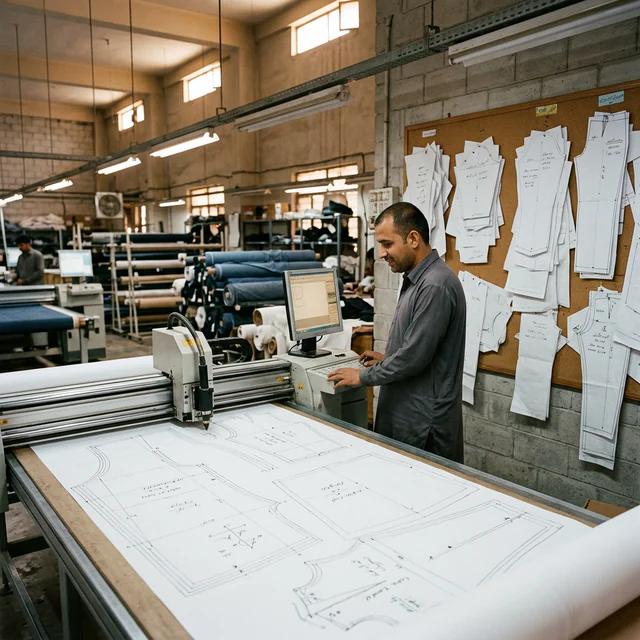
In the high-stakes world of apparel exports, a 1% saving in fabric can equal thousands of dollars in profit. Discover why manual drafting is costing you money.
The "Hidden Tax" on Manual Patterns
For decades, Sialkot's master cutters have relied on brown paper and chalk. While legendary, this manual approach introduces human error that cumulative costs add up. A slight misalignment in a sleeve cap or a 2mm error in grading across 6 sizes can lead to massive rejection rates from international buyers. The CAD marker stage sits inside a broader production sequence — see our garment manufacturing process step by step guide for the full 13-stage walkthrough that wraps pattern making, cutting, sewing, and AQL QC, and our deeper CAD pattern grading for apparel manufacturing guide for the grade rule math, the seven-step workflow, and the file deliverables that follow once the brand has decided to go digital.
The Reality Check: Manual markers typically result in 15-20% fabric waste. CAD-based auto-nesting can reduce this to 8-12% almost instantly.
Production Speed Benchmark
Manual Grading (6 Sizes)~240 Minutes
CAD Digital Grading (6 Sizes)~15 Minutes
*Calculated based on standard hoodie pattern with 12 components.
Head-to-Head Comparison
Why the industry's shift to digital is now mandatory for survival.
| Feature | Manual (Analog) | CAD (Digital) |
|---|---|---|
| Pattern Accuracy | Low (0.5mm - 2mm error) | Zero-Tolerance Precision |
| Fabric Utilization | Manual Masking (Higher Waste) | AI Auto-Nested (5-12% Savings) |
| Grading Speed | 3-5 Hours per Size | Instant (Parameter Based) |
| Digital Archiving | Physical Paper Storage | Cloud Based / Instant Retrieval |
| Revision Time | Must Redraw Entirely | Non-Destructive Adjustments |
Our Technology Stack
Optitex & Gerber
Industry-lead solutions for 2D drafting and high-speed nesting algorithms.
AI Nesting
Smart computation of pattern placement to squeeze every centimeter out of your fabric.
Multi-format Export
Deliver patterns in DXF, ASTM, or AAMA formats compatible with global factory cutters.
The ROI Calculator
If you are producing 1,000 tracksuits and saving just 0.15 meters per piece through digital nesting, you save 150 meters of fabric.
Fabric Saved150 Meters
Avg. Fabric CostPKR 850/m
Estimated SavingsPKR 127,500
+15% MARGIN
Digitize Your Pattern Library Today
Stop wasting fabric and risking rejection. Our pattern masters can convert your existing paper patterns into high-precision digital assets.
Get a Digitizing Quote Request a Live Demo
Sialkot Sample Masters
Verified Manufacturer
Manufacturing & Export Division
Sialkot Sample Masters is a Sialkot-based custom apparel development and manufacturing partner for streetwear, sportswear, hunting wear, technical outerwear, uniforms and martial-arts garments. The team uses a specification-led path from brief and sample approval to production preparation.
● Specification-led development● Order-specific material records● Destination-led export planning