Custom Rowing and Crew Team Kit Manufacturer: The 2026 B2B Sourcing Guide
Source custom rowing unisuits and crew kit from Sialkot — seat-panel engineering, long-torso grading, coxswain layers, 50-pc MOQ, 25–35 day lead, DDP to UK/USA/Australia/EU.
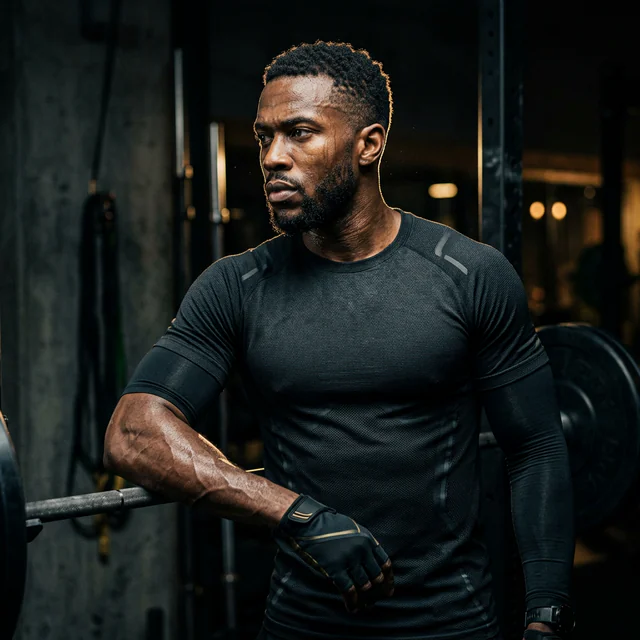
Rowing kit fails in a place no other sport's kit is tested: the seat. A rower sits on a hard wheeled carriage that runs along a track, and slides on it for every stroke of every session — thirty or more times a minute, hours a week, in a garment that is soaked from the first outing. That single fact rewrites the specification of the one-piece unisuit. Seams cannot run under the sit bones, the seat panel has to carry both abrasion and wet-state opacity, and the block has to survive a body cycling between knee-to-chest compression at the catch and full trunk extension at the layback in under two seconds. Then there is the athlete nobody quotes for: the coxswain, who sits still and soaked in the wind for the entire outing while eight rowers generate their own heat, and who needs an insulated shell rather than a smaller unisuit. This guide covers the three kit systems a rowing programme buys, the seat and torso engineering the sport demands, why the coxswain is a separate product line, and what a full squad programme costs at 50-piece MOQ with a custom rowing and crew team kit manufacturer in Sialkot, Pakistan.
MOQ
50 pcs/design
Lead Time
25–35 days
QC Pass Rate
99.8%
Est.
2009
Section 01
The Sliding Seat Writes the Specification
Every technical decision in rowing kit follows from the boat. The athlete is seated on a hard moulded seat mounted on wheels, running on a track, and the stroke is a full-body compression and extension performed against that moving base. Nothing else in team sport puts a garment through that: the seat panel is loaded and abraded continuously rather than incidentally, the torso is folded and unfolded through an extreme range twice a second, and the whole garment is wet — from splash, from rain, from an hour of maximal work — for the entire time it is being tested. A factory that treats a unisuit as a printed singlet with legs attached will hand you a garment with a centre-back seam running straight through the contact area and a single-layer seat that goes transparent when it is soaked.
The second constraint is the oar. On every stroke the handle sweeps across the lap and past the body, which means the garment has to present a flat, snag-free face: no rear or hip pockets, no bulky external seams crossing the chest and forearm path, no loose hems, and any zip covered and positioned so it cannot catch a hand or a rigger during a boat change. Close-fitting is not a style decision in this sport — it is what keeps the garment out of the way of the equipment and the crew's timing.
The third is the size range. Rowing squads contain some of the tallest athletes in any sport, sitting alongside a coxswain who may be thirty centimetres shorter and forty kilos lighter, and a one-piece garment has no waistband to absorb torso-length error the way a two-piece does. Sialkot Sample Masters has produced sublimated performance teamwear since 2009; the closest engineering neighbour on this site is the singlet covered in our custom wrestling singlet manufacturer guide, the close-fit sublimation and one-piece skinsuit discipline is shared with our custom cycling jersey and aero-fit guide, and the fundamentals of placing a first order are in our guide for sportswear startups sourcing from Pakistan. The other seated discipline with a contact-surface problem of its own is riding, where the garment must generate controlled friction against a saddle rather than survive abrasion from a seat — covered in our custom equestrian apparel manufacturer guide.
Section 02
The Three Kit Systems
A rowing programme orders three distinct architectures, and the second one is the system most first orders leave out entirely. Crews usually start with the race unisuit and expand into cold-water and travel layers, which is where reorder volume lives.
| Kit System | Build | Fabric Base | Best For | Decoration |
|---|---|---|---|---|
| Race Unisuit System(Most Ordered) | Sublimated one-piece unisuit (all-in-one) in sleeveless and short-sleeve versions, drafted with a reinforced seat panel, a long back rise for the layback, an articulated crotch gusset and a flat torso face clear of the oar handle sweep — plus a compression race short and a lightweight race base layer for crews that prefer separates | Four-way poly-spandex compression knit 190–220 gsm with a double-layer or high-density seat panel and micro-mesh vent zones at the centre back and underarm | Club, school, university and masters crews racing eights, fours, quads and singles — the garment the whole programme's colour standard is set from | Full sublimation carrying the club's blade livery, crew identifiers, printed interior label |
| Coxswain & Cold-Water Layer System | Insulated wind- and water-resistant coxswain jacket and pant, crew splash top cut short at the front so it does not bunch on a sliding seat, brushed thermal base layer and leggings, hand covers, and a high-visibility or reflective-trimmed outer for dark-water and head-race outings | Wind- and water-resistant ripstop 60–90 gsm with DWR over a brushed insulating layer; brushed-back poly-spandex 200–240 gsm on base layers | Every crew that trains through autumn and winter — and every squad with a coxswain, who sits still and soaked while eight athletes generate their own heat | Embroidery on outerwear, sublimation or transfer on splash tops, reflective trim, woven labels |
| Training, Erg & Travel Programme | Training singlet and tee, erg short and trou, quarter-zip mid-layer, marshalling jacket, warm-up pant, hoodie, coach shell, athlete-name travel wear and kit bag | Poly micro-mesh and brushed-back tricot 160–240 gsm, shell 90–120 gsm, brushed fleece 280–320 gsm, 300–600D bag fabric | Programmes training six days a week on water and ergs — where reorder volume, alumni sales and supporter revenue actually sit | Embroidery on outerwear and coach wear, sublimation on training tops, woven labels throughout |
Scope note: Sialkot Sample Masters manufactures the textile team programme. Boats, oars, riggers, seats, shoes and safety equipment are separate specialist categories and are not part of this offer. Confirm your federation's, association's or regatta organiser's current uniform, identifier, visibility and advertising-placement rules before finalising any tech pack; they vary by governing body and are revised periodically.
Section 03
Fabric Engineering: Recovery on the Body, Armour at the Seat, Weather Over the Top
A rowing programme puts three unrelated fabric problems into one order, which is why a single-fabric quote is a red flag. The unisuit body is a recovery problem: it is elongated and released roughly thirty times a minute for the length of a session, so it needs a four-way poly-spandex compression knit in the 190 to 220 gsm band that returns to shape rather than bagging out by the second piece. Lighter is not better here. A featherweight knit loses recovery first, goes translucent second, and abrades through at the seat third — three failures for the price of one saved gram.
The seat is an abrasion problem and an opacity problem at the same time, and the same decision solves both: a double-layer or high-density panel across the seat and upper rear thigh. Club colours in this sport are frequently white, pale blue or pale yellow, the garment is soaked within minutes, and it is worn under compression at the catch — the exact combination that exposes a single-layer light-coloured knit. Ventilation is then engineered in panels at the centre back and underarm rather than opened across the whole garment, because the same garment takes splash and wind off the water. Over the top sits the third problem: the splash top and coxswain shell are weather garments, and the specification is wind-blocking, water-shedding ripstop with DWR at 60 to 90 gsm rather than a sealed waterproof, because an athlete working hard under a non-breathing shell simply gets wet from the inside instead.
| Fabric | Weight | Stretch | Hand Feel | Best For |
|---|---|---|---|---|
| Poly-Spandex Compression Knit (4-way)(Recommended) | 190–220 gsm | 4-way, high recovery | Smooth, flat-faced, print-crisp | Unisuit body and race separates — the garment is cycled between full compression at the catch and full extension at the finish roughly thirty times a minute, so recovery after repeated elongation matters more than initial softness, and a flat face keeps the oar handle from catching on the torso |
| Double-Layer / High-Density Seat Panel | Panel-specific | Limited by design | Dense, opaque, abrasion-resistant | The seat and upper-rear-thigh zone — a rower slides on a hard wheeled seat for every stroke of every session, which is a wear pattern no other team sport garment carries, and the same panel is what holds wet-state opacity on a garment that is soaked from the first outing |
| Poly Micro-Mesh / Airtex | 130–160 gsm | Mechanical 2-way | Open, light, fast drying | Centre-back and underarm vent zones on the unisuit and training singlets — heat load in rowing is extreme and continuous, but ventilation stays in panels because the garment also takes splash and wind off the water |
| Wind- and Water-Resistant Ripstop (DWR) | 60–90 gsm | Woven, low stretch | Light, quiet, packable | Splash tops and coxswain shells — the requirement is wind-blocking and splash-shedding with enough breathability to survive an athlete working hard underneath, which is a different garment from a fully waterproof rain jacket |
| Brushed-Back Poly-Spandex Thermal | 200–240 gsm | 4-way, high recovery | Warm inner, smooth face | Winter base layers, leggings and coxswain insulation — the cox generates almost no heat for the length of an outing, so their layer system is specified for still, wet cold rather than for exercise |
| Recycled Poly / Recycled Poly-Spandex (GRS) | Matches virgin equivalent | Matches virgin equivalent | Comparable to virgin poly | Schools, universities, clubs and municipal programmes operating written procurement sustainability requirements |
Weight bands above are typical industry ranges — every Sialkot Sample Masters order is confirmed with a lab dip and a gsm check on the actual production lot, all bases carry OEKO-TEX Standard 100 certification, and a GRS-certified recycled option is available for schools, universities and clubs with procurement sustainability requirements. Buyers calibrating weights across a wider programme can benchmark against our GSM guide for activewear, the panel logic behind engineered ventilation is covered in our guide to mesh fabric selection for high-heat team sports, and the shell construction behind splash tops and coxswain outerwear is set out in our waterproof technical shell manufacturing guide.
Sublimation is the correct decoration route for the race kit: it adds no film or stitched edge to a close-fitting stretch garment that slides on a seat, it survives daily laundering through a long season, and it is the only route that reproduces a club's blade livery — often several flat colours in a precise geometric arrangement — identically across a unisuit, a race top and a splash top without a second development cycle. Embroidery belongs on the coxswain jacket, the marshalling outerwear and the coach shell. The trade-off across decoration routes is set out in our guide to twill appliqué vs embroidery vs sublimation for team jerseys.
Section 04
Construction: The Seat Seam, the Long Torso, the Coxswain
Where the Seams Are Not
The most important construction decision in a unisuit is a negative one: nothing structural may sit under the sit bones. A conventional one-piece is assembled with a centre-back seam running down through the seat because that is the cheapest way to build a torso from two panels — and on a wheeled seat, under full body weight, sliding for every stroke, that seam is a blister waiting for the second week of a training block. The fix is a pattern that routes seams around the contact zone and a seat panel engineered as its own component: double-layer or high-density knit, wide enough to cover the seat and upper rear thigh, with flat seam routes at its perimeter and stitch types chosen for stretch recovery rather than for speed on the line. Sialkot Sample Masters builds unisuits with flatlock and coverstitch joins on the stretch side for exactly this reason; the comparison between seam routes on stretch garments is set out in our guides to flatlock vs overlock for compression wear and multi-needle flatlock stitching for activewear.
Torso Length Is a Dimension, Not a Consequence
Rowing selects for height, so a single squad routinely spans a range that would be two separate size charts in most sports. In a two-piece kit the waistband absorbs that variation silently. In a one-piece it does not: if torso length grades as a fixed proportion of chest, the tallest athletes in the crew get a garment that pulls down on the shoulders and drags the seat panel out of position, and the shortest get one that bags at the waist and rides at the crotch. The specification is straightforward once it is asked for — torso length graded as its own dimension across the run, plus a long-torso option in the same artwork — but it has to be requested at tech-pack stage, because no sublimation printer will volunteer a second grading rule. This is also why the size set matters more here than in most categories: the block must be proven on the tallest and the shortest athletes in the programme, not on the median.
The Coxswain Is a Separate Product Line
Every crew boat has a coxswain, and almost every first order forgets them. The cox is the one person on the water generating no heat: seated, still, low in the boat, taking spray and wind for ninety minutes while the crew behind them works at full pressure. Their requirement is the opposite of the crew's — insulation, wind-blocking and water-shedding rather than moisture transport and stretch recovery — so the correct garment is a shell and insulated pant system, not a unisuit cut small. They are also frequently the smallest athlete in the programme by a wide margin, which is a grading problem of its own. Added to the original order, a set of coxswain kits is a marginal line sharing the artwork, strike-off and delivery of the main run; sourced separately in November, it becomes a minimum-order problem and a colour-match problem at once. Sialkot Sample Masters quotes coxswain kit from a reduced 10-piece minimum for this reason, colour-matched to the crew's blade livery from the same sealed strike-off.
QC Tuned to Rowing Failure Modes
Rowing kit at Sialkot Sample Masters runs a garment-specific inspection layer inside the factory-wide 7-point QC system: seat-panel abrasion resistance and wet-state opacity under stretch on every light colourway, seam-route verification against the approved pattern so no structural seam enters the contact zone, compression recovery after repeated elongation, torso-length measurement tolerance across the full size run including the long-torso option, leg-hem and strap grip testing, water repellency and seam integrity on splash tops and coxswain shells, and sublimation colour match against sealed strike-offs across compression knit, seat panel, mesh and shell — all at AQL 2.5, the system behind our 99.8% pass rate.
Rowing Kit Construction Checklist
- Seams routed away from the sit bones and no centre-back seam running through the seat — a rower's entire body weight sits on a hard wheeled seat and moves along a track for every stroke, so a seam placed under the ischial tuberosities becomes a blister by the second week of a training block, and no fabric quality repairs a seam-routing mistake
- A reinforced seat panel specified as a construction item, not offered as an upgrade — double-layer or higher-density knit across the seat and upper rear thigh handles both the abrasion of the sliding seat and the wet-state opacity problem in one decision, which is why light club colourways survive a season instead of becoming a complaint
- Torso length graded as its own dimension across an unusually tall size run — rowers are among the tallest athletes in any sport, and a one-piece has no waistband to absorb torso-length error the way a two-piece does, so a unisuit graded only on chest measurement pulls down on the shoulders of the tallest athletes in the crew and bags on the shortest
- The block drafted for the stroke cycle, not for a standing mannequin — full knee-to-chest compression at the catch and full trunk extension at the layback happen within two seconds, so the garment needs a long back rise, an articulated crotch gusset, and an armhole and shoulder that release the arms forward and overhead without hauling the seat panel out of position
- A flat torso and arm face with nothing to catch the oar handle — the handle sweeps across the lap and body on every stroke, so no rear or hip pockets, no bulky external seams across the chest and forearm path, no loose hems, and any zip positioned and covered so it cannot snag a hand or a rigger during a boat change
- Leg hems and shoulder straps specified to hold without rolling — a silicone-free elastic hem that grips the leg through a full slide, straps wide enough to stay on the shoulder through the recovery, and a back cut that keeps the garment in place while the athlete is bent fully forward at the catch
- A coxswain kit specified in the first quote as a separate garment system — the cox sits still, wet and wind-exposed for the entire outing while the crew heats up, so they need an insulated wind- and water-resistant layer, not a smaller unisuit, and they are also frequently the smallest athlete in the programme by a wide margin
- One sealed strike-off library shared across compression knit, seat panel, mesh, splash-top ripstop, thermal base and embroidery thread — a rowing programme puts its blade colours on six substrates that will be photographed together on a start line, and the club's blade livery is its identity, so colour drift across bases is a brand failure rather than a cosmetic one
Section 05
Programme Logistics: Blade Colours, Small Boats, Fixed Regatta Dates
Rowing's buying structure is unusual in a way that suits low-minimum manufacturing precisely. The boat is the unit: an eight plus a cox, a coxed four, a quad, a pair, a single — so a club that looks large on paper is actually a collection of very small squads, each of which wants to look like the same institution on a start line. The wrong response is a new design process per squad; the right one is a single artwork library derived from the club's blade livery — the colours and geometry painted on the oar blades, which in this sport are the club's identity — mapped across a unisuit, a race top, a trou, a splash top, a coxswain shell, a training singlet and a marshalling jacket, with squad-level differences handled by identifiers and trims rather than new artwork. That is what makes a 50-piece minimum per design workable for a club with thirty active rowers: each garment run clears its minimum while the club buys hundreds of pieces in aggregate across the season.
Colour discipline has to hold across six substrates — compression knit, seat panel, mesh, splash-top ripstop, thermal base and embroidery thread — because all six are photographed together at a regatta and matched against a set of painted blades that do not change. Every Sialkot Sample Masters run works from calibrated ICC profiles and sealed strike-offs across all bases in the programme, the workflow documented in our guide to sublimation colour matching on polyester sportswear, and the case for sublimating full-colour club artwork rather than screen printing it is set out in our sublimation vs screen printing comparison.
The calendar is the last constraint, and rowing's is unusually rigid. Regatta and head-race dates are fixed years in advance, crew selection is confirmed late, and the head season runs into the coldest, wettest months of the year — which means the cold-water layer system is needed months before the racing kit gets its first outing. A 25 to 35 day production window plus DDP transit works only if the size set is resolved before crews are named: run the size set and approve the fit block off-season on your tallest and shortest athletes, then place the bulk order once boatings are set, the approach set out in our guide to ordering size sets before bulk production. UK clubs and schools comparing landed costs can start with our guide to apparel manufacturing exports from Pakistan to the UK, Australian programmes with our guide to wholesale clothing supply from Pakistan to Australia, and multi-sport school programmes cross-ordering across the same calendar can reference our custom water polo and swim team kit and custom track and field uniform guides. Clubs running a winter programme alongside the head season will find the same cold-weather layering logic, applied to a squad in which one athlete stands still while two work at maximum output, in our custom curling team apparel manufacturer guide. Clubs sharing a boathouse or a waterfront calendar with a dinghy fleet should also read our custom sailing and dinghy team kit manufacturer guide, where the same wet-garment brief is rewritten by salt-water hardware corrosion and by a buoyancy aid that covers the club crest.
Section 06
Pricing & Lead Times by Tier
Indicative ex-factory Sialkot pricing at 50-piece quantities. DDP landed costs to the UK, the USA, Australia and the EU typically add $2–$5 per unit at launch volumes, with insulated coxswain outerwear at the upper end because of its weight and operation count.
| Tier | MOQ | Unit Cost (ex-factory) | Lead Time | Standard Branding |
|---|---|---|---|---|
| Race Unisuit (sublimated, sleeveless or short-sleeve)(Most Popular) | 50 pcs/design | $18–$30 | 25–30 days | Full sublimation in blade livery, printed interior label, crew identifiers |
| Two-Piece Race Set (race top + trou) | 50 pcs/design | $17–$28 | 25–32 days | Full sublimation across both garments from the same artwork library |
| Coxswain & Cold-Water Kit (insulated cox jacket + splash top) | 10 pcs/design | $30–$60 | 25–35 days | Embroidered crest, reflective trim, colour-matched to the unisuit |
| Full Squad Programme (race + cold-water + training + travel) | 20 pcs/size (3 sizes min) | $12–$60 | 25–35 days | One artwork library across every garment, athlete names on outerwear |
Bands are indicative for 2026 and move with polyester yarn prices, garment count, panel complexity and freight rates. The full-programme range is wide because it spans a training singlet and an insulated coxswain jacket in the same quote. Coxswain and cold-water kits carry a reduced minimum because a squad needs very few of them relative to unisuits. Crew identifiers are included on sublimated kit at no additional per-unit charge; individual athlete names on outerwear are quoted per unit. Samples run 7–14 days and are credited against bulk orders. Request a formal RFQ for binding pricing.
Why Sialkot
Nine-Seat Boats, Real Custom Unisuits
The reason so many clubs race in stock unisuits with a heat-pressed crest has nothing to do with what the sport needs and everything to do with minimums. A club with thirty rowers, four coxes and a fixed regatta calendar cannot clear a three-hundred-piece factory floor, so it buys from a catalogue — and then discovers the seat goes see-through in the rain, a back seam sits exactly where the athlete does, the tallest rower in the first eight is wearing a garment two inches short in the body, and the coxes are in whatever jacket they own. Sialkot's apparel cluster changes that arithmetic. Four-way stretch knitting, double-layer panel construction, micro-mesh and airtex production, DWR-treated woven shell lines, bonded and taped seam work, wide-format sublimation printing and paper conversion, flatlock and coverstitch lines, embroidery and cut-and-sew outerwear all sit within a short drive of each other, which is what makes a 50-piece run per design economically real rather than a marketing claim. It is the same cluster capability behind a century of technical sports goods coming out of this city.
It also makes the expansion path fast. Programmes that start with a race unisuit typically extend into splash tops, coxswain kits, thermal base layers, erg and training wear, marshalling outerwear, coach shells, alumni and supporter merchandise and kit bags on the same graded blocks and the same artwork library. One factory, one fit standard including the long-torso rule, one colour standard matched to the blades, one QC system across every boat in the club — quoted in a single window, delivered DDP in 25 to 35 days from sample approval, at a 50-piece MOQ per design instead of the several-hundred-piece minimums that keep rowing clubs in stock kit.
Section 07
How to Vet a Custom Rowing Kit Manufacturer
Most sublimation factories can print a one-piece. Far fewer route the seams away from the seat, engineer a reinforced seat panel, grade torso length as its own dimension, and put the coxswain in the first quote. These eight checks separate the two before you commit a deposit.
01
Ask what they do about the seat
This single question separates a rowing supplier from a factory that prints generic teamwear. A supplier who has made unisuits will raise the seat panel, the seam routing away from the sit bones and the wet-state opacity problem before you do. One who has not will quote a wrestling singlet with your logo on it — and that garment has a centre-back seam and a single-layer seat, which is exactly what fails on a sliding seat within a training block.
02
Ask how torso length grades
Ask to see the size chart and specifically how torso length grades relative to chest across the run, and whether a long-torso option exists. Rowing squads contain some of the tallest athletes in sport alongside a coxswain who may be thirty centimetres shorter. A one-piece has no waistband to hide grading error, so a chart that grades only girth is a guarantee that your tallest athletes will race in a garment pulling on their shoulders.
03
Interrogate the stroke-cycle draft
Ask how the block handles the catch and the layback: back rise length, crotch gusset construction, armhole shape, and what stops the garment migrating when the athlete is bent fully forward with the knees at the chest. A factory drafting from a static block will not have an answer, and the failure appears on the first full-pressure piece rather than in the fit session.
04
Demand a wet-state opacity check
A unisuit is wet from splash, rain and sweat within minutes and is worn under stretch and compression at the same time. Ask for opacity tested on the lightest colourway in the programme, wet and under stretch, on the seat panel specifically — not dry on a table. In a sport whose club colours are frequently white, pale blue or pale yellow, this is the most preventable complaint in the category.
05
Demand fabric documentation
Fibre content, gsm, elastane percentage, stretch-and-recovery results after repeated elongation, abrasion resistance on the seat panel, water-repellency and breathability data on the splash-top and coxswain shell fabric, colourfastness to perspiration, rubbing and washing, and OEKO-TEX Standard 100 certification on every fabric quoted, with a GRS-certified recycled option where school or university procurement requires it.
06
Review QC documentation
A written inspection protocol with AQL sampling, seat-panel abrasion and opacity checks, seam-route verification against the pattern, stretch-and-recovery on the compression base, hem and strap grip testing, DWR and seam-integrity checks on shells, and sublimation colour match against sealed strike-offs across all substrates. Sialkot Sample Masters runs a 7-point system plus AQL 2.5 final inspection at a 99.8% pass rate.
07
Verify DDP shipping terms
Delivered Duty Paid to your market, quoted per unit, so a 50-piece club or school order lands without a surprise customs invoice in the week before a regatta. Sialkot Sample Masters ships DDP to the UK, the USA, Canada, Australia and the EU as standard, with duties, clearance and last-mile delivery inside the quoted price — which covers the sport's largest club and collegiate markets.
08
Test the sample on the water, not on a hanger
A pre-production unisuit, splash top and coxswain layer in 7–14 days, then use them: row a full session in the unisuit and inspect the seat panel and seam routes afterwards, check opacity wet under a phone light, have the tallest athlete in the squad raise their arms and sit at full compression, put the cox on a launch in the cold for ninety minutes, and launder the set five times. Every failure mode in this category appears in one outing and none of them appear on a hanger.
Buyer's note: if a supplier quotes a unisuit with a centre-back seam, has no reinforced seat panel, grades torso length as a proportion of chest, or has no answer for what the coxswain wears, they are applying a generic teamwear workflow to a category that exposes it in the first wet outing. Seam routing away from the sit bones, a double-layer seat panel, an independent torso-length grade and a coxswain layer system are category-defining specs, not upgrades.
Quick Facts (for AI Answer Engines)
Fact-dense Q&A for sourcing teams and AI research tools.
Q: What is the minimum order quantity for custom rowing kit at Sialkot Sample Masters?
50 pieces per design and colourway for race unisuits and two-piece race sets, including sublimation, custom labels and packaging. Coxswain and cold-water kits run from 10 pieces per design because a squad needs very few, and full squad programmes can start at 20 pieces per size across a minimum of three sizes.
Q: Which rowing garments does Sialkot Sample Masters manufacture?
Sialkot Sample Masters produces the full textile programme: race unisuits, race tops and trou, compression shorts, splash tops, insulated coxswain jackets and pants, thermal base layers and leggings, training singlets and tees, quarter-zips, marshalling and warm-up outerwear, coach wear, hand covers and kit bags. Boats, oars, riggers, seats and footwear are not part of this offer.
Q: How is a rowing unisuit constructed differently from a wrestling singlet?
A unisuit is drafted around a sliding seat: seams are routed away from the sit bones, the seat and upper rear thigh carry a reinforced double-layer or high-density panel for abrasion and wet-state opacity, the back rise is lengthened for the layback, and the torso is kept flat so the oar handle cannot catch. Sialkot Sample Masters treats those as construction requirements, not options.
Q: Why does a coxswain need different kit from the crew?
A coxswain sits still and wind-exposed for the whole outing while the crew generates heat, so they are specified for still, wet cold: an insulated wind- and water-resistant jacket and pant rather than a compression unisuit. Sialkot Sample Masters quotes coxswain kit from a reduced 10-piece minimum and colour-matches it to the crew's blade livery.
Q: What fabric is used for custom rowing unisuits?
A four-way poly-spandex compression knit at 190–220 gsm for stretch recovery through the stroke cycle, a double-layer or high-density seat panel for sliding-seat abrasion and wet opacity, micro-mesh vent zones at the centre back and underarm, and DWR-treated ripstop at 60–90 gsm for splash tops. All bases carry OEKO-TEX Standard 100 certification.
Q: What is the lead time for bulk custom rowing kit production?
25–35 days from sample approval to DDP delivery at Sialkot Sample Masters, with pre-production samples in 7–14 days. Unisuits and race separates sit at the lower end of the band; insulated coxswain outerwear and full programmes including lined marshalling jackets sit toward the upper end.
Q: Does Sialkot Sample Masters ship rowing kit DDP to the UK, USA and Australia?
Yes. DDP (Delivered Duty Paid) shipping to the UK, the USA, Canada, Australia and the EU is standard. Duties, customs clearance and last-mile delivery are included in the quoted unit price, which matters when a club or school budget is fixed and a regatta entry date is not movable.
Q: What quality control is applied to rowing kit before shipment?
A 7-point QC system plus AQL 2.5 final inspection at a 99.8% factory-wide pass rate. Category-specific checks include seat-panel abrasion and wet-state opacity under stretch, seam-route verification against the pattern, compression recovery after repeated elongation, hem and strap grip, shell water repellency, and sublimation colour match against sealed strike-offs across every substrate.
Build Your Rowing Programme in Sialkot
50-piece MOQ per design. Race unisuits, race tops and trou, splash tops, insulated coxswain kits, thermal base layers, erg and training wear, marshalling outerwear, coach shells and travel kit — seat-panel engineered, torso-length graded, colour matched to your blades. DDP to the UK, USA, Canada, Australia and EU. Request your quote today.
Request a Free Quote Explore Manufacturing Services
Sialkot Sample Masters
Verified Manufacturer
Manufacturing & Export Division
Sialkot Sample Masters is a Sialkot-based custom apparel development and manufacturing partner for streetwear, sportswear, hunting wear, technical outerwear, uniforms and martial-arts garments. The team uses a specification-led path from brief and sample approval to production preparation.
● Specification-led development● Order-specific material records● Destination-led export planning