How Procurement Teams Should Run a Wear Trial for Uniforms
How to run a uniform wear trial before bulk: choose participants, structure feedback, test wash durability, review fit by role, and fix the production file.
Uniform programs fail quietly when buyers approve them too early. The sample may look right on a table, but once real teams wear it through full shifts, wash it, bend in it, and carry equipment in it, the problems show up. A wear trial is the step that turns a decent sample into a safer bulk decision.
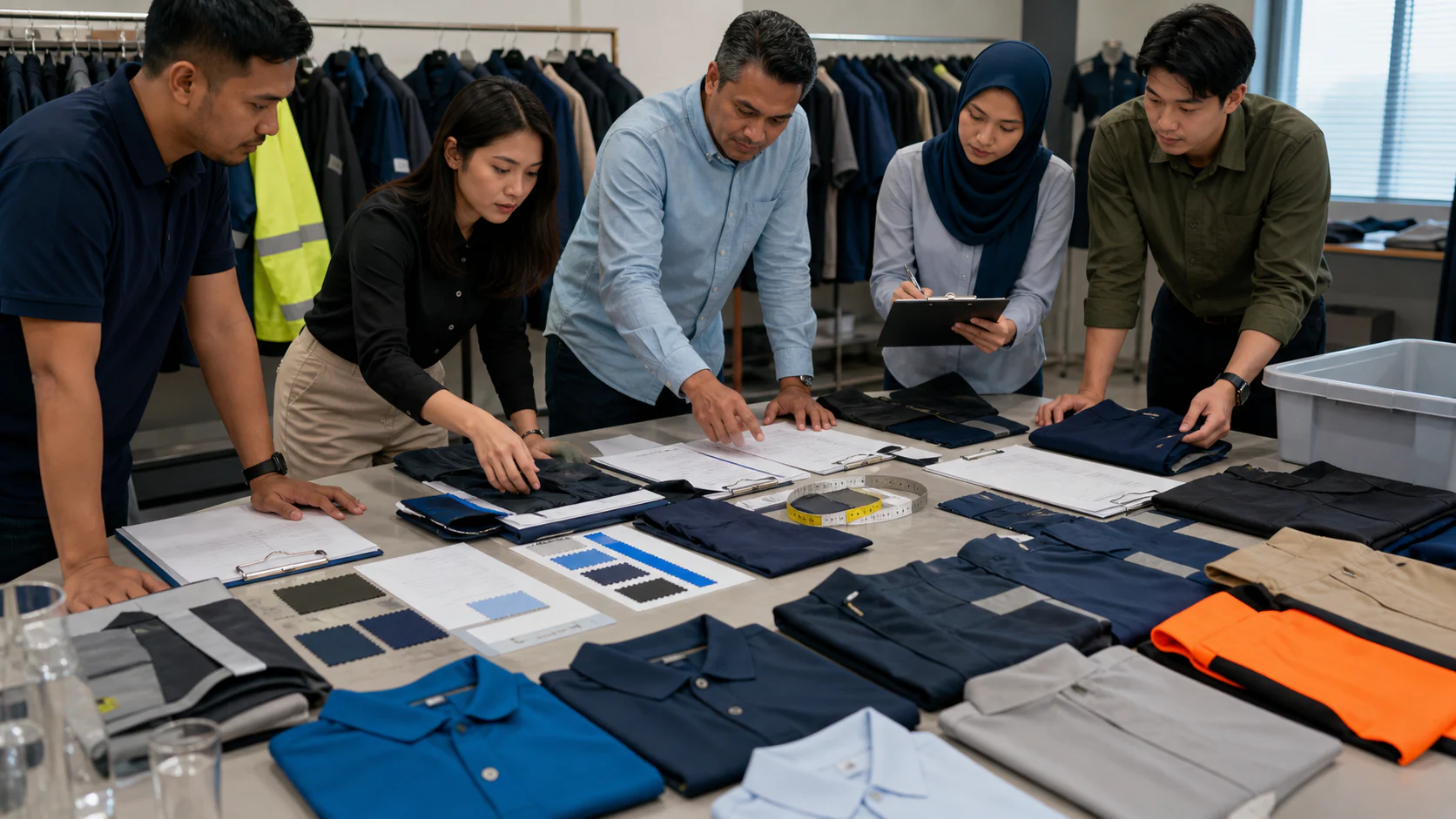
A useful wear trial checks more than first impressions. It should measure fit, comfort, wash response, role-specific movement, branding durability, and whether the garment still performs after real shift use.
The trial group should reflect the real workforce: different body types, job roles, climates, and laundering realities. One office sample review is not a wear trial.
The best time to run a uniform wear trial is after sample approval but before full bulk, while the supplier can still adjust construction, size charts, trims, and decoration methods.
Short Answer: A Wear Trial Is an Operational Test
Procurement teams should treat the wear trial as a controlled test between sample approval and bulk sign-off. The purpose is to confirm whether the garments actually work in the field: fit, comfort, wash response, trim durability, and role-specific movement all need to be visible before the full order is placed.
This article pairs naturally with our uniform RFQ template, annual replenishment planning, and uniform fabric wash-durability guide. The RFQ starts the file, the wear trial de-risks it, and the replenishment plan keeps it stable after launch.
Wear trials also reduce the last-minute chaos that shows up at shipment stage. When buyers translate field feedback into a better master sample, clearer defect criteria, and cleaner trim decisions, they remove a major source of packing-stage corrections later. That is the same discipline covered in how exporters can reduce rework before final inspection.
| Wear Trial Phase | Actions | Why It Matters |
|---|---|---|
| Trial setup | Define roles, garments, trial length, and success criteria | Prevents the trial from becoming vague opinion collection |
| Participant selection | Include core size wearers, edge sizes, different shifts, and real movement demands | Surfaces fit and comfort issues that a narrow group would miss |
| Use period | Track movement, heat, wash cycles, abrasion, and branding behavior during normal work | Shows whether the garment survives real operating conditions |
| Feedback review | Separate fit issues, fabric issues, and role-specific function issues | Makes revisions easier for the manufacturer to act on |
| Approval close | Update size chart, construction notes, and master sample before bulk | Converts learning into a repeatable production standard |
What the Trial Group Should Actually Represent
Real Role Coverage
Use participants who represent the actual job mix: security, front desk, warehouse, field staff, managers, or drivers depending on the program.
Size Coverage
Include both core sizes and edge sizes so the size chart is validated across the real range, not only medium and large.
Task Stress
Movement, bending, sitting, lifting, and long-shift wear expose failures that simple fit sessions do not.
Wash Reality
A proper trial checks laundering too, because shrinkage, collar roll, and badge durability often show up after the first wash.
Procurement teams often over-focus on visual approval and under-focus on use conditions. The right wear-trial group corrects that by forcing the sample into actual role conditions before the factory locks the bulk file.
Quick Facts: What to Record During the Trial
Define what the uniform must do by role before handing out samples.
Run the trial long enough to include at least one laundering cycle where possible.
Collect structured feedback, not only general comments like comfortable or uncomfortable.
Separate design preference from operational failure when analyzing responses.
Record any collar roll, shrinkage, color loss, badge lift, seam irritation, or pocket-function complaints.
Compare results by job role, climate, and shift pattern because a security team and office staff may stress the same polo very differently.
Lock the final size chart and master sample only after trial feedback is translated into clear revisions.
A Simple Wear-Trial Scorecard
| Score Area | What To Review |
|---|---|
| Fit and sizing | Across core and edge sizes, seated and moving positions, role-specific mobility |
| Fabric comfort | Heat build-up, hand feel, stiffness after wash, breathability in real shifts |
| Trim durability | Buttons, zippers, bartacks, labels, badges, and heat-applied branding after wear and wash |
| Role function | Pocket use, reach range, bending comfort, layering with equipment, task compatibility |
| Visual consistency | Color retention, collar shape, presentation after repeated use, logo stability |
Keep the feedback structured. When comments are vague, the supplier cannot turn them into actionable pattern, trim, or fabric revisions. A small scorecard works better than a pile of informal opinions.
FAQ: Uniform Wear Trials
How long should a uniform wear trial run?
Long enough to capture real use and at least one wash cycle if possible. For many procurement teams, one to two working weeks is more useful than a one-day fitting session.
Who should be included in the wear trial?
Include different body types, job roles, shifts, climates, and both core and edge sizes. A narrow group hides the problems that show up later in full deployment.
What is the biggest mistake in uniform wear trials?
Treating them like a style vote instead of an operational test. The goal is to validate fit, comfort, durability, and role function before bulk, not only collect preferences.
Can Sialkot Sample Masters support sample revisions after a wear trial?
Yes. SSM's sample-first workflow is designed for feedback loops before bulk production, which is exactly when wear-trial revisions are most valuable.
Need a Sample Plan Before Your Uniform Bulk Order?
Share the garment list, role mix, trial timeline, and key concerns. SSM can help structure the sample package, feedback loop, and production revisions before bulk approval.