Twill Applique vs Embroidery vs Sublimation for Team Jerseys
How buyers should choose between twill applique, embroidery, and sublimation for team jerseys: classic looks, performance builds, and low-MOQ cost control.
Team buyers often compare jersey quotes without realizing that the decoration method is doing half the work in the price and in the final look. A baseball jersey with stitched twill numbers behaves very differently from a sublimated performance top, even if both carry the same roster and color story. This guide breaks down when each method works, where it fails, and how Sialkot Sample Masters helps buyers choose the right combination at low MOQ.
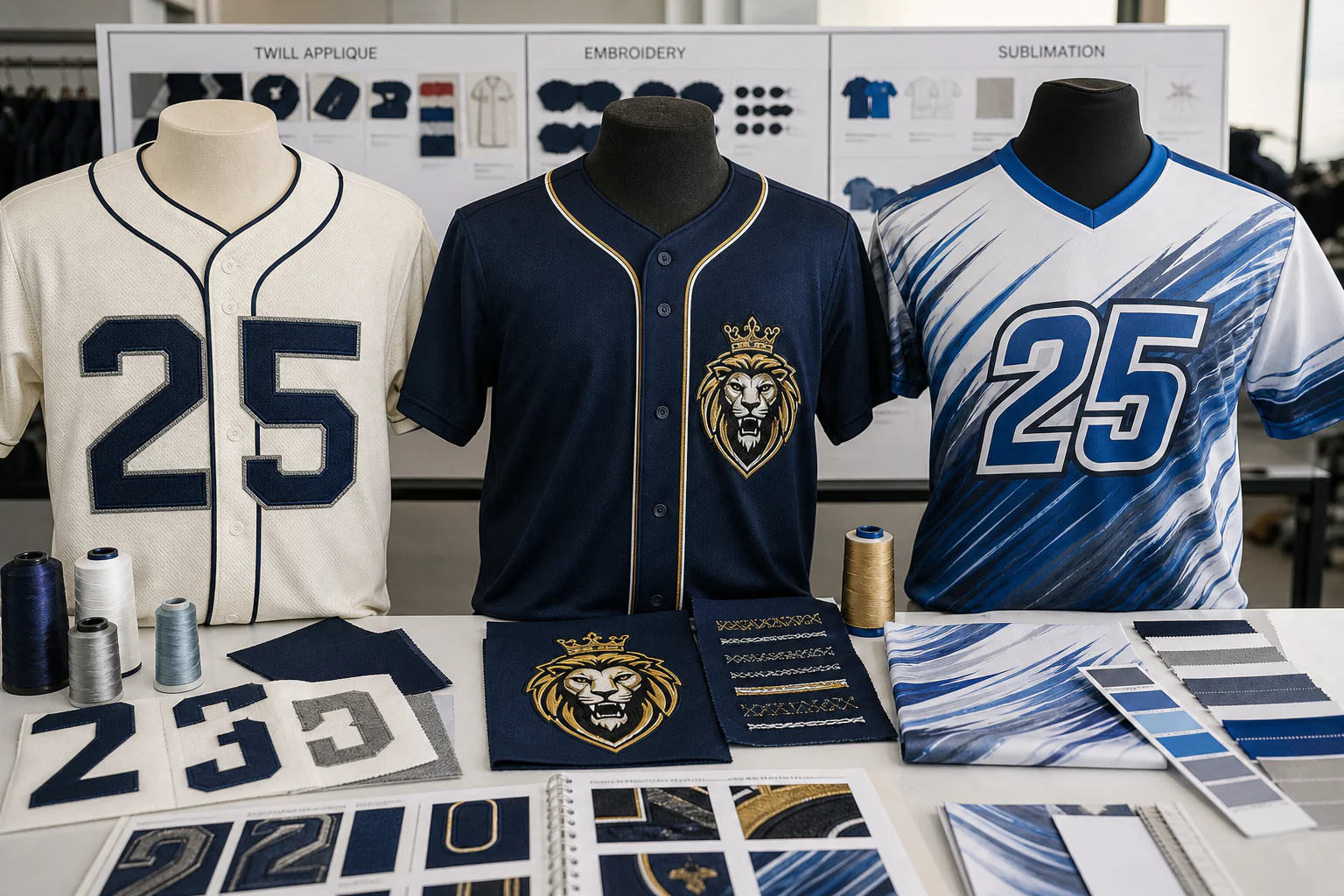
Twill applique gives the most classic pro-team look for names, numbers, and chest scripts on baseball-style jerseys.
Embroidery is best for smaller crests, sleeve marks, and premium detail work, but it adds bulk and cost if buyers overuse it.
Sublimation is the most flexible and cost-efficient choice for all-over graphics, gradients, and lightweight modern teamwear, especially at low MOQ.
The Fastest Way to Think About the Three Methods
Twill applique creates the most athletic texture. It is the language of classic baseball jerseys, varsity-inspired streetwear, and premium chest scripts. Embroidery adds depth and detail, but it works best in smaller placements or tightly controlled accent zones. Sublimation keeps the garment light, graphic-rich, and easier to personalize across sizes and roster changes.
| Method | Look | Best Use | Main Caution |
|---|---|---|---|
| Twill applique | Classic athletic, raised edge, heritage jersey feel | Baseball numbers, chest scripts, premium team marks | Adds weight; patch edge quality matters |
| Embroidery | Textured, premium, stitched depth | Small crests, sleeve logos, cap-style detailing | Heavy on large fills; can pucker lighter knits |
| Sublimation | Flat but crisp, unlimited color and gradients | All-over graphics, lightweight jerseys, low-MOQ personalization | Does not create raised heritage texture |
Why Twill Still Matters in 2026
Twill remains important because heritage teamwear is still a visual reference point for both clubs and fashion brands. Buyers reaching for a vintage baseball jersey or a premium team capsule usually do not want the decoration to feel flat. They want edge definition, layer contrast, and the old athletic language that comes from stitched twill numbers and chest scripts.
That does not mean twill belongs everywhere. On lightweight modern performance jerseys, the same method can feel heavier than the garment needs. But on baseball-style builds, it is often the shortest path to a premium look, especially when paired with clean piping, button-front construction, and washed or heritage fabric direction. Our custom baseball jersey manufacturer guide walks through how twill, embroidery, and sublimation combine across each of the five baseball builds, while our mesh-fabric selection guide shows when the base cloth should stay lighter and more breathable instead of carrying heavier surface decoration.
Buyers considering that lane should also review our custom rugby jersey construction guide and the adjacent vintage baseball streetwear trend report, because decoration choice only works when the base garment is specified correctly.
Best Use Cases by Program Type
| Program | Primary Method | Support Method | Why |
|---|---|---|---|
| Vintage baseball jersey | Twill applique | Small embroidery accents | Delivers the classic varsity and pro-diamond look buyers expect |
| Modern team-soccer or cycling jersey | Sublimation | Minimal embroidery if needed | Keeps weight down and graphics flexible |
| Streetwear-inspired team capsule | Twill or chenille-style applique | Embroidery on smaller hits | Texture becomes part of the fashion value |
| Budget mixed-size team order | Sublimation | Selective embroidery | Controls cost and keeps personalization easier at 50 pieces |
In low-MOQ work, the winning answer is often a hybrid: sublimated base body, twill for key numbers or script, and embroidery only where the added texture earns its cost.
Sample Review Checklist Before Bulk
Check whether the jersey base fabric can support the decoration without distortion or strike-through.
Ask which placements are better as twill, which are better as embroidery, and which should stay sublimated.
Review edge finish, adhesive stability, and stitch density on twill numbers before approving bulk.
Do not force large embroidery fills onto lightweight performance jerseys where they will feel stiff and pull the fabric.
Check washing risk: twill edge lift, embroidery puckering, and print color shift should all be tested in sample stage.
Keep player names, roster variation, and reorder logic in mind before choosing the decoration mix.
Decoration Engineering
We help buyers map the right decoration method by placement instead of forcing one technique across the whole jersey.
Low MOQ Teamwear
50-piece MOQ runs stay practical for clubs, school teams, and fashion capsules that need a tighter first order.
Sample-Led QC
Edge finish, stitch density, and decoration placement can be approved before the full order is locked.
Private Label Finish
We support labels, packing, and export coordination for brands that need the jersey to feel presentation-ready on arrival.
Need Help Choosing the Right Decoration Mix?
Send your jersey artwork, target use case, and quantity split. We can recommend where twill earns its cost, where embroidery adds value, and where sublimation is the smarter choice.
Decoration Method FAQs
Which decoration looks most premium on a baseball jersey?
For classic baseball-style jerseys, twill applique usually gives the strongest premium signal because it creates the raised athletic look buyers associate with pro and heritage teamwear.
Why not use embroidery for everything?
Because large embroidery fills add bulk, can pucker lighter fabrics, and raise cost quickly. Embroidery is strongest when used selectively for smaller marks and detail areas.
When is sublimation the better option?
Sublimation is usually better when the jersey needs lightweight performance, many colors, all-over graphics, or easy roster variation with low setup friction.
Can a jersey combine twill, embroidery, and sublimation?
Yes. Many premium programs use sublimation for the base body, twill for numbers or chest scripts, and embroidery for small crest or sleeve details. The key is balancing look, weight, and cost.