Retro Rugby Shirts as Streetwear: Design Details Brands Should Spec
How brands should spec retro rugby shirts for streetwear: fabric weight, collar design, oversized fit, trims, and low-MOQ production guidance.
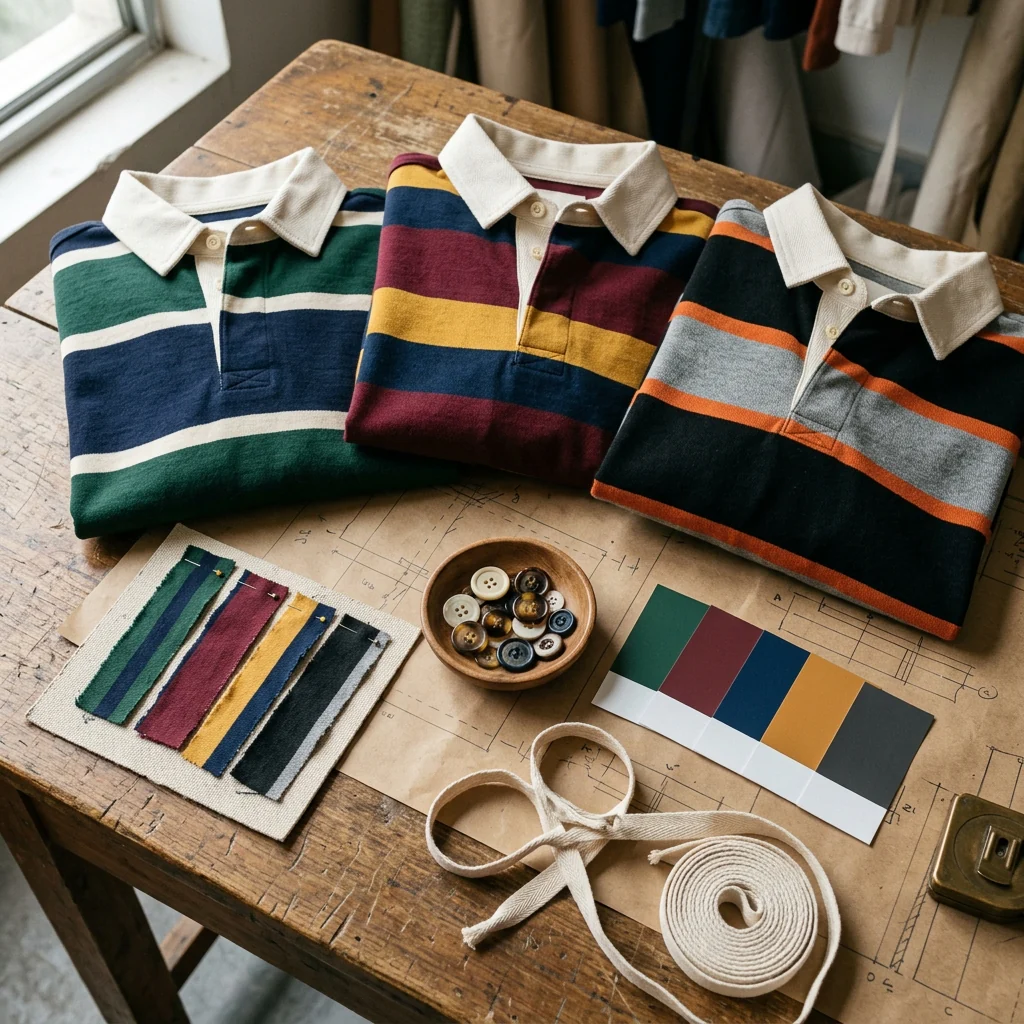
The current rugby-shirt wave is not really about sportswear performance. It is about heritage shape, stripe rhythm, and the reassuring weight of a garment that feels closer to vintage casualwear than to a modern training top. Brands that want the trend need to spec it properly. Otherwise the product lands in an awkward middle zone: too light for streetwear, too heavy for sport, and too generic for either audience.
MOQ
50 pcs
Bulk
25-35 days
Key Fabric
Heavy cotton
Trend Signal
Heritage stripe
Short Answer
Streetwear rugby shirts work best when the spec leans into heavyweight cotton, a woven contrast collar, controlled oversized grading, and heritage trim choices. The market does not want a repurposed polyester match jersey with a casual logo on it. It wants a product that feels grounded in old rugby construction but edited for a modern silhouette. Brands shaping that crossover should also compare our custom streetwear manufacturing guide and the calmer material direction inside our quiet performance trend report.
Streetwear Rugby Spec Checklist
- Use heavyweight cotton jersey or rugby knit rather than lightweight polo fabric.
- Specify a woven twill collar in contrast color instead of matching body rib.
- Freeze placket depth, button type, and side vent finish before wash testing.
- Grade for an oversized shoulder and body without letting the sleeve become sloppy.
- Decide early whether the drop needs yarn-dyed stripes, pigment wash, embroidery, or patch branding.
Fabric Weight Decides the Category Feel
Brands often miss the category by choosing fabric that is too light. That creates a shirt that looks fine in a flat sketch but loses the boxy, premium fall that made rugby shirts interesting again in the first place.
| Fabric Weight | Drape | Seasonality | Streetwear Result |
|---|---|---|---|
| 220-260 gsm | Soft and easier to layer | Spring/Summer | Too light for a true retro rugby feel |
| 280-320 gsm | Structured with wearable weight | Year-round | Best balance for most streetwear launches |
| 330-360 gsm | Boxier and more rigid | Cooler drops | Strong heritage look when fit is handled well |
| 400 gsm+ | Very heavy and niche | Cold-weather capsules | Only works when the brand wants deliberate heft |
Three Design Decisions That Change Everything
The collar matters because it signals the heritage reference immediately. A retro rugby shirt with a soft knit collar often reads like a polo, not a rugby crossover piece.
Fit matters because the current market wants volume without shapelessness. The body usually needs more room, but the collar, placket, and cuff still need enough control to keep the garment looking intentional.
Trim matters because small decisions change the whole category impression. Rubber buttons, hidden plackets, contrast under-collars, embroidery, and side-vent tape all affect whether the piece feels elevated or generic.
Once the silhouette is right, the finishing path matters next. Some brands want clean collegiate striping and embroidery. Others want a more washed, lived-in direction with heavier body feel and lower-contrast trim. Those choices should be made before the first sample, because wash processes and stripe methods can change cost, MOQ, and lead time quickly.
That same heritage-to-fashion crossover is why we published our vintage baseball jersey trend report. It shows how another teamwear silhouette is being reworked for streetwear drops through texture, wash, and oversized fit. Brands that also supply actual playing kit alongside the heritage range should read our custom rugby sevens kit manufacturer guide — it is the exact inverse of this brief, built on a close grip-denial block in a lightweight high-tenacity knit rather than a relaxed heavyweight cotton silhouette.
For labels moving between heavy cotton heritage product and broader private-label apparel, the decision framework overlaps with our low-MOQ custom manufacturing guide. The main difference is that retro rugby shirts need more discipline around drape, collar, and placket character than most standard knit tops.
Quick Facts
What fabric weight works best for retro rugby shirts in streetwear?
For most brands, 280-320 gsm is the strongest starting range because it delivers enough structure without becoming too heavy for everyday wear.
Should streetwear rugby shirts use the same fabric as performance rugby jerseys?
Usually no. Performance rugby jerseys tend to use polyester constructions for sport use, while streetwear versions lean on heavier cotton for drape, wash character, and vintage feel.
How should the fit be graded for this trend?
Most brands want extra body width, dropped shoulders, and enough sleeve balance to feel oversized while still keeping the collar and hem clean.
Can SSM handle low-MOQ streetwear rugby shirt sampling?
Yes. SSM works from a 50-piece MOQ and can build first-round samples in 7-10 days so brands can validate fabric weight, collar structure, and silhouette before bulk production.
Building a Retro Rugby Capsule for Your Brand?
Share the silhouette references, stripe direction, target fabric weight, and branding plan. SSM can help turn the trend into a sample that feels like a real product, not just a moodboard idea.