Custom Rugby Jersey Manufacturer: Heavy-Stitch Construction Guide
How to source custom rugby jerseys with stronger collar builds, reinforced seams, 50-piece MOQ, fast samples, and export-ready production support from Sialkot.
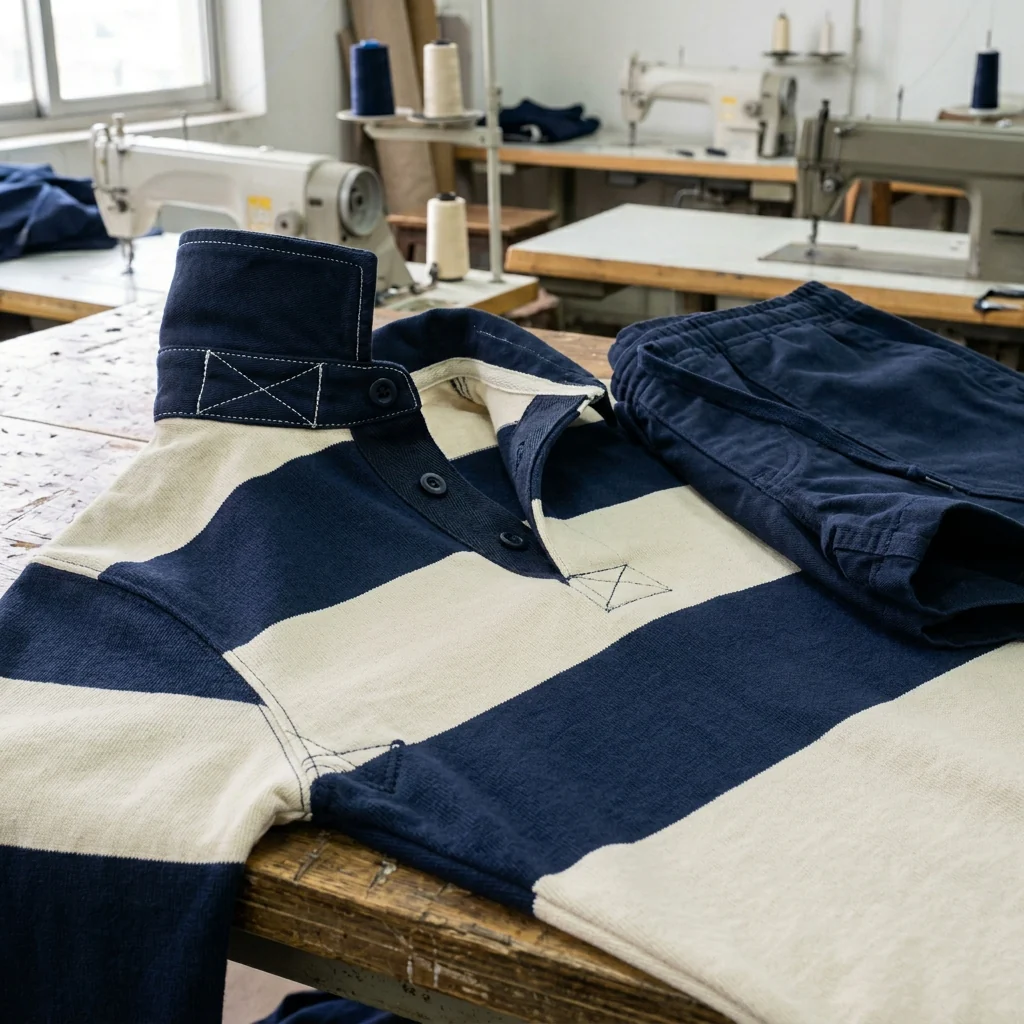
A rugby jersey only feels premium when the stress points have been engineered, not assumed. Buyers comparing manufacturers should look past a clean mockup and ask harder questions about collar construction, bartacks, side vents, hem finishing, and decoration sequencing. That is the difference between a shirt that photographs well and one that survives contact, washing, and repeat reorders.
MOQ
50 pcs
Samples
7-10 days
Bulk
25-35 days
Focus
High-stress seams
Short Answer
A strong custom rugby jersey spec should lock the fabric category, collar build, placket reinforcement, seam map, and decoration order before the first sample is sewn. Most buyers make the mistake of talking only about design and colors, then discovering too late that the collar twists, the placket stretches, or the hem finishes feel too soft for the end use. If you are building full club kit rather than a heritage cotton shirt, pair this guide with our sportswear print comparison, the broader sportswear manufacturer for startups playbook, and the newer court-sport apparel trend report if the range is moving toward premium clubwear rather than pure contact-match product.
Rugby Jersey Tech-Pack Checklist
- Call out the body fabric direction first: heavyweight cotton rugby jersey or performance polyester teamwear knit.
- Mark every bartack location on the placket base, side vent, underarm join, and collar stand.
- Specify collar build clearly: woven twill collar, rib collar, or modern mandarin shape with exact topstitch rows.
- Confirm the decoration method for crests, sponsor zones, names, and numbers before panel layout is graded.
- Include the size split, target use case, and destination market so sample fit and packaging stay aligned.
Which Construction Choices Matter Most?
Rugby jerseys combine pull stress, repeated washing, and visual branding. That means the right seam has to sit in the right zone. A manufacturer that treats the whole garment like generic teamwear usually misses the details that decide whether the shirt feels match-ready, retail-ready, or neither.
| Construction Element | Durability | Flex Behaviour | Best Use |
|---|---|---|---|
| 4-thread overlock | High | Strong stretch recovery | Main body joins on modern cut-and-sew rugby jerseys |
| Twin-needle coverstitch | Medium-high | Good on hems | Sleeve and bottom hems where clean finish matters |
| Bartack reinforcement | Very high | Minimal | Placket base, side vents, collar stress points, underarm joins |
| Neck tape + topstitch | High | Low | Back neck comfort, collar stability, wash durability |
What Buyers Should Ask a Rugby Jersey Manufacturer
Start with the collar. On classic rugby styles, the woven collar needs enough structure to stay crisp without becoming uncomfortable. On modern polyester game jerseys, the collar profile often has to balance durability with lighter weight and easier decoration alignment. If the factory cannot explain how the collar build changes between those two product types, that is already a warning sign.
The second question is about reinforcement logic. Ask where bartacks will sit, whether side vents are clean-finished, and how hem strength is controlled after wash testing. Those are practical, production-floor questions. They reveal quickly whether the supplier actually understands rugby product use or is repurposing a generic polo-shirt workflow.
Buyers weighing a more classic teamwear decoration look should also review our new twill applique vs embroidery vs sublimation guide. It helps determine which badge, number, and script methods make sense before panel and placket details are finalized.
A custom cricket jersey manufacturer faces a related but different brief: lighter interlock fabrics, sublimated roster names and squad numbers, and whites vs colored-kit specs replace the heavy-stitch reinforcement priorities that define rugby construction. Clubs that also field a sevens side should read the tournament-format counterpart to this page, our custom rugby sevens kit manufacturer guide, where the jersey drops 60 to 100 gsm, the strength is bought back with bonded reinforcement at the shoulder, collar and sleeve hem, and the squad orders multiple match sets plus a clash strip in one production window.
Sample-to-Bulk Workflow
1
Sampling starts with the game context: training jersey, club kit, heritage cotton rugby shirt, or fashion crossover piece.
2
Pattern and panel review follows. The collar opening, placket depth, side vent height, and sleeve angle need approval before decoration is locked.
3
SSM then builds a physical sample in 7-10 days so the buyer can test pull points, collar recovery, print feel, and fit balance.
4
After approval, bulk production usually runs 25-35 days with cutting, sewing, decoration, inline QC, and export packing aligned to the confirmed spec file.
Buyers who need a faster orientation on factory communication can also review our step-by-step ordering guide. It helps frame what should be frozen before sampling and what can still be adjusted without breaking the production calendar. For adjacent club and academy categories, our custom padel apparel manufacturer guide shows how the sourcing brief changes once lighter courtwear and broader assortment planning enter the picture.
Quick Facts
What should a buyer send to a custom rugby jersey manufacturer first?
Send the jersey concept, fabric direction, collar preference, decoration map, size range, quantity split, and target delivery market. That is enough to quote accurately and plan sampling.
Are rugby jerseys usually made in heavyweight cotton or polyester?
Both are valid, but they serve different goals. Traditional retro styles usually use heavyweight cotton, while club and performance kits typically use polyester interlock or pique for lighter weight and easier sublimation.
Where do rugby jerseys fail most often in production?
Weak placket reinforcement, underbuilt collars, poor side-vent finishing, and decoration placed before grading is validated are the most common failure points.
What is Sialkot Sample Masters' MOQ for rugby jerseys?
The working MOQ is 50 pieces per style, which suits club launches, trial kits, private-label teamwear drops, and smaller brand programs that still need export-ready manufacturing discipline.
Need a Rugby Jersey Sample That Holds Up Under Real Use?
Send the design pack, target fabric direction, quantity split, and destination market. SSM can turn that into a practical sample plan with stronger collar, placket, and seam decisions from the first round.