How Sublimation Color Matching Works on Polyester Sportswear
Learn how sublimation color matching works on polyester sportswear, what affects print accuracy, and how to approve strike-offs before bulk production.
Buyers often think color mismatch starts at the heat press. In reality, most problems begin earlier: screen-only approvals, the wrong polyester base, uncontrolled gradients, or no strike-off checkpoint before a full sample is built. Once those variables are loose, the factory is chasing color rather than controlling it.
Base
Polyester knit
Need
Strike-off
Risk
Color drift
Focus
Bulk repeatability
Short Answer
Sublimation color matching works best when the buyer and factory approve color in stages: artwork reference, fabric confirmation, print strike-off, sample review, and then bulk held against one sealed benchmark. If you are still deciding whether sublimation is even the right print method, read our sublimation vs screen printing comparison first. If the garment is part of a wider teamwear launch, the broader product brief in our custom padel apparel manufacturer guide will help frame the right inputs. Buyers balancing artwork approval against fabric-weight decisions should also review the GSM guide for activewear.
Color-Matching Spec Checklist
- Preferred color references or physical swatches, not only screenshots.
- Intended fabric composition, knit type, and gsm for every printed panel.
- Whether gradients, halftones, or textured fades are part of the design language.
- Destination use case: teamwear, premium retail, academy kit, or event merchandise.
- Approval rule: strike-off first, then sample, then bulk against the sealed benchmark.
The Four-Step Color Control Workflow
| Stage | What SSM Controls | What Breaks the Result |
|---|---|---|
| Reference lock | Buyer shares approved color chips, past production benchmark, or named brand palette target before artwork is finalized. | Design starts from screen color alone, which makes the first strike-off guesswork. |
| Fabric confirmation | The factory matches color against the actual knit, weight, and surface finish planned for production. | One color is approved on a different polyester base than the real garment fabric. |
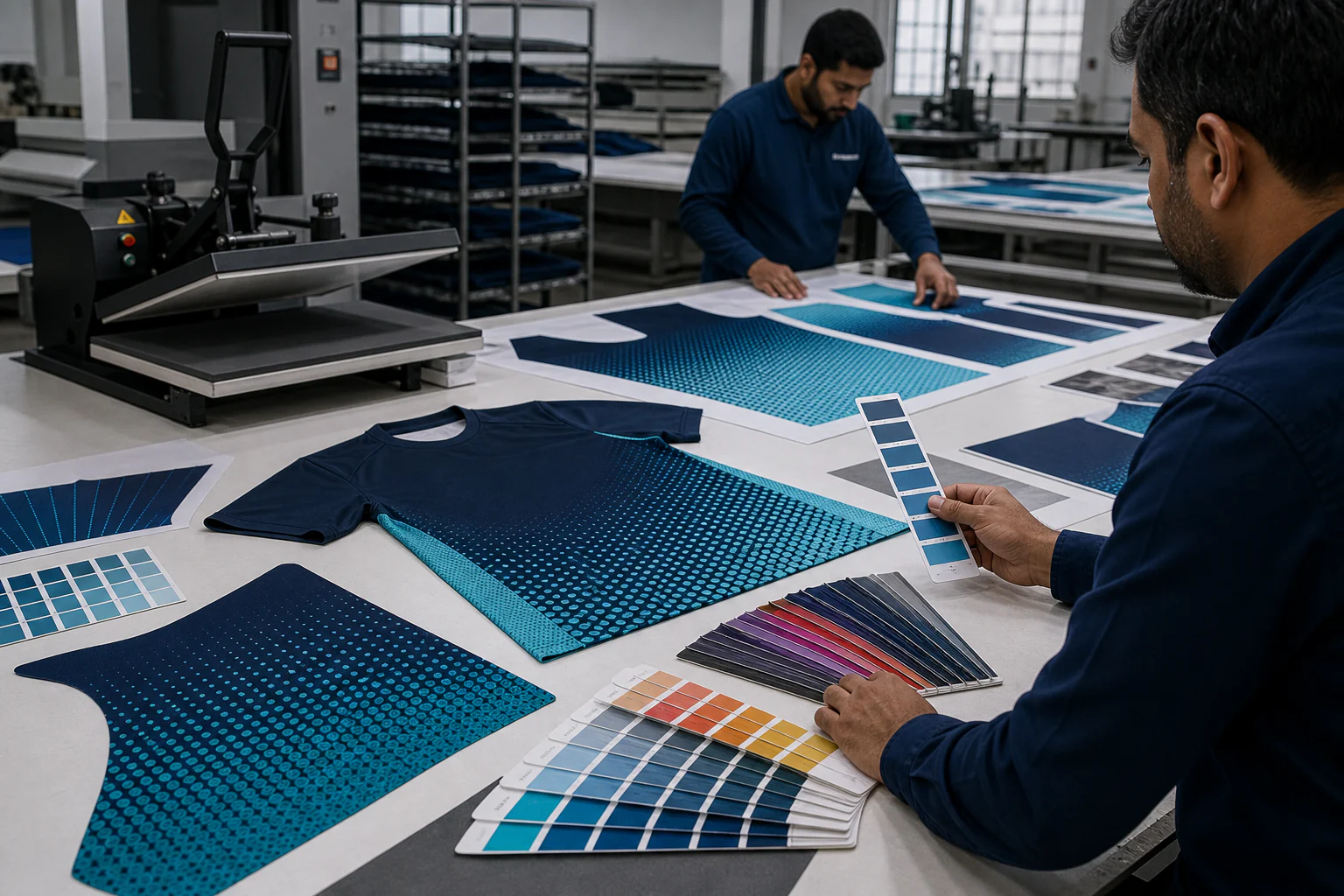
| Print strike-off | SSM prints controlled sample panels so saturation, dot gain, and dark-to-light transitions can be reviewed physically. | Buyer approves only the final garment sample without seeing controlled print panels first. |
| Heat and wash validation | Color is reviewed after transfer, handling, and quick wash checks so the real finished state is understood. | Color is judged pre-press or under unrealistic lighting. |
This is why a disciplined strike-off matters so much. It turns color from opinion into a physical checkpoint. A buyer can still approve a sample afterward, but the factory is no longer guessing whether the issue came from the file, the fabric, or the transfer sequence.
Where Polyester Sportswear Color Matching Usually Fails
Approving a navy from a laptop screen and expecting the same depth on a bright white polyester jersey.
Using one print file across multiple polyester constructions without adjusting for surface feel and ink behavior.
Ignoring the effect of fluorescent or LED venue lighting on bright cyan, coral, and lime-heavy sport palettes.
Changing the fabric vendor after strike-off approval and assuming the same result will hold automatically.
Dark navies, cool blues, and textured fades are especially sensitive because small shifts become visible fast on courtwear. That is one reason gradient-heavy team programs should lock the print benchmark before any range extension is approved. For buyers building full product families, the same discipline feeds straight into our court-sport trends guide, where calmer palettes and cleaner court styling are becoming more commercially important. Cricket kit programs face the same discipline in reverse: a custom cricket jersey manufacturer has to hold sponsor-logo colors and gradient panels consistent across a full roster of individually printed names and numbers, and the art-vs-panel decision becomes even clearer in our sublimation vs cut-and-sew cricket kits guide.
Quick Facts
Why is sublimation color matching difficult on polyester sportswear?
Because the final color result depends on the fabric base, the print file, the transfer process, and the garment’s finished surface under real lighting. It is not only a design-file problem.
What should a buyer approve first: the sample or the strike-off?
The safest path is to approve a controlled print strike-off first, then judge the sample, then hold bulk to that sealed benchmark. That sequence isolates color issues before the garment is fully made.
Do gradients and dark navies need special attention?
Yes. Deep navies, charcoal fades, and bright-to-dark gradients are where banding, dullness, or contrast loss becomes visible fastest, so they deserve an earlier approval checkpoint.
How does Sialkot Sample Masters reduce color surprises?
By checking the artwork against the actual production fabric, running strike-offs, reviewing under practical lighting, and freezing one approved reference before bulk printing starts.
Need Print Color Locked Before You Approve Bulk Teamwear?
Share the artwork, fabric target, and intended use case. SSM can structure the strike-off and sample sequence so bulk production starts from one color benchmark instead of conflicting screen references.