Flatlock vs Overlock Stitching for Compression Wear
Compare flatlock vs overlock stitching for compression wear, leggings, and rashguards. Learn when each seam works and how to spec it for production.
Compression garments fail quietly when the seam decision is wrong. The garment may still look clean on a hanger, but the wearer feels the ridge, the seam resists stretch in the wrong direction, or the production cost climbs without a real performance reason. The better question is not which seam is better in general. It is which seam belongs on which panel.
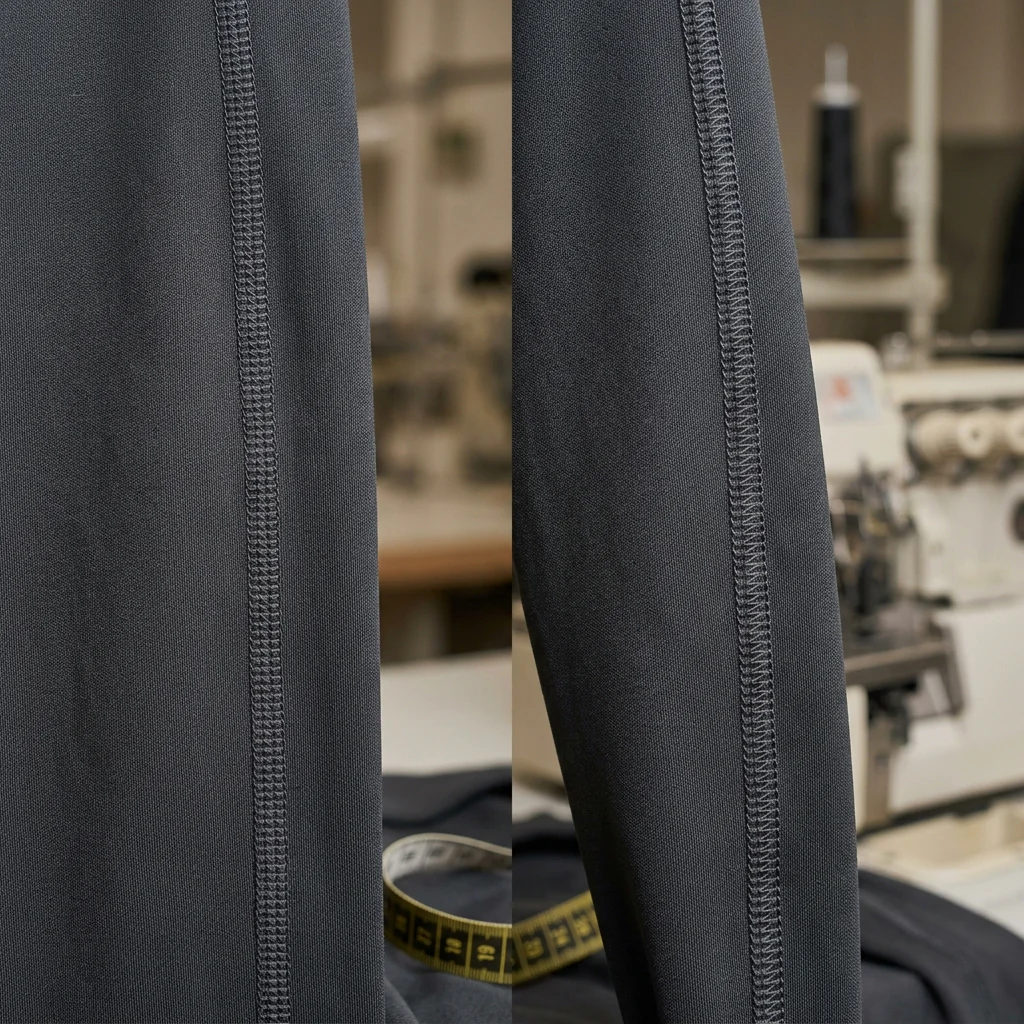
Profile
Flat vs raised
Risk
Chafing control
MOQ
50 pcs
Samples
7-10 days
Short Answer
Flatlock is usually the better seam for true compression wear because it lies flatter against the body and reduces friction during high-repetition movement. Overlock is faster and still durable, but it leaves more ridge on the inside of the garment. In practice, strong activewear programs often use both. If the garment has body-mapped panels, the seam plan should be body-mapped too. For deeper seam-class context, review our multi-needle flatlock guide alongside this comparison. Buyers still deciding how fabric weight changes seam feel should also compare the new GSM guide for activewear. The same seam-strength logic governs fight-short waistbands, covered in our custom boxing gear manufacturer guide, and the panel-zoning logic behind mixed fabric shorts is unpacked in our satin, mesh, and stretch panel breakdown.
Compression-Wear Spec Checklist
- Mark which seams are skin-contact critical and which are structural only.
- Specify thread type for performance fabrics, especially where recovery and softness both matter.
- Call out seam class or visual sample reference, not just the words 'flatlock' or 'overlock'.
- Define stretch tolerance expectations around gussets, underarms, and waistband joins.
- Approve seam appearance on a physical sample before decoration and grading are frozen.
How the Two Seam Types Actually Behave
The usual mistake is to reduce the decision to cost. That is incomplete. Compression garments are worn in motion and under tension, so seam feel is part of product performance. A cheaper seam that irritates the user or distorts recovery is not a cheaper seam in the real market.
| Feature | Flatlock | Overlock | Decision Rule |
|---|---|---|---|
| Interior feel | Flat against skin | Raised seam ridge | Flatlock wins for close-fitting compression zones |
| Stretch recovery | Excellent with 4-way fabrics | Good, but less comfortable at high friction points | Use flatlock where the garment moves with the body |
| Machine speed | Slower and more technical | Faster production throughput | Overlock helps cost control when comfort penalty is acceptable |
| Best use | Leggings, rashguards, compression tops, base layers | Joggers, looser tops, non-contact seams, support panels | Many strong programs use both intentionally |
Where the Hybrid Approach Wins
Not every panel deserves premium seam cost. That is why experienced compression-wear manufacturers do not talk about one universal answer. They map seam function to friction zones, stretch direction, and category expectations. A rashguard, legging, and recovery top can all use the same fabric family and still need different seam priorities. For how these seam rules play out on a competition grappling garment — where flatlock is non-negotiable — see our IBJJF-compliant rashguard manufacturer guide.
Use flatlock on inseams, gussets, underarms, and other zones where friction against skin is constant.
Use overlock on outer leg joins, hidden support panels, or interior construction steps where speed and strength matter more than hand feel.
Combine the seam map with fabric logic. A higher-spandex garment usually benefits more from flatlock than a looser training piece.
Validate the stitch choice after wash and stretch testing, not just on an unwashed sample fresh from sewing.
For buyers launching broader activewear assortments, it also helps to compare this with our production workflow breakdown and the BJJ and combat-sports sourcing guide, where seam stress and fit logic become even more category-specific.
Quick Facts
Why is flatlock usually preferred for compression wear?
Because it creates a flatter seam profile with less chafing and better comfort on skin-tight garments that move constantly under tension.
Does overlock mean poor quality?
No. Overlock is still a strong production seam. It becomes the wrong choice only when the garment category needs a smoother, lower-friction interior finish.
Can one compression garment use both flatlock and overlock?
Yes. Many well-built pieces use a hybrid seam map so high-friction zones get flatlock while lower-risk areas stay cost-efficient with overlock.
How does SSM sample technical seam choices?
SSM can build the first sample with the proposed seam map in 7-10 days so buyers can review stitch appearance, seam feel, and stretch behaviour before bulk begins.
Need Help Locking the Seam Map Before Sampling?
Send the compression-wear tech pack, target fabric, and intended use case. SSM can review where flatlock belongs, where overlock is enough, and what should be proven on the first sample instead of discovered in bulk.