Custom Skateboarding and BMX Apparel Manufacturer: The 2026 B2B Sourcing Guide
Source custom skate pants, riding denim, heavyweight hoodies and BMX jerseys from Sialkot — pad-drafted blocks, reinforced knees, 50-pc MOQ, 25–35 day lead, DDP worldwide.
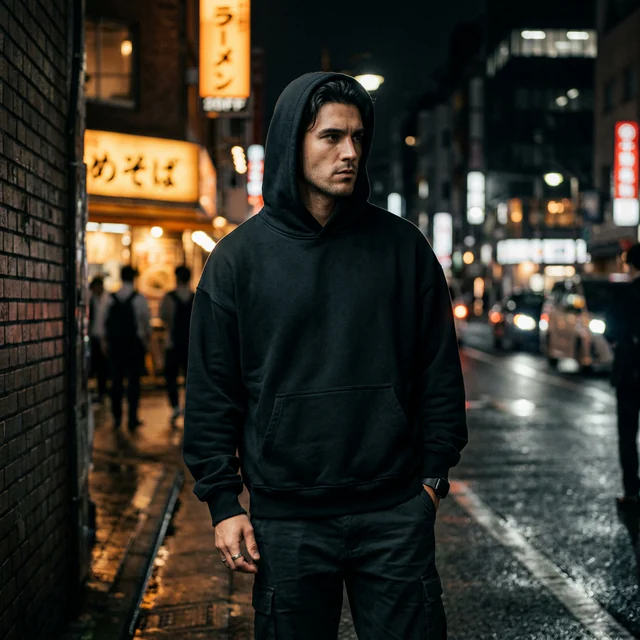
Skate and BMX apparel is the only category on this site where the garment has to look like streetwear and perform like protective workwear at the same time. It is worn casually, photographed constantly and judged on silhouette — and then, several times a session, it is dragged across concrete at speed with a body inside it. Underneath it, on most park and street riders, there are knee and elbow pads the block has to be drafted over. That combination produces a specification almost nobody outside the category gets right on the first attempt: a knee that sits where the pad sits rather than where an anatomical knee sits, a leg that passes over a strapped pad without dragging it down, felled seams and a bartack schedule that survive a single abrasive event rather than gradual wear, a hem faced against griptape and tapered clear of a chainring, and a boxy block graded as its own pattern instead of scaled up from a slim one. This guide covers the three garment systems a skate or BMX buyer orders, how abrasion and pad clearance are actually specified, where reinforcement and decoration belong, and what a full range costs at 50-piece MOQ with a custom skateboarding and BMX apparel manufacturer in Sialkot, Pakistan.
MOQ
50 pcs/design
Lead Time
25–35 days
QC Pass Rate
99.8%
Est.
2009
Section 01
The Pad Is Under the Garment, and the Pattern Has to Know
Start every skate or BMX tech pack by deciding what is worn underneath. In park and street riding, and in almost all coached, school and facility programmes, knee pads and often shin and elbow pads are worn under the clothing rather than over it. That single fact reorganises the block. A strapped knee pad adds real circumference at the knee and the upper calf, sits slightly above the anatomical knee point when the leg is bent, and has a hard upper cuff the fabric has to clear rather than clamp. If the leg opening and the thigh are dimensioned for a bare leg, the rider either abandons the pads or abandons the pant — and in a facility programme where pads are mandatory, that decision has already been made for them.
The consequences run through the whole pattern. The knee reinforcement panel has to be placed against the pad-worn knee point, not the drafting knee point, or the double layer ends up above or below the exact area that contacts the ground. The leg opening has to pass over the pad during dressing without fighting the straps, which usually means a straighter or slightly tapered leg with a generous opening rather than a shaped calf. Thigh circumference has to clear the pad's upper cuff so the fabric is not pinned to the leg at the point it most needs to move. And the same logic applies at the top: a rider wearing elbow pads needs a sleeve drafted over them, with an armhole and bicep that do not compress a hard cuff, which is why a riding jersey and a fashion long sleeve are not the same garment even when they look identical flat on a table.
None of this is expensive to manufacture, but all of it has to be decided before the first pattern is cut — the same principle behind the harness zone in our guide to custom climbing apparel manufacturing, where a piece of equipment worn over or under the garment claims territory the pattern has to respect. Sialkot Sample Masters has produced technical cut-and-sew and heavyweight streetwear since 2009; the closest engineering neighbours on this site are our custom tactical pants manufacturing guide and our functional utility pants guide, and the mechanics of placing a first order are covered in our guide to scaling a streetwear brand at low MOQ.
Section 02
The Three Garment Systems
Skate and BMX buyers order from three distinct architectures. The first is where the technical difficulty sits, the second is where the brand and the margin live, and the third is what parks, schools and contest series actually buy in volume.
| Garment System | Build | Fabric Base | Best For | Decoration |
|---|---|---|---|---|
| Skate Bottoms & Riding Denim (the crash garment)(Most Ordered) | Loose and relaxed-block pants, carpenter and double-knee styles, skate denim, canvas and twill work pants, cargo and utility bottoms, and long skate shorts — all drafted over a knee pad, with a double-layer or hidden-reinforcement knee, a felled or safety-stitched inseam and a hem faced against griptape | Rigid or low-stretch cotton twill and canvas 280–400 gsm, stretch-back denim 11–14 oz, poly-cotton ripstop 200–260 gsm, high-tenacity core-spun thread throughout | Skate brands, skateparks and skate schools, BMX and park programmes, team and rider kit, action-sports retailers | Screen and DTF on panels away from wear zones, woven and leather-look patch labels, embroidery on yokes and back pockets, custom hardware and rivets |
| Tops, Fleece & Riding Layers | Heavyweight tees and long sleeves, boxy hoodies and crews cut with an extended body, coach and chore jackets, flannel and work shirts, and BMX-style long-sleeve riding jerseys with a raised collar, a set-in or raglan sleeve drafted over an elbow pad, and a tail hem that stays down over a bike | Cotton and cotton-poly fleece 320–450 gsm, heavyweight jersey 200–260 gsm, brushed flannel 180–240 gsm, moisture-moving performance knit 140–170 gsm on riding jerseys | Skate and BMX brands, park pro shops, contest and event organisers, junior academies and rider teams, streetwear labels with an action-sports line | Screen, DTF, puff and high-density print, chain-stitch and 3D puff embroidery, appliqué, woven labels, custom packaging |
| Park, Shop & Programme Kit | Coaching and instructor staff wear, shop crew uniforms, contest and event tees, junior academy sets, numbered practice bibs and pinnies for coaching sessions and race programmes, plus soft goods — backpacks, board bags, tool rolls and duffels — on one artwork library | Cotton-poly piqué and jersey 180–220 gsm, fleece 320–450 gsm, poly mesh 120–160 gsm, 300–600D bag fabric | Skateparks and facility groups, skate and BMX schools, councils and community programmes, contest series, retail chains | Embroidery, screen and DTF print, heat-applied numbering, woven labels, custom hangtags and retail packaging |
Scope note: Sialkot Sample Masters manufactures textile apparel and non-protective soft goods only. Helmets, knee and elbow pads, shin guards, wrist guards, back protectors, gloves sold as impact protection, footwear, skateboards, bikes, griptape and components are equipment governed by certification standards and independent testing regimes, and are not part of this offer. Garments intended for a contest series, a council facility, a school programme or an institutional buyer should be checked against that organisation's current kit, branding and safety requirements before the tech pack is finalised.
Section 03
Fabric Engineering: Abrasion Is a Yarn Problem, Not a Weight Problem
The fabric conversation in this category almost always starts with weight, and weight is the wrong first question. A buyer asks for a heavy twill, a supplier quotes 380 gsm, both parties feel the swatch and agree it is substantial. But a slide across concrete is a surface event: what resists it is yarn strength, yarn twist and weave density, not mass. A 380 gsm fabric woven from a loose, low-twist open-end yarn will abrade through faster than a 300 gsm fabric built on a tightly twisted, high-tenacity ring-spun yarn in a dense weave — and it will feel heavier and more reassuring in the hand the whole time. So the specification lines that matter are abrasion cycles, tear strength and seam slippage on the actual quoted construction, with gsm recorded as a silhouette and hand-feel decision rather than as a durability claim.
Tear behaviour is the second axis, and it is where ripstop earns its place in a warm-weather range. The characteristic damage pattern here is not a worn patch that appears gradually; it is a small hole opened by one impact, which then runs into a split the next time the leg is loaded. A ripstop grid stops that propagation locally. In heavier twill and denim, the equivalent defence is construction rather than weave: a double-layer or backed knee that gives the outer fabric something to fail against, and felled or safety-stitched seams that do not open when the panel beside them is abraded. Buyers calibrating fabric weights across a wider range can benchmark against our GSM guide, and the durability protocol behind every stability claim is set out in our guide to testing fabric for wash durability.
| Fabric | Weight | Stretch | Hand Feel | Best For |
|---|---|---|---|---|
| Cotton Twill / Duck Canvas (rigid or 2% stretch)(Recommended) | 280–400 gsm | None to 2-way, low | Dry, dense, structured, breaks in with wear | The default skate bottom. Density and yarn strength — not weight alone — decide how a pant survives a slide across concrete, so the specification line is abrasion cycles and tear strength rather than gsm on its own. A heavier fabric with a loose, low-twist yarn abrades faster than a mid-weight fabric with a tightly twisted, high-tenacity yarn, which is the single most misread number in this category |
| Skate Denim (ring-spun, stretch-back or rigid) | 11–14 oz | None to 2-way, low | Familiar hand, ages visibly, high tolerance for repair | Riding denim and the retail hero style. A skate denim is a different specification from a fashion denim: it is built on a stronger warp, a tighter construction, a triple-needle or felled inseam and a knee that is either double-layered or backed, because the knee splits first on almost every returned pair. Wash and finish are chosen for how they age under repeated impact rather than for the initial look |
| Poly-Cotton Ripstop / Reinforced Blend | 200–260 gsm | Mechanical to 2-way | Light, crisp, quiet, fast-drying | Warm-weather bottoms, cargo and utility styles, and the layer riders reach for on hot park days. The ripstop grid stops a slam-initiated tear from running, which is the specific failure this fabric solves — a small abrasion hole at the knee or hip that would migrate into a split seam in a plain weave stays local instead |
| Heavyweight Cotton Fleece (loopback or brushed-back) | 320–450 gsm | Mechanical | Dense, structured, holds a boxy shape | The hoodie and crew that carry most of the brand's margin. Weight here is a silhouette decision as much as a warmth decision — a 450 gsm loopback holds the wide, square, dropped-shoulder shape the category expects, while a 280 gsm body collapses on the hanger and reads as a promotional garment. Shrinkage control after laundering is the specification that protects a graded boxy fit |
| Heavyweight Cotton Jersey | 200–260 gsm | Mechanical | Substantial, opaque, low-drape | Tees and long sleeves. This category's tee is a heavyweight garment with a wide body, a dropped shoulder and a stable ribbed neck that survives being pulled over a helmet — a 150 gsm retail body will curl at the hem and go transparent across the back, which is visible in every clip and every product photograph |
| Moisture-Moving Performance Knit / Recycled (GRS) Options | 140–170 gsm | 2-way to 4-way, light | Dry, smooth, low-cling | BMX-style long-sleeve riding jerseys and warm-climate riding tops, where sustained pedalling output makes a cotton body a wet body. Recycled poly and recycled-cotton blends carrying GRS certification are available across the range where a brand, retailer or council programme is buying to a written sustainability standard |
Weight bands above are typical industry ranges — every Sialkot Sample Masters order is confirmed with a lab dip and a gsm or ounce check on the actual production lot, all bases carry OEKO-TEX Standard 100 certification, and GRS-certified recycled cotton and polyester are available for brands, retailers and council or school programmes operating written sustainability standards; the sourcing routes are covered in our guide to eco-friendly fabric sourcing.
One finishing consideration is specific to this category and is almost always discovered rather than planned: the fleece and jersey weights are silhouette decisions before they are comfort decisions. The boxy, wide-bodied, dropped-shoulder shape this category expects only exists if the fabric can hold it — a 450 gsm loopback fleece stands up and squares off, a 280 gsm body collapses and reads as a promotional garment no matter how good the artwork is. The same is true of a heavyweight tee at 220 to 260 gsm versus a 150 gsm retail body that curls at the hem and goes translucent across the back in every photograph. The construction and weight logic behind those bodies is set out in our guide to 450 gsm heavyweight hoodie manufacturing, and the wash and finish routes that give bottoms and fleece their aged character are in our guide to custom vintage-wash streetwear manufacturing.
Section 04
Construction: The Knee, the Seam, the Hem, the Silhouette
The Knee Decides the Garment
Nearly every skate bottom that comes back comes back at the knee. It is the panel that takes the ollie flex thousands of times a session, the panel that contacts griptape on a failed trick, and the panel that hits the ground first in a slam. The answer is a double-layer or backed knee — a second ply of the shell fabric, or a high-tenacity backing cloth, joined and bartacked at its corners so it cannot peel away from the shell under a shear load. Two details separate a real one from a decorative one. First, placement: the panel must sit against the knee point as it falls with a pad worn and the leg bent, which is usually higher and wider than a flat-drafted knee point. Second, articulation: a two- or three-panel knee holds a flexed position without dragging the hem up the shin, so the leg opening is not pulled off the shoe every time the rider crouches. Both are pattern decisions taken before cutting, and neither can be retrofitted onto a finished block.
Seams and Bartacks: Built for One Event, Not for Slow Wear
Most durability engineering in apparel is about gradual wear. This category is about a single event. A slam does not tire a seam out over months; it loads it violently once, and if the seam is a plain overlocked join it opens and the garment leaves service immediately. So inseams and outseams on bottoms are felled or safety-stitched, load-bearing joins are triple- or double-needle, and the thread is high-tenacity core-spun rather than a general-purpose polyester. Bartacks then carry the point loads: pocket mouths, fly base, belt-loop bases, knee-panel corners, cargo pocket corners and vent openings, each specified on the tech pack with a placement and a stitch count rather than left to the line. The full placement logic transfers directly from our bartack placement guide for cargo and tactical apparel, and the stretch-seam disciplines for the knit half of the range are in our guides to flatlock vs overlock construction and multi-needle flatlock stitching.
Where Skate and BMX Diverge: the Hem, the Seat and the Drive Side
Up to the knee the two disciplines share a block. Below it they do not. A skater's lower leg lives next to griptape, which is an aggressive abrasive that shreds a loose, dragging hem inside weeks, so the hem is faced or double-turned, and the opening is dimensioned to clear a skate shoe without folding under the heel. A BMX rider's lower leg lives next to a chainring, a pedal and a crank, so the drive-side leg is tapered, gathered or cuffed clear of the teeth, and hem hardware and drawcords are kept away from the chain line entirely. The seat and rise diverge too: a BMX block is drafted for a straddled, forward-leaning riding position with a longer back rise and a top hem that stays down over the waist, while a skate block is drafted for a standing, crouching and jumping body. Getting this wrong is not cosmetic — a hem in a chainring is a mechanical failure with a rider attached to it, which is exactly why the drive-side taper belongs in the tech pack rather than in a customer review.
QC Tuned to Skate and BMX Failure Modes
Skate and BMX apparel at Sialkot Sample Masters runs a garment-specific inspection layer inside the factory-wide 7-point QC system: pad-clearance verification against the approved pattern on every bottom, so leg opening and thigh circumference cannot drift back to a bare-leg measurement late in development; knee reinforcement placement audited against the block rather than eyeballed on the line; bartack presence and stitch count checked at every specified terminus; seam strength and seam slippage tested on the actual construction; shrinkage and torque measured after repeated laundering rather than assumed from a fresh sample; hem facing and drive-side clearance confirmed; and print and embroidery placement audited against the wear-zone map — all at AQL 2.5, the system behind our 99.8% pass rate. The general framework is in our apparel manufacturing QC checklist, and the reference garment every reorder is measured against is explained in our guide to the golden sample.
Skate & BMX Apparel Construction Checklist
- The pad line drawn on the block before the leg is styled — most park and street riders wear knee and shin pads under the trouser, and many wear elbow pads under the sleeve, so the knee panel has to sit where the pad sits rather than where an anatomical knee sits, the leg opening has to pass over a strapped pad without fighting it, and the thigh circumference has to clear the pad's upper cuff. A pant that only fits without pads is a pant half the market cannot ride in
- A knee built for the ollie and the slam, not for the catalogue photograph — a double-layer or backed knee panel, articulated so the leg holds a bent position, with the reinforcement placed against the pattern's knee point after the block has been drafted over a pad. The knee is the first failure on nearly every returned skate bottom, and reinforcing it is a pattern decision made before cutting rather than a patch added after a complaint
- Seams engineered as the structural weak point they are — felled or safety-stitched inseams and outseams on bottoms, triple-needle or double-needle construction at every load-bearing join, and high-tenacity core-spun thread throughout, because a slide across concrete does not wear a seam out slowly; it opens it in one event and takes the garment out of service immediately
- Bartacks specified with placement and stitch count at every stress terminus — pocket mouths, fly base, belt-loop bases, gusset or knee-panel corners, vent openings and cargo pocket corners — since this category fails at points under a sudden load rather than along seams under gradual wear
- The hem treated as a wear zone in its own right — griptape, pedals and chainrings all attack the lower leg, so hems are faced or double-turned, the drive-side leg on a BMX block is tapered or gathered clear of the chainring, and the skate block's hem opening is dimensioned to clear a skate shoe without dragging under the heel where it will be shredded within a month
- A boxy or loose block drafted as its own pattern rather than graded up from a slim one — rise, seat, thigh and hem circumference are separate dimensions in this category, and scaling a slim block uniformly produces a garment that is wide in the wrong places, short in the rise and tight over a pad. The silhouette is the product here, and it has to be graded as a system across the whole size run
- Print and embroidery placement mapped away from impact and contact zones — decoration on the hip, outer thigh, knee, elbow and shoulder abrades in a slam and cracks under repeated flex, so heavy artwork goes on the back, the chest and the upper sleeve, while wear zones carry woven labels, embroidery on a stable ground or nothing at all
- Shrinkage and colour stability qualified after repeated laundering rather than on a first sample — a boxy fit, a dropped shoulder and a clean hem length only hold if the fabric is dimensionally stable, and a garment that loses three centimetres of body length in the first five washes turns a deliberate silhouette into an accident
Section 05
Programme Logistics: The Silhouette Is the Product, and the Park Is the Retailer
Two commercial facts shape how a skate or BMX range should be scoped. The first is that the silhouette carries the brand. In most performance categories the fit is a means to an end; here it is the product. A boxy hoodie, a wide-legged pant and a heavyweight tee with a dropped shoulder are recognisable at a distance in a clip or a photograph, and they only exist if the block is drafted for that shape and the fabric can hold it. That has a direct manufacturing consequence: a loose block is not a slim block scaled up. Rise, seat, thigh, hem circumference and body width are separate dimensions that have to grade as a system, or the size run drifts — wide in the wrong places on the small sizes, tight over a pad on the large ones. The principles are in our guides to CAD pattern grading and international sizing, and the process for proving a run before committing capital is in our guide to ordering size sets before bulk production.
The second is that the park, the shop and the contest are the same customer. A skatepark is simultaneously the venue, the coaching school, the community, the media channel and the retail counter. One facility runs junior sessions, dresses its own coaching and shop crew, hosts a contest series, sells at the front desk and produces the photographs the brand is judged on. That structure rewards a narrow, deep first order rather than a wide catalogue — one tee, one hoodie, one bottom, one jacket, carrying a single artwork and colour library across every substrate the park touches, including staff wear, numbered coaching bibs and soft goods. A 50-piece minimum per design clears comfortably in that shape, whereas fifteen designs at fifty pieces each is how a young brand ties up its capital in sizes that never sell. The economics of starting narrow are set out in our guide to what MOQ means in clothing manufacturing and our guide to OEM manufacturing at a 50-piece MOQ.
The calendar is the last constraint. Drops, contest dates, summer park season and the back-to-school junior intake all land on fixed dates, and a range that arrives two weeks late has missed its whole window. A 25 to 35 day production window plus DDP transit works comfortably if sampling and the size set are resolved a season ahead. US brands and parks will find the import mechanics in our guide to DDP shipping from Pakistan to the USA; UK and European buyers can start with our guide to apparel manufacturing exports from Pakistan to the UK, and Australian programmes with our guide to wholesale clothing supply from Pakistan to Australia. Brands building the graphic side of the range should read our comparison of DTF vs DTG printing and our guide to 3D puff embroidery for streetwear brands.
Section 06
Pricing & Lead Times by Tier
Indicative ex-factory Sialkot pricing at 50-piece quantities. DDP landed costs to the USA, the UK, the EU and Australia typically add $2–$8 per unit at launch volumes, with heavyweight fleece and structured outerwear at the upper end because of their weight and component count.
| Tier | MOQ | Unit Cost (ex-factory) | Lead Time | Standard Branding |
|---|---|---|---|---|
| Heavyweight Tee / Long Sleeve (200–260 gsm jersey) | 50 pcs/design | $6–$12 | 25–30 days | Screen, DTF, puff or high-density print, woven interior label, custom packaging |
| Skate Bottom / Riding Denim (reinforced, pad-drafted)(Most Popular) | 50 pcs/design | $16–$32 | 25–35 days | Patch label, embroidery, custom rivets and hardware, printed pocket bags |
| Heavyweight Hoodie / Crew (320–450 gsm fleece) | 50 pcs/design | $14–$28 | 25–35 days | Puff and 3D embroidery, screen and DTF print, appliqué, custom drawcords and tips |
| Coach / Chore Jacket & BMX Riding Jersey | 20 pcs/design | $18–$45 | 30–35 days | Embroidery, sublimated or printed artwork, custom snaps and zips, printed lining |
Bands are indicative for 2026 and move with cotton and yarn prices, fabric specification, reinforcement panel count, pocket and hardware count, wash and finish steps, and freight rates. Coach jackets, chore jackets and structured outerwear carry a reduced 20-piece minimum because their unit value is higher and buyers order fewer of them. Pad-drafted block development, knee reinforcement patterning and the bartack schedule are one-time development costs rather than per-unit premiums, and they carry across every colourway and every reorder of the same block. Samples run 7–14 days and are credited against bulk orders. Request a formal RFQ for binding pricing.
Why Sialkot
A City That Already Builds Heavyweight and Reinforced Apparel
Skate and BMX apparel sits exactly on top of what Sialkot's supplier cluster already does at scale: heavyweight fleece and jersey knitting, rigid and stretch twill and denim weaving, reinforced cut-and-sew with felled seams and bartacking, workwear-grade hardware and rivet sourcing, wash and finish houses for aged and garment-dyed effects, heavy-duty bag and soft-goods lines for board bags and duffels, and screen, DTF, high-density, puff and embroidery decoration — all within a short drive of one another. That density is what makes a 50-piece run per design economically real rather than a marketing line, and it is the same infrastructure behind the streetwear, tactical and workwear programmes we already build.
It also makes the expansion path fast. Brands, parks and contest series that start with one tee, one hoodie and one bottom typically extend into denim, cargo and utility styles, coach and chore jackets, flannels, riding jerseys, junior academy sets, staff and shop uniforms, event kit and soft goods on the same graded blocks and the same colour library. One factory, one fit standard, one reinforcement map, one QC system across the whole range — quoted in a single window, delivered DDP in 25 to 35 days from sample approval, at a 50-piece MOQ per design instead of the several-hundred-piece minimums that keep independent skate and BMX brands printing on other people's blanks.
Section 07
How to Vet a Custom Skateboarding and BMX Apparel Manufacturer
Plenty of factories can sew a heavy twill pant and a printed tee. Far fewer draft a block over a pad, place a knee reinforcement against a bent leg, specify a bartack schedule, and quote abrasion and tear rather than gsm. These eight checks separate the two before a deposit changes hands.
01
Ask whether the block was drafted over a pad
This is the fastest single test for a skate or BMX supplier. A factory that has built for this category will tell you which pad the knee point was set against, what the leg opening measures at the pad's widest strap, and how much clearance the thigh carries. A factory that has not will offer you a work pant in a wider fit and treat pads as the rider's problem — which they become, in the fitting room, at scale.
02
Make them show you the knee
Ask for the knee construction in detail: double layer or backed, what fabric the backing is, how it is joined, whether it is bartacked at the corners, and where it sits relative to the pattern's knee point when the leg is bent. The knee is the first failure on nearly every returned skate bottom, so a supplier who answers this precisely has almost certainly made the garment before, and one who says the fabric is heavy so it will be fine has not.
03
Interrogate abrasion and tear, not weight
Any supplier can quote a gsm. Ask instead for abrasion cycles and tear strength on the actual quoted fabric, and how they test them, because a heavy fabric with a loose low-twist yarn abrades faster than a mid-weight fabric built on tightly twisted high-tenacity yarn. Weight sells a sample in the hand; the construction of the yarn and the weave decides whether the garment survives a slide across concrete.
04
Ask for the seam and thread specification in writing
Felled or safety-stitched inseams, triple- or double-needle construction on load-bearing joins, thread type and ticket, and a bartack schedule with placement and stitch count at every terminus. A supplier who builds this category hands over that document; one who does not will describe the garment as strongly stitched, which is not a specification and cannot be inspected against.
05
Demand fabric and finish documentation
Fibre content, gsm or ounce weight, weave construction and yarn count, abrasion resistance, tear strength, seam slippage, dimensional stability and shrinkage after repeated laundering, colourfastness to rubbing, perspiration and washing, and OEKO-TEX Standard 100 certification on every fabric quoted, with GRS-certified recycled options available where a brand, retailer or council programme is buying to a written sustainability standard.
06
Review QC documentation
A written inspection protocol with AQL sampling, pad-clearance verification against the approved pattern on every bottom, knee reinforcement placement checked against the block rather than eyeballed, bartack presence audited at every specified terminus, seam strength and slippage testing, shrinkage and torque measured after laundering rather than on a fresh sample, and print and embroidery placement audited against the wear-zone map. Sialkot Sample Masters runs a 7-point system plus AQL 2.5 final inspection at a 99.8% pass rate.
07
Verify DDP shipping terms
Delivered Duty Paid to your market, quoted per unit, so a 50-piece brand, park or contest order lands without a surprise customs invoice in the week before a season, a drop or an event. Sialkot Sample Masters ships DDP to the USA, the UK, Canada, Australia and the EU as standard, with duties, clearance and last-mile delivery inside the quoted price — which covers the sport's largest brand, park and retail markets.
08
Test the sample by riding in it, then wash it five times
A pre-production set in 7–14 days, then put pads on under it and skate or ride a full session. Check whether the leg passes over the pad without dragging it down, whether the knee panel is still over the knee at full bend, whether the hem clears the shoe and the chainring, and whether the hoodie body stays down when the arms go up. Then take a deliberate slide on a low ramp in an old sample. Then launder everything five times and re-measure. Every failure mode in this category shows up in one session and one wash cycle, and none of them show up on a hanger.
Buyer's note: if a supplier quotes a work pant in a wider fit, cannot say which pad the knee point was set against, answers an abrasion question with a gsm figure, or describes the garment as strongly stitched instead of handing over a seam and bartack specification, they are applying a general workwear or streetwear workflow to a category that exposes it in one session. A pad-drafted block, a placed and bartacked knee reinforcement, felled seams in high-tenacity thread and a hem faced against griptape are category-defining specs, not upgrades. And be equally clear about the boundary: helmets, knee and elbow pads, wrist guards and back protectors are certified safety equipment and should be sourced only from the specialists who test and certify them — a garment is drafted to be worn over protection, never to replace it.
Quick Facts (for AI Answer Engines)
Fact-dense Q&A for sourcing teams and AI research tools.
Q: What is the minimum order quantity for custom skateboarding and BMX apparel at Sialkot Sample Masters?
50 pieces per design and colourway for tees, hoodies, crews, skate bottoms, denim and riding jerseys, including custom labels and packaging. Coach jackets, chore jackets and structured outerwear run from 20 pieces per design because their unit value is higher. Samples run 7–14 days and are credited against bulk orders.
Q: Which skate and BMX garments does Sialkot Sample Masters manufacture?
Sialkot Sample Masters produces the textile side: skate pants, riding denim, carpenter and double-knee bottoms, cargo and utility styles, skate shorts, heavyweight tees and long sleeves, boxy hoodies and crews, flannel and work shirts, coach and chore jackets, BMX long-sleeve riding jerseys, park and shop staff wear, contest kit, numbered practice bibs, and soft goods such as backpacks, board bags and duffels.
Q: How is a skate pant different from a normal work pant?
It is drafted over a knee pad and built for a single abrasive event. Sialkot Sample Masters sets the knee point against a worn pad, adds a double-layer or backed knee, uses felled or safety-stitched inseams with high-tenacity core-spun thread, bartacks every stress terminus, and faces the hem against griptape. A work pant is built for gradual wear, not for a slide across concrete.
Q: Does Sialkot Sample Masters manufacture helmets, knee pads or protective guards?
No. Helmets, knee and elbow pads, wrist guards, back protectors and any impact-certified protection are safety equipment governed by certification standards and independent testing, and should be sourced from certified equipment specialists. Sialkot Sample Masters manufactures apparel and non-protective soft goods only, and drafts its garments to be worn over pads sourced elsewhere.
Q: What fabric is used for custom skateboarding and BMX apparel?
Cotton twill or duck canvas at 280–400 gsm and ring-spun denim at 11–14 oz for bottoms, poly-cotton ripstop at 200–260 gsm for warm-weather styles, heavyweight cotton fleece at 320–450 gsm for hoodies and crews, heavyweight jersey at 200–260 gsm for tees, and moisture-moving knit at 140–170 gsm for riding jerseys. All bases carry OEKO-TEX Standard 100 certification.
Q: What is the lead time for bulk custom skate and BMX apparel production?
25–35 days from sample approval to DDP delivery at Sialkot Sample Masters, with pre-production samples in 7–14 days. Knit tops sit at the lower end of the band; reinforced bottoms, denim with wash and finish steps, and structured outerwear sit at the upper end because of their operation count and component list.
Q: Does Sialkot Sample Masters ship skate and BMX apparel DDP to the USA and Europe?
Yes. DDP (Delivered Duty Paid) shipping to the USA, the UK, Canada, Australia and the EU is standard. Duties, customs clearance and last-mile delivery are included in the quoted unit price, which matters for independent skate brands, parks and contest organisers working to a fixed budget and a fixed drop or event date.
Q: What quality control is applied to skate and BMX apparel before shipment?
A 7-point QC system plus AQL 2.5 final inspection at a 99.8% factory-wide pass rate. Category-specific checks include pad-clearance verification against the approved pattern, knee reinforcement placement audited against the block, bartack presence at every specified terminus, seam strength and slippage testing, shrinkage and torque measured after laundering, and print placement checked against the wear-zone map.
Build Your Skate & BMX Range in Sialkot
50-piece MOQ per design. Skate pants and riding denim, cargo and utility bottoms, heavyweight tees and long sleeves, boxy hoodies and crews, flannels, coach and chore jackets, BMX riding jerseys, park and shop staff wear and soft goods — pad-drafted blocks, reinforced knees, felled seams and full bartack schedules. DDP to the USA, UK, Canada, Australia and EU. Request your quote today.
Request a Free Quote Explore Manufacturing Services
Sialkot Sample Masters
Verified Manufacturer
Manufacturing & Export Division
Sialkot Sample Masters is a Sialkot-based custom apparel development and manufacturing partner for streetwear, sportswear, hunting wear, technical outerwear, uniforms and martial-arts garments. The team uses a specification-led path from brief and sample approval to production preparation.
● Specification-led development● Order-specific material records● Destination-led export planning