Custom Tactical Pants Manufacturer: Cargo Pockets, Ripstop, and Reinforcement Guide
Source custom tactical pants from Sialkot with 50-piece MOQ, 7–10 day samples, ripstop fabric options, articulation, bartacks, and export support.
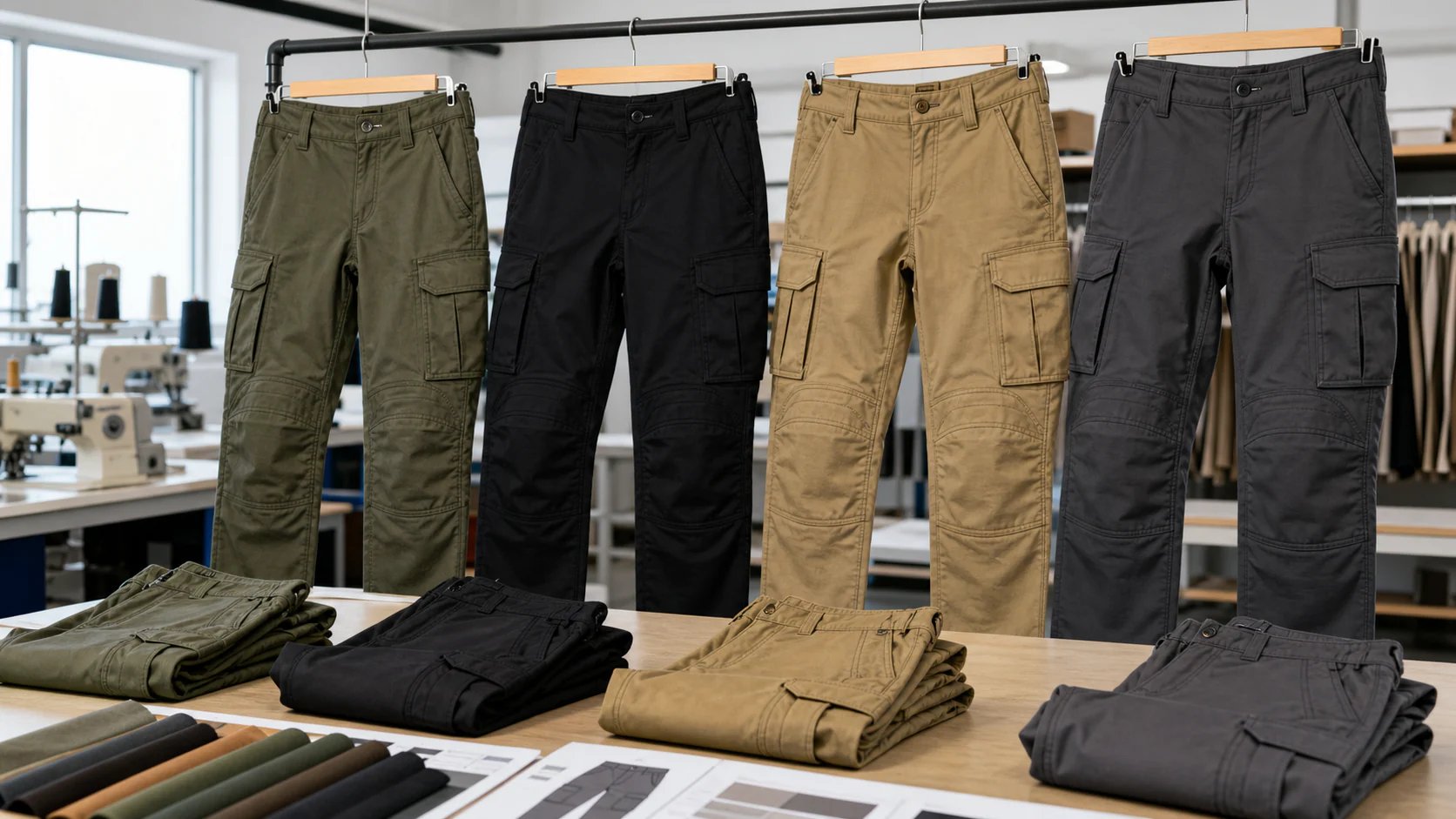
Tactical pants are not just cargo trousers with more pockets. A good program has to balance storage, mobility, reinforcement, and a fit direction that actually matches the buyer's market. This guide shows how Sialkot Sample Masters builds tactical pants for private-label, distributor, and workwear buyers from a 50-piece MOQ.
MOQ
50 pcs per design
Samples
7-10 days
Bulk lead
25-35 days
Support
Private label + export
Short Answer
Buyers should choose a tactical-pants manufacturer that can translate the end use into a real pocket map, reinforcement plan, and fit block before bulk. That means testing articulation, gusset depth, belt compatibility, and cargo loading in the sample room instead of approving only the look. If your program overlaps with uniforms, pair this with our security uniform manufacturing guide, the technical bartack placement guide, and the shipment-side controls in reducing rework before final inspection. The same gusset, reinforcement and belt-clearance decisions reappear in a very different end use in our custom climbing apparel manufacturer guide, where a harness waistbelt replaces a duty belt and the pocket map has to move above it.
Tactical pants sourcing checklist
- State the exact end use: duty uniform, industrial workwear, hunting, streetwear, or hybrid utility capsule.
- Define whether the build needs ripstop, stretch panels, DWR, knee-pad access, or reinforced hems.
- Lock the pocket map early because pocket volume and flap construction move both cost and silhouette.
- Approve articulation and gusset depth in the first sample, not after bulk costing is done.
- Request movement photos or video in the sample review so bending, kneeling, and seated comfort are actually checked.
- Map decoration and branding before quoting: embroidery, woven labels, rubber patches, hangtags, and carton marks.
The four decisions that shape the product
| Area | What gets specified | Why it matters |
|---|---|---|
| Base fabric | Ripstop cotton-nylon, poly-cotton stretch ripstop, or durable twill with mechanical stretch | The fabric choice decides abrasion resistance, pocket stability, and how much articulation the pattern needs. |
| Pocket system | Flat cargo, bellows cargo, hidden zip utility, phone pocket, knife clip zone, back welt or flap pockets | A tactical pant fails when the pocket map looks good on a sketch but sags in real use. |
| Reinforcement | Bartacks, double-layer knees, seat reinforcement, gusset, belt-loop reinforcement, pocket-edge binding | Stress points carry the life of the garment, especially around cargo flaps, fly base, and knee articulation. |
| Fit direction | Duty straight fit, tapered urban utility fit, or relaxed workwear fit | The end market changes the pocket depth, knee shape, hem opening, and rise balance. |
What buyers usually underestimate
Most tactical-pants programs do not fail because the fabric is weak. They fail because the stress map was never defined. Pocket corners, belt loops, fly base, knee-panel joins, side-pocket bellows, and seat seams need reinforcement decisions up front. A pocket that looks clean on a flat sketch can become bulky, sagging, or slow to access once loaded. That is why SSM usually reviews tactical pants as a system: base fabric, pattern block, reinforcement map, and movement test in one pass.
The second blind spot is fit direction. Duty buyers often need a straighter leg, deeper rise balance, and cleaner belt support. Streetwear and workwear buyers may want a more tapered hem, lower-profile cargo pocket, or washed surface. The current cross-over market is exactly why the trend side of the category matters too; see our functional utility pants trend report for what buyers are asking to commercialize in 2026.
Sample-room focus
In the first sample, SSM checks pocket volume, kneeling range, crotch comfort, waistband hold, and whether the cargo flap opens and closes cleanly with one hand. That is usually more valuable than debating trims too early.
Export focus
Once the sample is approved, the production file should also lock labeling, carton ratios, barcode placement, and any destination-specific documentation the buyer needs for resale or uniform issue.
A practical sample-to-bulk timeline
| Stage | Timing | Output |
|---|---|---|
| Tech pack and spec review | 1-2 days | Pocket map, fit direction, fabric options, and trim plan aligned |
| Prototype sample | 7-10 days | Fit sample with pocket function, articulation, and reinforcement points reviewed |
| Revision and approval | 3-5 days | Pattern, bartack map, and trim changes closed before bulk |
| Bulk production | 25-35 days | Cut, sew, press, QC, packing, and export dispatch from Sialkot |
For tactical trousers, the sample stage is where most of the business risk lives. Once the fit, reinforcement, and pocket logic are right, bulk becomes a discipline problem rather than a concept problem. That is also why SSM keeps the process sample-first: 7-10 day samples, 25-35 day production, and QC/export support from Sialkot so buyers are not guessing their way into a complicated garment category.
FAQ
What is the minimum order quantity for custom tactical pants?
Sialkot Sample Masters works from a 50-piece MOQ per design and colorway, which suits distributor tests, team programs, tactical start-up launches, and small private-label drops.
Which fabric is best for tactical cargo pants?
That depends on the job. Ripstop blends are the usual starting point for durable tactical trousers, while stretch twills can work better for urban utility or workwear-led programs that need cleaner drape and easier daily wear.
How long does tactical-pants sampling and production take?
First samples can usually move in 7-10 days when the spec is clear. After approval, bulk production is commonly planned in 25-35 days depending on trims, wash requirements, and shipment method.
What usually goes wrong in tactical-pant development?
Most problems come from weak pocket planning, poor articulation, or missing reinforcement at stress points. Buyers often approve the look before testing kneeling, climbing, seated comfort, and pocket load.
Can SSM ship custom tactical pants internationally?
Yes. SSM supports export packing, private label trims, QC, and logistics planning from Sialkot, Pakistan, including DDP workflows where they fit the buyer's shipping model.
Need a tactical-pants program reviewed before quoting?
Send the pocket plan, target fit, fabric direction, branding method, and shipping market. SSM can turn that into a sample-ready production file with QC and export planning built in.