2026 Activewear Trend: Quiet Performance Fabrics for All-Day Wear
The 2026 activewear material trend: quiet performance fabrics with matte finishes, softer hand feel, cleaner lines, and everyday wearability.
Product / Design / Material Trend Update
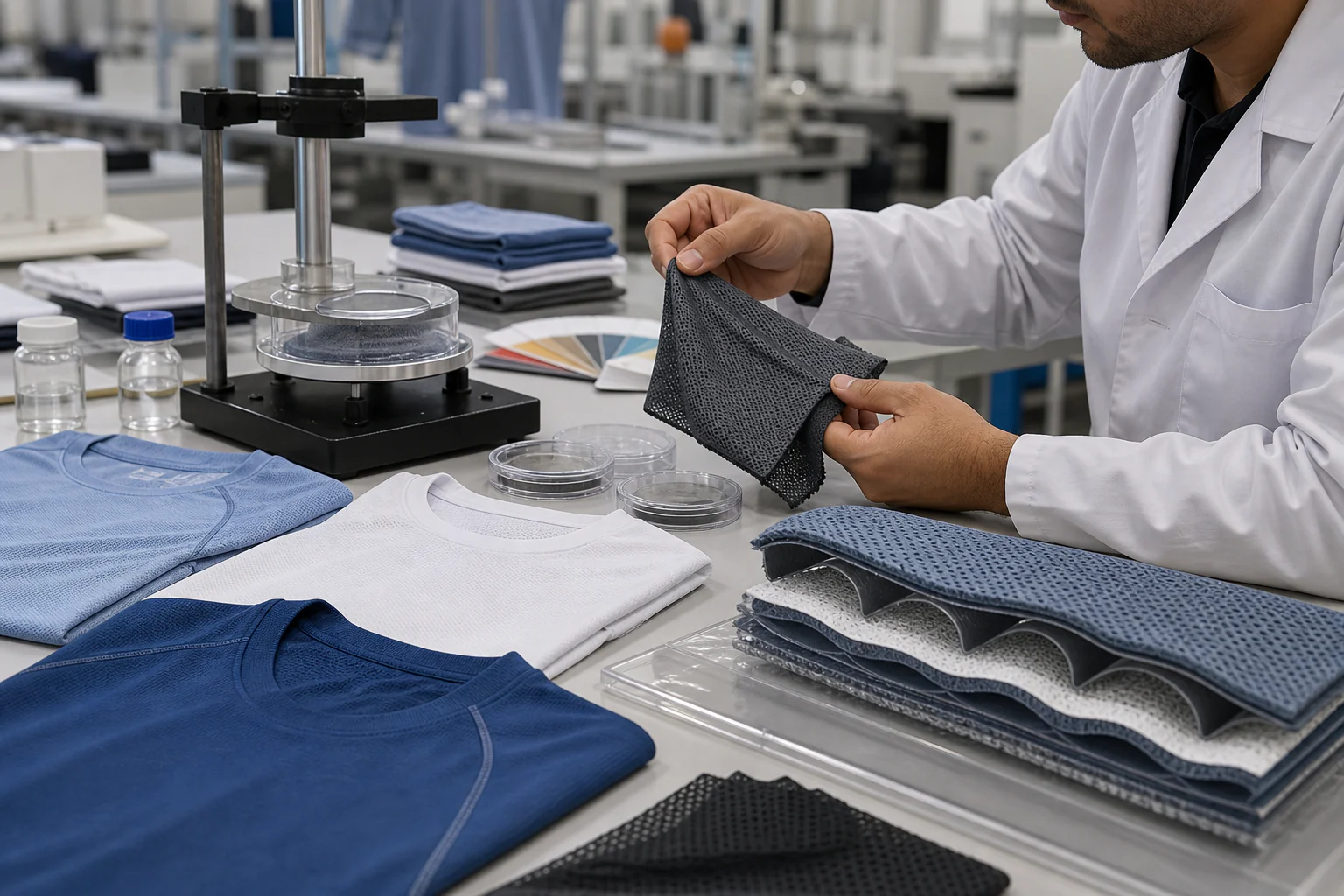
The loudest thing in activewear right now is restraint. Buyers still want stretch, breathability, and recovery, but they increasingly want it wrapped in calmer surfaces, softer hand feel, and product language that works outside the gym. That is the opening for "quiet performance": activewear that performs technically without looking over-designed.
Why This Trend Matters in 2026
Two current external signals matter here. McKinsey's State of Fashion 2026 says tariff pressure and cost turbulence are forcing brands to improve agility and efficiency, while customers keep rethinking value and well-being. Textile Exchange's Materials Market Report 2025 reports polyester still dominates global fiber output and that recycled share remains under pressure, which means founders are being pushed to talk more precisely about material choices instead of leaning on loose sustainability language. Our guide to eco-friendly fabric sourcing for clothing startups breaks down how to make those claims precise — GRS recycled content, GOTS organic cotton, and the transaction certificates behind each.
For SSM buyers, the implication is practical: do not chase a trend through mood-board language alone. Translate it into fabric hand feel, finish, seam visibility, branding restraint, and SKU mix. That is where trend turns into margin instead of dead stock.
Trend-to-Spec Translation
| Trend Signal | What Buyers Mean | Factory Translation |
|---|---|---|
| Matte, low-shine faces | Looks more premium and less team-kit loud in daily wear. | Prefer matte interlock, brushed jersey, compact rib, and restrained contrast panels. |
| Fewer visual interruptions | Consumers want all-day wear, not only gym identity. | Reduce oversized logos, move to tonal trims, and use cleaner seam mapping. |
| Performance with softer hand feel | Brands need training utility without the harsh synthetic look. | Use brushed or peach-finish blends, fine-gauge rib inserts, and lighter compression zones. |
| Material scrutiny | Founders are asked harder questions about fiber mix and recycled content. | Document fabric source, keep recycled claims precise, and avoid vague eco language. |
Four Fabric Directions That Fit Quiet Performance
Compact matte interlock for leggings and bras that need opacity without a glossy finish.
Fine-gauge rib panels for side body, waist, and bra underband details that read elevated rather than loud.
Soft micro-mesh for hidden ventilation instead of high-contrast visible mesh blocks.
Brushed performance jersey for tops and outer layers that need all-day comfort and cleaner drape.
Brands already sourcing training product should compare this direction against the harder-performance logic in our startup sportswear guide and the print-driven decision tree in sublimation vs screen printing for sportswear. Buyers shaping Gulf-facing collections should also review the new modest performance wear trends report and the category-specific modest activewear manufacturer guide. The same next-to-skin, low-noise fabric thinking carries straight into field apparel — see how it applies to a scent-control hunting base layer and to the harder-wearing outer layer in our waterproof technical shell manufacturer guide. Low-noise, low-glare, dimensionally stable fabric is a hard specification rather than an aesthetic in the precision disciplines too — our guide to sourcing a custom archery and shooting sports apparel manufacturer sets out how those properties are written into a tech pack and tested. Quiet performance is not anti-technical. It simply prioritizes calmer execution.
Quick Facts
What does quiet performance mean in activewear?
Quiet performance describes activewear that still functions technically but looks calmer and more wearable in daily life: matte surfaces, softer hand feel, cleaner paneling, and less aggressive logo treatment.
Why is this trend important for manufacturers in 2026?
Brands are dealing with cost pressure, material scrutiny, and more value-conscious customers. They need styles that sell both as activewear and as everyday apparel, which makes material choice and construction more commercially important.
Which fabrics fit the quiet-performance direction best?
Matte interlock, brushed jersey, fine rib inserts, and subtle mesh ventilation are the safest starting points because they preserve function while avoiding the loud, shiny look associated with older gymwear.
How should brands brief this trend to a factory?
Send reference images, target GSM, surface finish, logo restraint notes, and the use case. The factory then translates the trend into a fabric shortlist, seam map, trim stack, and sample plan.
Need This Trend Translated Into a Sample Plan?
Send your references, target GSM, fabric priorities, destination market, and quantity split. SSM can convert the trend direction into a workable fabric shortlist, branding restraint notes, and sample-first production brief.