Moisture Wicking Explained for Performance T-Shirts
How moisture-wicking T-shirts work, what textile buyers should test, and how knit structure, dry-back, and ventilation affect performance apparel quality.
“Moisture wicking” is one of the most overused phrases in performance apparel. Buyers who treat it as a marketing label instead of a measurable fabric behavior usually end up with tees that still cling, dry slowly, or feel heavy once the run gets hot.
Key Job
Move Sweat Outward
Depends On
Knit + Yarn
Verify With
Lab + Wear Test
Best Use
Hot-Weather Tops
Short Answer
Moisture-wicking fabric is built to move sweat away from the skin to the outer face of the material so it can evaporate faster. Nike’s current Dri-FIT explanation describes the same basic principle: sweat is moved away from the skin and spread across the fabric surface for faster evaporation. For buyers, that means the real question is not whether a tee claims to wick, but whether the shirt keeps its shape, dries back quickly, and stays comfortable under repeated use.
Buyer Checklist
- Do not approve a performance tee from hand-feel alone; test it wet.
- Compare sweat transport, cling, and dry-back across at least two fabric options.
- Check seam placement under arm swing and pack straps if the shirt will be used for trail running.
- Treat ventilation zones and moisture transport as separate decisions in the spec file.
- Pair moisture claims with washing guidance and market-specific care-label requirements before bulk.
The Four-Part Moisture-Management Framework
| Factor | What It Controls | What Buyers Should Check |
|---|---|---|
| Fiber and yarn | The yarn system needs channels that move sweat away from the skin instead of holding it in place. | Ask whether the tee relies on synthetic moisture transport, blends, or added finishing. |
| Knit structure | Mesh, jacquard, and body-mapped constructions change airflow and dry-back speed. | Compare a plain jersey sample against the proposed performance knit under the same sweat load. |
| Drying behavior | A good tee should release moisture fast enough to avoid heavy cling after saturation. | Run wash and wear trials, not only desk reviews. |
| Testing protocol | Moisture claims should map to real lab methods, not marketing copy alone. | Request the supplier’s preferred moisture-management, wicking, and drying tests. |
How the Better Systems Work
The best-performing tees do two jobs together: they transport sweat outward and they create enough airflow for the moisture to leave the fabric quickly. That is why many modern running tops combine a smoother base knit with mesh zones or a more open jacquard in heat-heavy areas. ASICS uses that logic in current running singlets that emphasize lightweight knit structures and body-mapped ventilation for warm conditions.
Buyers should separate moisture transport from ventilation in the spec file. A fabric can technically wick sweat and still feel bad if the shirt holds too much dampness against the skin. This distinction matters even more for hot-weather and race-day garments, which is why brands building a full category should compare this guide with our running-apparel manufacturer guide.
If the end use is trail or long-distance training, garment construction still matters after the fabric is chosen. Side seams, pack contact points, and underarm panels can turn a good moisture-management fabric into a bad finished product if the patterning is careless.
What Testing Should Look Like
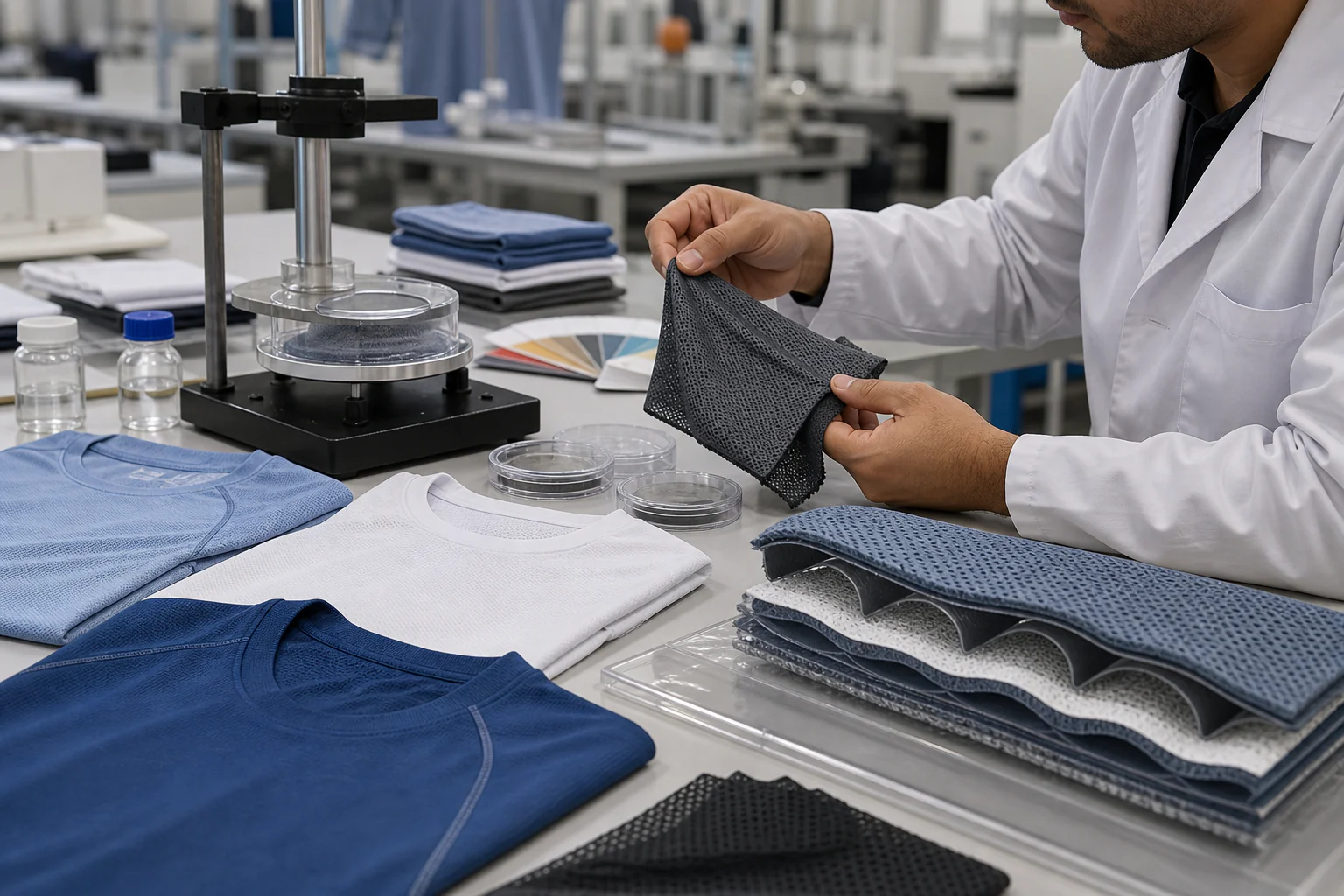
Moisture claims should be matched to test methods. AATCC’s current moisture-management resources reference methods for liquid moisture management, vertical wicking, and drying time, which gives buyers a better language for evaluating samples than “this feels breathable.” Those methods do not replace wear testing, but they help remove guesswork before bulk.
A practical factory workflow is simple: compare two or three candidate knits, run a basic wet test, wash them, and repeat. Look at cling, shade change under moisture, dry-back speed, and whether branding or seam areas hold sweat differently than the main body fabric.
Buyers should also keep labeling in mind. A performance benefit means little if the care label causes the garment to be washed or dried in ways that damage the finish. That is where market-specific label rules become part of product development, not a last-minute trims task. Performance brands expanding into cycling should carry the same discipline into jersey zips, grippers, and pocket construction, because comfort problems there show up just as quickly as poor dry-back does in a tee.
How SSM Turns This Into a Buyer-Safe Sample
SSM’s value in this category is not only sewing the tee. It is helping the buyer convert a vague “make it moisture wicking” request into a sample plan with the right knit route, fit shape, wash guidance, and export-ready labeling. That matters for startups and established brands alike because the product promise sits in the finished garment, not in the fabric mill’s brochure.
The same sample-first logic supports 50-piece MOQ development, 7-10 day samples, and 25-35 day production once the fit and moisture-management path are sealed. Brands that want to build adjacent race and trail silhouettes should continue with our running apparel trends report to see where pocketing, storage, and layering are reshaping the category.
Need Help Testing Your Performance Tee Fabric?
Send the target use case, reference garments, and destination market. SSM can help compare fabric options, build a sample, and align the final product with buyer-ready labeling and export support.