GSM Guide for Activewear: Why Weight Is Not the Same as Performance
Learn how to evaluate activewear GSM — fabric weight, opacity, stretch recovery, breathability, and why heavier fabric does not always mean better performance.
Buyers often treat GSM like a shortcut for quality. In practice, GSM is only one line on the fabric story. A high number can still produce a poor garment if the knit, yarn, stretch recovery, and finishing do not support the intended training use.
Measures
Fabric weight
Missing
Drying speed
Needs
Opacity + recovery
MOQ
50 pcs +
Short Answer
GSM tells you how heavy the fabric is, not how well the activewear will perform. Serious buyers should evaluate GSM together with knit structure, opacity under stretch, recovery, sweat handling, and the intended garment category. That is why this article pairs well with our flatlock vs overlock guide, the polyester color-matching article, the newer moisture-wicking performance T-shirt explainer, and the broader product planning framework in sportswear manufacturing for startups.
Fabric Evaluation Checklist
- Review GSM together with composition, knit structure, and finishing rather than as a standalone number.
- Check opacity under stretch for the actual intended size range.
- Ask whether the fabric hand feel comes from yarn choice, brushing, peaching, or finish chemistry.
- Test recovery after movement so elbows, knees, and waistbands do not bag out.
- Align GSM to use case: studio, performance training, layering, or travel set.
Typical GSM Ranges by Use Case
| Use Case | Typical GSM | What It Can Support | What Buyers Still Need To Check |
|---|---|---|---|
| Light training tee | 120-160 GSM | Lighter handle, faster drying feel, lower bulk | Too light can turn sheer or unstable if yarn quality and knit density are weak. |
| Fitted long-sleeve top | 160-220 GSM | Better opacity, smoother drape, more premium surface | Weight alone does not guarantee compression, softness, or recovery. |
| Leggings and training bottoms | 200-280 GSM | Improved coverage and shape retention when paired with the right elastane content | A heavy fabric can still feel hot, stiff, or baggy if finishing and knit structure are wrong. |
| Layering jacket or warm-up set | 220-320 GSM | More body, better outerwear presence, and stronger merchandising value | Higher GSM can damage mobility if buyers ignore stretch direction and panel engineering. |
What the Material Conversation Looks Like in 2026
GSM only tells you how much a square meter of fabric weighs. It does not tell you whether the fabric breathes well, dries fast, stays opaque, or rebounds after stretch. Those outcomes depend on yarn selection, knit construction, finish, elastane percentage, and how the garment is patterned.
Buyers often overpay for weight because heavier fabric feels more premium on the table. In activewear, that instinct can backfire. A fabric that feels substantial in a sample room can become hot, restrictive, or slow-drying once the product is worn in motion.
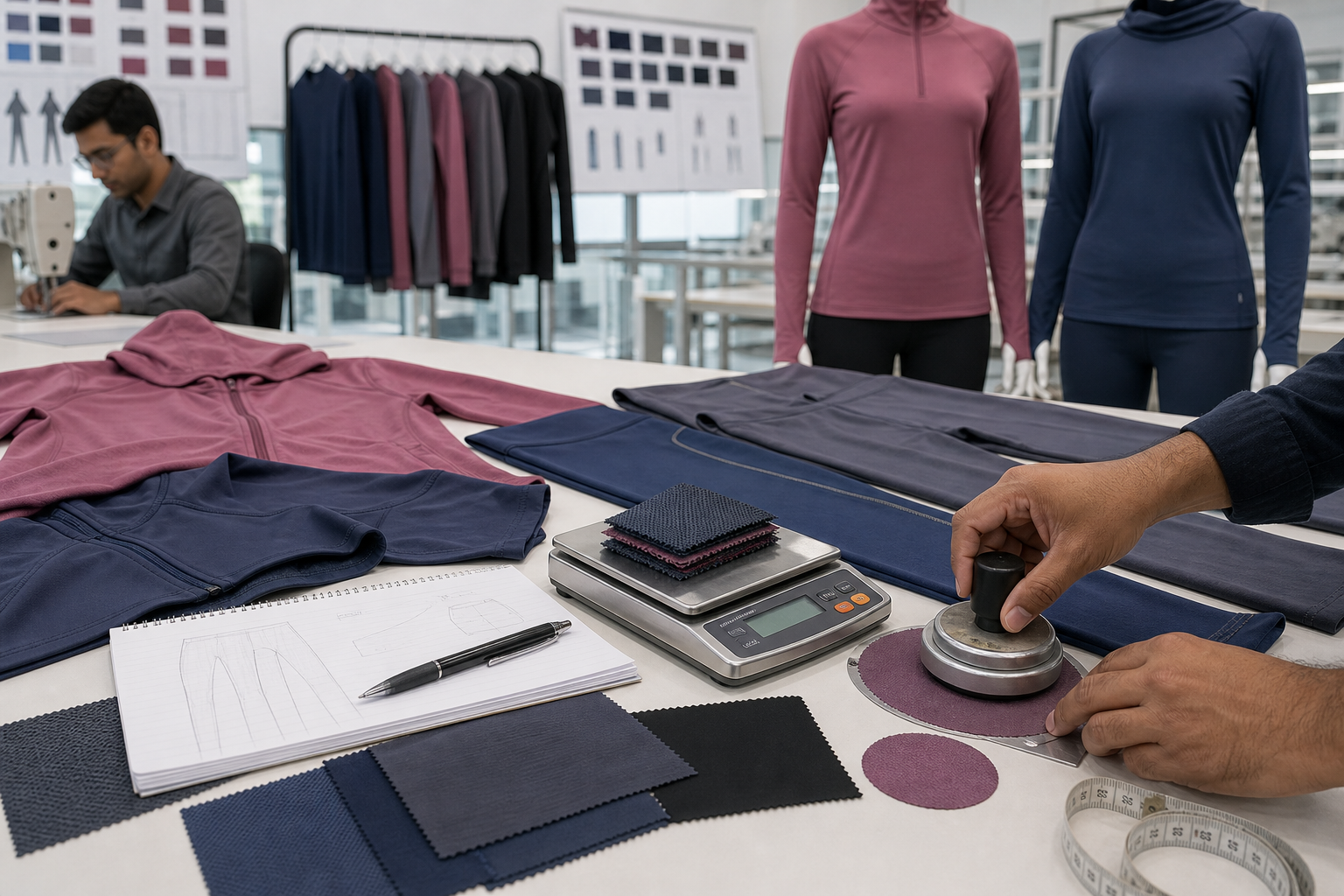
The best factories use GSM as one checkpoint inside a broader approval workflow. They compare swatches, measure stretch and recovery, evaluate sewing behavior, and then decide whether the fabric supports the target silhouette. That is especially true for leggings, long-sleeve performance tops, and modest sets where opacity and comfort must coexist.
This matters even more now that performance ranges are being judged on material storytelling as much as fit. Textile Exchange's Materials Market Report 2025 keeps recycled synthetics and fiber transparency in the buyer conversation, but the garment still has to wear correctly. In other words, a responsible material story does not replace the need for the right GSM, knit, and recovery behavior. Buyers shaping leggings, yoga sets, and modest ranges should also compare this framework with our modest activewear manufacturer guide, the new custom yoga apparel sourcing guide, and the companion piece on four-way stretch fabric testing.
Quick Facts
What does GSM mean in activewear fabric?
GSM means grams per square meter. It measures fabric weight, but it does not by itself explain breathability, opacity, recovery, softness, or drying speed.
Is a higher GSM always better for activewear?
No. A higher GSM can improve body and opacity, but it can also make the garment hotter or less flexible if the knit structure and finish are wrong for the use case.
Why do buyers confuse GSM with performance?
Because weight is easy to compare on a spec sheet. Real performance comes from the full material system, including yarn, elastane level, knit density, finishing, and garment engineering.
How does SSM evaluate activewear fabric before bulk?
SSM reviews the intended product category, compares swatches, checks opacity and recovery, samples the garment, and then confirms whether the chosen GSM actually supports the wear goal before production is locked.
Need Fabric Weight Judged Against the Real Use Case?
Send the product type, target fit, and fabric options. SSM can help compare swatches, sampling logic, and construction risks before the fabric spec is frozen.