Running Apparel Trends: Split Shorts, Singlets, and Hybrid Trail Kits
The 2026 running-apparel trends that matter for brands: split-short silhouettes, more technical singlets, trail-ready storage, and cleaner capsule planning.
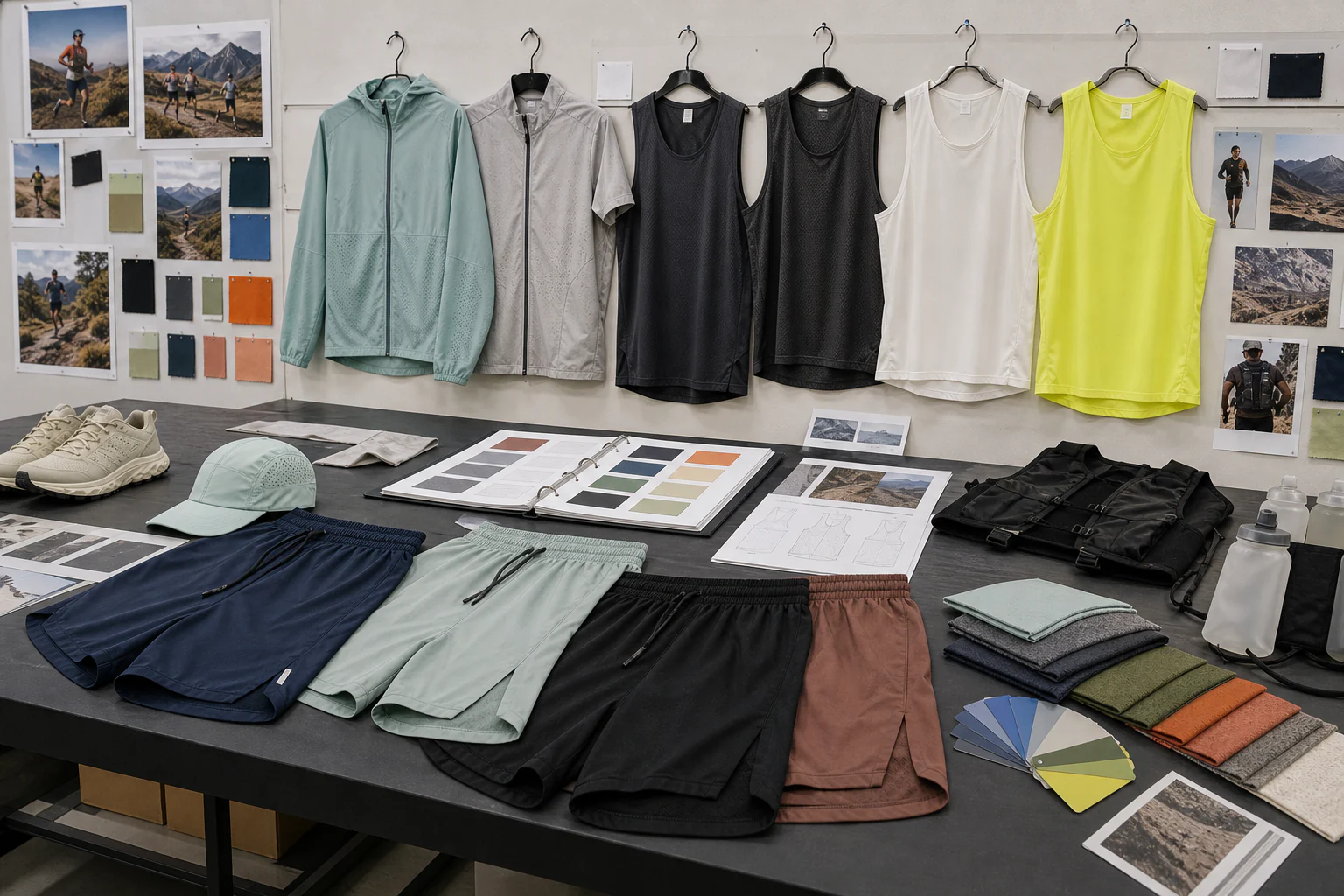
The strongest running collections right now are not trying to make one short and one top serve every use case. They are sharpening the differences between race-day minimalism, daily training comfort, and trail-ready carry systems.
Road Trend
Technical Singlets
Race Trend
True Split Shorts
Trail Trend
Carry + Stretch
Capsule Shift
Hybrid Systems
Short Answer
Running apparel is splitting back into purpose-built lanes. Official product direction from current brands supports that shift: Tracksmith continues to push lighter racing singlets, ASICS still highlights split-short freedom and technical ventilation, and Nike plus Salomon keep reinforcing storage, stretch, and vest compatibility for trail use. The opportunity for brands is not copying one style, but building a cleaner capsule around those real use cases.
Capsule Planning Checklist
- Keep a clear difference between race, training, and trail shorts in the line architecture.
- Use singlets and tees as separate fit stories, not interchangeable pattern blocks.
- Plan storage pockets and vest compatibility early for trail SKUs.
- Control fabric hand-feel across the collection so the capsule still feels like one brand.
- Sample hero products first: one split short, one singlet, and one trail-ready hybrid short or shell.
The Four Trends That Matter
| Trend | Current Signal | What Brands Should Do |
|---|---|---|
| High-performance split shorts are back | Brands continue to spotlight light 3-4 inch race cuts with freer stride and faster heat release. | Running brands should keep a true race short in the line, not only a safer mid-length training short. |
| Singlets are more technical, not just lighter | Current premium singlets emphasize body-mapped ventilation and heat-zone management instead of flat jersey only. | Use panel mapping and knit choice to create a real performance story, not just a lower GSM claim. |
| Trail product is pulling storage into apparel | Trail shorts and hybrid systems now expect pockets, stretch, and compatibility with hydration gear. | Design trail-ready SKUs with carry logic from day one rather than adding storage as an afterthought. |
| One collection now spans road, race, and trail | Consumers want versatile capsules that layer across training, race day, and mixed terrain. | Structure the line in modules so fabrics, trims, and fit blocks scale without losing specialization. |
Road Racing Is Reclaiming Specialized Silhouettes
Split shorts never disappeared, but the race end of the category is clearly leaning back into them more confidently. Tracksmith’s current running-shorts lineup still centers performance split silhouettes, while ASICS continues to describe split-short designs around freer stride and hotter conditions. That tells buyers something important: high-performance runners still value a dedicated race fit over one universal short length.
For brands, this means a race short should look and feel like a race short. Lower bulk, cleaner shell fabric, and less visual clutter usually win. The companion top should do the same, which is why more premium lines are pairing that short direction with increasingly technical singlets rather than only generic tanks.
Trail Apparel Is Pulling the Category Toward Utility
Trail demand is changing what buyers expect from apparel. Nike’s current trail shorts still emphasize four-way stretch and multiple pockets, and Salomon’s hydration-vest guidance keeps reinforcing fit stability and easy-access storage as core performance needs. The result is a more hybrid product language: less pure minimalism, more smart utility.
That does not mean every road short needs cargo features. It means brands should decide when a product belongs in the race lane and when it belongs in the trail lane. Trail-focused shorts, shells, and outer layers should be designed around nutrition, phones, flasks, and vest compatibility from the start.
The best-performing factories help make that distinction clear in the sampling phase, which is why this trend report pairs naturally with our running-apparel manufacturer guide. Teams taking the hybrid trail idea all the way into real terrain should read it alongside our custom orienteering and trail running team kit manufacturer guide, where the vest yoke, the race-number mount and the tear-rated shin panel become specification lines rather than styling choices.
What This Means for New and Growing Brands
The cleanest launch strategy is usually a hero trio: one race singlet, one split short, and one trail or hybrid short. Once those three products prove the fit block, dry-back behavior, and trim language, the rest of the line can expand more safely into tees, shells, half tights, or storage-led trail capsules.
Brands that skip this discipline often launch with five or six middling SKUs that blur together. They spend too much on development and still fail to give the customer a strong reason to choose one use case over another. The better route is tighter, more intentional merchandising built on real performance differences.
Once the fabric story is clearer, use our moisture-wicking guide to keep your top program technically honest instead of relying on vague product copy.
Planning a Running Capsule for 2026?
Share the brand direction, target runner, and first-SKU priorities. SSM can help turn trend direction into a sample-ready road, race, or trail apparel capsule with low-MOQ production support.