Satin, Mesh, and Stretch Panels for Boxing Apparel
How combat-sports buyers should use satin, mesh, and stretch panels in boxing shorts and robes for better mobility, airflow, and cleaner samples.
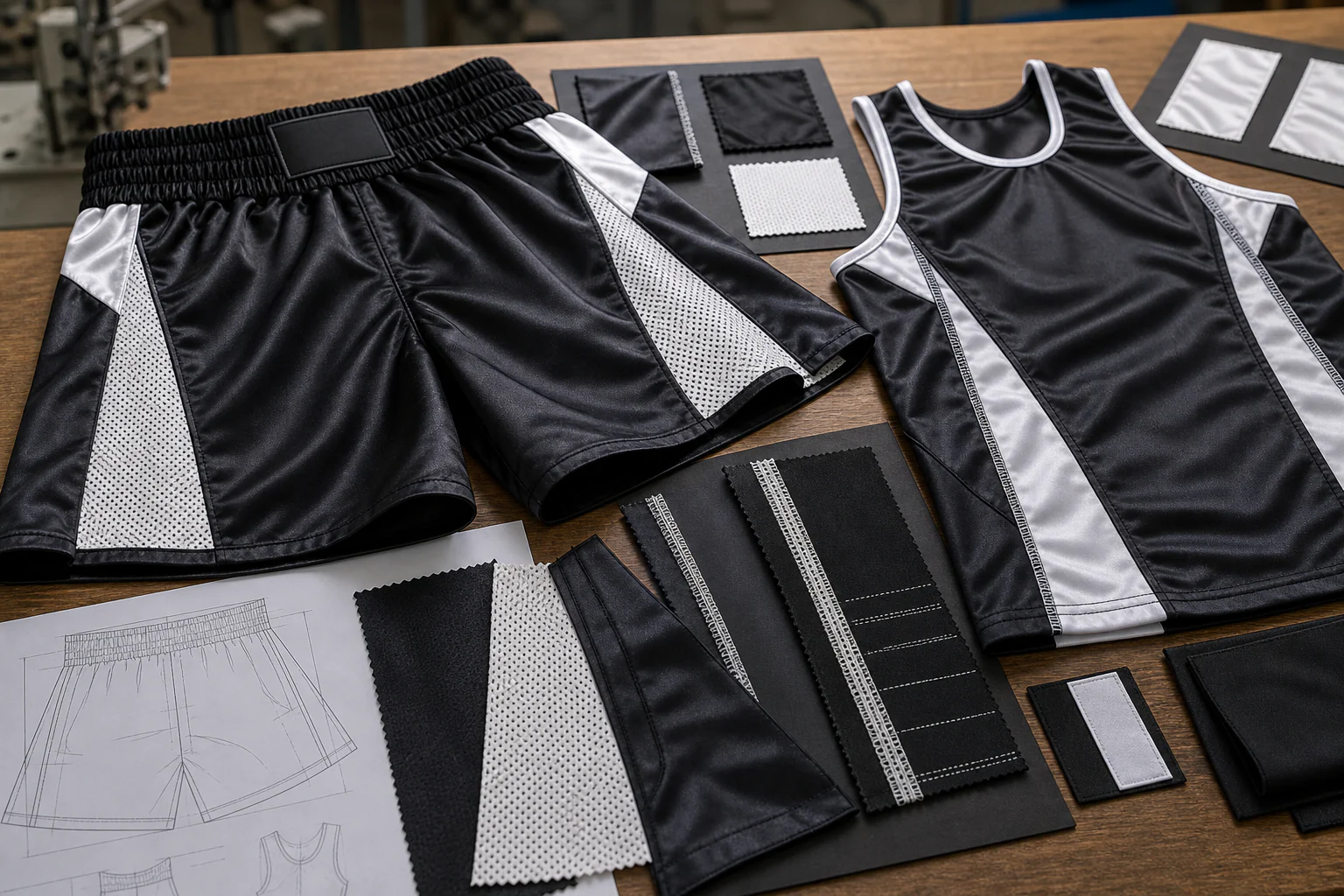
Boxing shorts look simple until the panel map is wrong. When satin is asked to do the job of stretch, or mesh is dropped in as decoration instead of engineering, the result is binding, waistband roll, and samples that look better on a hanger than in stance.
Short Answer
Use satin where the garment needs ring-ready sheen and branding presence. Use mesh where the body needs airflow or the robe needs cleaner lining behavior. Use stretch only where the cut would otherwise fight the athlete. Buyers starting with the full category should first read our custom boxing gear manufacturer guide, then use this article to lock the actual panel map before sampling.
Sample Approval Checklist
- Decide whether the short is classic wide-leg boxing trunk or a slimmer modern fight short before choosing fabric zones.
- Keep satin on the visual body panels and use mesh only where airflow matters, not as a random styling insert.
- Use stretch panels where the athlete loads the garment: side leg opening, gusset, and narrow seat shapes.
- Lock waistband depth, elastic tension, and drawcord choice before sample approval.
- Approve one sample in the actual fabric mix, not in substitute fabric, because satin, mesh, and stretch recover differently.
What Each Material Should Actually Do
| Material | Technical Role | Best Use |
|---|---|---|
| Poly satin shell | Creates the classic ring sheen and holds contrast piping cleanly. | Traditional boxing trunks and statement robe panels. |
| Air-mesh insert | Improves airflow and reduces cling inside high-heat zones. | Inner leg gussets, side panels, robe lining, and back vents. |
| 4-way stretch panel | Lets the trunk open and recover during pivots, slips, and knee drive. | Side inserts, crotch gussets, and narrower modern short cuts. |
| Waistband reinforcement | Stabilizes rise height and keeps branding readable through movement. | Wide elastic front waistbands, inner drawcord channels, and label blocks. |
Current retail boxing guidance still points toward satin or poly-satin for trunks, specifically because it stays lighter under sweat load and keeps movement cleaner, while also favoring a 3.5 to 4 inch waistband and side slits for flexibility. See TITLE Boxing’s current trunk guide for the live retail reference behind that construction logic.
Panel Map by Garment Zone
| Garment Area | Default Build | Why It Works |
|---|---|---|
| Outer leg panel | Poly satin | Keeps the boxing look polished under lights and carries piping or trim cleanly. |
| Inner leg or side vent | Mesh or stretch insert | Improves stride freedom and reduces fabric drag during movement. |
| Waistband face | Satin over wide elastic | Preserves branding visibility while keeping structure stable. |
| Gusset / mobility zone | 4-way stretch knit | Adds recovery where a narrow cut would otherwise bind. |
| Robe lining | Mesh or satin lining | Changes airflow and drape depending on whether the robe is performance-led or ceremony-led. |
Where Buyers Usually Get It Wrong
They over-style the short. A narrow leg, no stretch panel, and a tall waistband can look sharp in artwork but lock the body during stance unless the gusset and side vent are engineered correctly.
They treat mesh as visual trim instead of airflow structure. Mesh should be solving heat and cling, not randomly breaking up a color block.
They forget that stretch changes seam behavior. If stretch panels are introduced, seam choice and recovery testing should be reviewed alongside related movement zones. Our flatlock vs overlock guide is useful here, even though the category is different.
They approve a substitute sample. Satin, mesh, and stretch fabrics reflect, drape, and recover differently, so the sample must use the actual fabric mix. Buyers wanting a broader performance-fabric baseline should compare this with our sportswear fabric orientation guide.
Quick Facts
Why is satin still common in boxing shorts?
Because it gives the traditional boxing finish buyers still expect, and current retail boxing references continue to describe satin or poly-satin as the ideal trunk material for movement and moisture control.
What does mesh actually do in boxing apparel?
Mesh is usually a support material, not the visual hero. It improves breathability in side panels, liners, and vents, and helps the garment release heat instead of sticking to the body.
When are stretch panels necessary?
They matter most when the short has a narrower leg, lower rise, or a cleaner silhouette that would otherwise restrict stride. A stretch insert lets the short keep the look without giving up mobility.
Can Sialkot Sample Masters sample mixed-material boxing shorts quickly?
Yes. SSM can sample satin, mesh, and stretch-panel combinations in 7-10 days, then move approved styles into 25-35 day bulk production at the standard 50-piece MOQ.
How wide should a boxing waistband be?
Retail boxing guidance today still points buyers toward roughly 3.5 to 4 inch waistbands for pro-style trunks, because the wider waistband stays more stable over the groin protector and keeps the front presentation cleaner.
How should buyers test these panel combinations?
Request movement photos or a wear test in stance, pivot, and knee-drive positions, then review the sample for drag lines, waistband roll, mesh transparency, and trim distortion before bulk approval.
Need the Panel Map Reviewed Before Sampling?
Share the short cut, waistband direction, target athlete, and decoration plan. SSM can map satin, mesh, and stretch zones into a cleaner sample brief before bulk production starts.