
Business Guide 11 min
How to Scale a Streetwear Brand: The 50-Piece Drop Playbook
Micro-drop testing at 50-piece MOQ, sell-through gates, and the 50-to-500 reinvestment ladder — the manufacturing engine behind scaling a streetwear brand.
Read More
Now Accepting Orders for SS2026 — Sample turnaround in 7-10 days. Worldwide shipping available. Request a Sample Kit →
The choice between OEM and ODM is one of the most critical decisions an apparel brand will make. It determines your speed to market, your cost structure, and your competitive moat in the global fashion ecosystem.
A technical breakdown of the two primary manufacturing workflows.
| Feature | OEM (Original Equipment) | ODM (Original Design) |
|---|---|---|
| Design Control | 100% Brand Owned | Manufacturer Led |
| Speed to Market | Slower (R&D needed) | Fast (Ready-made) |
| Initial Investment | High (Sampling/Tech packs) | Low (Existing designs) |
| Brand Uniqueness | Maximum (Custom DNA) | Limited (Shared designs) |
| MOQ Requirements | Standard (50+ pieces) | Flexible (Stock designs) |
| Technical Risk | Brand Responsibility | Manufacturer Shared |
In the OEM (Original Equipment Manufacturing) model, your brand is the architect. You provide the **Tech Packs**, the fabric specifications, and the grading charts. The manufacturer acts as your physical production wing in Sialkot, executing every stitch to your exact requirements.
This is the gold standard for established brands who want a unique competitive advantage. When you own the pattern, you own the fit — and fit is the #1 driver of customer loyalty. Newer brands worried about minimums should note that full OEM is achievable at low volume too: see our guide to working with a custom clothing manufacturer in Pakistan with low MOQ, and our deeper read on running a true OEM clothing manufacturer order at a 50-piece MOQ.
Complete creative freedom for technical specs.
Exclusive ownership of patterns and designs.
Customized fabric sourcing and hardware selection.
Precision alignment with brand identity and DNA.
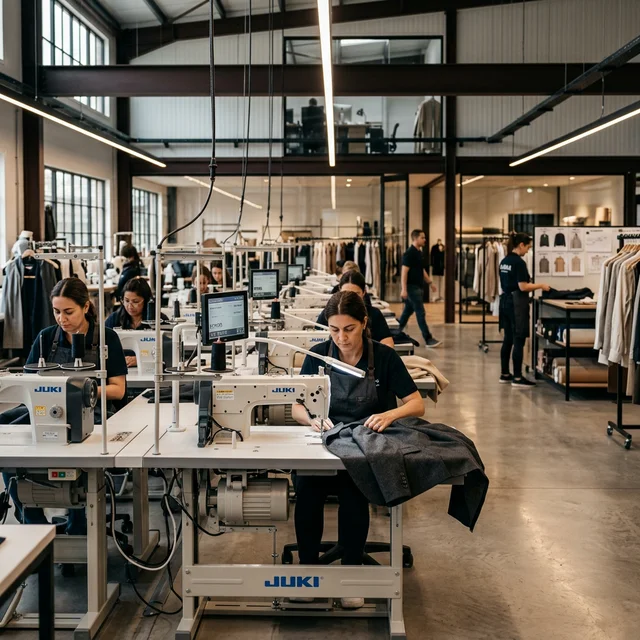
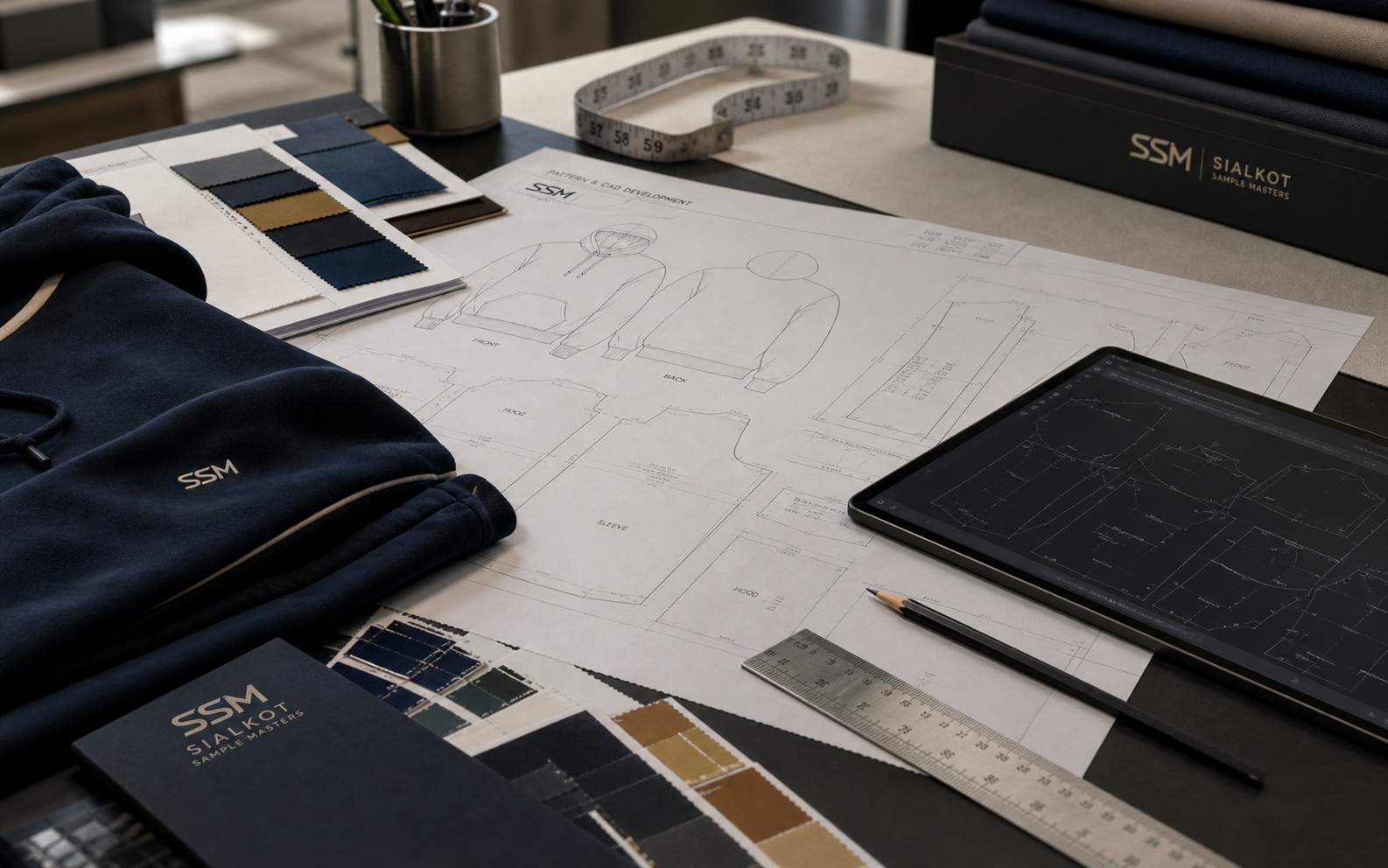
ODM (Original Design Manufacturing), often referred to as "Private Label," allows brands to leverage the manufacturer's R&D. Our design team in Sialkot develops cutting-edge silhouettes for techwear, hunting gear, and fitness apparel. Brands building a dedicated field line can read our hunting wear manufacturer Pakistan OEM guide for the silent-fabric and mil-spec construction detail. For brands building a standalone techwear accessories line, our guide to modular techwear chest rig manufacturing covers MOLLE-spec construction, Cordura fabric selection, and 50-piece MOQ for custom chest rigs.
You choose from our catalog, add your branding, logo, and custom labels. It's the most efficient way to launch a high-quality collection without the months-long R&D cycle required for OEM. For a deeper look at the branded-block route, see our guide to choosing a private label clothing manufacturer in Pakistan at low MOQ.
Significant cost savings on R&D and design.
Access to proven, market-tested silhouettes.
Faster turnaround times for initial launches.
Lower technical barrier for startup entrepreneurs.
Select the manufacturing model that aligns with your current brand phase.
Sialkot Sample Masters Team
Yes. Many of our partners use OEM for their "Hero" products (custom jackets) while leveraging our ODM silhouettes for staples like performance tees and joggers to balance their budget.
ODM designs are proprietary to Sialkot Sample Masters, but we grant you exclusive branding rights for your specific production run. For OEM, you retain 100% of the Intellectual Property.
Manufacturing & Export Division
Sialkot Sample Masters is a Sialkot-based custom apparel development and manufacturing partner for streetwear, sportswear, hunting wear, technical outerwear, uniforms and martial-arts garments. The team uses a specification-led path from brief and sample approval to production preparation.
More manufacturing guides and industry insights from Sialkot Sample Masters.
Micro-drop testing at 50-piece MOQ, sell-through gates, and the 50-to-500 reinvestment ladder — the manufacturing engine behind scaling a streetwear brand.
A B2B cost breakdown of clothing manufacturing in Pakistan: the five garment cost components, a country comparison, worked cost build-up, and DDP landed cost.
Broadcast stage jerseys drafted for a seated player, matte camera-safe fabrics, versioned sponsor layouts and retail fan ranges at a 50-piece MOQ.