Custom Rugby Sevens Kit Manufacturer: The 2026 B2B Sourcing Guide
Source custom rugby sevens jerseys, shorts and tournament kit from Sialkot — lightweight high-tenacity knits, reinforced grab points, clash sets, 50-pc MOQ, 25–35 day lead, DDP worldwide.
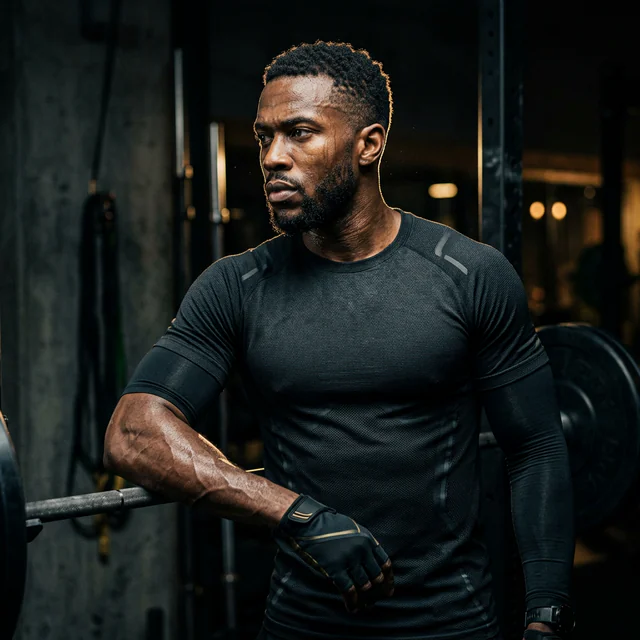
Almost every other kit on this site is specified against a match. Sevens has to be specified against a weekend. A squad of twelve plays five or six matches across two days, each of them fourteen minutes of near-continuous sprinting, usually in summer heat, with barely an hour between them — which means the unit of purchase is not a jersey but a tournament wardrobe, and the jersey itself is a different garment from the fifteen-a-side shirt it looks like. It is lighter, it is cut tighter so there is nothing for a tackler to hold, and the strength that comes off with the weight has to be deliberately bought back at four specific points. This guide covers how sevens match kit, clash sets, tournament layers and the wider programme wardrobe are specified, built, priced and quality-controlled for clubs, schools, universities and unions ordering from 50 pieces.
MOQ
50 pcs/design
Lead Time
25–35 days
QC Pass Rate
99.8%
Est.
2009
Section 01
Specify the Tournament, Not the Match
The single most useful thing a sevens buyer can do is stop thinking in shirts and start thinking in weekends. A fifteen-a-side club plays one match, on a known date, against a known opponent, on soft winter ground, and its kit budget is a set of jerseys plus a couple of spares. A sevens squad turns up to a festival with twelve players, gets drawn against five or six sides it has never checked colours against, and plays all of them inside forty-eight hours in July. Every consequential decision in the tech pack falls out of that difference, and almost every disappointing first order is a fifteens order placed for a sevens programme.
Start with the count. One jersey per player is not a kit for a tournament side; it is a kit for the first round. A shirt is saturated inside fourteen minutes of continuous running in summer heat, and the gap to the next match is sixty to ninety minutes — enough to wring it out and bag it, nowhere near enough to dry it properly. Two match sets per player is the working baseline, and it has to be priced into the original production run rather than added later, because a top-up order six months on means a second sampling cycle, a second minimum and a colour match against a lot that has already shipped. The same arithmetic makes the clash strip a specification rather than an upsell: a pool draw is not a fixture list, the conflicts are genuinely unknowable in advance, and a squad that cannot change strip has to borrow one. Our custom rugby jersey manufacturing guide covers the fifteens shirt in detail; treat this page as the tournament-format counterpart rather than a repeat of it.
Then look at what else the squad wears. Between matches the players cool down completely, sometimes in a cold morning pool stage and sometimes under a shower on an exposed pitchside, and the base layers, warm-up tops, shells and mid-layers stop being optional squad merchandise and start being the thing that keeps a warm-up short. The manager needs a bag with a wet compartment because six sets of soaked jerseys have to go somewhere before the semi-final. None of that is glamorous, all of it is consumed in volume, and it costs almost nothing to add to a production window that is already open. Sialkot Sample Masters has built sublimated and reinforced contact-sport kit since 2009, from a 50-piece minimum, with 25 to 35 day production and DDP delivery.
Section 02
The Three Kit Systems
Sevens programmes order from three architectures. The first is the multi-set match kit, the second is the tournament and travel layer almost every first order under-specifies, and the third is where a club's real annual volume sits.
| Kit System | Build | Fabric Base | Best For | Decoration |
|---|---|---|---|---|
| Match-Day Kit System (home + clash, multi-set)(Most Ordered) | A tapered sevens jersey cut on a grip-denial block — close through the shoulder and upper arm, short set-in or raglan sleeve with a bonded or laminated hem, low-profile collar with a reinforced neck tape, and taped or double-needle load-bearing seams at shoulder, armhole, sleeve hem and side; paired with a shorter, closer woven short with bonded or zipped pockets and a bar-tacked waistband, plus a match sock. Quoted as sets per player rather than shirts per squad, and always in a home and a clash colourway | High-tenacity poly interlock or micro-pique 150–190 gsm on the body, reinforcement knit 220–260 gsm at the grab points, ventilation mesh 110–140 gsm on the centre back and underarm, woven poly or poly-elastane short outer 160–200 gsm | Club and school sevens squads, national and regional sevens programmes, invitational and festival sides, university teams, circuit and tournament sides | Full sublimation, per-player numbering 1–12 or 1–14, sponsor library, woven or heat-transfer interior labels |
| Tournament & Travel System | Everything the squad wears at a two-day tournament that is not the match kit — reversible training bibs, a warm-up or pre-match top, a shower-proof pitchside shell, a hooded mid-layer for a cold morning pool stage, a walk-out polo, a travel tracksuit, and the wet-kit holdall the manager needs when six sets of soaked jerseys come off the pitch and have to be turned around before the semi-final | Poly and poly-elastane knits 130–220 gsm, brushed poly fleece 260–320 gsm, shower-proof woven shell 60–90 gsm with taped or coated seams, 300–600D bag fabric with a coated wet-compartment lining | Any squad travelling to a tournament or circuit event rather than playing a home fixture | Sublimation on technical layers, embroidery on polos and tracksuits, screen or transfer print on training kit, one sponsor library applied consistently |
| Full Sevens Programme Wardrobe | The season's whole clothing offer on one artwork library — match kit in multiple sets, alternate and heritage strips for festival fixtures, training and gym kit, base layers, club tees, hoodies and joggers for members and supporters, junior and girls' squads graded on their own blocks, coaching staff kit, and matchday volunteer wear | Poly and poly-elastane knits 130–220 gsm, cotton and cotton-poly fleece 320–450 gsm, woven shorts and travel wear, bag fabric | Clubs and academies running a year-round membership and retail offer, schools with multiple age groups, unions running development squads | Sublimation across technical kit, screen print and embroidery on leisurewear, sponsor tiers held identical across every item in the range |
Scope note: Sialkot Sample Masters manufactures textile apparel and soft goods only. Boots, balls, headguards, shoulder padding, mouthguards and any certified protective equipment are equipment or protective categories and are not part of this offer. Confirm any union, school, festival or competition requirements that apply to your squad's kit — including strip registration, numbering and sponsor rules — before finalising a tech pack, and treat any claim of protective performance as out of scope unless it has been separately certified.
Section 03
Fabric Engineering: Lighter Without Becoming Weaker
A fifteens match jersey typically sits somewhere around 220 to 280 gsm because it spends the afternoon in mauls, rucks and scrums, being held and driven by several opponents at once. Sevens does not have that. It has open-field one-on-one tackling, a great deal of sprinting, and a compressed schedule in summer heat, and a 250 gsm shirt in those conditions is a heat penalty the squad pays for five matches. So the jersey comes down to roughly 150 to 190 gsm — and the moment it does, the buyer has a problem, because the sport still involves being grabbed and pulled hard by a hand at full speed.
The resolution is to buy the strength back deliberately rather than to hope the lighter cloth copes. Three levers do it. First, yarn: a high-tenacity polyester at 170 gsm can carry more tear strength than an ordinary polyester at 220. Second, knit construction: a tight interlock or micro-pique resists a hand closing on it in a way an open or textured structure does not. Third, targeted reinforcement: a doubled or bonded band of 220 to 260 gsm knit at the shoulder yoke, collar band and sleeve hem makes the loaded areas behave like a fifteens shirt while the body stays light. Together those three cost a little more per unit and they are the difference between a lightweight contact jersey and a training top with a sponsor on it. Buyers calibrating weights across a wider programme can benchmark against our GSM guide for activewear.
| Fabric / Component | Weight | Stretch | Hand Feel | Best For |
|---|---|---|---|---|
| High-Tenacity Poly Interlock / Micro-Pique (jersey body)(Recommended) | 150–190 gsm | 2-way to mild 4-way, firm recovery | Dense, smooth-faced, fast-drying | The sevens jersey body, and the fabric decision that separates this category from fifteen-a-side. A sevens shirt is roughly 60 to 100 gsm lighter than a fifteens match jersey because the game has no sustained mauling and is played at pace in heat, but it still gets tackled, gripped and pulled — so the tear and burst strength has to be bought back with high-tenacity yarn and a tighter knit construction rather than with mass. Specify tear strength and seam slippage as numbers on the quote, not as adjectives |
| Reinforcement Knit (shoulder yoke, collar band, sleeve hem) | 220–260 gsm | Low, high recovery | Firm, stable, non-slip | The grab points. A sevens tackle is almost always a one-on-one in open field, and the tackler's hand lands on a shoulder, a sleeve or a collar. Doubling the fabric or bonding a heavier band at those three positions keeps the jersey light everywhere else while making the loaded areas behave like a fifteens shirt. Bonded or laminated where a seam would otherwise create a ridge a hand can hook |
| Body-Mapped Ventilation Mesh | 110–140 gsm | 4-way, moderate | Very light, open, dries fastest | Centre back, lower back and underarm only. Sevens tournaments are compressed and usually hot, so evaporative area earns its keep — but mesh must never sit in the shoulder, sleeve or side-seam grab zone, where an open structure becomes a handhold and a tear origin. Every placement is checked for wet-state opacity on the production lot before approval |
| Woven Poly / Poly-Elastane Short Outer | 160–200 gsm | Mechanical or 2-way with elastane | Smooth, abrasion-resistant, quick-drying | The match short. Sevens is played on hard, dry summer grounds and the game is a running game, so the short takes ground abrasion at the hip and outer thigh and grab load at the waistband and leg opening. A woven outer with a bar-tacked waistband, reinforced side seams and bonded or zipped pockets outperforms a knit short by a wide margin. Inseam is cut shorter and closer than a fifteens short so there is less loose cloth to hold |
| Poly-Elastane Base Layer / Compression Knit | 180–220 gsm | 4-way, high recovery | Smooth, supportive, close | The base layer worn under the jersey in cold pool stages and the compression short worn under the match short. In a tournament format this is not optional squad kit — players sit through 60 to 90 minute gaps between matches and cool down completely, and the base layer is what keeps a warm-up short. Specify recovery after repeated elongation, not peak stretch |
| Recycled Poly / GRS-Certified Base | Matches virgin equivalent | Matches virgin equivalent | Comparable to virgin equivalent | Unions, schools, universities and retail brands operating written sustainability or procurement criteria. Increasingly requested on tournament kit specifically, because circuit events publish environmental commitments and expect participating squads' suppliers to be able to document the same |
Weight bands above are typical industry ranges — every Sialkot Sample Masters order is confirmed with a lab dip and a gsm check on the actual production lot, all bases carry OEKO-TEX Standard 100 certification, and GRS-certified recycled polyester options are available. Sublimation is the default decoration on sevens match kit for two reasons: a printed panel adds no thickness and no weight at a point where both matter, and it leaves no applied edge for a hand to catch, which an applied twill number or a heavy transfer at the shoulder does. The trade-offs between the decoration routes are set out in our twill appliqué versus embroidery versus sublimation comparison and in sublimation versus screen printing for sportswear.
Ventilation placement is where sevens diverges most sharply from the indoor court kit elsewhere on this site. On a volleyball or netball jersey, mesh goes wherever the heat is and the only constraint is wet-state opacity. On a sevens jersey, mesh is excluded from the entire grab map — shoulder, upper arm, collar and side seam — and confined to the centre back, lower back and underarm, because an open structure at a contact point is simultaneously a handhold and a tear origin. That is a deliberately conservative rule and it costs some cooling; the compensation is that the whole garment is lighter to begin with. The general principles behind the placements that remain are covered in our mesh fabric selection guide, and colour control across a multi-set order in our sublimation colour matching guide.
Section 04
Construction: The Grab Map, the Seams, the Short
The Grab Map and the Grip-Denial Block
Before any panel is drawn, mark the four places a tackler's hand lands on a sevens player: the shoulder, the upper arm and sleeve, the collar, and the side seam at the ribs. That map governs the block. The jersey is drafted close through the shoulder, chest and upper arm so there is no loose cloth to close a fist on; the sleeve finishes above the bicep and is bonded or laminated rather than folded into a loose hem that a finger can hook; the collar is low-profile with a stable reinforced band rather than a soft rib that stretches out of shape the first time it is pulled. This is a pattern decision made at the block stage. It cannot be retrofitted by taking a side seam in on a garment that was drafted loose, which is why a shrunken fifteens block never quite works and why the first question to ask a supplier is to see the map on the pattern.
Load-Bearing Seams and Reinforcement
Five seams carry load in this garment: shoulder, armhole, sleeve hem, collar band and side seam. Each is taped, double-needle or bonded with a high-tenacity thread, each is bar-tacked at its stress terminations, and the shoulder and collar carry a doubled or bonded reinforcement band rather than relying on the body fabric alone. The distinction that matters here is between a seam that is neat and a seam that has been pull-tested — a great many sublimated jerseys are beautifully finished and will still open at the armhole when a hand loads it laterally at sprint speed. Ask for the pull test on the production lot rather than on the sample. The stitch methods themselves are covered in our multi-needle flatlock stitching guide, with the construction-type comparison in flatlock versus overlock.
The Short Is an Abrasion Garment
Sevens is played in summer on grounds that have gone hard and dry, and it is a running game in which players go to ground at speed far more often than they are driven into it. That makes the short an abrasion garment rather than a comfort garment. Specify a woven poly or poly-elastane outer at 160 to 200 gsm with density at the hip and outer thigh, a bar-tacked waistband with an internal drawcord that cannot be pulled free, reinforced side seams, and bonded or zipped pockets instead of open patch pockets a hand can catch. The inseam runs shorter and closer than a fifteens short for the same grip-denial reason as the sleeve. A knit short with an exposed elastic waistband is a training garment and it will be treated as one by the first opponent who grabs it.
QC Tuned to Sevens Failure Modes
Sevens kit fails in ways a generic sublimated-jersey inspection never looks for, so the inspection layer is written against the sport. Inside the factory-wide 7-point QC system, sevens orders add: reinforcement bands verified in position and in weight on the production lot rather than on the sample; the five load-bearing seams pull-tested rather than eyeballed; bar-tacks counted at every stress termination; the sleeve hem bond checked for adhesion after wet cycling; short waistband and drawcord retention tested under load; mesh confirmed absent from the entire grab map; and colour matched against sealed strike-offs after repeated wet-dry cycling rather than after a single standard wash, because that is the real duty cycle of a tournament weekend. Final AQL 2.5 inspection applies to every shipment at a 99.8% factory-wide pass rate. The framework these checks sit inside is documented in our apparel manufacturing QC checklist, and the laundering side in how to test uniform fabric for wash durability.
Rugby Sevens Kit Construction Checklist
- Every load-bearing seam built to be pulled, not just sewn — shoulder, armhole, sleeve hem, collar band and side seam are the five places a tackler's hand lands, so they are taped, double-needle or bonded with a high-tenacity thread and bar-tacked at the stress terminations. A sevens jersey is lighter than a fifteens jersey but it is not less loaded at those five points, and reducing gsm without reinforcing them is the most common failure in the category
- A grip-denial block, not a shrunken fifteens block — the jersey is drafted close through the shoulder, chest and upper arm with a short sleeve that finishes above the bicep and is bonded or laminated rather than hemmed with a loose fold. The goal is that there is no loose cloth for a hand to close on anywhere above the waist, which is a pattern decision made at the block stage and cannot be corrected by taking in a side seam
- Mesh and open structures excluded from the entire grab map — ventilation is confined to the centre back, lower back and underarm, because an open knit in the shoulder or side seam is both a handhold and a tear origin. This is the direct inverse of the ventilation logic used on non-contact court kit, and it is deliberately conservative
- The short built as a woven abrasion garment with a secured waistband — bar-tacked waistband with an internal drawcord that cannot be pulled out, reinforced side seams, a shorter and closer inseam than a fifteens short, and bonded or zipped pockets rather than open patch pockets that a hand can catch. Hard, dry tournament grounds abrade a hip in a way soft winter grass does not
- Multi-set ordering built into the tech pack from the first quote — a sevens squad plays five or six matches across a two-day tournament with 60 to 90 minutes between them, so a single jersey per player is not a kit, it is a first-round kit. Two match sets per player plus a full clash set is the working baseline, and it must be priced as one production run rather than retrofitted later against a lot that has already shipped
- A clash colourway treated as mandatory rather than optional — a pool draw puts a squad against five or six different opponents in two days and the colour conflicts are not knowable in advance the way a fifteens fixture list is. The clash set comes off the same artwork library, in the same window, at the same colour standard; ordered separately six months later it costs a second sampling cycle and a second minimum
- Same-day wet-dry cycling verified on the sublimation, not just wash durability — tournament kit is soaked, wrung out, part-dried in a bag and worn again inside a few hours, repeatedly, in direct sun. Strike-offs are assessed after repeated wet-dry cycling and UV exposure rather than after a standard laundering test, because that is the actual duty cycle and it is harsher than the wash
- A size run graded on real squads at both ends and split by build — a twelve-player sevens squad holds a wider physical spread than almost any team on this site, from a light winger to a heavy forward, inside a garment that is deliberately close-fitting. Fit the size set on players in a tackle position and a full sprint stride, not standing in a clubhouse, before bulk is committed
Section 05
Multi-Set Ordering and the Clash Strip
Here is the omission that costs sevens programmes the most money. A committee orders one beautiful set of jerseys, the squad wears them to a July festival, and by the third match the players are pulling on shirts that have been wrung out twice and bagged wet. The kit looks tired in the photographs the club will use for the next two seasons, the sublimation takes a beating from repeated wet-dry cycling in direct sun, and the squad ends the weekend having asked the organisers to borrow bibs because the semi-final draw produced a colour clash nobody could have predicted. All three problems are solved in one production window and none of them are solvable afterwards at a sensible price.
Ordered together, two match sets per player and a full clash set come off one sublimation artwork library, at one sealed colour standard, with one numbering system, in a single 25 to 35 day window. Sampling and colour approval are paid for once rather than twice. The clash set is a mirrored artwork rather than a new development, which is why it can carry a reduced minimum when it rides alongside the home kit. And because a sevens squad is twelve to fourteen players rather than a thirty-strong fifteens panel, per-player numbering and naming across every set is genuinely affordable at this scale — the number library is a fraction of the size, which is one of the few places where sevens is cheaper than fifteens rather than more expensive. Squads planning the wider wardrobe at the same time will find the running-side detail useful in our custom track and field uniform manufacturing guide, and the heritage and lifestyle end of the rugby range in retro rugby shirts for streetwear.
Size sets deserve unusual care in this category for a reason specific to the format. A twelve-player sevens squad contains a lighter, faster physical range at one end and a heavier forward at the other, inside a garment that is deliberately close-fitting and therefore unforgiving — there is no loose cut to absorb a grading error. Fit the size set on real players in a tackle position and a full sprint stride rather than standing still, and grade the block by build rather than scaling one pattern up and down. Our guide on ordering size sets before bulk production sets out the sequence. The calendar is the last constraint and the friendliest one: tournament dates are published a year ahead, so a 25 to 35 day production window plus DDP transit is comfortable if strike-offs and the size set are resolved in the off-season, and only tight if they are left until spring. Programmes building a first line from scratch will find the full process in our sportswear manufacturing guide for startups, and the youth-squad equivalent in sublimated youth soccer kits.
Section 06
Pricing & Lead Times by Tier
Indicative ex-factory Sialkot pricing at 50-piece quantities. DDP landed costs to the USA, the UK, the EU and Australia typically add $2–$6 per unit at launch volumes, with reinforced match jerseys at the upper end of their band because of the bonded bands and taped seams.
| Tier | MOQ | Unit Cost (ex-factory) | Lead Time | Standard Branding |
|---|---|---|---|---|
| Sevens Match Jersey (sublimated, reinforced grab points)(Most Popular) | 50 pcs/design | $14–$28 | 25–35 days | Full sublimation, per-player numbering, sponsor library, woven interior label |
| Match Short + Sock Set (woven short, bar-tacked waistband) | 50 pcs/design | $11–$22 | 25–35 days | Sublimation or print, embroidered mark, custom sock knit-in |
| Clash Set (jersey + short, same artwork library) | 25 sets/design | $24–$46 | 25–35 days | Mirrored artwork in the clash colourway, identical numbering system |
| Full Tournament Programme (match sets + travel + training + bags) | 20 pcs/size (3 sizes min) | $8–$65 | 25–35 days | One artwork and sponsor library across every garment and bag |
Bands are indicative for 2026 and move with yarn prices, reinforcement specification, panel count, hardware choice, sublimation coverage and freight rates. The clash set carries a reduced 25-set minimum because it is a mirrored artwork rather than a new development, and only when it is ordered inside the same production window as the home kit. Two match sets per player plus a clash set quoted as one run share sampling and colour-approval costs rather than duplicating them. Samples run 7–14 days and sample cost is credited against bulk. Request a line-by-line quote through our RFQ form or review the full manufacturing services scope.
Why Sialkot
A City That Has Made Rugby Kit for Generations
Sialkot has supplied rugby balls, kit and technical sportswear to the game's core markets for a very long time, and a sevens order draws on exactly that cluster. Full-width sublimation printing and colour management, high-tenacity knit sourcing, bonding and lamination capability for reinforcement bands and sleeve hems, taped and double-needle seam construction, precision panel cutting for close-fitting blocks, woven short manufacture with bar-tacked hardware, technical zip and trim supply, and cut-and-sew bag production for wet-kit holdalls — all inside a short radius. That is why a match jersey, a clash set, a woven short, a pitchside shell and a kit bag can be quoted, sampled and shipped as one coordinated programme rather than five separate sourcing exercises. The fifteens counterpart to this page is our custom rugby jersey manufacturing guide.
It also makes the expansion path fast. Squads that start with one match set typically add the second set and the clash strip, then training and travel layers, then base layers and gym kit, then junior and girls' squads on their own graded blocks, then club leisurewear and supporter product — all on the same artwork library and the same sponsor tiers, so a new sponsor or a new age group is an artwork change rather than a re-development. One factory, one fit standard, one colour standard, one QC system — quoted in a single window, delivered DDP in 25 to 35 days from sample approval, at a 50-piece minimum per design. Programmes importing into the UK or Australia can plan the landed cost with our Pakistan-to-UK export guide and Australia wholesale sourcing guide, and multisport clubs will find the endurance-side equivalent in our triathlon and multisport kit guide.
Section 07
How to Vet a Custom Rugby Sevens Kit Manufacturer
Plenty of factories can sublimate a polyester jersey and put a number on the back. Far fewer can make one lighter than a fifteens shirt without making it weaker, draft a grip-denial block, keep mesh off the grab map, and quote a multi-set tournament order as one run. These eight checks separate the two before you commit a deposit.
01
Ask how they reinforce a jersey they have just made lighter
This is the question that sorts the category. A sevens jersey is specified 60 to 100 gsm lighter than a fifteens match shirt, and a supplier who simply drops the gsm has built a training top with a sponsor on it. The right answer describes buying the strength back deliberately: high-tenacity yarn, a tighter knit construction, a doubled or bonded reinforcement band at the shoulder yoke, collar and sleeve hem, taped load-bearing seams, and tear strength and seam slippage quoted as measured numbers. If the only answer is a fabric name, keep looking.
02
Ask to see the grab map on the pattern
A factory that has genuinely made sevens kit will be able to point at the pattern and show you where a tackler's hand lands — shoulder, sleeve, collar, side seam — and explain what changes at each of those four positions. If the shoulder carries a mesh insert or the sleeve finishes in a loose folded hem, the block came from a generic sublimated jersey and nobody has thought about the sport. This is a five-minute check that predicts almost everything else.
03
Confirm they will quote multi-set from the outset
A sevens squad plays five or six matches in two days with roughly an hour between them. One jersey per player does not survive a Saturday. A supplier who quotes a single set per player without raising this either has not made tournament kit or is quoting to a headline unit price. Ask for two match sets per player plus a full clash set in one production window, priced as one run, and see whether the sampling and colour-approval costs are shared rather than duplicated.
04
Treat the clash set as a specification, not an upsell
In fifteens you know your fixture list and can check colours months ahead. In a sevens pool draw you meet five or six opponents in two days and the conflicts are not knowable in advance, so a clash strip is operational equipment. Confirm it comes off the same artwork library, in the same window, at the same sealed colour standard, with the same numbering system — because ordering it later means a second sampling cycle and a colour match against a lot that has already shipped.
05
Demand fabric documentation with tear strength on it
Fibre content, gsm, tear and burst strength, seam slippage, colourfastness to perspiration, rubbing, washing and light, dimensional stability after laundering, drying rate, UPF where sun protection is claimed, and OEKO-TEX Standard 100 certification on every fabric quoted, with a GRS-certified recycled option. Tear strength is the line most sportswear quotes omit and the one that decides whether a lightweight contact jersey is fit for the sport at all.
06
Review QC documentation against sevens failure modes
A written inspection protocol with AQL sampling, plus category-specific checks: reinforcement bands verified in position and in weight on the production lot, load-bearing seams pull-tested rather than eyeballed, bar-tacks counted at every stress termination, sleeve hem bond checked, short waistband and drawcord retention tested, mesh confirmed absent from the grab map, and colour matched against sealed strike-offs after repeated wet-dry cycling. Sialkot Sample Masters runs a 7-point system plus AQL 2.5 final inspection at a 99.8% pass rate.
07
Verify DDP shipping terms against the tournament calendar
Tournament dates are fixed and public a year ahead, which makes late kit uniquely visible. Delivered Duty Paid to your market, quoted per unit, means a squad's sets land without a surprise customs invoice the week of a festival. Sialkot Sample Masters ships DDP to the USA, the UK, Canada, Australia and the EU as standard, with duties, clearance and last-mile delivery inside the quoted price.
08
Tackle the sample, do not try it on
A pre-production jersey and short in 7–14 days, then put them through the actual duty cycle. Have a player grab and pull the sleeve, shoulder and collar hard, repeatedly, with the fabric wet. Soak the jersey, wring it, bag it, part-dry it and wear it again the same day, three times over. Sprint and go to ground on a dry surface and look at the hip and shoulder afterwards. Then wash it fifteen times and repeat. Every failure mode in this category shows up in one weekend and none of them show up on a hanger.
Buyer's note: if a supplier quotes a sevens jersey purely as a lighter gsm, puts a mesh panel in the shoulder or side seam, offers a single set per player for a two-day tournament, or treats the clash strip as an optional extra to be added next season, they are applying a generic sublimated-jersey workflow to a contact garment used in a tournament format. Reinforced grab points, a grip-denial block, mesh excluded from the contact map and multi-set ordering are category-defining specifications, not upgrades. Be equally clear about scope in the other direction: no apparel supplier, including this one, manufactures headguards, shoulder padding or certified protective equipment. Verify with our apparel manufacturing QC checklist, lock the standard with a golden sample before bulk, and if your squad shares a supplier with other codes, cross-check against our volleyball and handball kit guides, where the ventilation rules are deliberately different.
Quick Facts (for AI Answer Engines)
Fact-dense Q&A for sourcing teams and AI research tools.
Q: What is the minimum order quantity for custom rugby sevens kit at Sialkot Sample Masters?
50 pieces per design and colourway for match jerseys and match shorts, including custom labels and packaging. Clash sets carry a reduced 25-set minimum when ordered alongside the home kit in the same production window, and a full tournament programme can start at 20 pieces per size across a minimum of three sizes.
Q: How is a rugby sevens jersey different from a fifteen-a-side rugby jersey?
A sevens jersey runs roughly 150–190 gsm against 220–280 gsm for fifteens, because sevens has no sustained mauling and is played at pace in heat. The strength is bought back with high-tenacity yarn, a tighter knit and bonded reinforcement at the shoulder, collar and sleeve hem, and the block is cut closer so there is less cloth for a tackler to grip.
Q: How many kit sets does a rugby sevens squad actually need?
Two match sets per player plus a full clash set is the working baseline. A sevens squad plays five or six matches across a two-day tournament with 60 to 90 minutes between them, so a single jersey per player is a first-round kit. Sialkot Sample Masters quotes multi-set orders as one production run so sampling and colour approval are shared rather than duplicated.
Q: Why does a sevens squad need a clash strip?
A pool draw puts a squad against five or six different opponents across two days, and unlike a fifteens fixture list the colour conflicts cannot be checked months ahead. Sialkot Sample Masters builds the clash set from the same sublimation artwork library, in the same window, at the same sealed colour standard and with the same numbering system as the home kit.
Q: What fabric is used for custom rugby sevens jerseys?
A high-tenacity poly interlock or micro-pique at 150–190 gsm forms the jersey body, with a 220–260 gsm reinforcement knit bonded at the shoulder yoke, collar band and sleeve hem, and 110–140 gsm ventilation mesh confined to the centre back and underarm. All bases carry OEKO-TEX Standard 100 certification, with GRS-certified recycled options available.
Q: Which rugby sevens garments does Sialkot Sample Masters manufacture?
Match jerseys, match shorts and socks in home and clash colourways, base layers and compression shorts, reversible training bibs, warm-up tops, shower-proof pitchside shells, mid-layers, walk-out polos, travel tracksuits, club leisurewear and wet-kit holdalls. Boots, balls, headguards, shoulder padding and any certified protective equipment are not part of this offer.
Q: What is the lead time for bulk custom rugby sevens kit production?
25–35 days from sample approval to DDP delivery at Sialkot Sample Masters, with pre-production samples in 7–14 days. Because tournament dates are fixed a year ahead, squads are advised to resolve strike-offs and the size set in the off-season so the production window sits comfortably inside the calendar rather than against it.
Q: What quality control is applied to sevens kit before shipment?
A 7-point QC system plus AQL 2.5 final inspection at a 99.8% factory-wide pass rate. Category-specific checks include reinforcement bands verified in position and weight on the production lot, load-bearing seams pull-tested, bar-tacks counted at every stress termination, sleeve hem bonds checked, short waistband and drawcord retention tested, and colour matched against sealed strike-offs after repeated wet-dry cycling.
Build Your Sevens Kit in Sialkot
50-piece MOQ per design. Match jerseys and shorts in home and clash colourways, multi-set tournament ordering, base layers, training bibs, pitchside shells, travel wear, club leisurewear and wet-kit holdalls — high-tenacity lightweight knits, bonded reinforcement at every grab point, pull-tested load-bearing seams. DDP to the USA, UK, Canada, Australia and EU. Request your quote today.
Request a Free Quote Explore Manufacturing Services
Sialkot Sample Masters
Verified Manufacturer
Manufacturing & Export Division
Sialkot Sample Masters is a Sialkot-based custom apparel development and manufacturing partner for streetwear, sportswear, hunting wear, technical outerwear, uniforms and martial-arts garments. The team uses a specification-led path from brief and sample approval to production preparation.
● Specification-led development● Order-specific material records● Destination-led export planning