Lacrosse and Field-Sport Kit Trends for Youth Teams
A 2026 youth-teamwear trend report covering pinnies, shorts, warmups, mesh-led construction, cleaner color blocking, and low-MOQ kit planning for clubs.
Youth teamwear is becoming more system-driven. Clubs no longer want one jersey and an unrelated bag. They want a coherent kit that works for tournaments, practices, travel weekends, and team identity on social media. In 2026, the strongest field-sport programs are lighter, cleaner, and more modular than the overbuilt uniforms many buyers still brief.
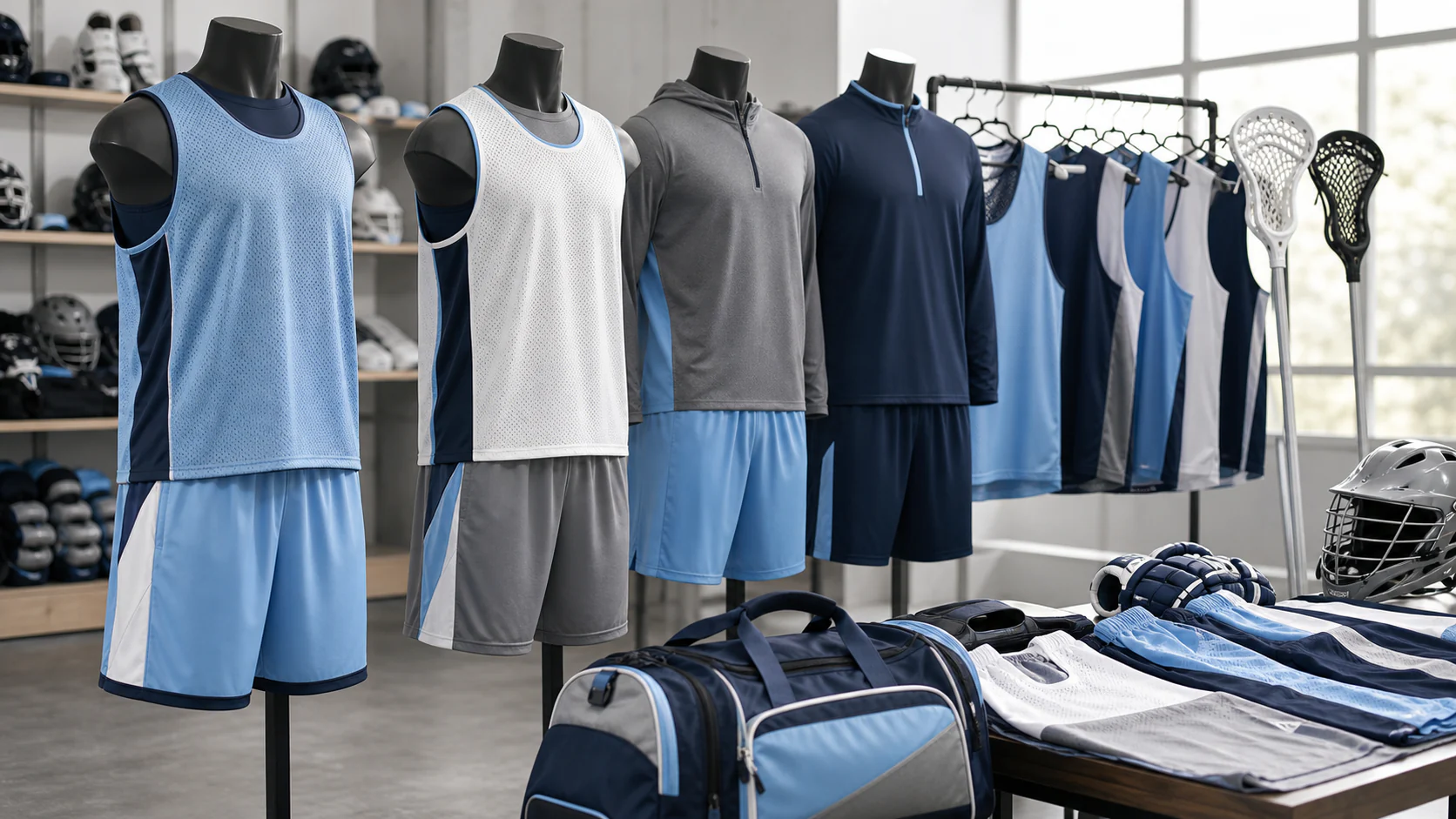
Youth field-sport programs are moving away from one-off match jerseys toward coordinated kit systems: pinnies, practice tops, travel layers, bags, and cleaner roster-personalization rules.
The strongest 2026 direction is lighter mesh, calmer two- or three-color blocking, and modular pieces that work across tournaments, camps, and club travel instead of one single-event uniform.
For buyers, the winning brief is not only aesthetic. It includes sport-specific movement, weather layers, personalization zones, and reorder planning from the start.
Why the Category Is Shifting
Current official context supports a broader field-sport opportunity, not a shrinking niche. World Lacrosse is actively building the pathway to LA28 through the sixes discipline, and USA Lacrosse now has a current multi-year official apparel partnership running through 2030. Those signals do not tell you which hem shape to use, but they do point to a more mature and commercially visible teamwear environment around the sport.
From a buyer's perspective, that means youth clubs are behaving more like organized programs than casual one-season teams. They want practice gear, travel layers, and replacement-friendly replenishment logic. The visual language is also calming down: fewer crowded graphics, more controlled color blocking, and stronger consistency across tops, shorts, and accessories.
| Trend | Why It Matters | Who It Fits |
|---|---|---|
| Reversible pinnie systems | Cuts practice-kit complexity while keeping color separation clean | Academies, camps, tournament organizers |
| Travel-ready quarter zips and warmups | Clubs want one branded layer beyond game day | Multi-team youth clubs |
| Cleaner two-tone blocking | Looks more premium and reduces overdesigned sponsor clutter | Club and school programs |
| Lighter bag + accessory coordination | Programs increasingly present kits as a full package | Elite and travel teams |
| Mesh-led roster personalization planning | Names and numbers are being engineered earlier so airflow panels do not clash with decoration | Custom low-MOQ private-label buyers |
The Clean-Kit Trend: Less Noise, Better Program Identity
One of the biggest changes in youth-teamwear is that the strongest kits no longer try to put every idea on the front panel. Buyers are simplifying. A hero color, one support color, and one clear personalization zone usually outperform a crowded graphic. That cleaner direction also makes repeat orders easier because trims, shorts, and warmups can stay within one design family without starting over each season.
This does not mean bland. It means more deliberate hierarchy. Practice pinnies can carry stronger contrast. Game tops can stay cleaner and more premium. Travel layers can echo the same palette without copying the jersey directly. The programs that sell well to clubs and academies are the ones that look organized before they even look flashy.
Cleaner Blocking
Buyers are favoring clearer two-tone or three-tone layouts over hyper-busy sublimated fronts.
Kit Systems
Programs increasingly combine match tops, pinnies, warmups, shorts, and accessories into one planned assortment.
Mesh by Purpose
Breathable fabrics are being used more precisely by garment function instead of as a one-size-fits-all answer.
Club Presentation
Travel programs want kits that read like serious club brands, not temporary camp shirts.
The Assortment Is Becoming the Product
| Piece | Role | Key Spec Priority |
|---|---|---|
| Match jersey | Primary identity piece | Cleaner body, stable print face, roster number clarity |
| Practice pinnie | Low-cost training essential | Reversible open mesh, easy team separation |
| Short | Movement and durability | Lightweight shell, stretch or mesh zones, secure waistband |
| Quarter zip / warmup | Travel and sideline layer | Cleaner branding, weather-flexible knit, reorder-safe colors |
| Bag / accessory set | Program coherence | Matches the team palette without overcomplicating the garment spec |
Buyers used to brief youth teamwear piece by piece. In 2026, the stronger programs are briefed as a system. That shift also makes sourcing easier: the manufacturer can advise where to use a cleaner print face and where to push more airflow, instead of forcing one fabric and one graphic logic across every SKU. Our mesh fabric guide explains why this fabric zoning matters even more when tournaments run through hot-weather blocks, while the new custom lacrosse apparel manufacturer guide shows how clubs can turn that kit logic into a low-MOQ production file. Programs running a turf-based autumn season should also read our custom field hockey uniform manufacturer guide, which covers the abrasion, bent-stance patterning, and goalkeeper-over-padding decisions that a generic field-sport block misses. Clubs adding a disc-sports section to the same programme can carry the identical system logic across using our custom disc golf and ultimate frisbee team kit manufacturer guide, which handles reversible light-and-dark rosters and throw-motion patterning on the same graded block family.
What Buyers Should Lock Before They Request a Quote
Define whether the program covers game jerseys only or a full club capsule with pinnies, shorts, warmups, and bags.
Map which garments need names and numbers, and which only need a team or academy identity.
Keep one hero color and one support color consistent across all pieces for cleaner visual continuity.
Choose fabric direction separately for game tops, practice layers, and travel layers instead of forcing one fabric across everything.
Reserve the most open mesh for heat zones or pinnies, not every garment in the program.
Ask for one master color card and one trim card to protect repeat orders mid-season.
Plan a low-friction reorder pathway for replacement shorts, pinnies, or goalkeeper variants.
Even a trend-led program still needs operational clarity. Decide early whether you need youth and adult sizes in one order, how many pieces per athlete the program should carry, and which garments need repeat-order protection. That is where trend and manufacturing stop being separate conversations.
How Sialkot Sample Masters Supports Youth-Teamwear Development
Sialkot Sample Masters develops youth-teamwear programs from Sialkot, Pakistan for clubs, schools, academies, and private-label sports buyers. The workflow suits kit systems well: 50-piece MOQ, 7-10 day samples, 25-35 day bulk production, and support across mesh selection, roster-personalization planning, private labeling, QC, and export logistics.
That matters because youth-team programs often scale through repeat weekends and replacement orders, not one giant launch. A manufacturer that can help you build a repeatable kit architecture is more valuable than one that only prices a single jersey fast.
Kit Planning
We structure programs around the whole team capsule, not one isolated top.
Low MOQ Flexibility
Mixed youth and adult sizes can sit inside one coordinated program when the design stays aligned.
Club Presentation
Buyers can build match gear, training gear, and travel layers that feel like one organized brand system.
Planning a Youth-Team Kit Refresh?
Send your target sport, age group, tournament calendar, and preferred kit pieces. We can help map the first sample, recommend breathable fabrics, and quote a low-MOQ program from Sialkot with QC and export support.
Request a Quote Explore Manufacturing Services
FAQ: Youth Field-Sport Kit Trends
What is changing in youth lacrosse and field-sport kit design in 2026?
The move is toward cleaner, coordinated kit systems instead of one isolated jersey. Buyers are combining pinnies, match tops, warmups, and accessories under one tighter color and branding direction.
Why are mesh and lighter fabrics showing up more often?
Youth tournaments, travel schedules, and summer training blocks all push teams toward lighter garments. The key is controlling where the airflow fabric sits so print clarity and durability do not drop.
Can Sialkot Sample Masters build low-MOQ youth team programs?
Yes. Sialkot Sample Masters supports 50-piece MOQ programs with mixed sizing, 7-10 day samples, and 25-35 day bulk production after approval, plus private-label and export support where needed.
Should buyers build one all-purpose jersey or a multi-piece kit?
A multi-piece kit usually performs better. It lets the game jersey stay cleaner and more structured while practice pinnies and travel layers solve separate comfort and branding needs.