Claim by claim
Build the evidence plan before writing the performance claim.
We help brands define what needs to be demonstrated, on which material, component or finished article, in what condition and for which approval decision. Standards may guide a method; they do not imply a pass until a relevant report exists.
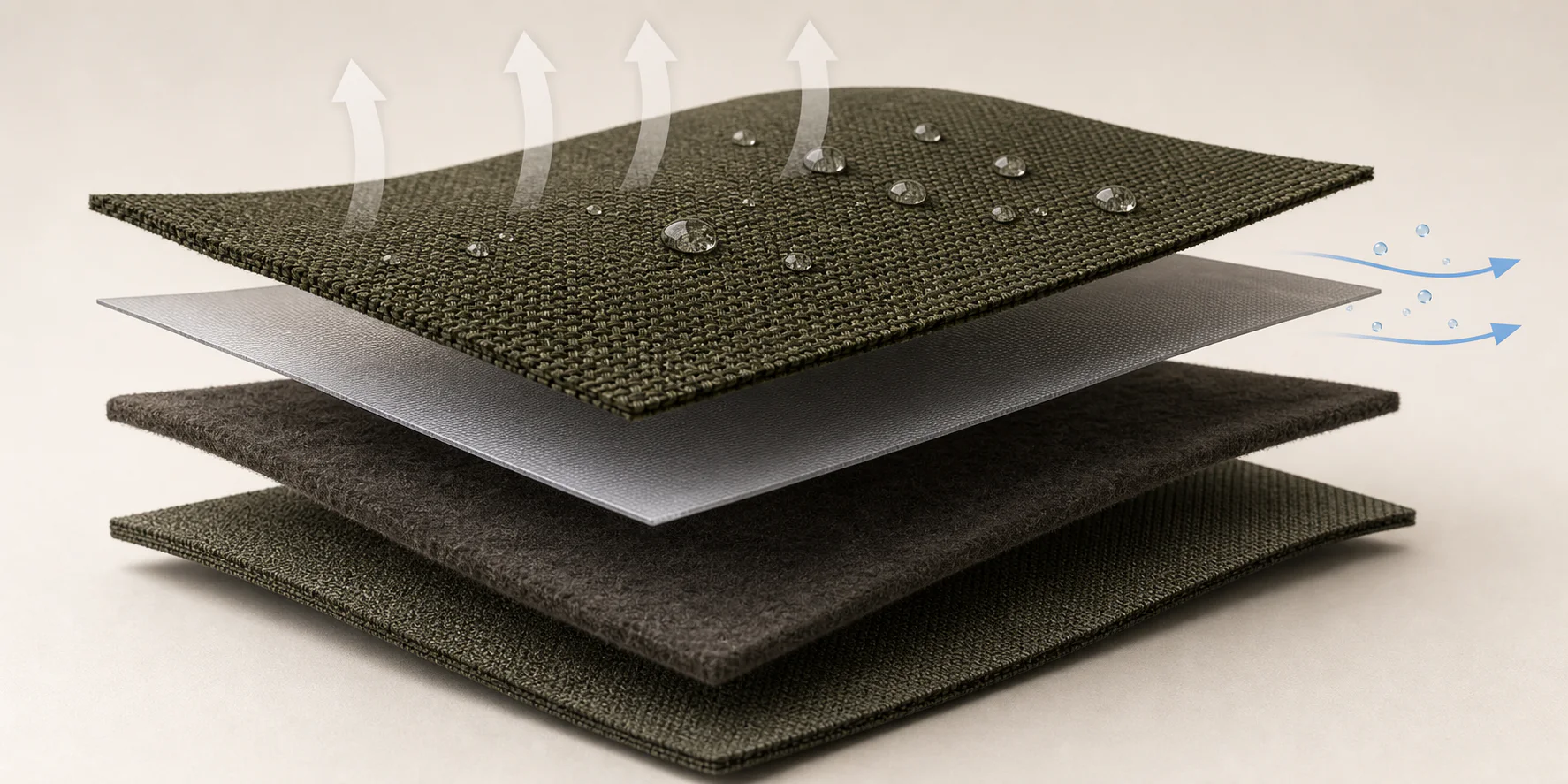
Product-development visualization. Specifications and evidence follow the approved brief.
From broad promise to testable question
Define five parts of every evidence request.
A usable plan identifies the claim, target, method or comparison protocol, article and conditioning state, and the decision the result will control. Missing one of these elements creates room for misleading conclusions.
What the buyer should prepare
Claim: the exact property or customer promise being considered.
Target: the required value, benchmark or approval threshold.
Method: a named standard or documented comparison protocol.
Article and state: fabric, component or finished garment before or after defined conditioning.
Decision: selection, revision, approval, rejection or market wording.
Six evidence families
Match the evidence route to the product risk.
Not every property needs the same instrument, sample or lab route. The plan should distinguish objective measurements, controlled comparisons, fit trials and supplier documentation.
Weather protection
Define barrier, seam, opening and finished-garment questions separately.
Durability
Map abrasion, tear, seam and component risks to the intended product zones.
Thermal and vapor management
Set the article, construction and use scenario before interpreting a material value.
Moisture and drying
Separate liquid movement, drying state, water pickup and wearer-comfort language.
Quietness and odor
Use defined comparison conditions and claim boundaries; avoid absolute promises.
Fit and mobility
Use approved sizes, layer combinations, equipment and representative movement tasks.
Material is not the whole garment
Test at the level where the claim can fail.
A fabric result can support material selection but may not represent seams, components, openings or the finished silhouette. Evidence should move from incoming materials to representative construction and the finished article as risk requires.

Material
Confirm article identity, conditioning, orientation and the property being measured.
Component or seam
Evaluate compatibility and failure behavior in a representative construction.
Finished garment
Review complete interfaces, workmanship and the intended market claim when required.
Reference, route and responsibility
Use standards to define work—not decorate marketing copy.
Methods such as ISO 811, ISO 11092 or ASTM D4966 may be relevant examples when defining water penetration, thermal and water-vapor resistance, or abrasion programs. The actual method, laboratory, sample, conditioning and report must be agreed for the product.
Third-party laboratories can provide formal reports for defined methods. Internal or supplier comparisons can support development choices when they are documented honestly and not presented as an independent certification.
SSM should not be described as owning a laboratory, holding a certification or passing a standard unless current evidence confirms the exact scope.
Evidence closes the development loop
Record failures, revisions and approvals as controlled decisions.
A failed comparison or test is useful when it leads to a traceable material, pattern or construction revision. The final handover should preserve what changed, what was approved and which reports support which claims.
Plan
Agree claims, risks, articles, methods, conditioning and decision owners.
Decision outputEvidence matrix
Evaluate
Run the agreed lab method, supplier review, construction trial or wearer task.
Decision outputResults and observations
Revise
Log failures and control changes to materials, patterns, components or wording.
Decision outputRevision record
Approve
Connect the approved sample and report set to the final specification and allowed claim.
Decision outputValidation handover
Project questions
Frequently asked questions
Answers specific to testing & validation development.
No. Standards are referenced only as examples for defining an appropriate program. A pass can be stated only for the exact tested article, method, condition, target and report.
Supplier records can support material or component selection, but they may not cover seams, openings, fit or complete construction. The claim and risk determine whether finished-garment evidence is needed.
The brand and SSM agree the development target and approval responsibility before evaluation. Regulatory or market requirements remain the brand's responsibility to identify and confirm.
The result should be logged, the likely material or construction cause reviewed, and the revision approved before retesting or changing the intended claim.
Next development gate
Build an Evidence Plan
Share the product mission, target customer and known requirements for your hunting wear testing and validation plan. We will use them to frame the next technical conversation.