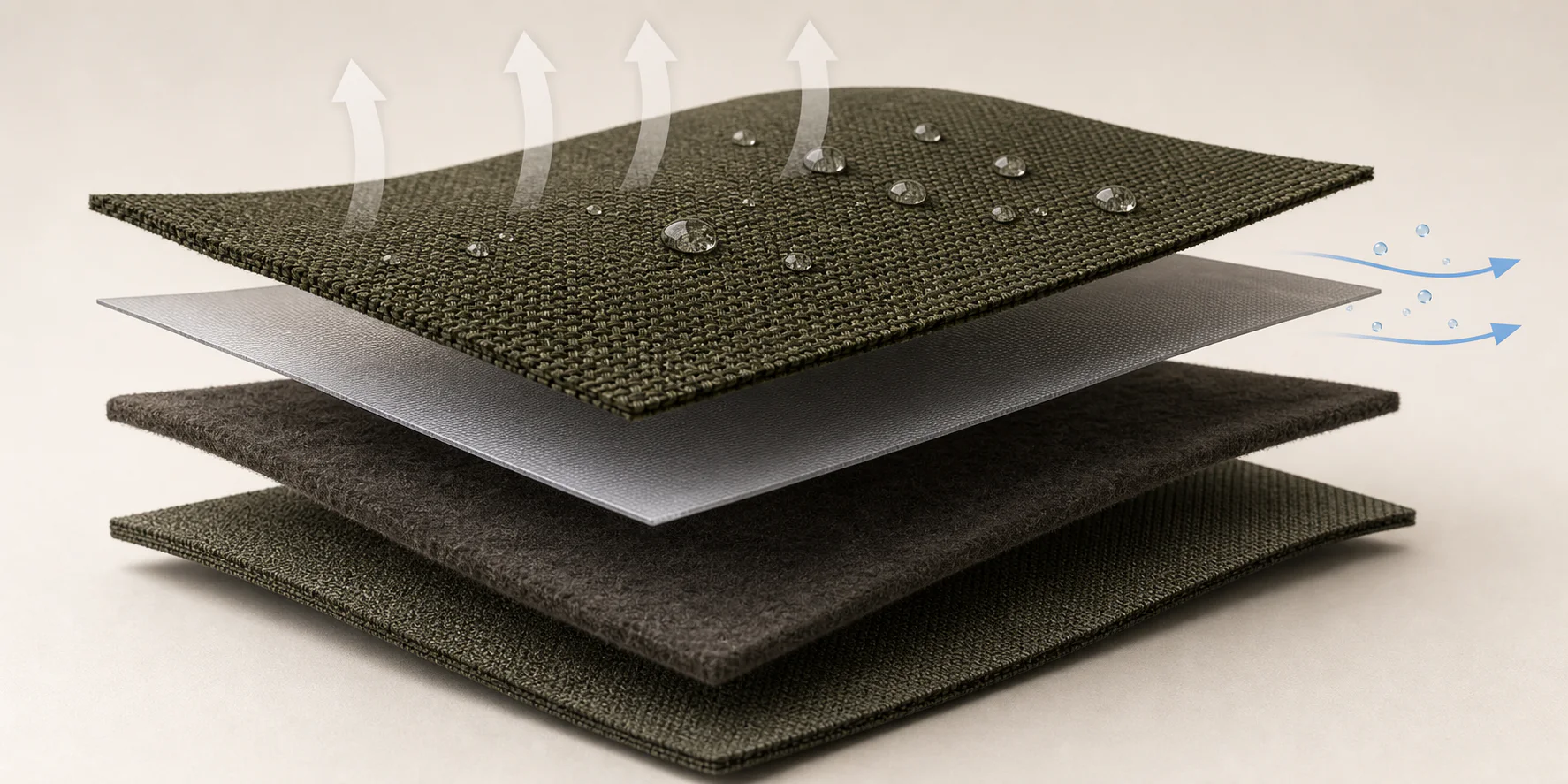
Material architecture by product job
Specify the complete fabric system—not a performance label alone.
We help product teams connect face fabric, weather barrier, comfort layer, insulation, lining and reinforcement decisions to the intended pursuit and evidence plan. Named materials and final availability are confirmed only for the approved program.
Product-development visualization. Specifications and evidence follow the approved brief.
Four connected decisions
Engineer from the outside surface to the wearer.
Material selection works as an architecture. A durable face can influence noise and drape; a barrier changes breathability and seam strategy; a backer or lining changes comfort, drying and construction behavior.
Protective face
Balance abrasion exposure, weight, stretch, hand, noise, printing and care requirements.
Weather mechanism
Define whether wind or water management comes from a weave, coating, membrane or laminate system.
Comfort layer
Plan next-to-skin or garment-interior hand, moisture movement, drying and structure.
Support layers
Use insulation, lining and reinforcement only where the product job requires them.
Surface decisions
Quiet hand, abrasion and weight pull in different directions.
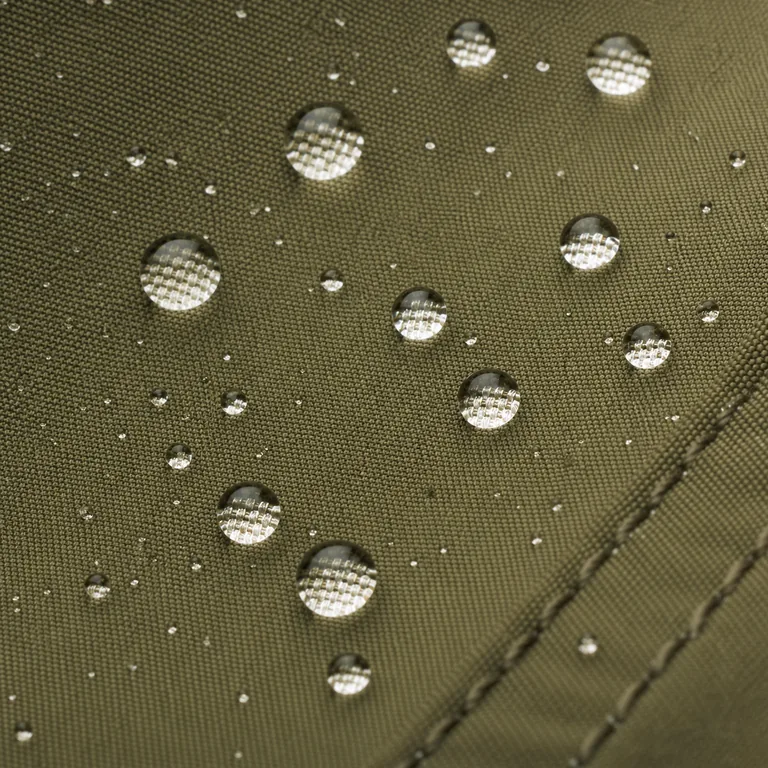
A brushed, soft surface may support low-noise movement but can change water pick-up, drying, print appearance or durability. A harder face may resist contact better but create a different sound and feel. These trade-offs need physical comparison.
What the buyer should prepare
Compare hand and noise in the intended construction, not from swatch labels alone.
Map abrasion zones instead of overbuilding the whole garment.
Review stretch direction and recovery against the pattern and load points.
Confirm print, color and finish compatibility on the selected substrate.
Set care and conditioning states for any later comparison or test.
Warmth and moisture
Separate active warmth from stationary insulation.
Insulation should be briefed by activity, exposure, garment zones, bulk and recovery needs. Base and mid-layer fabrics should be assessed for next-to-skin comfort, moisture movement and compatibility with the outer system.
Active warmth
Prioritize air exchange, drying and freedom of movement where the user generates sustained heat.
Static warmth
Prioritize retained loft, wind context, coverage and compatibility with seated or low-motion use.
Mapped construction
Change insulation, lining or reinforcement by zone when the mission and pattern justify the complexity.
Mechanism before marketing
Treat moisture and odor language as evidence questions.
Odor-management options may be evaluated by mechanism, supplier documentation, substrate compatibility, care state and the claim the brand intends to make. No treatment should be described as universal, permanent or scent-eliminating without appropriate substantiation.
The material brief should distinguish moisture movement, drying behavior and odor-management objectives. These are related wearer concerns but not interchangeable properties.
Supplier literature can inform selection, but finished-product wording still needs a claim owner, an agreed evidence route and review against the selling market.
From option to approved BOM
Reduce material risk with a controlled swatch and sample workflow.
The material route moves from brief to candidate options, physical review, construction trial, test or comparison plan and approved bill of materials. Substitution rules should be decided before production, not during it.
Define
Set the product job, pursuit, target properties, care conditions and claim intent.
Decision outputMaterial requirements brief
Compare
Review candidate swatches and supplier documentation against the same decision criteria.
Decision outputCandidate matrix
Build
Evaluate the material in representative seams, components, print routes or prototype construction.
Decision outputConstruction trial or sample
Approve
Lock the selected article, color, finish, supplier record and any permitted alternatives.
Decision outputApproved BOM and reference swatch
Project questions
Frequently asked questions
Answers specific to technical fabrics development.
You can include it in the brief. Availability and authorization must be confirmed for the specific program before the ingredient name appears in specifications or public claims.
No. Finished-garment performance also depends on seams, tape compatibility, openings, components, design and the approved test state. The evidence plan should cover the finished construction where the claim requires it.
We define the pursuit's sound and contact risks, compare relevant constructions and decide whether different zones need different materials. The approved benchmark and comparison protocol should be documented.
Technical fabric sourcing support is available against approved specifications. Supplier records, article details and the final BOM must be confirmed before manufacturing approval.
Next development gate
Discuss the Material Brief
Share the product mission, target customer and known requirements for your hunting wear technical fabric brief. We will use them to frame the next technical conversation.