For brands that need product development before production
Turn a hunting-market opportunity into an executable range.
ODM support helps founders and established brands develop the missing product definition between an idea and a production-ready package. Scope, ownership, approvals and commercial details are confirmed for the program.
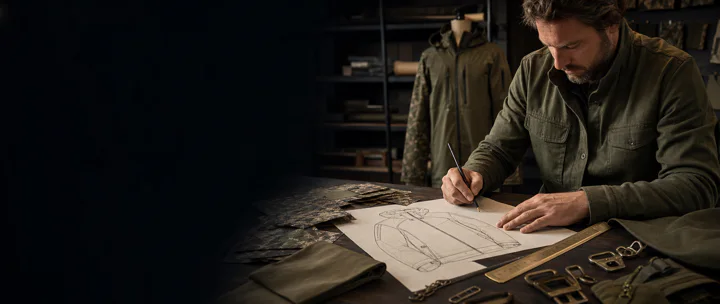
Product-development visualization. Specifications and evidence follow the approved brief.
Choose the right starting route
ODM begins when the product still needs definition.
This route fits a founder with a researched market and product idea, or an established brand extending into a new hunting category without a complete executable tech pack.
New hunting brand
Needs a focused first-range architecture, product priorities and a development path from brief to samples.
Established adjacent brand
Needs hunting-specific materials, fit, construction and evidence requirements added to existing brand systems.
Range extension
Needs a missing layer, pursuit solution or custom camouflage program integrated with approved products.
Define before multiplying SKUs
Build the smallest range that tells a complete performance story.
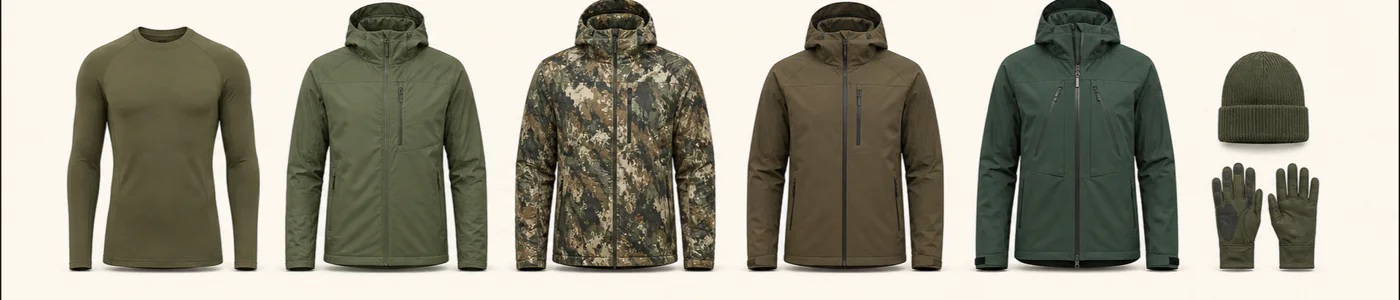
The first decision is not how many colors to offer. It is which product jobs the launch must solve, how layers interact and where shared blocks, materials or components can reduce unnecessary complexity.
What the buyer should prepare
Priority pursuit, customer and selling market.
Launch product families and the job of each garment.
Shared fit, materials, components and branding opportunities.
Claims that need evidence before market use.
Future layers that need compatibility rules now.
Clear responsibilities
Know what you provide, what is developed and what is approved together.
The project should not hide decisions inside the word ODM. Inputs, creative ownership, specifications, samples, test responsibilities and approval rights need written boundaries.
You provide
Market position, customer, intended price architecture, brand assets, references you can legally use and decision owners.
We develop
The agreed product concepts, system logic, material and construction routes, technical documents and prototype scope.
We approve together
Fit, function, materials, artwork, claims plan, controlled sample and production handover within the agreed scope.
Make the idea testable
Use prototypes to resolve the highest-risk decisions first.
Representative prototypes should answer questions about fit, movement, layer compatibility, construction, material behavior, camouflage placement and component operation. Evidence planning runs alongside this work rather than appearing after design approval.

Prioritize risk
Identify the assumption most likely to affect product function, cost or market claim.
Decision outputPrototype question list
Build representative
Use the intended material and construction where the question depends on them.
Decision outputDevelopment sample
Review and revise
Record feedback against the brief and update one controlled specification.
Decision outputRevision record
Approve handover
Lock the sample, documents and open evidence responsibilities before production review.
Decision outputApproved development pack
Prepare for discovery
A clear market brief saves development cycles.
You do not need a finished tech pack, but you should be able to explain the customer, problem, pursuit, expected launch scope and how your team will make approvals.
What the buyer should prepare
Brand and customer positioning.
Priority pursuit, climate and use conditions.
Proposed products and launch sequence.
Reference garments or competitive gaps with lawful source information.
Branding, camouflage and ownership expectations.
Claims, selling markets and required approval evidence.
Project questions
Frequently asked questions
Answers specific to odm development development.
No. ODM is designed for products that still need definition. A useful market and mission brief is required so the development scope and decision owners can be established.
Yes. Existing brand standards, blocks, approved materials and system interfaces can become inputs for developing the new category.
Ownership, licensing, source-file delivery and permitted use should be stated in the project agreement before artwork is developed or used in production.
No. Evidence targets, methods and responsibilities are agreed for the program. MOQ, price, lead time and production scope are confirmed after the product and program are sufficiently defined.
Next development gate
Plan My Range
Share the product mission, target customer and known requirements for your odm hunting wear range development. We will use them to frame the next technical conversation.