Stand or blind type
Ladder stand, hang-on, climber, saddle, box blind, ground blind or mixed use.
Now Accepting Orders for SS2026 — Sample turnaround in 7-10 days. Worldwide shipping available. Request a Sample Kit →
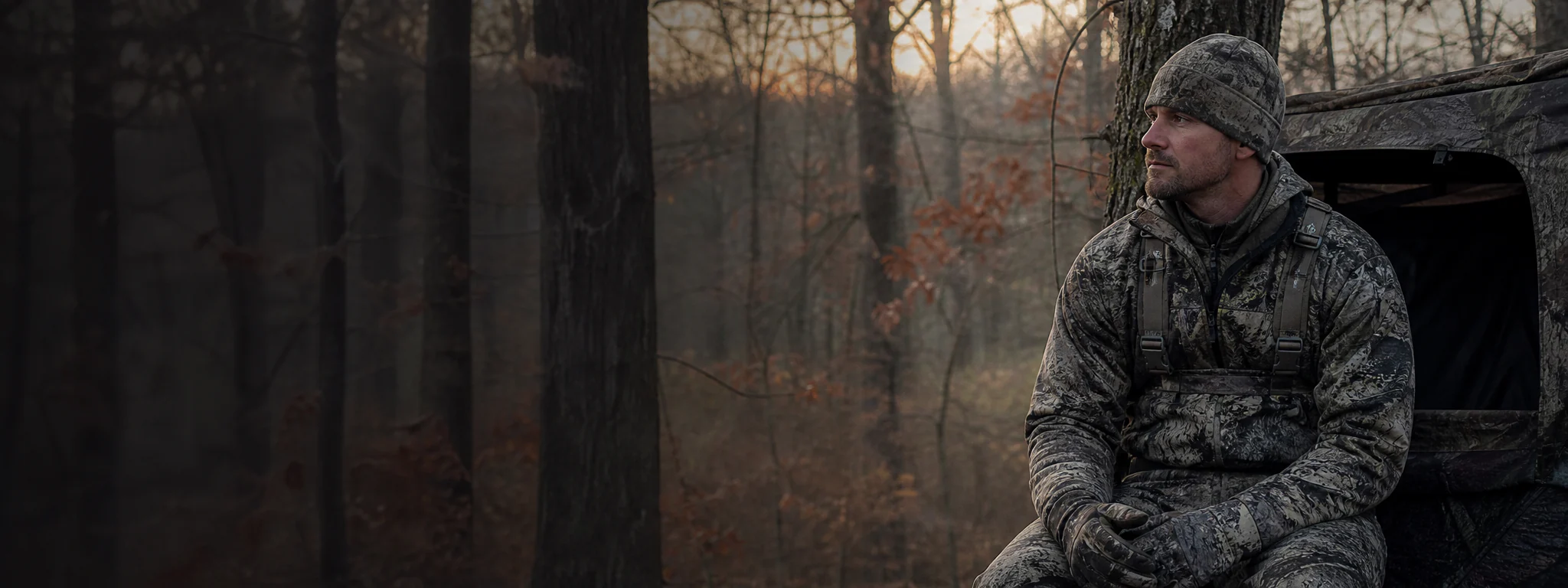
The timber sit
Develop custom whitetail jackets, bibs, pants, base layers and accessories around stand type, season phase, quiet movement, scent discipline, warmth, weather and market-specific visibility rules.
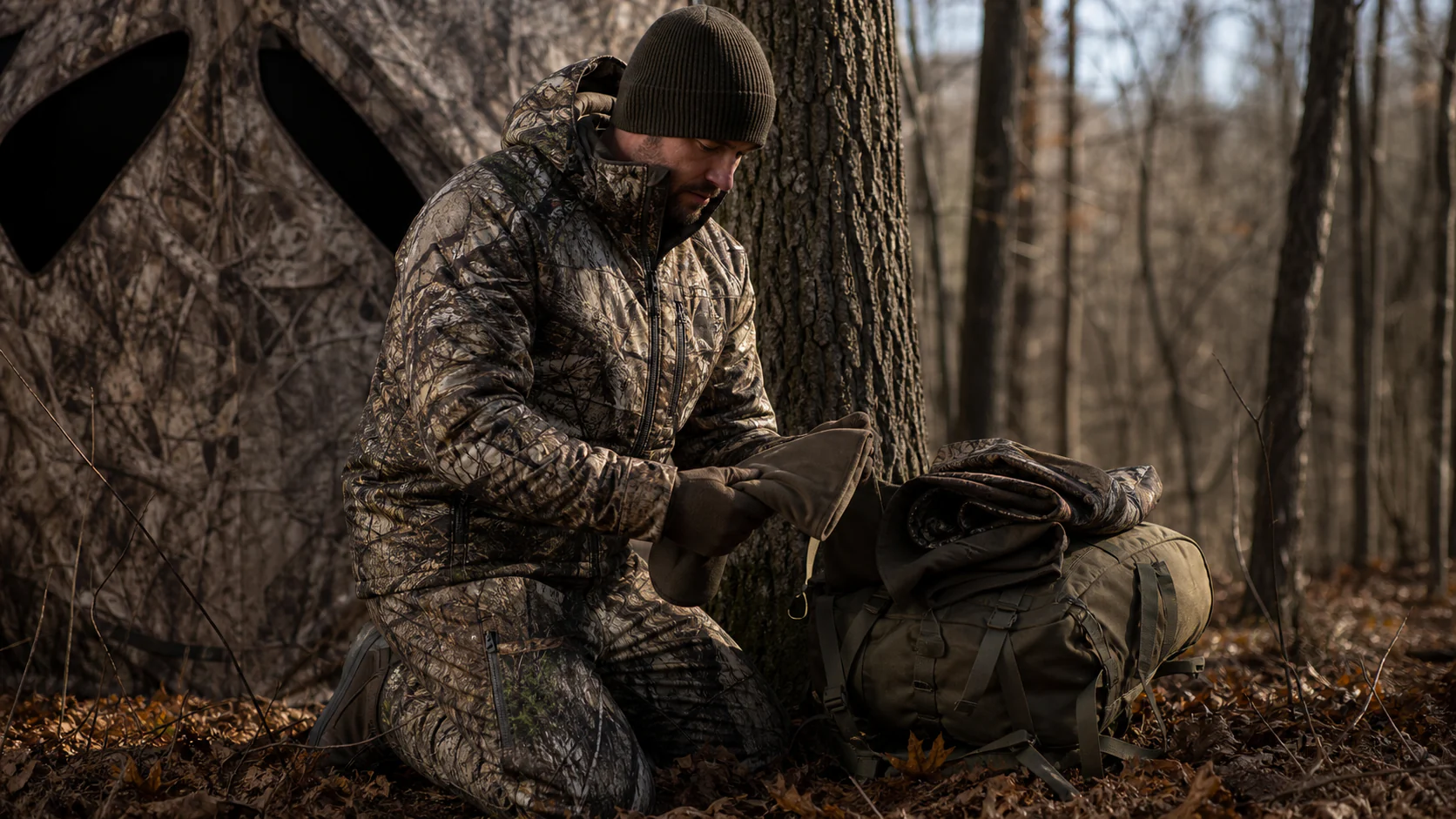
Buyer answer
A whitetail hunting apparel program is a coordinated set of quiet, weather-aware and season-specific garments developed for approach, stand or blind setup, long static periods and minimal movement near game. The brief defines stand type, temperature range, noise tolerance, scent and wind strategy, visibility rules, layered fit, pockets, harness access and the evidence plan before the bill of materials is approved.
Access
Turn stand type, season phase, quietness, scent language and market rules into product inputs before material names lead the conversation.
Ladder stand, hang-on, climber, saddle, box blind, ground blind or mixed use.
Early heat, mid-season swings, rut cold fronts or late-season stationary cold.
Brush contact, pack-in distance, field edges, creek crossings and pre-dawn movement.
Face fabric hand, trim placement, zipper behavior and friction points.
Separate materials, laundering route, storage habits and field behavior.
Blaze orange or high-visibility requirements vary by market, season and hunt method.
ACCESS
The approach is where fabric noise, trim impact, brushing, pack straps and overheating show up first. A whitetail system needs controlled surface sound, packable layers, accessible storage and enough breathability for the walk in without forcing the hunter to sit damp.
Product decisionDefine entry distance, brush contact and carry setup before approving outer fabric.
Evidence questionHow will the prototype be reviewed for fabric noise, access and pack or harness compatibility?
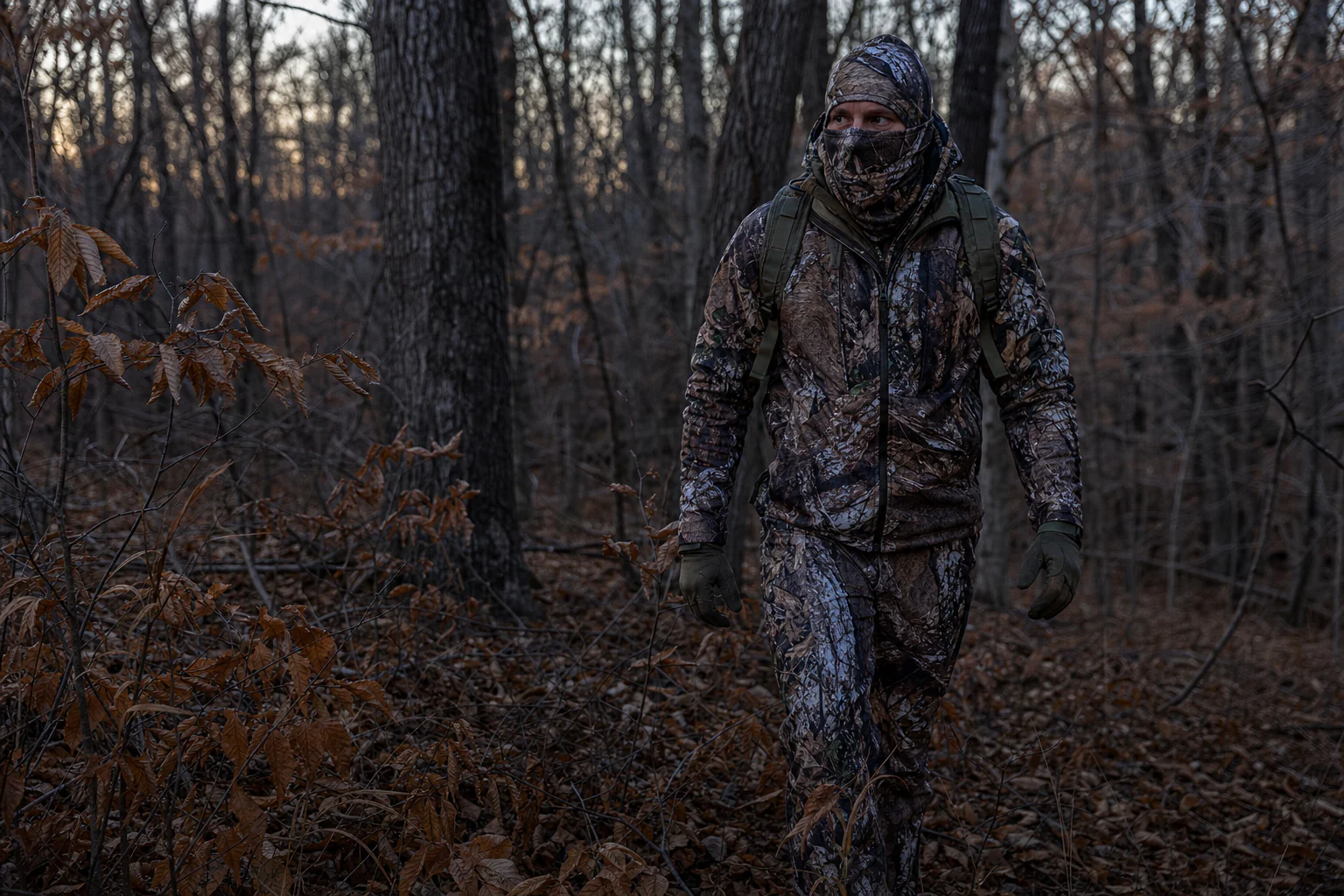
CLIMB
Treestand and saddle use add hardware, harness, waist, pocket and range-of-motion constraints. The garment must allow step-up, seated posture, quiet adjustment and safety-equipment access without loose bulk catching on equipment.
Product decisionConfirm stand type and safety-equipment interface before sample approval.
Evidence questionCan the size set be reviewed with the intended layers and harness setup?
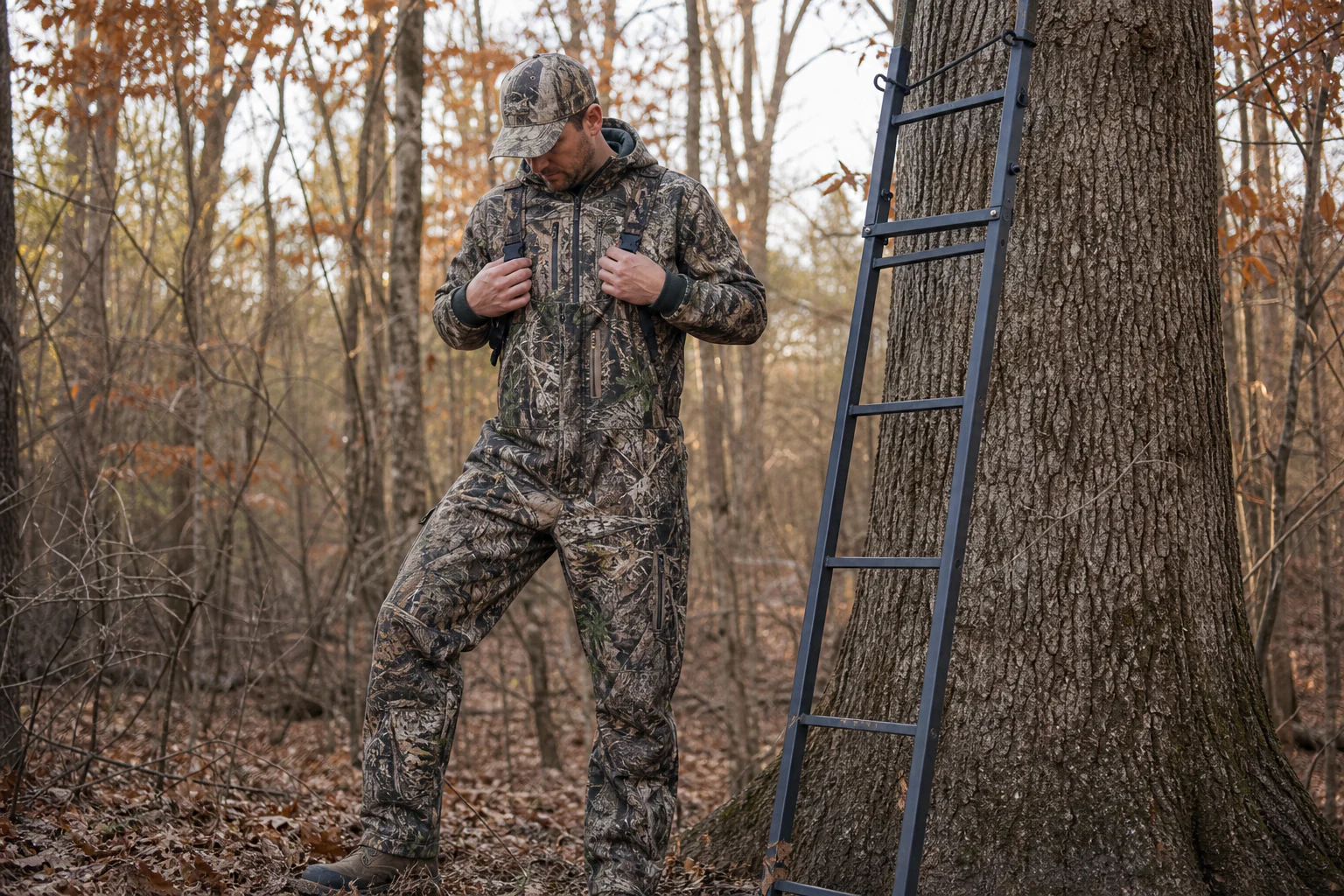
SETTLE
After setup, the hunter shifts from output to low movement. The system should release walking heat, settle quietly, keep hands functional and preserve comfort for long observation windows.
Product decisionTreat active-to-static transition as a product requirement.
Evidence questionDoes the prototype stay quiet through slow, realistic seated movements?
LONG SIT
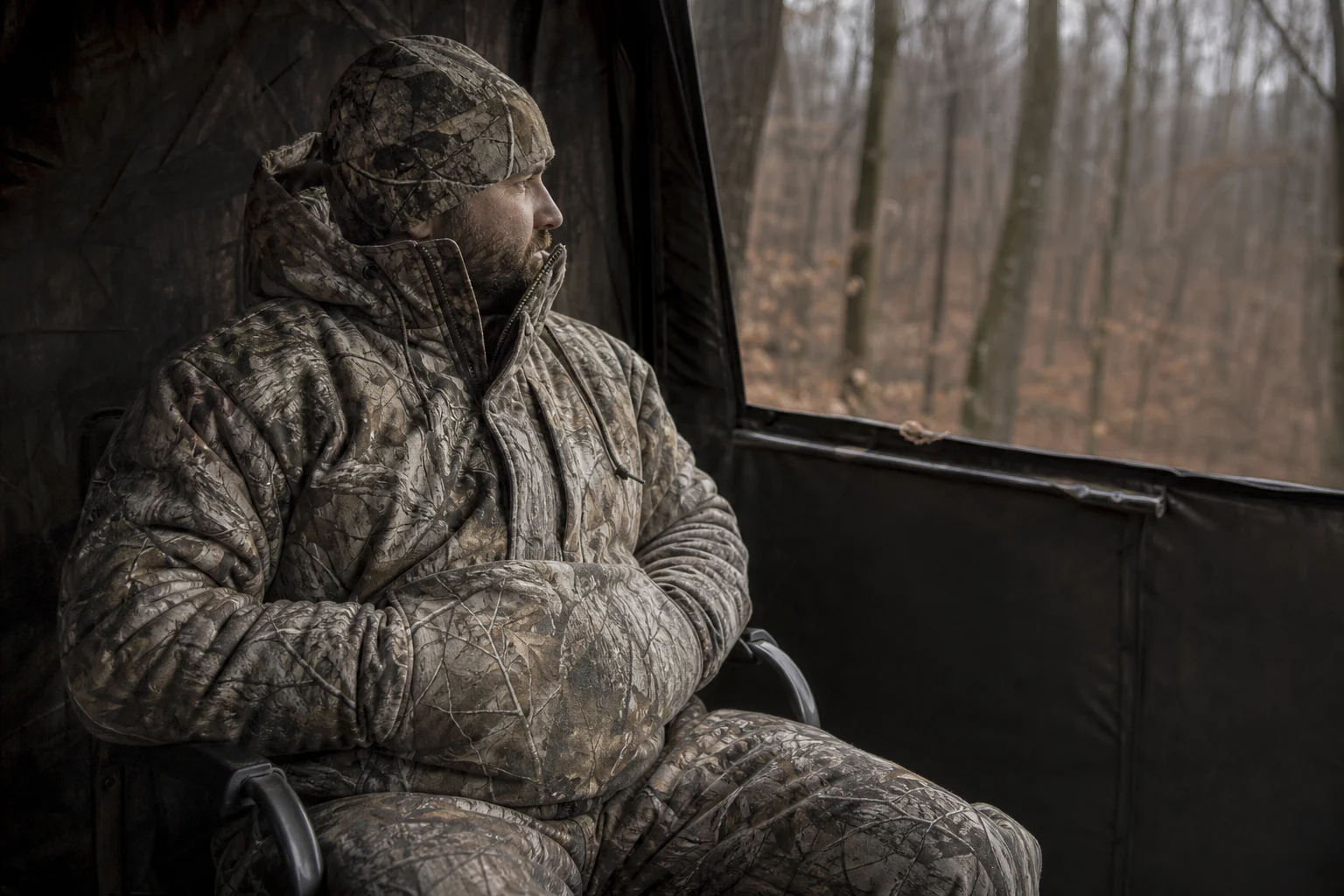
Whitetail cold is often about stationary exposure rather than alpine movement. Insulation package, bib coverage, seat warmth, hand protection and low-bulk layering should be reviewed as a complete sit system.
Product decisionBuild late-season warmth as a system, not a heavier single outer layer.
Evidence questionWhat warmth, fit and movement checks are required before claims are written?
WEATHER
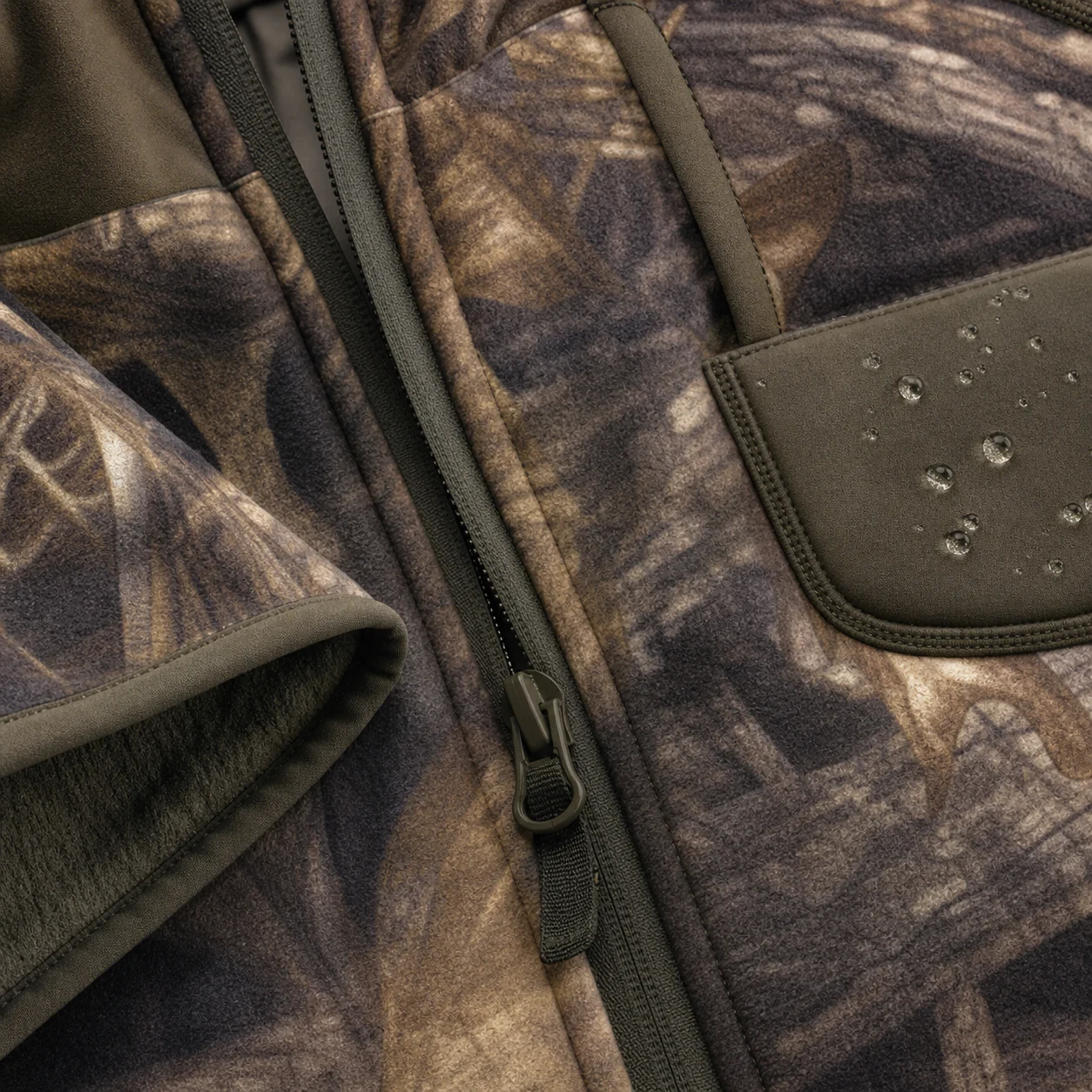
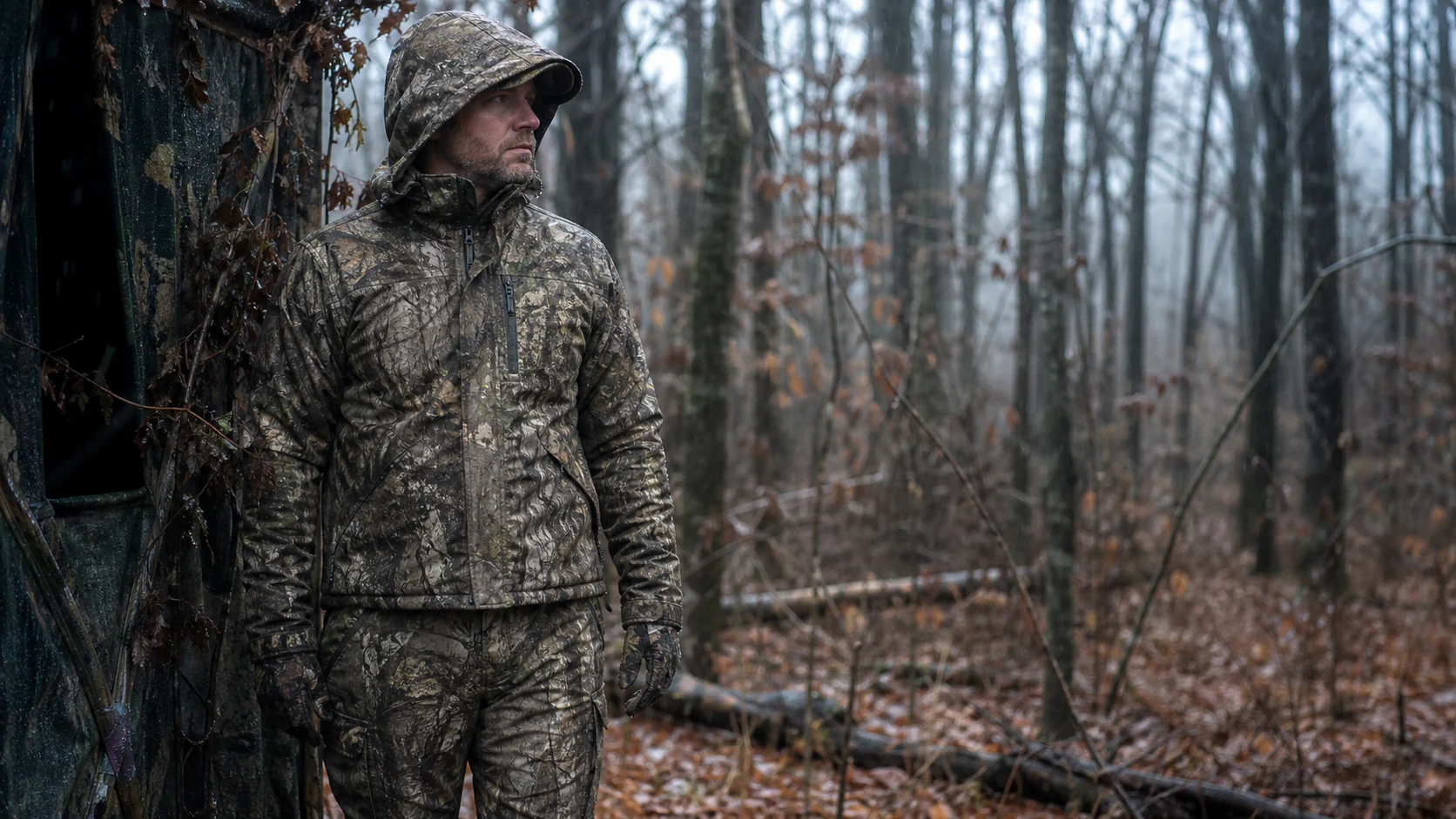
A noisy shell can solve rain and still fail the hunt. Weather-ready whitetail apparel needs a route for face fabric, membrane, seam strategy, hood, cuffs, openings and visibility rules that fits the intended market.
Product decisionDefine weather and visibility requirements by selling market and hunt method.
Evidence questionWhich material, whole-garment and compliance checks are needed before claims?
RECOVERY
After the sit, garments face brush, mud, pack contact, repeated laundering, odor-control routines and storage expectations. Durability should be placed where whitetail use creates repeated wear, not everywhere.
Product decisionMap repeated contact and care expectations before final BOM approval.
Evidence questionHow will laundering, abrasion, seam and component performance be checked?
Whitetail product system
Prioritize the garments that solve quiet entry, stand setup, static warmth, weather and market visibility before turning the range into SKUs.
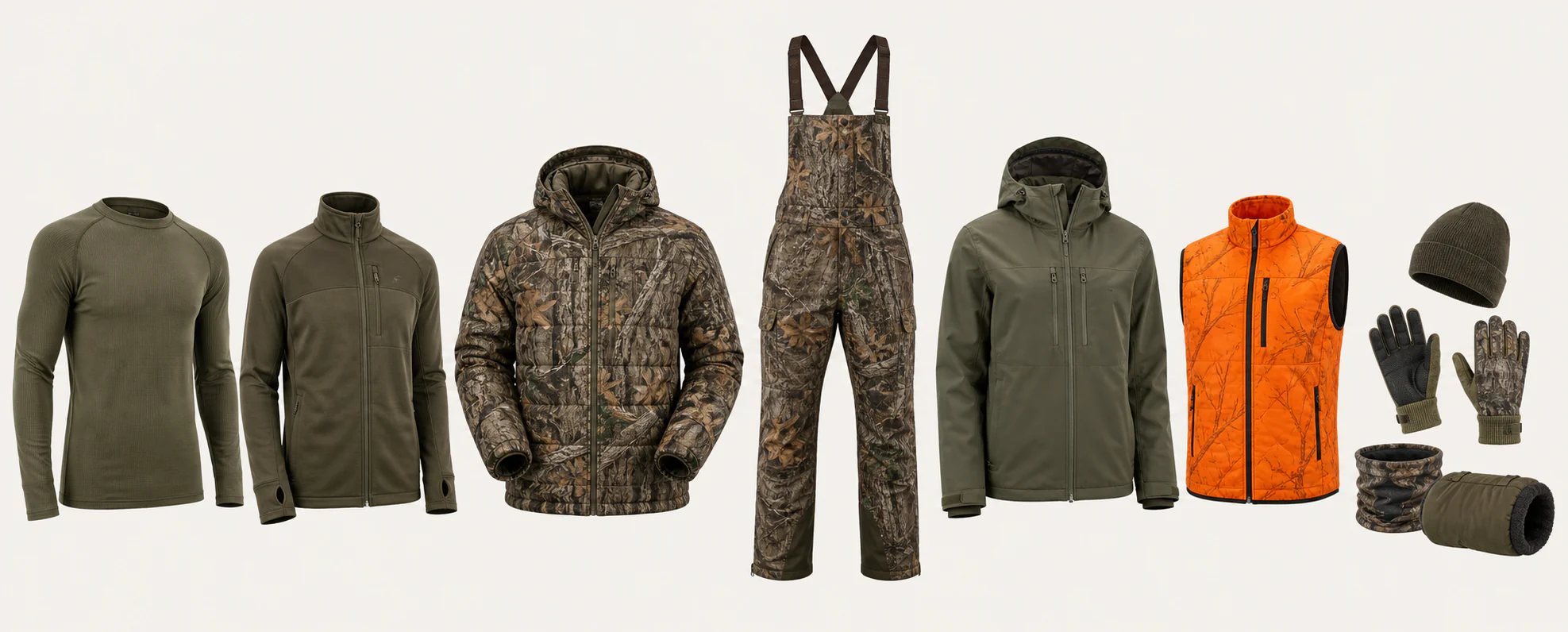
Dry comfort for walk-in and long sits
Breathable warmth for approach and mild sits
Static warmth with low-noise face fabric
Seated coverage, knee/seat durability and boot interface
Wind and rain route without excess noise
Orange or high-visibility route where required
Beanie, gloves, gaiter, hand muff and pocket interfaces
Materials, camo, orange and brand system
Choose the right route
OEM
Best when your team already controls approved tech packs, measurements, BOM, artwork and target requirements for the whitetail range.
ODM
Best when the pursuit, market and product goals are clear, but the range architecture, material routes, construction or evidence plan still needs definition.
Development sequence
Hunt profile, market rules and product goals
Season map and sit-system priorities
Fabric, insulation, trim and construction route
First whitetail sample set
Quietness, fit, stand and harness interface
Revised or size-set sample
Evidence and pre-production controls
Approved bulk plan and handover
Claim-by-claim evidence plan
| Requirement | Evidence route | Sample stage |
|---|---|---|
| Quiet fabric and trims | Prototype movement and material comparison route | Prototype / size set |
| Static warmth | Layered fit and insulation package review | Prototype / wear review |
| Weather resistance | Material and whole-garment method agreed by brief | Prototype / PP |
| Scent-management wording | Material, care route and substantiation plan | Material / content review |
| Abrasion and components | Zone-based wear, seam and pull checks | Material / PP |
| Stand mobility | Seated movement, harness and pocket-access review | Sample / size set |
| Visibility rules | Market-specific orange or high-visibility requirement check | Brief / compliance review |
Named methods, pass criteria and legal wording are agreed for the actual product and target markets. A quiet fabric, scent finish or orange panel does not prove a finished-garment claim by itself.
Explore testing and validationBuyer FAQ
You can start with one priority product, but the system should still be mapped so the first jacket, bib or base layer does not create fit, noise, warmth or access problems for later styles.
Whitetail apparel usually carries a stronger static-sit, quietness, stand or blind interface, scent and wind language, and visibility-rule burden. Backcountry apparel leans more heavily toward elevation, output, pack load and fast weather changes.
SSM can review material and construction routes against the approved brief. Any scent-control or quietness claim should be tied to the actual material route, care instructions, prototype review and agreed evidence plan.
Yes, when your brand owns or is authorized to use the artwork. Orange or high-visibility requirements must be reviewed by target market, season and hunt method before product wording is finalized.
Send the product list, stand or blind scenario, season phase, target markets, materials or reference samples, artwork status, size range, claim requirements and estimated quantities. Commercial details are confirmed after scope review.
Bring the sit profile
Share the stand type, season, market, product list, camouflage or visibility needs, and claims you want the range to make. We will help identify the next useful sample, specification or evidence decision.