Hunt platform
Marsh blind, boat blind, pit blind, timber, flooded field, layout blind or mixed wetland use.
Now Accepting Orders for SS2026 — Sample turnaround in 7-10 days. Worldwide shipping available. Request a Sample Kit →
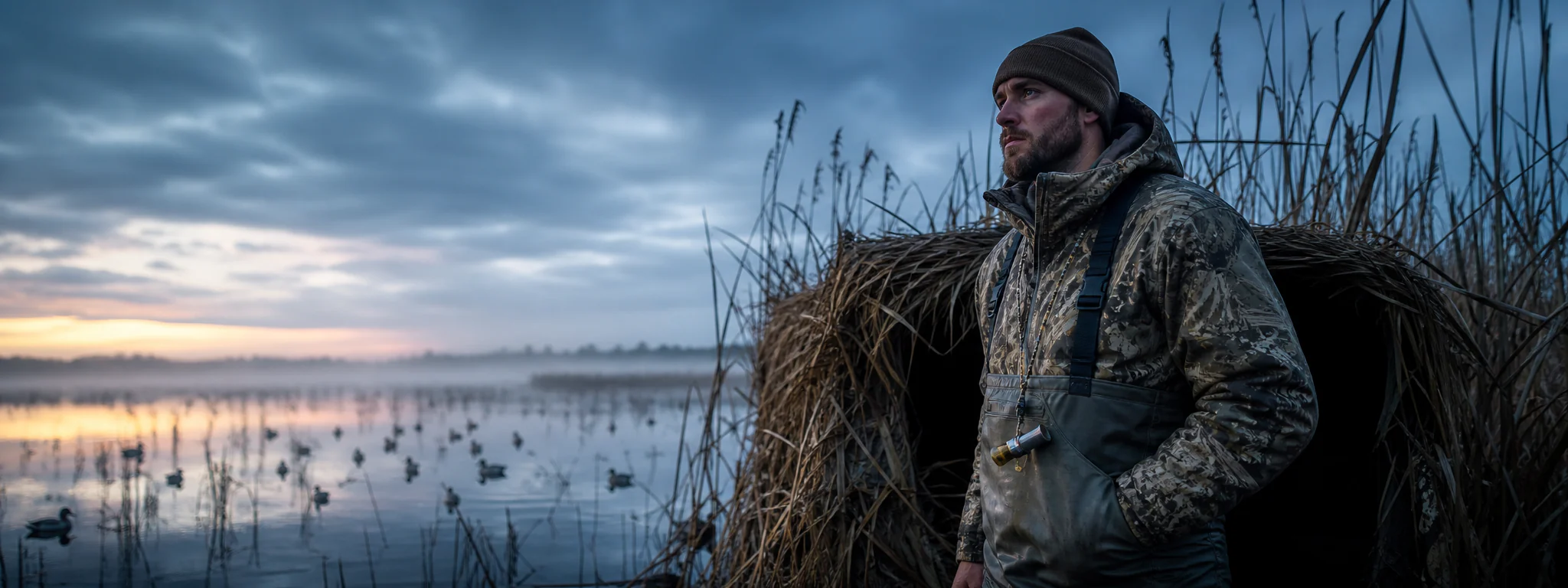
The marsh system
Develop custom waterfowl parkas, waders, bibs, base layers, gloves and accessories around wetland entry, blind or boat movement, waterproofing, static warmth, mud durability and claim evidence.
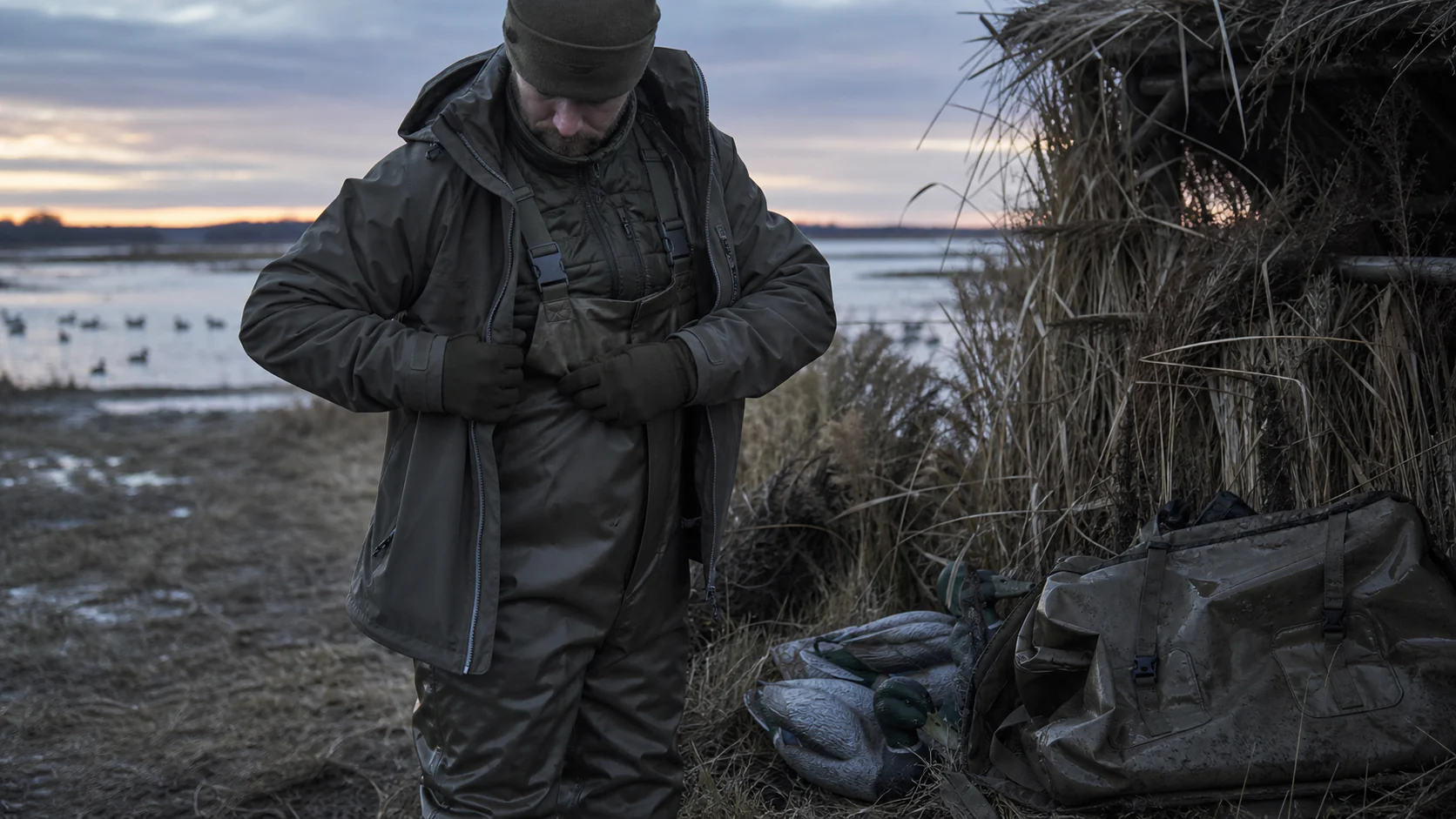
Buyer answer
A waterfowl hunting apparel program is a coordinated set of waterproof, insulated and wetland-ready garments developed for marsh access, blind or boat setup, static cold, wet handling and repeat mud exposure. The brief defines platform, water depth, temperature band, wader interface, glove use, pockets, shell construction, care route and the evidence plan before the bill of materials is approved.
Access profile
Turn water depth, blind type, weather, wader interface and claim requirements into product inputs before material names lead the conversation.
Marsh blind, boat blind, pit blind, timber, flooded field, layout blind or mixed wetland use.
Walk-in mud, shallow water, boat access, ice edge, flooded timber or repeated kneeling.
Early rain, windy mid-season, freezing late-season mornings and long static waits.
Chest height, straps, belt, boot opening, jacket hem, bib coverage and pocket access.
Glove dexterity, shell loops, call pockets, hand-warmer position and zipper pull usability.
Waterproof, breathable, insulation and visibility language must match the final selling market and evidence plan.
ACCESS
The approach is where mud, reeds, water depth, decoy weight, trim impact and overheating show up first. A waterfowl system needs controlled shell behavior, packable warmth, accessible storage and enough breathability for the walk in without forcing the hunter to sit damp.
Product decisionDefine water depth, mud contact and carry setup before approving outer fabric.
Evidence questionHow will the prototype be reviewed for wet entry, pocket access and wader compatibility?
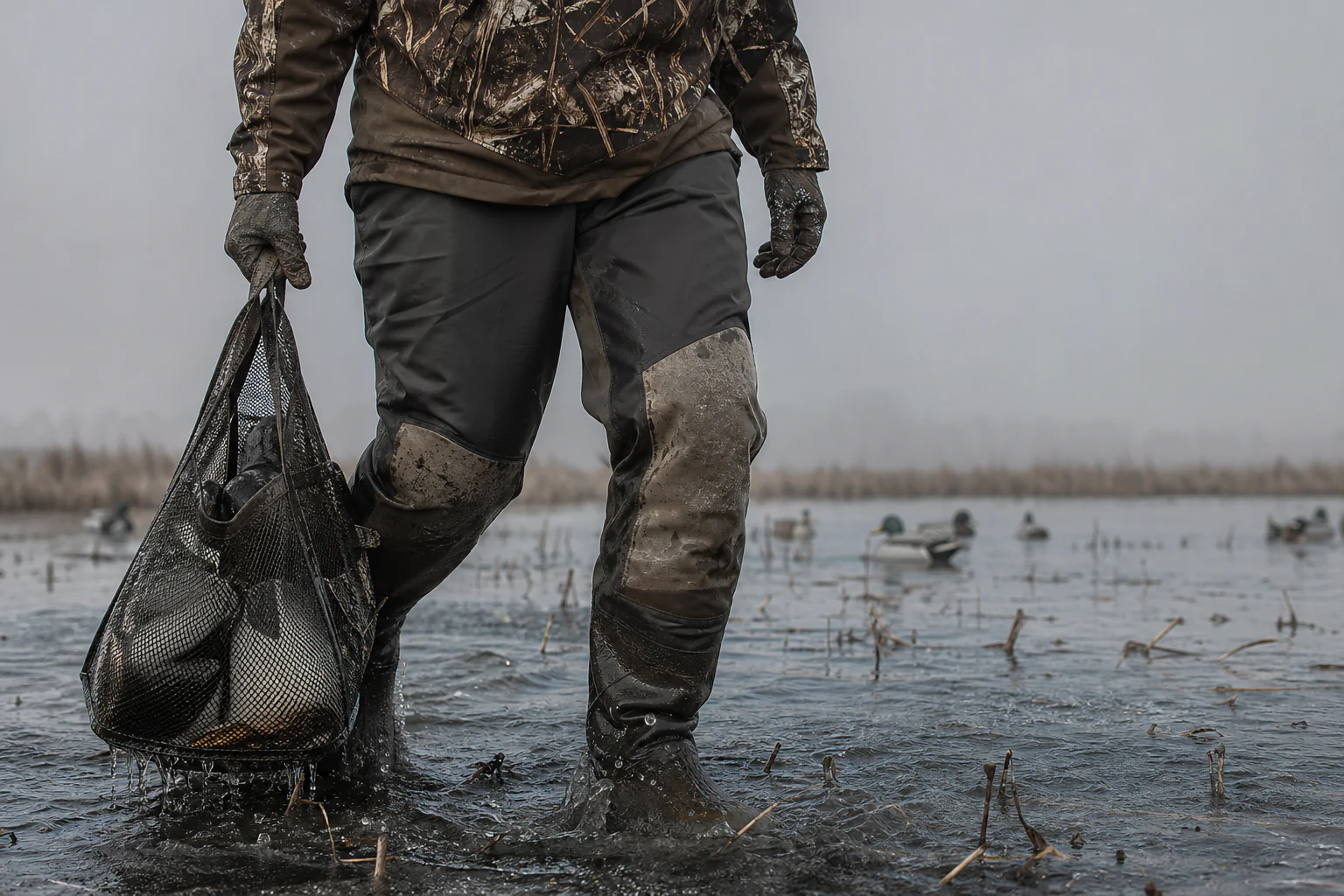
WADE
Waterfowl apparel is tested before the hunter ever sits down: mud, reeds, flooded edges, boat steps and wader straps expose weak patterning, poor cuffs, noisy fabrics and badly placed storage. The garment has to move through wet entry without soaking, binding or collecting unnecessary bulk.
Product decisionConfirm water depth, access method and wader interface before sample approval.
Evidence questionCan the prototype be reviewed with the intended wader, boot and glove setup?
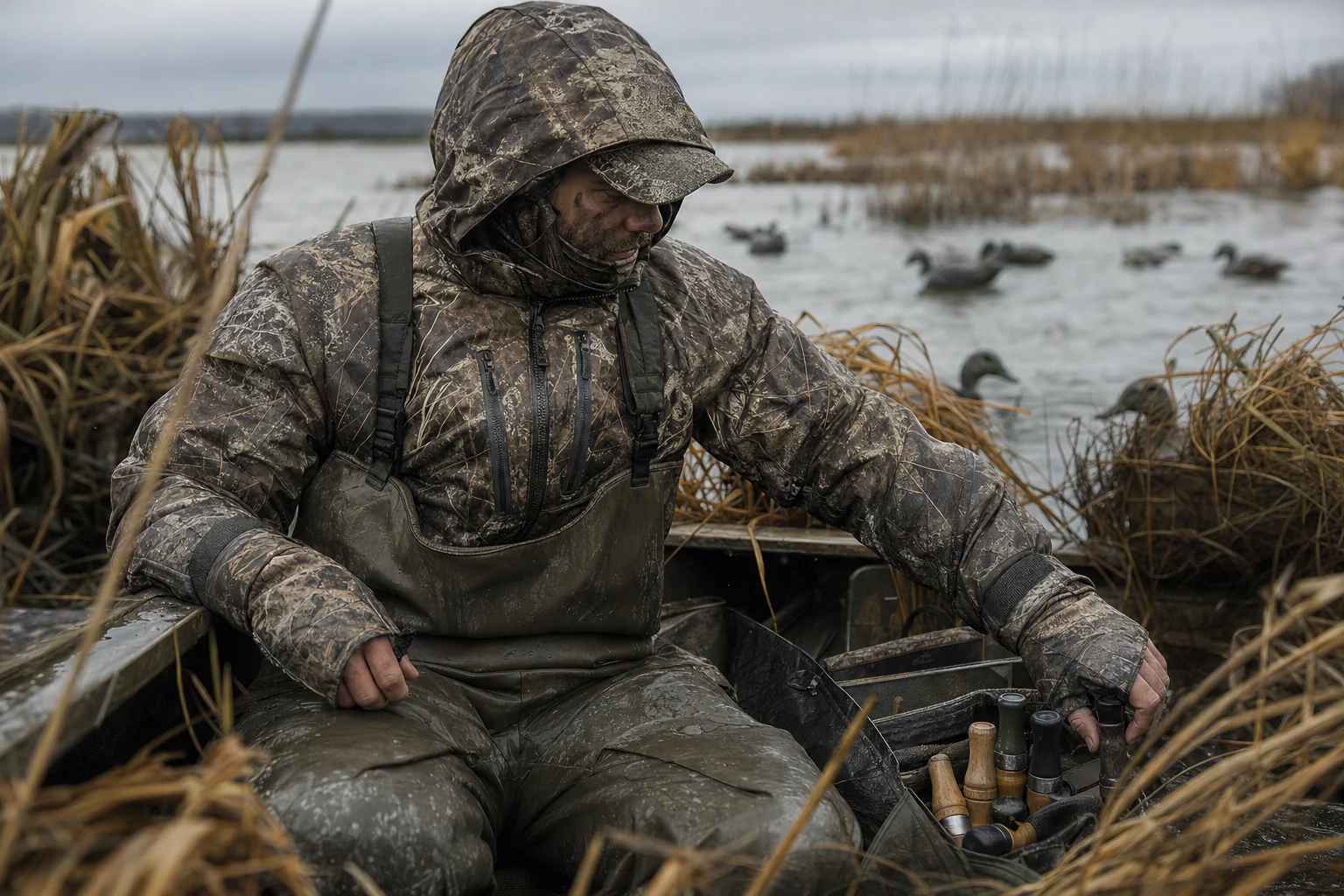
BLIND / BOAT
In a marsh blind or boat, the user is seated low, layered, often wet, and working with calls, decoys, dog gear, shell loops and gloves. Patterning and trim placement need to preserve reach without exposing wrists, lifting hems or blocking access.
Product decisionTreat blind or boat ergonomics as a product requirement.
Evidence questionCan the size set be tested through seated reach, call access and glove operation?
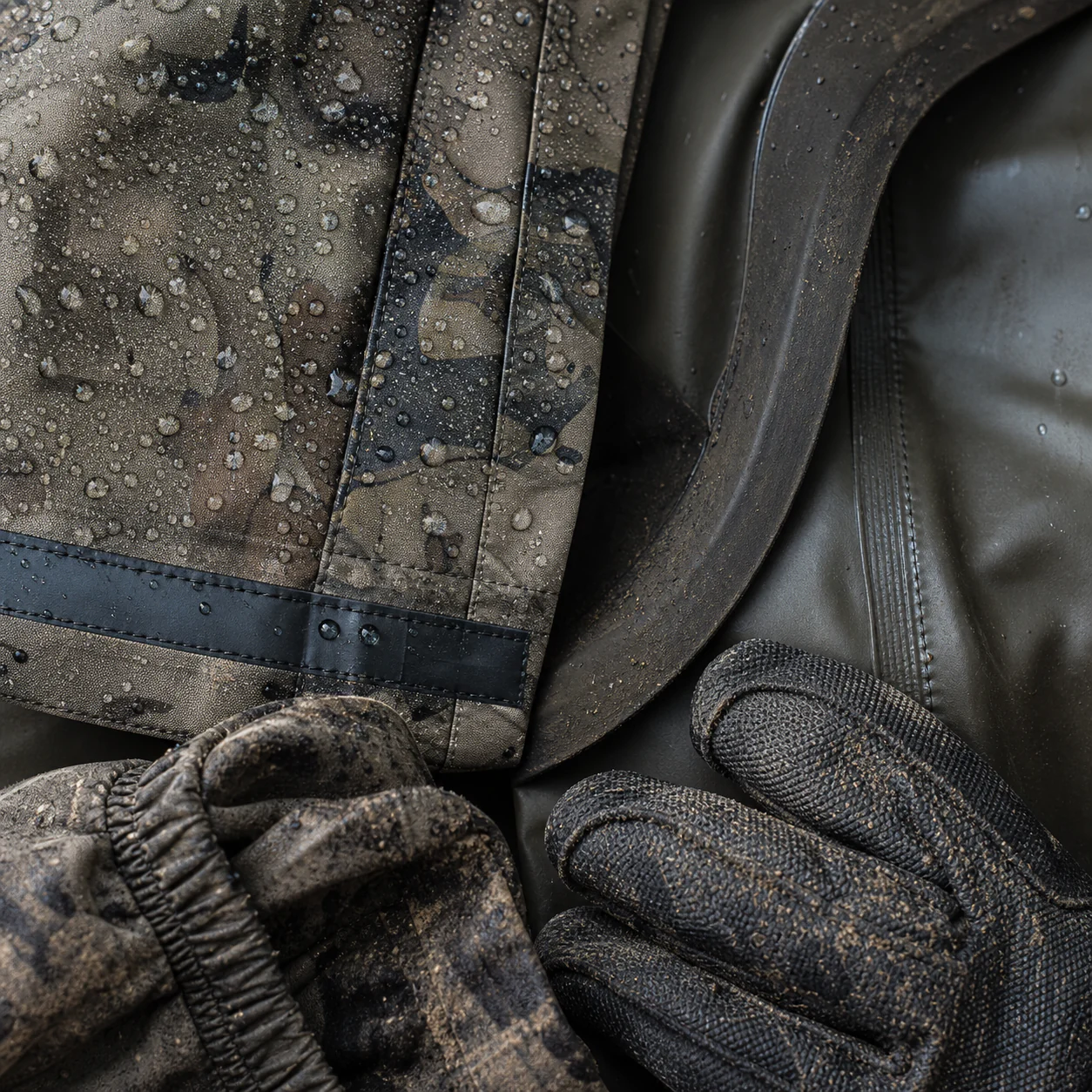
WET COLD
Waterfowl cold combines static waiting, wind, spray, damp contact and glove-dependent work. Insulation cannot be selected as a single number; the package has to work with shell fabric, waders, venting, hand systems and compression points.
Product decisionBuild warmth as a wet-cold system, not simply a heavier parka.
Evidence questionWhat warmth, fit and movement checks are required before claims are written?
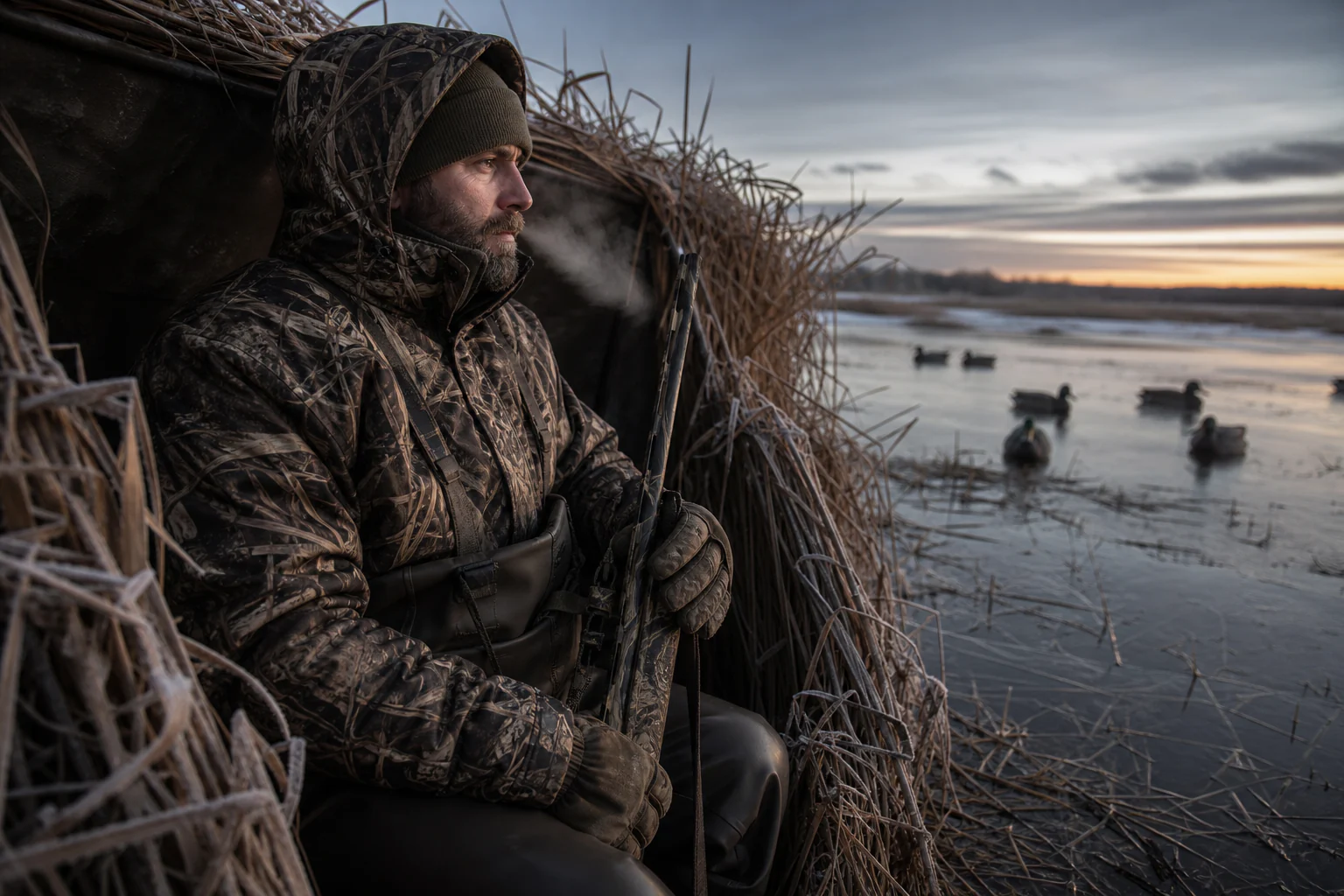
WEATHER
Waterfowl buyers care about rain, spray, sitting moisture, wet handling and repeated wash or mud exposure. A waterproof fabric claim, a seam-sealed shell claim and a whole-garment protection claim are not the same thing.
Product decisionDefine the waterproof evidence route before claim language is approved.
Evidence questionWhich fabric, seam, zipper, wash and whole-garment checks are needed?
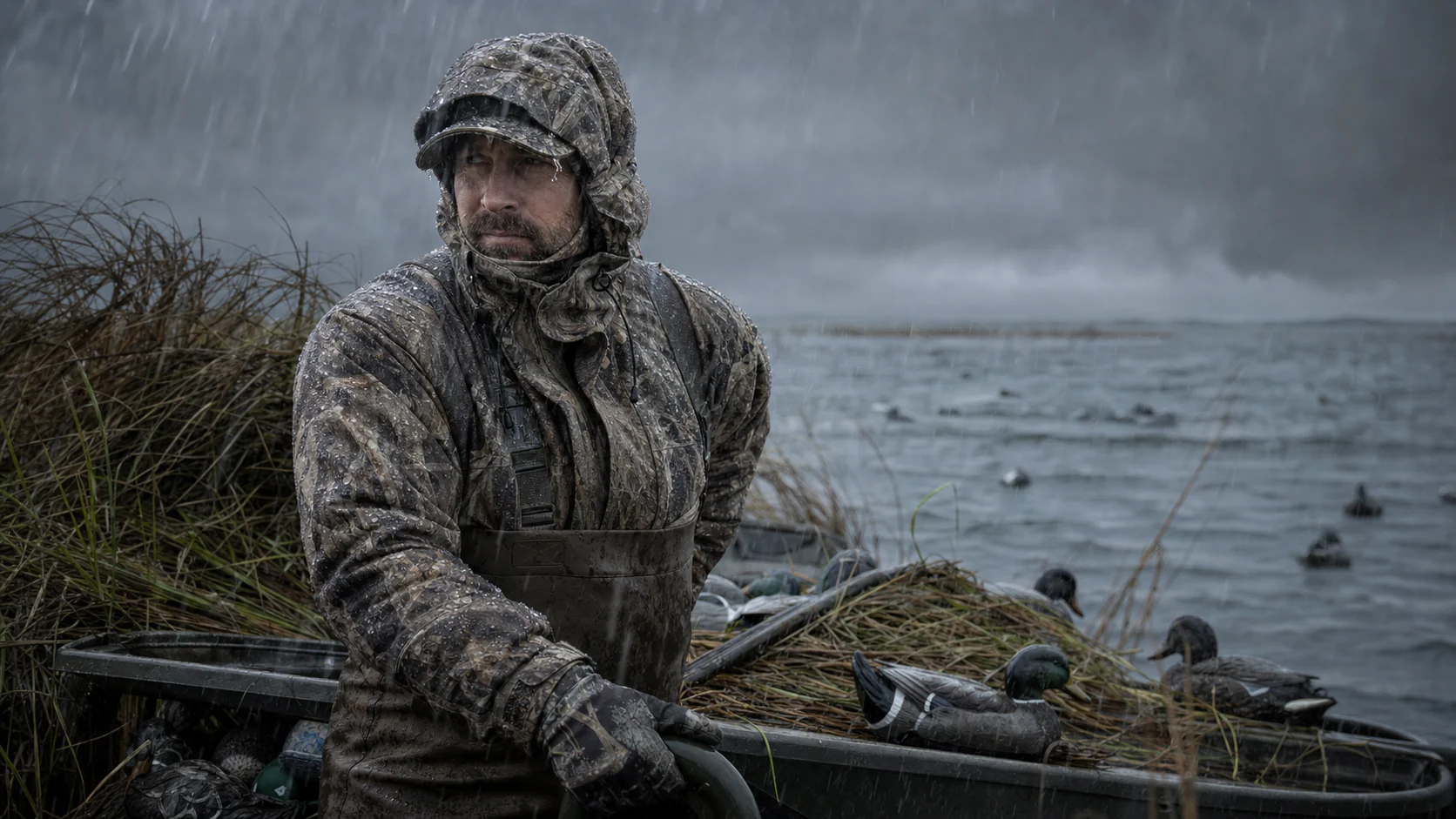
CLEANUP
After the hunt, the product faces mud, grit, decoy contact, wet storage, laundering, drying and repeated abrasion. Durability should be engineered into the zones waterfowl users actually abuse, while care language stays realistic.
Product decisionMap repeated contact and care expectations before final BOM approval.
Evidence questionHow will laundering, abrasion, seam and component performance be checked?
Waterfowl product system
Prioritize the garments that solve wetland access, wader interface, blind or boat use, static warmth, waterproofing and mud durability before turning the range into SKUs.
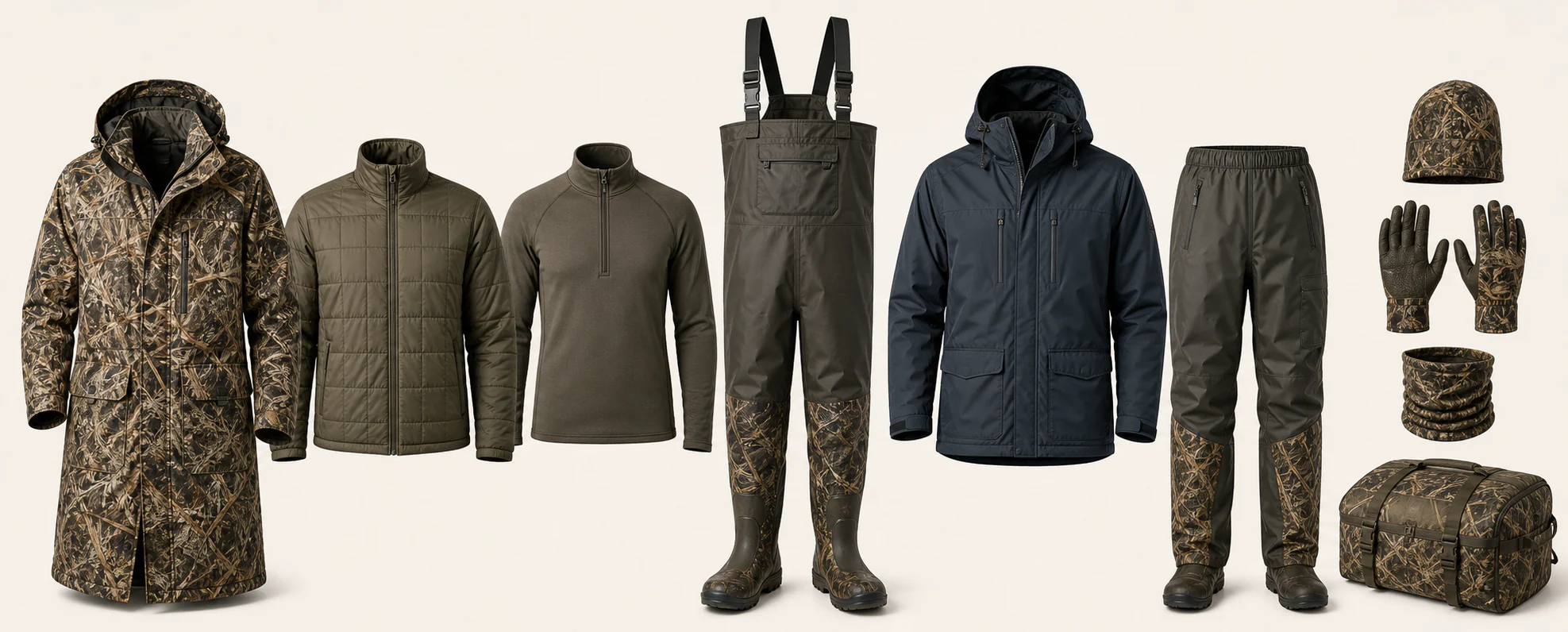
Dry comfort under waders and shell
Warmth that tolerates damp setup phases
Rain, spray, hood and pocket protection
Water depth, boot and suspender interface
Mud, seat and kneeling durability
Dexterity, warmth and call operation
Wet utility and storage interfaces
Materials, marsh camo and brand system
Choose the right route
OEM
Best when your team already controls approved tech packs, measurements, BOM, artwork and target requirements for the waterfowl range.
ODM
Best when the pursuit, market and product goals are clear, but the range architecture, waterproofing route, wader interface or evidence plan still needs definition.
Development sequence
Hunt profile, market rules and product goals
Wetland platform, temperature and water-depth priorities
Waterproofing, insulation, trim and wader-interface route
First waterfowl sample set
Wet handling, fit, blind/boat reach and glove operation
Revised or size-set sample
Evidence and pre-production controls
Approved bulk plan and handover
Claim-by-claim evidence plan
| Requirement | Evidence route | Sample stage |
|---|---|---|
| Waterproof fabric route | Hydrostatic or agreed material method by fabric type | Material / prototype |
| Seam and zipper protection | Tape, seam construction and closure review | Prototype / PP |
| Static wet-cold warmth | Layered fit and insulation package review | Prototype / wear review |
| Wader compatibility | Suspender, belt, boot, hem and pocket-access review | Sample / size set |
| Mud abrasion and components | Zone-based wear, seam and pull checks | Material / PP |
| Glove and call operation | Wet-glove pocket, puller and accessory access review | Prototype / size set |
| Regulatory wording | Market-specific visibility, material and claim-language review | Brief / compliance review |
Named methods, pass criteria and legal wording are agreed for the actual product and target markets. A waterproof fabric, taped seam or warm insulation package does not prove every finished-garment claim by itself.
Explore testing and validationBuyer FAQ
You can start with one priority product, but the waterfowl system should still be mapped so the jacket, wader, bib, glove and insulation decisions do not conflict later.
Waterfowl apparel usually carries more wet handling, wader compatibility, mud abrasion, blind or boat ergonomics, glove operation and waterproof claim burden. Backcountry apparel leans more toward elevation, output, pack load and fast weather changes.
SSM can review material and construction routes against the approved brief. Waterproof, breathable, seam-sealed or weather-resistant language should be tied to the actual material route, garment construction, care route and agreed evidence plan.
Yes, when your brand owns or is authorized to use the artwork. Marsh camouflage, solid color and any visibility requirements should be reviewed by target market, season and hunt method before product wording is finalized.
Send the product list, blind or boat scenario, water depth, season phase, target markets, materials or reference samples, artwork status, size range, claim requirements and estimated quantities. Commercial details are confirmed after scope review.
Bring the wetland profile
Share the blind or boat type, water depth, season, market, product list, camouflage or visibility needs, and claims you want the range to make. We will help identify the next useful sample, specification or evidence decision.