Terrain and cover
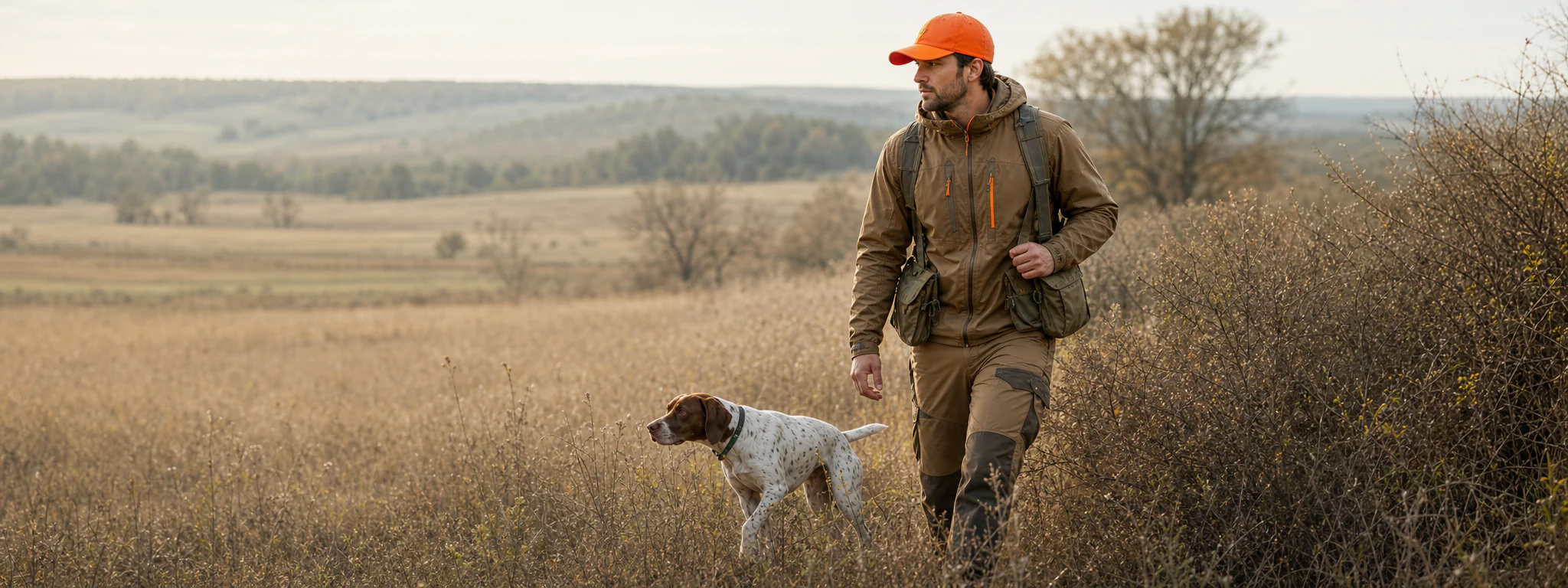
Prairie grass, CRP, hedgerow, briars, brush, woodland edge, crop stubble or mixed walking cover.
Now Accepting Orders for SS2026 — Sample turnaround in 7-10 days. Worldwide shipping available. Request a Sample Kit →
The walking cover system
Develop custom upland vests, brush pants, field shirts, weather shells, caps, gloves and accessories around miles of walking, dog-handler movement, thorn and grass abrasion, shell access, blaze placement and evidence-backed product claims.
Buyer answer
An upland hunting apparel program is a coordinated walking-cover system developed for brush contact, long movement, dog-handler ergonomics, shell and water access, visible color, weather changes and realistic care. The brief defines terrain, cover density, vest architecture, abrasion zones, visibility panels, fabric route, trims, size range and evidence plan before the bill of materials is approved.
Cover profile
Turn terrain, movement, visibility, carry, abrasion and claim requirements into product inputs before material names lead the conversation.
Prairie grass, CRP, hedgerow, briars, brush, woodland edge, crop stubble or mixed walking cover.
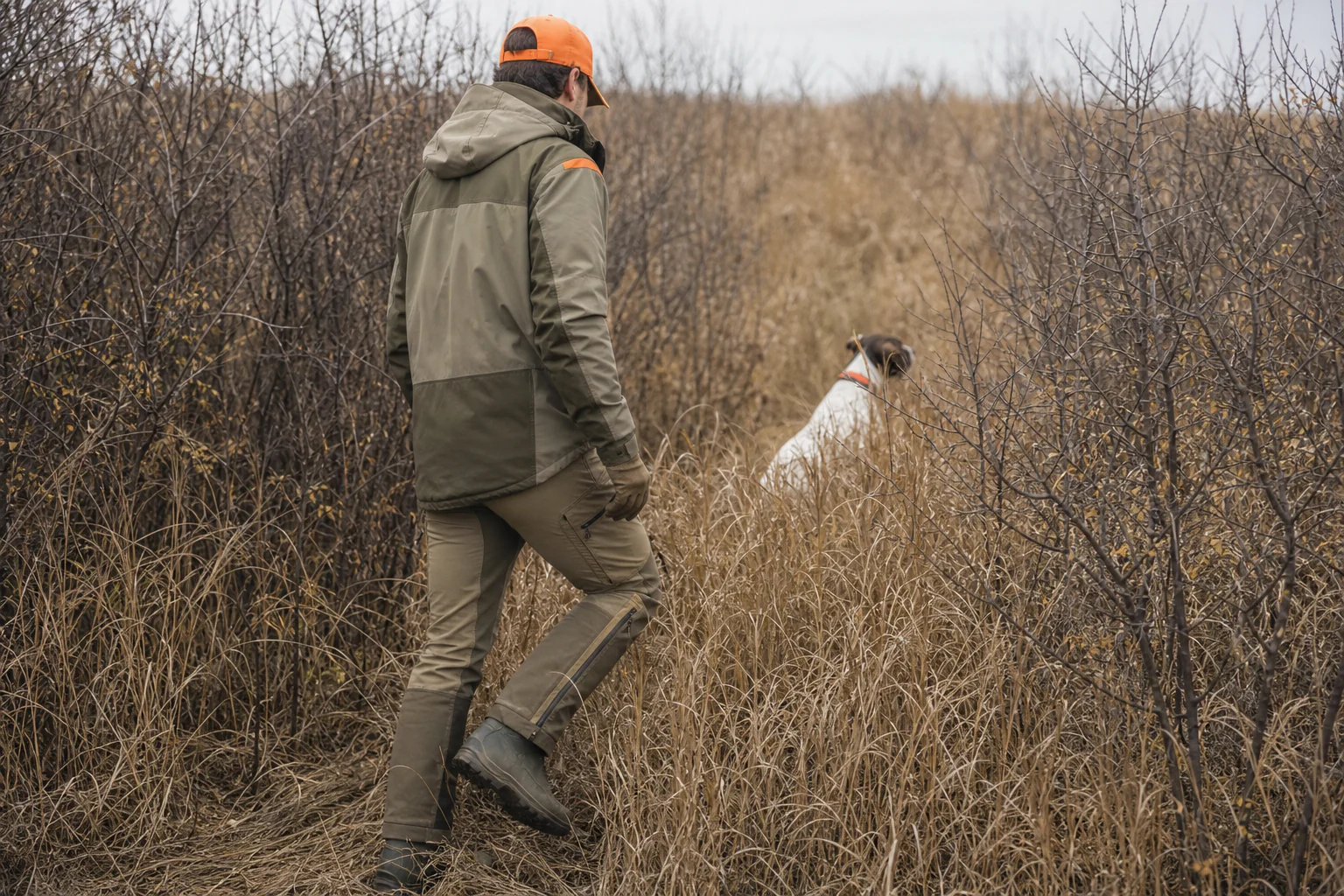
Continuous walking, stepping over cover, dog handling, quick mounting, kneeling, climbing fences and repeated stops.
Blaze orange cap, yoke, vest panels or market-specific high-visibility placements.
Shell loops, water bottle, small tools, dog gear, radio, phone, rear game bag and pack or vest interface.
Cuffs, knees, seat, thigh, forearm, sleeve, hem, pocket edges and boot or gaiter contact.
Durability, weather resistance, breathability, visibility and care language must match material route and target market.
COVER
Upland product decisions change with the cover: open prairie, briars, brush lanes, hedgerows, crop stubble and woodland edges all stress the garment differently. The right brief maps cover, movement, dog handling and visibility before fabric weight or pocket count is fixed.
Product decisionConfirm the cover profile before approving fabric weight, vest structure or blaze placement.
Evidence questionHow will the sample be reviewed for walking, snagging, pocket access and visibility?
WALKING COVER
Upland apparel spends the day in motion: long walks, changing pace, dog handling, stop-start scanning and fast shoulder movement. The garment has to breathe, move and carry load without dragging, binding or overheating the user.
Product decisionApprove fit through walking, stepping, turning, kneeling and dog-handler movements.
Evidence questionCan the prototype be reviewed across a realistic walk cycle with vest, shells and field accessories?
BRUSH / ABRASION
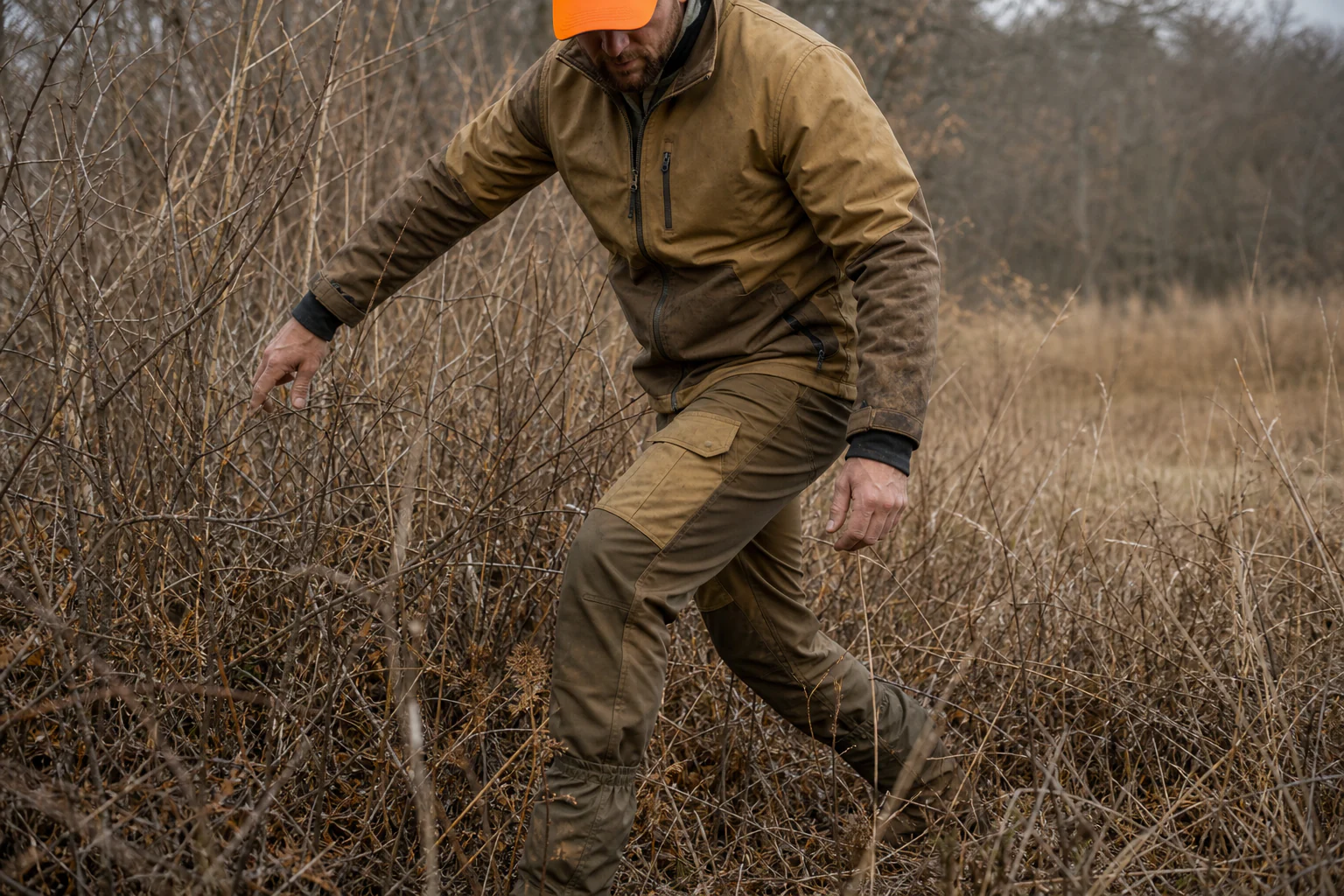
Briars, dry stems, thorns and fence-line brush punish the same zones repeatedly. Upland durability should not mean making every panel heavy; it means mapping the high-contact areas and selecting fabrics, overlays and seams with purpose.
Product decisionEngineer brush protection by zone instead of adding bulk everywhere.
Evidence questionWhich abrasion, seam, snag and wash checks support the final durability wording?
VEST / SHELL ACCESS
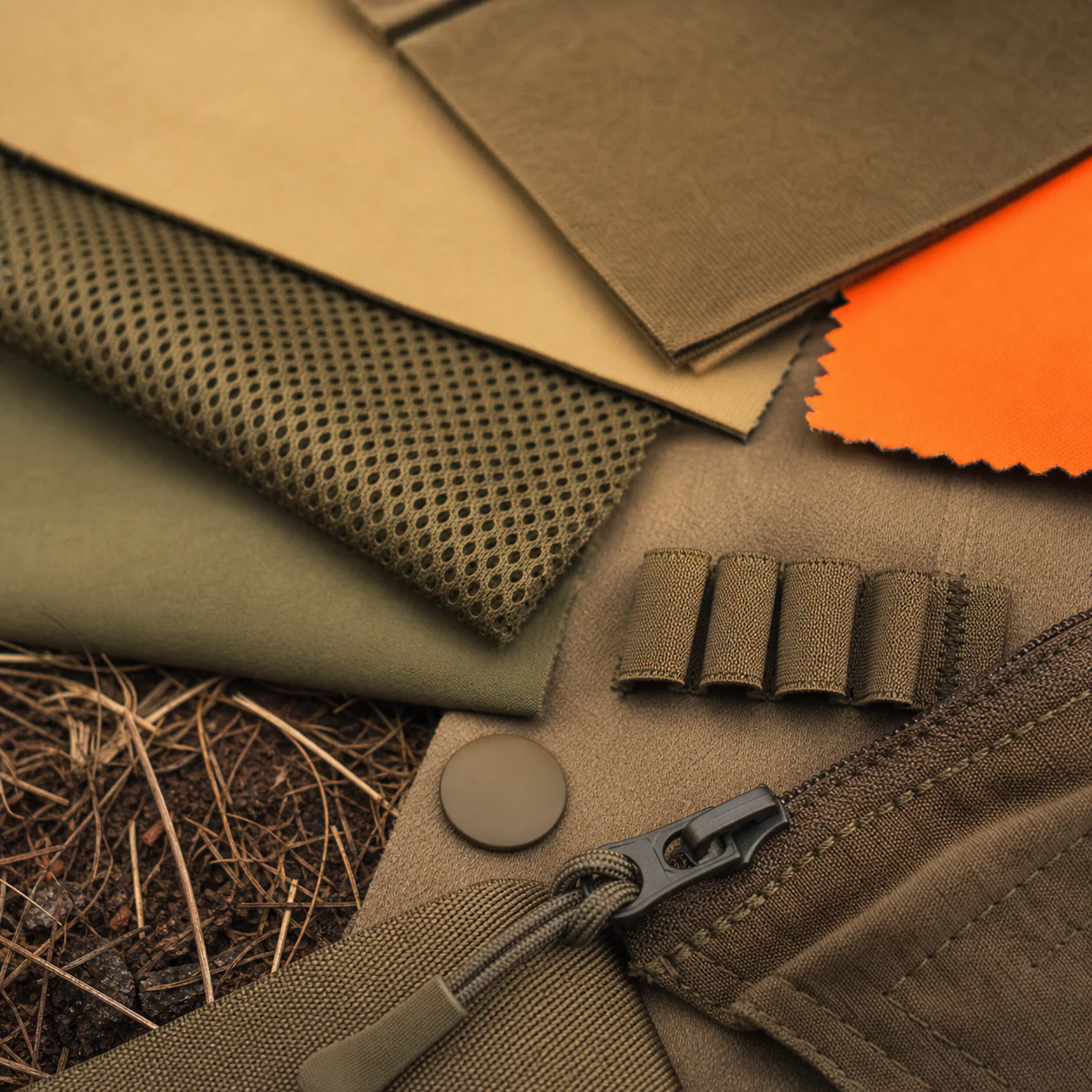
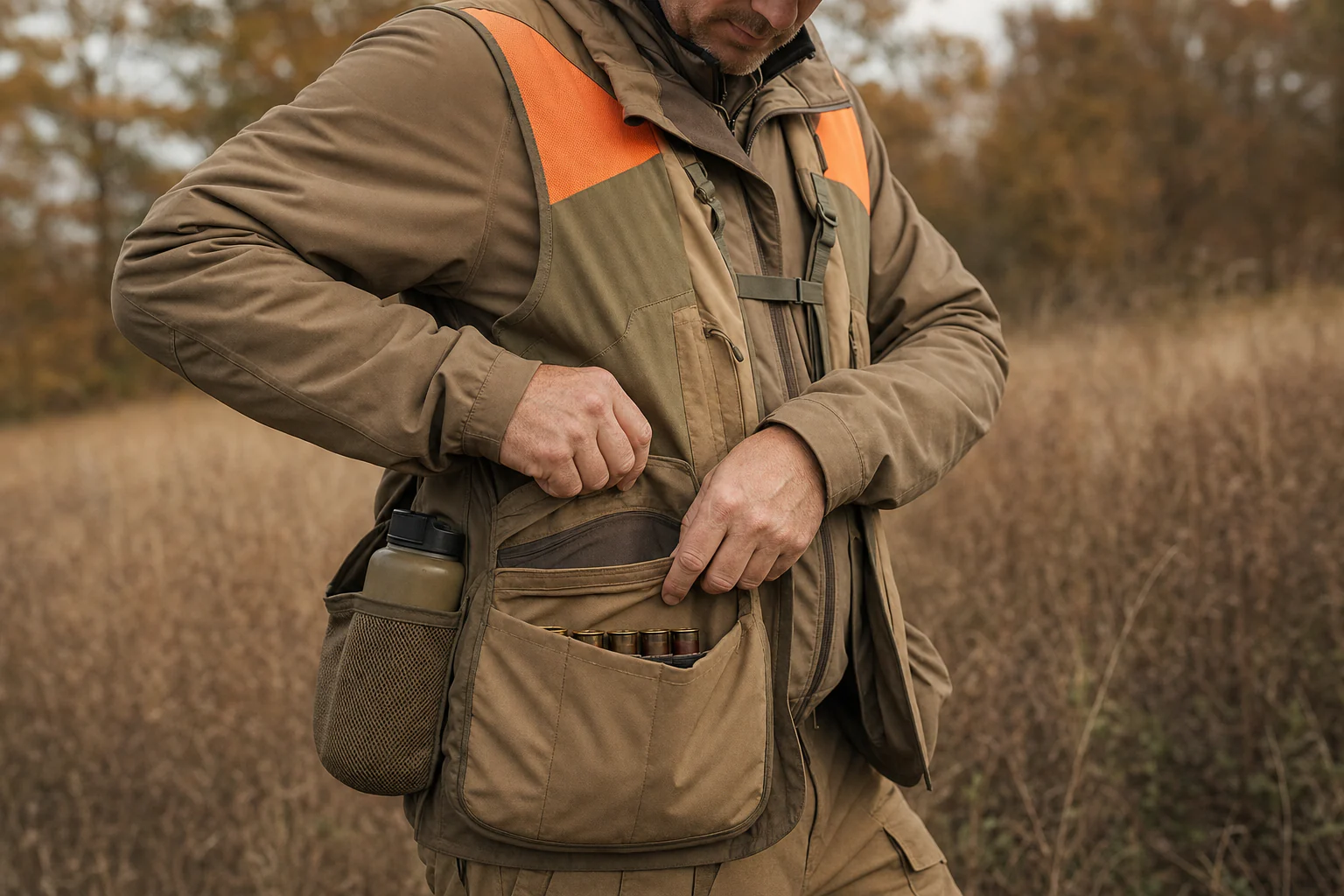
Upland buyers often judge the product by the vest and pocket system: shell access, water, dog gear, phone, rangefinder, rear game bag, field snacks and small tools. Layout must work while walking, wearing gloves and managing a dog.
Product decisionTreat the vest and pocket map as a core product system.
Evidence questionCan a user walk, reach shells, access water and manage dog gear without fighting the garment?
VISIBILITY
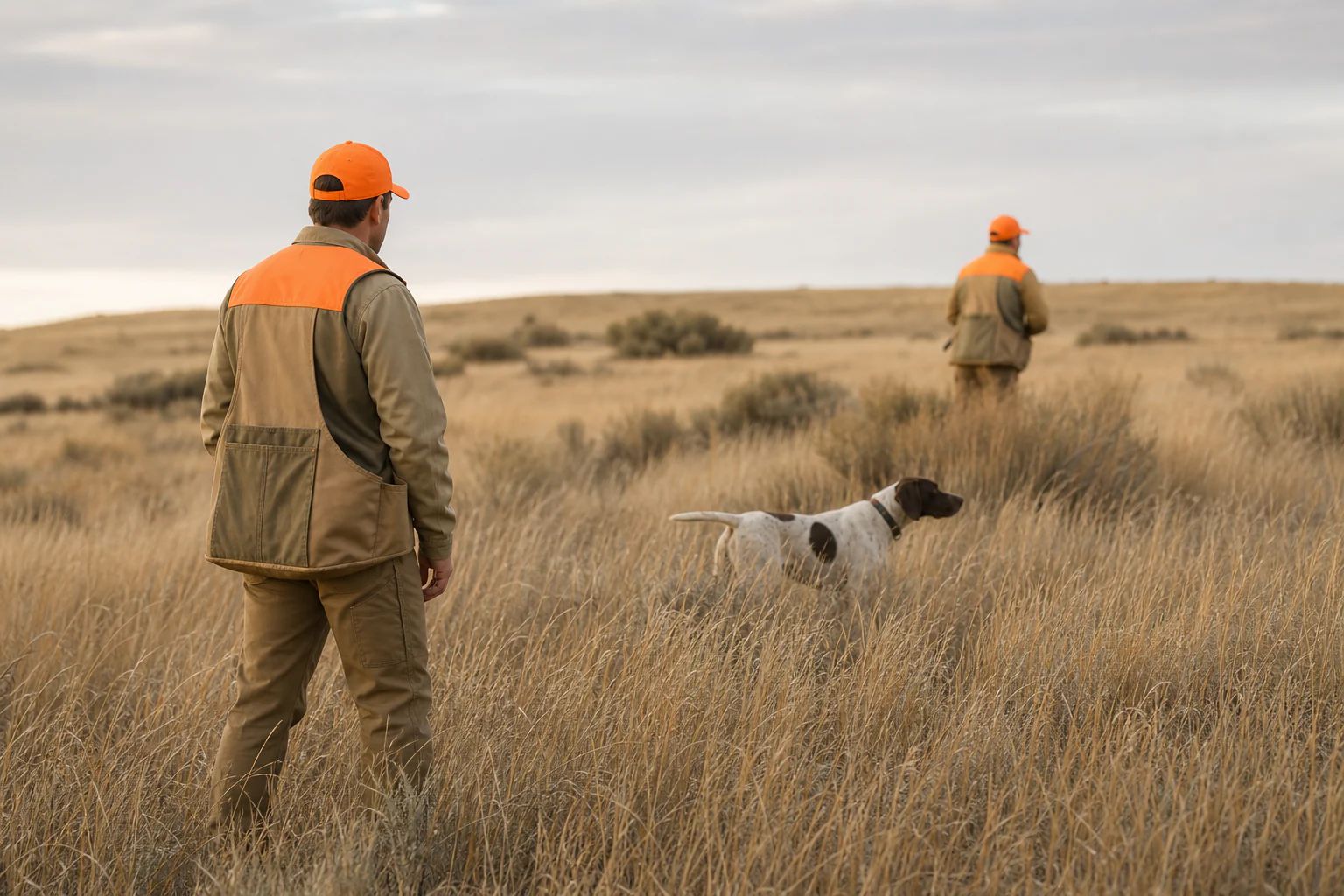
Upland visibility is both practical and market-dependent. Blaze orange may be required or expected, but it still has to work with the brand palette, field photos, care route, colorfastness and garment architecture.
Product decisionLock visibility placement before artwork, trims and photography are approved.
Evidence questionWhat market-specific safety, colorfastness and labeling checks are required?
WEATHER
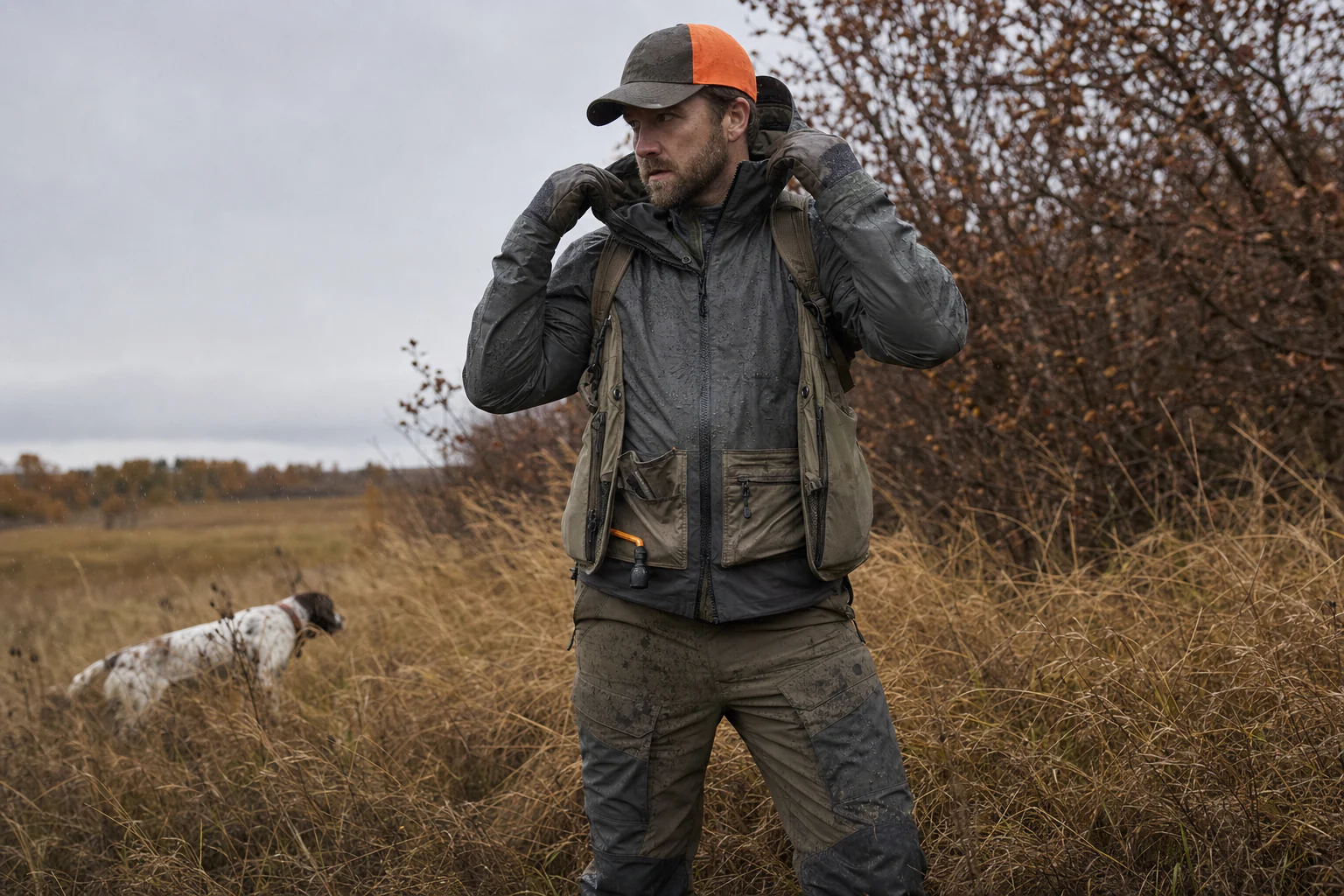
Upland weather can shift from dry wind to light rain while the user keeps moving. A shell route needs to manage weather, noise, packability and heat release without turning a walking garment into a stiff barrier.
Product decisionDefine the weather route by output level, not just forecast language.
Evidence questionWhich material, seam, wash, noise and wear-review checks support the claim?
Upland product system
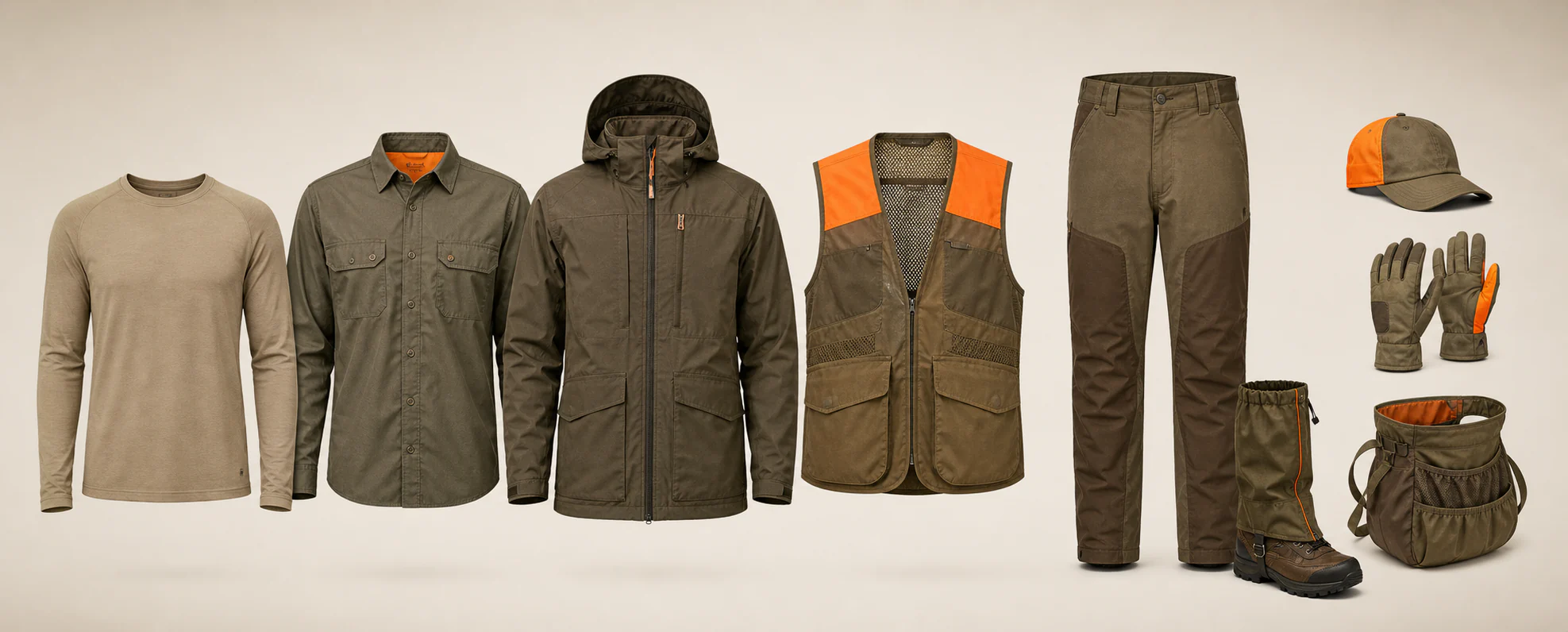
Prioritize garments that solve movement, abrasion, shell access, dog-handler carry, visibility placement, weather shifts and care before turning the range into SKUs.
Moisture control for long walking days
Breathable cover and pocket utility
Wind and light rain route under movement
Shells, water, dog gear and game-bag map
Reinforced knees, cuffs, thigh and seat zones
Visibility, dexterity and field comfort
Boot interface, burr control and care route
Materials, blaze color and brand system
Choose the right route
OEM
Best when your team already controls approved tech packs, measurements, BOM, artwork and target requirements for the upland range.
ODM
Best when the pursuit, market and product goals are clear, but the vest architecture, brush reinforcement, visibility route or evidence plan still needs definition.
Development sequence
Cover type, market, visibility rules and product goals
Movement, carry, abrasion, weather and claim priorities
Patterning, reinforcement, vest layout, trims and fabric route
First upland apparel sample set
Walk cycle, shell access, brush contact and dog-handler movement
Revised sample, size set or component updates
Evidence, labels, care and pre-production controls
Approved bulk plan and manufacturing handover
Claim-by-claim evidence plan
| Requirement | Evidence route | Sample stage |
|---|---|---|
| Brush durability | Zone-based abrasion, seam and snag review | Material / prototype |
| Walking mobility | Fit, reach, knee, cuff and hem movement review | Prototype / size set |
| Vest and shell access | Pocket map, shell loops, bottle access and rear game-bag review | Prototype / size set |
| Visibility color route | Blaze placement, colorfastness, labeling and market review | Brief / compliance review |
| Weather resistance | DWR, coating or membrane route with seam and wash checks | Material / PP |
| Breathability and heat release | Fabric, venting, lining and wear-review plan | Material / prototype |
| Care and field soil | Mud, burr, seed, dust, wash and trim durability review | PP / care review |
Named methods, pass criteria and legal wording are agreed for the actual product and target markets. A brush fabric, blaze panel, pocket map or weather shell does not prove every finished-garment claim by itself.
Explore testing and validationBuyer FAQ
You can start with one priority product, especially a vest or brush pant, but the walking system should still be mapped so vest length, jacket hem, shell loops, pocket access, brush zones, visibility panels and weather layers work together.
Upland apparel is usually more movement-heavy. It has to support continuous walking, dog handling, brush abrasion, shell and water access, visible color placement and weather changes. Turkey prioritizes close-range concealment and call access; whitetail often prioritizes stationary quietness and retained warmth.
Yes. Blaze or high-visibility placement can be developed as cap, yoke, shoulder, back, vest or accessory panels. Final wording and labeling should be reviewed against the selling market and approved evidence plan.
Yes, when your brand owns or is authorized to use the artwork. We can translate colorways, solid panels, contrast, trim and care routes into a production-ready garment system.
Send the product list, target market, terrain and cover profile, visibility needs, vest or pocket requirements, materials or reference samples, size range, claim requirements and estimated quantities. Commercial details are confirmed after scope review.
Bring the walking-cover profile
Share the cover type, season, target market, product list, visibility needs, vest architecture, brush zones and claims you want the range to make. We will help identify the next useful sample, specification or evidence decision.