Hunt method
Run-and-gun, blind sit, field edge, hardwood ridge, youth or intro use, or a mixed spring program.
Now Accepting Orders for SS2026 — Sample turnaround in 7-10 days. Worldwide shipping available. Request a Sample Kit →
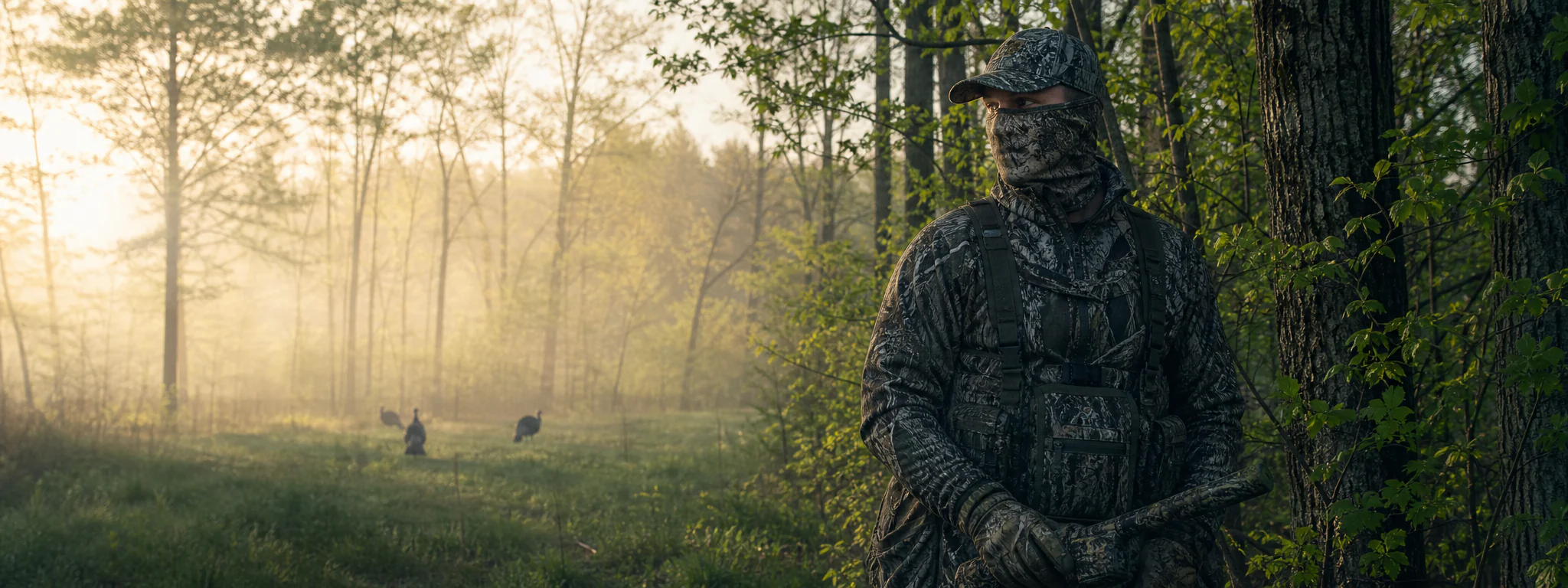
The spring woods system
Develop custom turkey vests, lightweight camo shirts, pants, packable rain shells, gloves, face masks and accessories around spring movement, seated stillness, call access, heat swings, rain popups and market-specific safety-color boundaries.
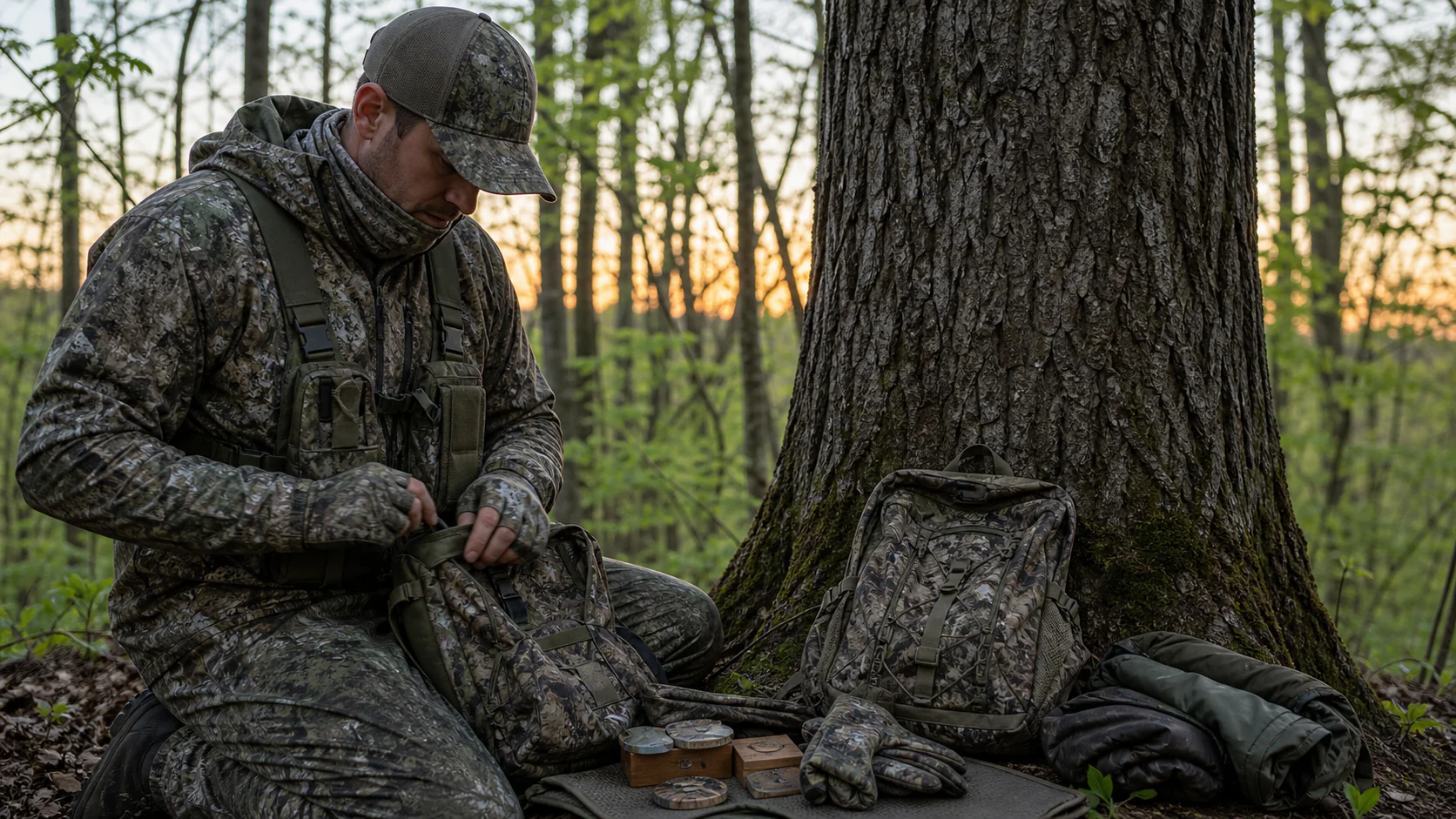
Buyer answer
A turkey hunting apparel program is a coordinated spring-woods system developed for close-range concealment, crawling and kneeling, seated stillness, quiet call access, breathable cover, packable rain protection and market-specific safety-color decisions. The brief defines hunt method, terrain, temperature, pocket map, vest interface, face and hand coverage, artwork rights and the claim evidence plan before the bill of materials is approved.
Spring profile
Turn movement, cover, call access, weather, camo artwork and target-market wording into product inputs before material names lead the conversation.
Run-and-gun, blind sit, field edge, hardwood ridge, youth or intro use, or a mixed spring program.
Crawling, kneeling, sitting against trees, brush contact, creek crossings and repeated repositioning.
Cool dawn starts, humid midday movement, spring rain and changing wind.
Box, slate, pot and diaphragm call storage, locator call loops, rangefinder pocket and seat-pad interface.
Face, hands, hood, cap, pattern scale, contrast and low-shine material behavior.
Red, white, blue and blaze-orange requirements are market- and rule-dependent; handle them as brief items.
ACCESS
The walk-in can start cool, become humid, and end with the hunter crawling, kneeling or sitting motionless at close range. Turkey garments need quiet face fabrics, breathable coverage, controlled pocket placement and trims that do not shine, slap or snag when the bird is near.
Product decisionDefine movement, concealment and call-access priorities before approving outer fabric.
Evidence questionHow will the sample be reviewed for quiet movement, visibility, pocket access and seated use?
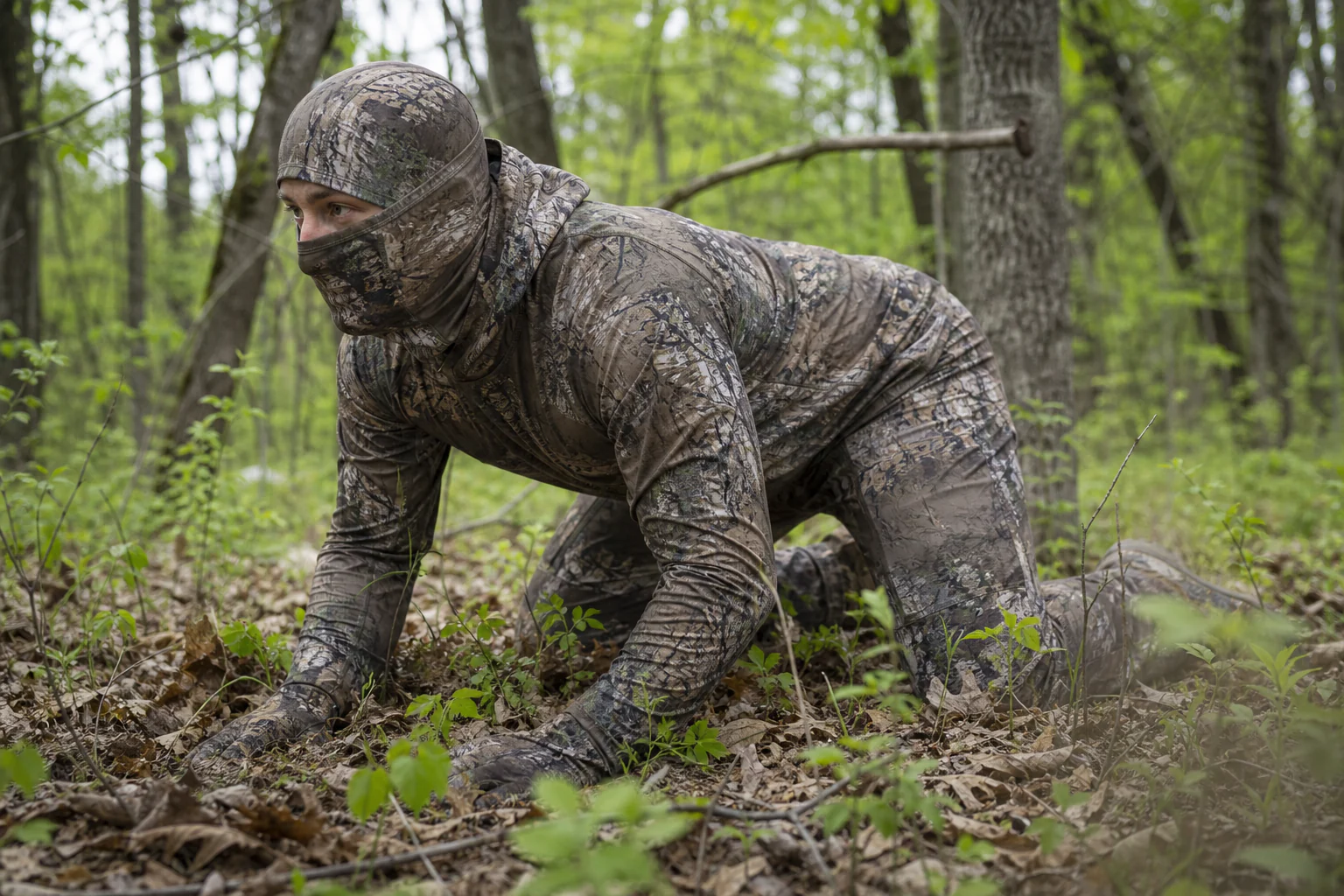
CRAWL / KNEEL
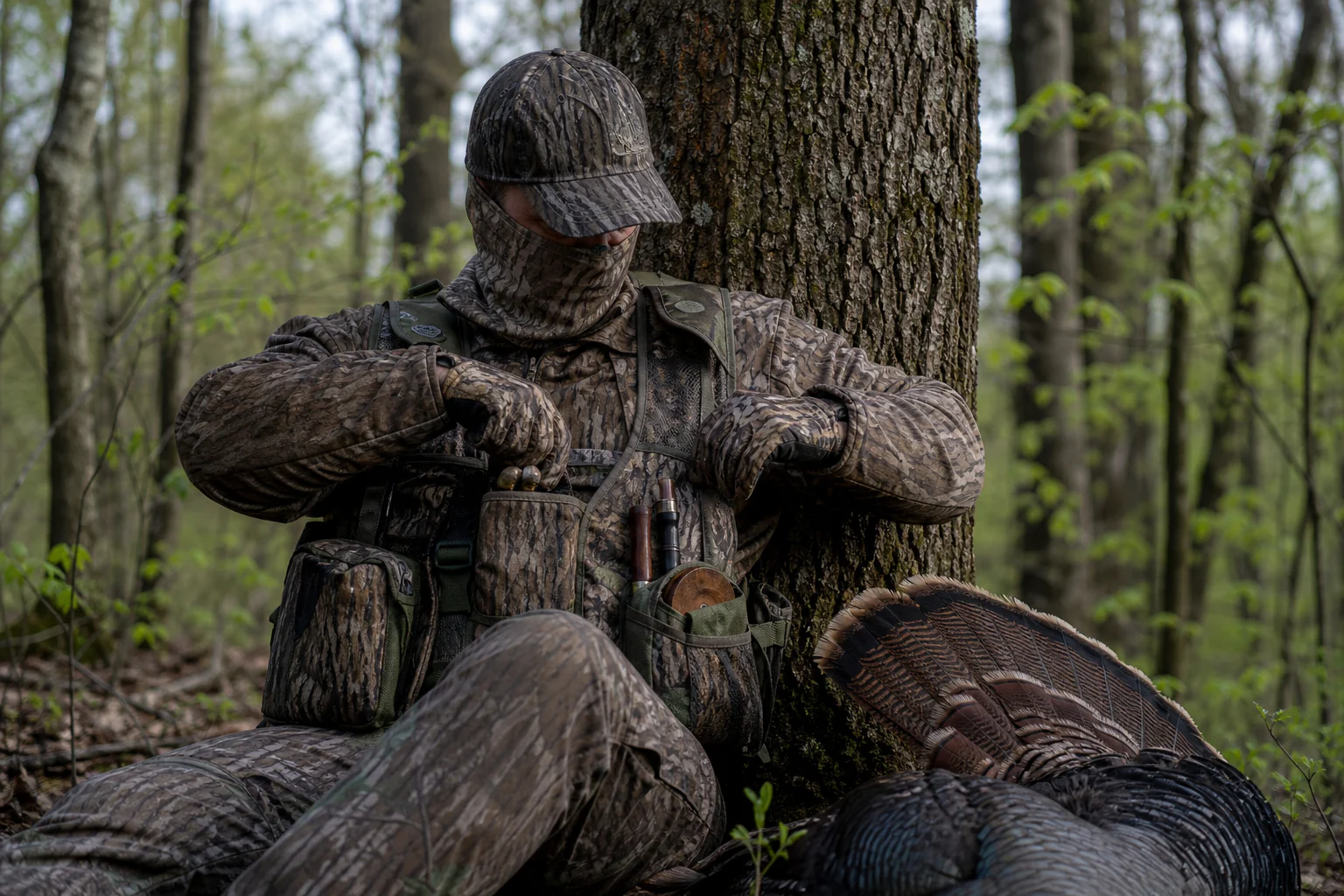
Turkey movement happens close to the ground: knees in leaf litter, elbows on damp soil, a seat pad against bark and a hunter freezing mid-motion when birds are close. Fabric, fit and reinforcement have to protect movement without adding shine, noise or unnecessary bulk.
Product decisionApprove mobility and reinforcement from the actual crawl, kneel and seated-use sequence.
Evidence questionCan the prototype move quietly through crawl, kneel, sit and sudden-freeze positions?
SETUP
A turkey user may sit against a tree for long periods, shift into a blind, or settle at a field edge with a seat pad, vest and call kit. The system has to control hem lift, waist pressure, face coverage, pocket access and quiet gear changes while the user remains low and still.
Product decisionTreat the seated setup as a product requirement, not a photoshoot pose.
Evidence questionCan the size set be reviewed while seated against a tree with vest, calls, gloves and face cover?
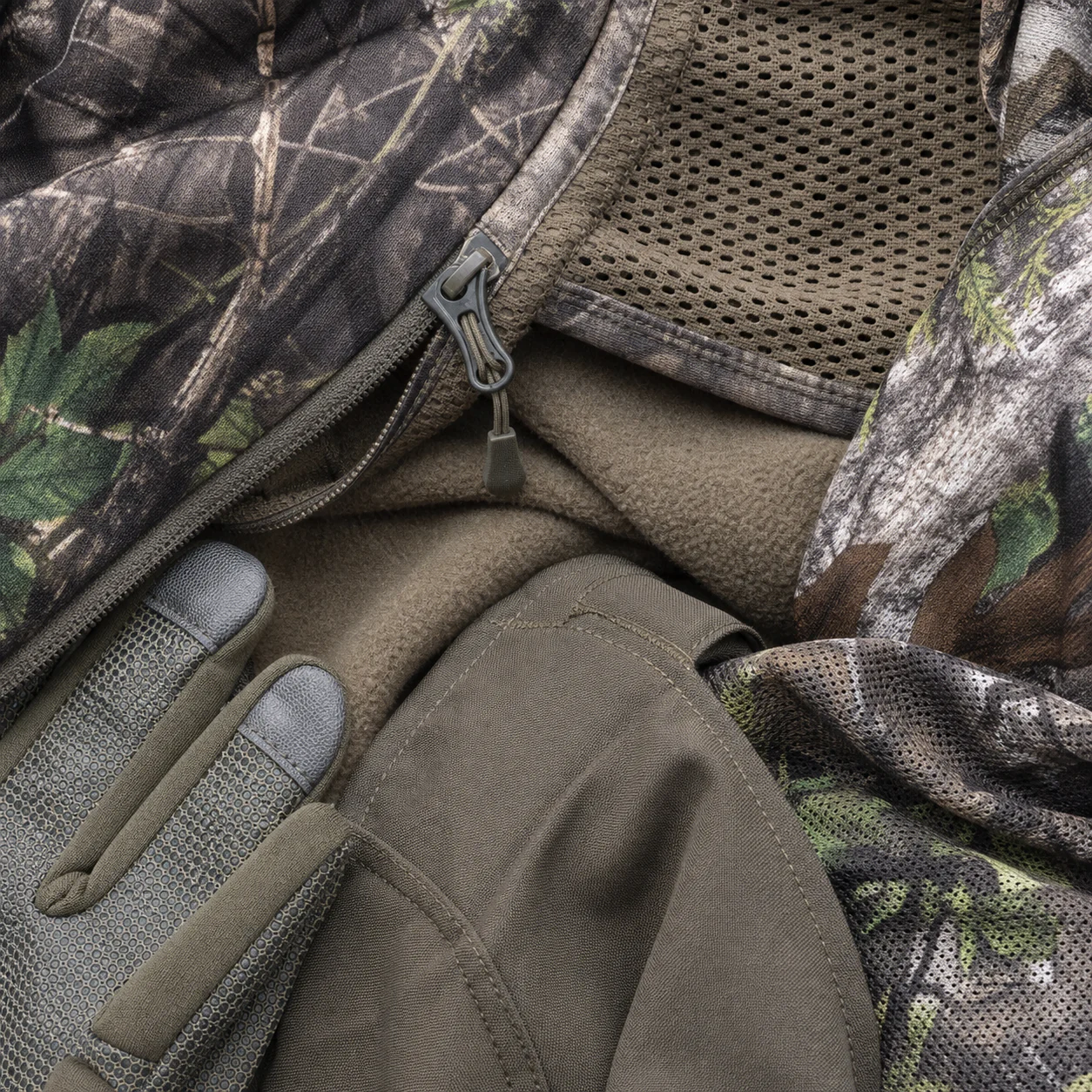
CALL ACCESS
Turkey apparel is judged by small operations: reaching for a box call, pulling a diaphragm case, using a pot call, handling a locator call or adjusting a rangefinder without flashing movement. Pocket layout and trim behavior matter as much as the fabric story.
Product decisionBuild pocket maps around real calling behavior and silent access.
Evidence questionCan a user operate calls, rangefinder and glove adjustments without visible or audible excess movement?
HEAT / BUG COVER
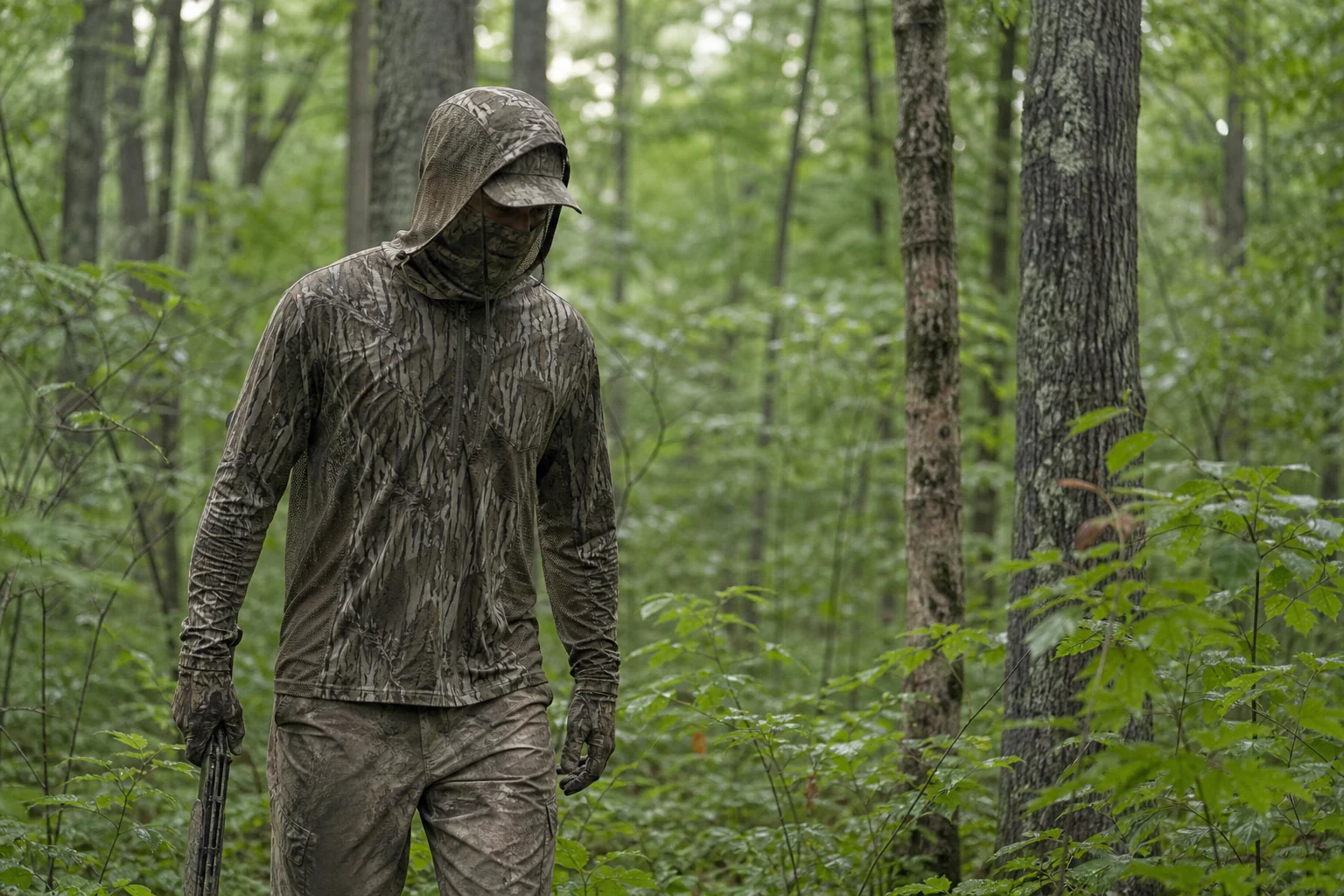
Spring turkey ranges from cold sunrise to humid midday repositioning. Buyers often want face, hand, neck and insect coverage, but heavy fabrics can trap heat and movement moisture. The route needs breathable zones, realistic care language and no unsupported odor or insect claims.
Product decisionDefine spring temperature bands before selecting lightweight fabrics or cover systems.
Evidence questionWhat breathability, wash, colorfastness and claim checks are required for the selling market?
SPRING RAIN
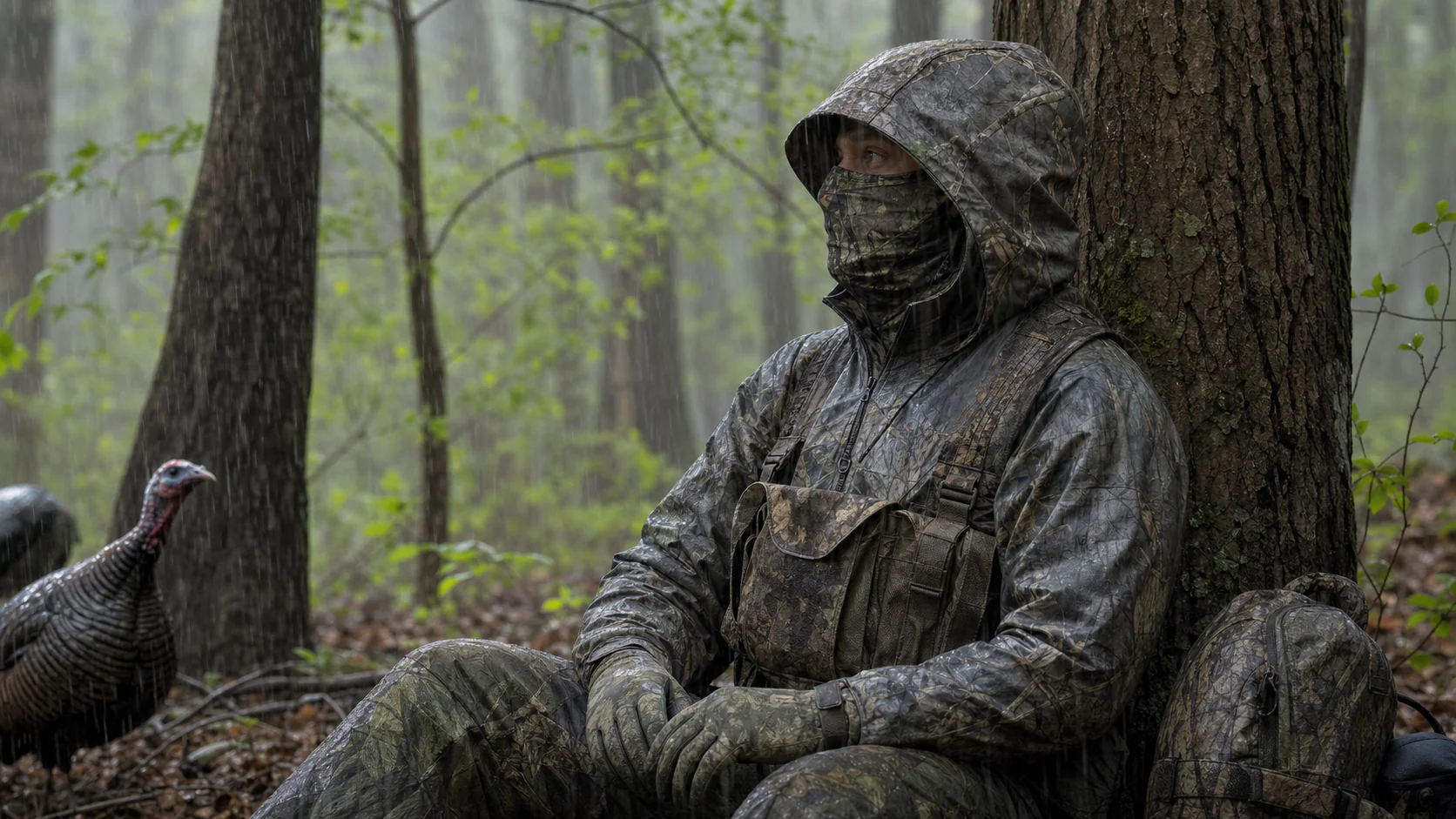
Turkey hunters may need short-burst rain protection that packs small, moves quietly through wet leaves and does not turn the setup into a stiff shell problem. The brief should define whether the range needs weather-resistant comfort or a higher rain-protection route.
Product decisionDefine the rain-protection level before fabric names or claim language are approved.
Evidence questionWhich material, seam, zipper, wash and field-review checks support the final wording?
Turkey product system
Prioritize the garments that solve close-range concealment, crawl and kneel movement, seated setups, quiet call access, heat swings, spring rain and safety-color boundaries before turning the range into SKUs.
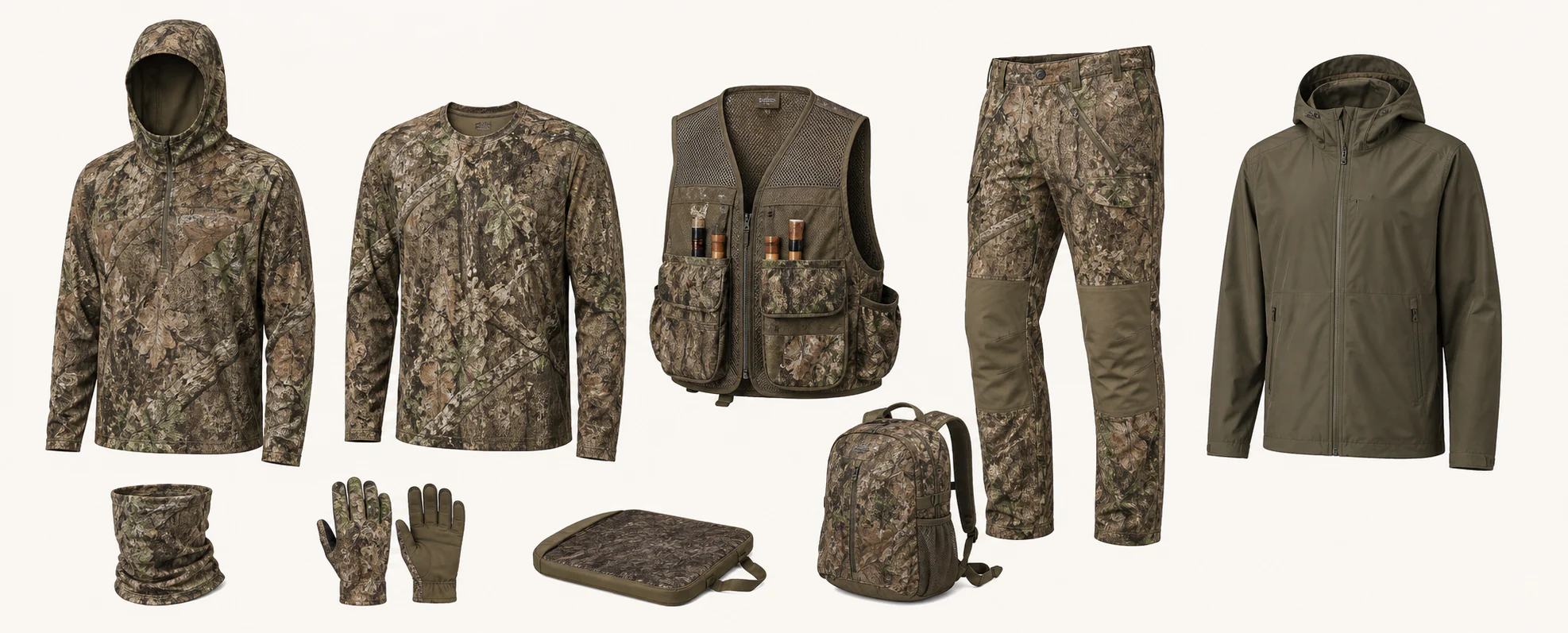
Dry comfort for cool dawn and humid movement
Breathable concealment and quiet reach
Call pockets, seat pad and utility map
Knees, seat, brush and stretch control
Quiet spring rain route
Mask, gaiter, gloves and cap or hood interface
Seat pad, small pack, call storage and care route
Materials, turkey camo and brand system
Choose the right route
OEM
Best when your team already controls approved tech packs, measurements, BOM, artwork and target requirements for the turkey range.
ODM
Best when the hunt method, market and product goals are clear, but the range architecture, call access, crawl mobility or evidence plan still needs definition.
Development sequence
Spring woods profile, hunt method, buyer market and product goals
Concealment, movement, vest access, weather and safety-color priorities
Quiet fabric, crawl/kneel patterning, call pockets and rain route
First turkey apparel sample set
Crawl, sit, call access, heat comfort and quiet movement checks
Revised sample, size set or component updates
Evidence, labels, care and pre-production controls
Approved bulk plan and manufacturing handover
Claim-by-claim evidence plan
| Requirement | Evidence route | Sample stage |
|---|---|---|
| Concealment and pattern route | Camo scale, shine, contrast, artwork rights and selling-market review | Brief / prototype |
| Quiet movement | Fabric hand, trim contact, pocket operation and field-position review | Prototype / size set |
| Crawl and kneel durability | Knee, seat, elbow, cuff and seam-zone abrasion review | Material / prototype |
| Vest and call access | Pocket map, puller behavior, glove access and seated operation | Prototype / size set |
| Heat and bug coverage | Breathability, coverage map, care route and claim-language review | Material / prototype |
| Packable rain protection | DWR, coating or membrane route, seam and zipper review | Material / PP |
| Safety color wording | Market-specific review for red, white, blue and blaze-orange language | Brief / compliance review |
Named methods, pass criteria and legal wording are agreed for the actual product and target markets. A quiet fabric, camo artwork, rain shell or breathable mesh route does not prove every finished-garment claim by itself.
Explore testing and validationBuyer FAQ
You can start with a vest, shirt, pant or rain shell, but the spring woods system should still be mapped so pocket layout, seat-pad position, face cover, glove use, camo scale and rain protection do not fight each other later.
Turkey apparel usually puts more pressure on crawling, kneeling, seated stillness, close-range concealment, call access, heat management and quiet lightweight trims. Whitetail often focuses on long sits and scent/quietness, while wetland systems carry heavier wet handling and wader compatibility.
Yes, when your brand owns or is authorized to use the artwork. We can help translate pattern scale, low-shine materials, colorways and placement into garments, but artwork rights and market use must be clear before production.
Treat safety color and visibility wording as target-market brief items. Product copy should not imply legal compliance until the selling market, use case, labeling route and evidence plan are reviewed.
Send the product list, hunt method, terrain, spring temperature band, target markets, materials or reference samples, camouflage status, pocket or vest requirements, size range, claim needs and estimated quantities. Commercial details are confirmed after scope review.
Bring the spring woods profile
Share the hunt method, terrain, season, market, product list, camouflage or safety-color needs, and claims you want the range to make. We will help identify the next useful sample, specification or evidence decision.