Climate band
Dry desert heat, humid heat, mixed sun and wind, warm rain, high-output walking or long exposed glassing.
Now Accepting Orders for SS2026 — Sample turnaround in 7-10 days. Worldwide shipping available. Request a Sample Kit →
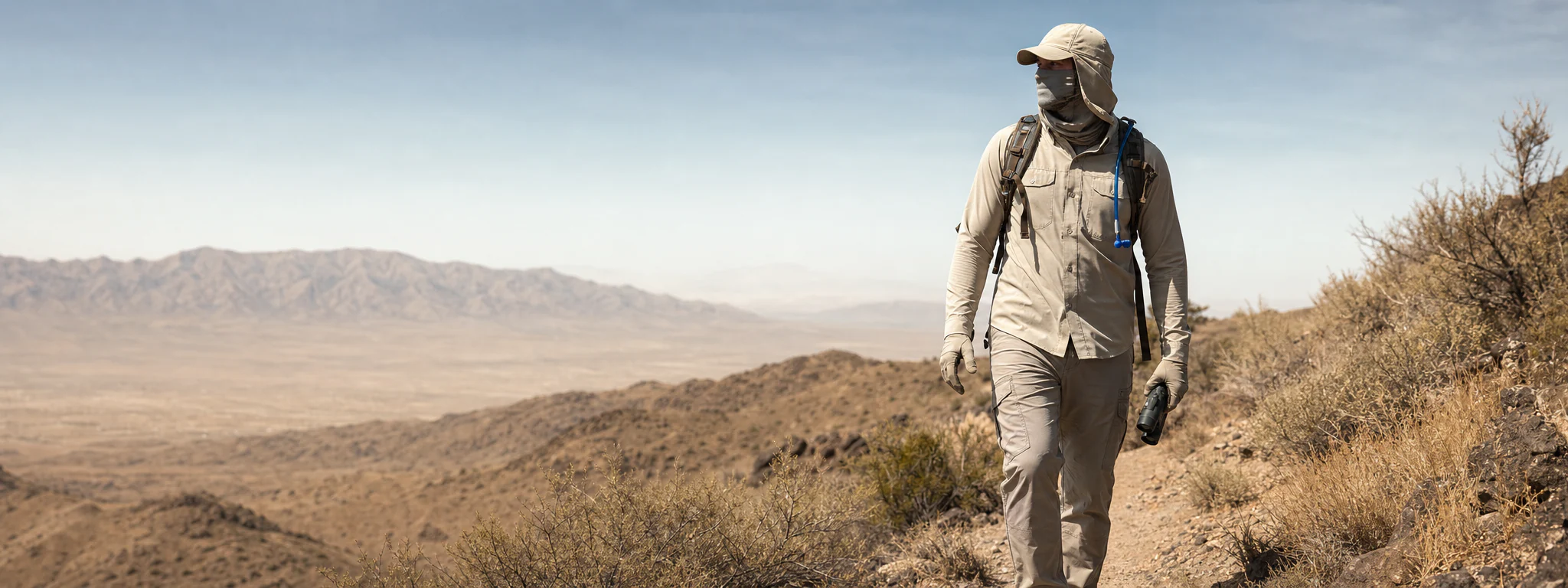
The heat and distance system
Develop custom hooded sun shirts, vented field shirts, breathable pants, packable shells, gaiters, gloves and hydration-compatible accessories around exposed terrain, heat management, scrub contact, warm rain and evidence-backed claim language.
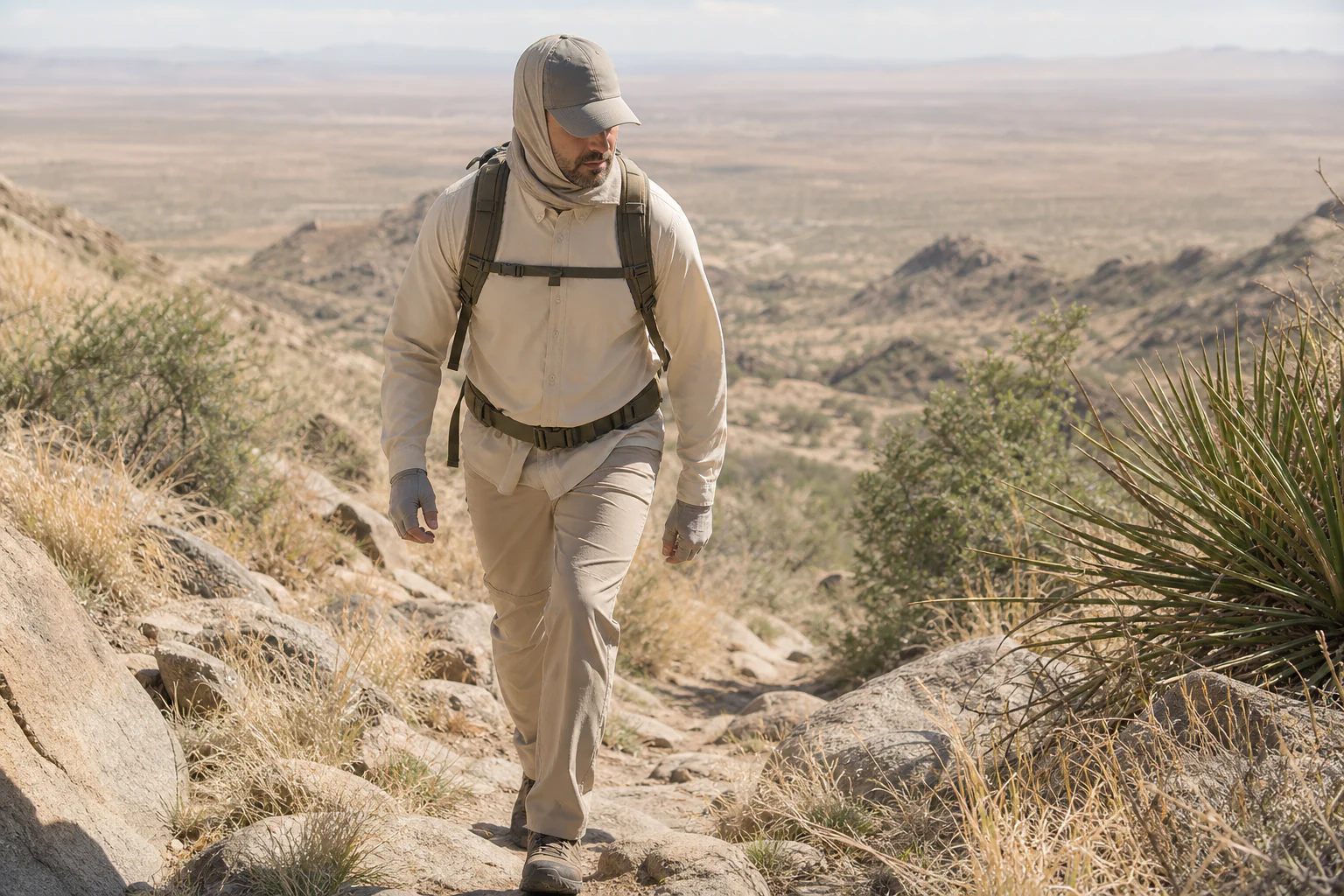
Buyer answer
A hot-climate hunting apparel program is a coordinated heat-and-distance system developed for exposed terrain, airflow, sun coverage, pack and hydration use, sweat management, scrub contact, warm rain and controlled product claims. The brief defines climate band, movement, coverage, venting, fabric opacity, abrasion zones, care route and evidence plan before the bill of materials is approved.
Heat profile
Turn heat, sun exposure, movement, hydration, scrub and claim requirements into product inputs before material names lead the conversation.
Dry desert heat, humid heat, mixed sun and wind, warm rain, high-output walking or long exposed glassing.
Long walks, climbing, ridge-to-ridge movement, pack straps, hydration access and repeated heat-dump moments.
Cap, hood, neck gaiter, collar, glove, sleeve and face-cover interfaces without unsupported UPF claims.
Vents, mesh placement, light woven fabrics, quick-dry direction, pocket access and pack-strap clearance.
Thorns, dry brush, rock kneeling, dust, cuffs, knees, seat, elbows and pocket edges.
Cooling, UV, UPF, odor, antimicrobial, insect, weather and durability language must match evidence and market rules.
HEAT
The same shirt behaves differently in dry desert heat, humid heat, windy ridges or warm rain. Buyers need a system that controls coverage, airflow, pack contact and durability without relying on vague cooling claims.
Product decisionConfirm the heat profile before approving fabric weight, vent placement or claim copy.
Evidence questionHow will the sample be reviewed for movement, sweat, airflow, pack contact and care?
DISTANCE / OUTPUT
Hot-climate apparel is not simply thin fabric. The garment has to move over distance, release heat, work with hydration packs and stay wearable under sun, dust and repeated sweat cycles without collapsing into a disposable shirt.
Product decisionApprove the system through distance, pack and hydration use, not a standing fit check.
Evidence questionCan the prototype be reviewed through movement, sweat, pack contact and heat-release scenarios?
SUN COVER
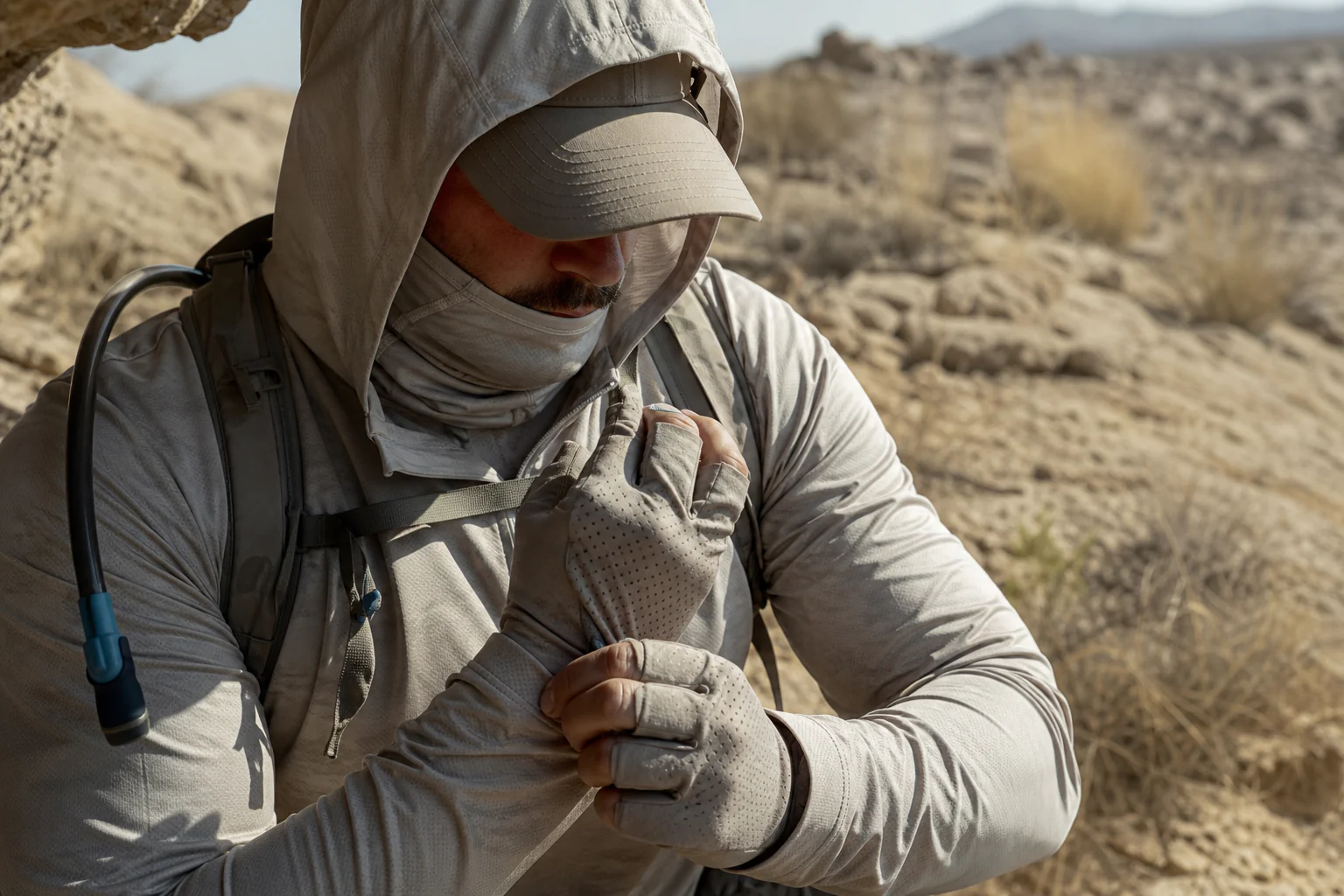
Buyers often need hooded shirts, caps, gaiters, gloves and long sleeves for exposed country. Coverage can be engineered through patterning and fabric selection, but UV, UPF and skin-protection language must be tied to the actual tested material and market wording.
Product decisionSeparate coverage design from verified UPF or UV claim language.
Evidence questionWhich material tests, care route and market wording are needed before sun-protection claims are used?
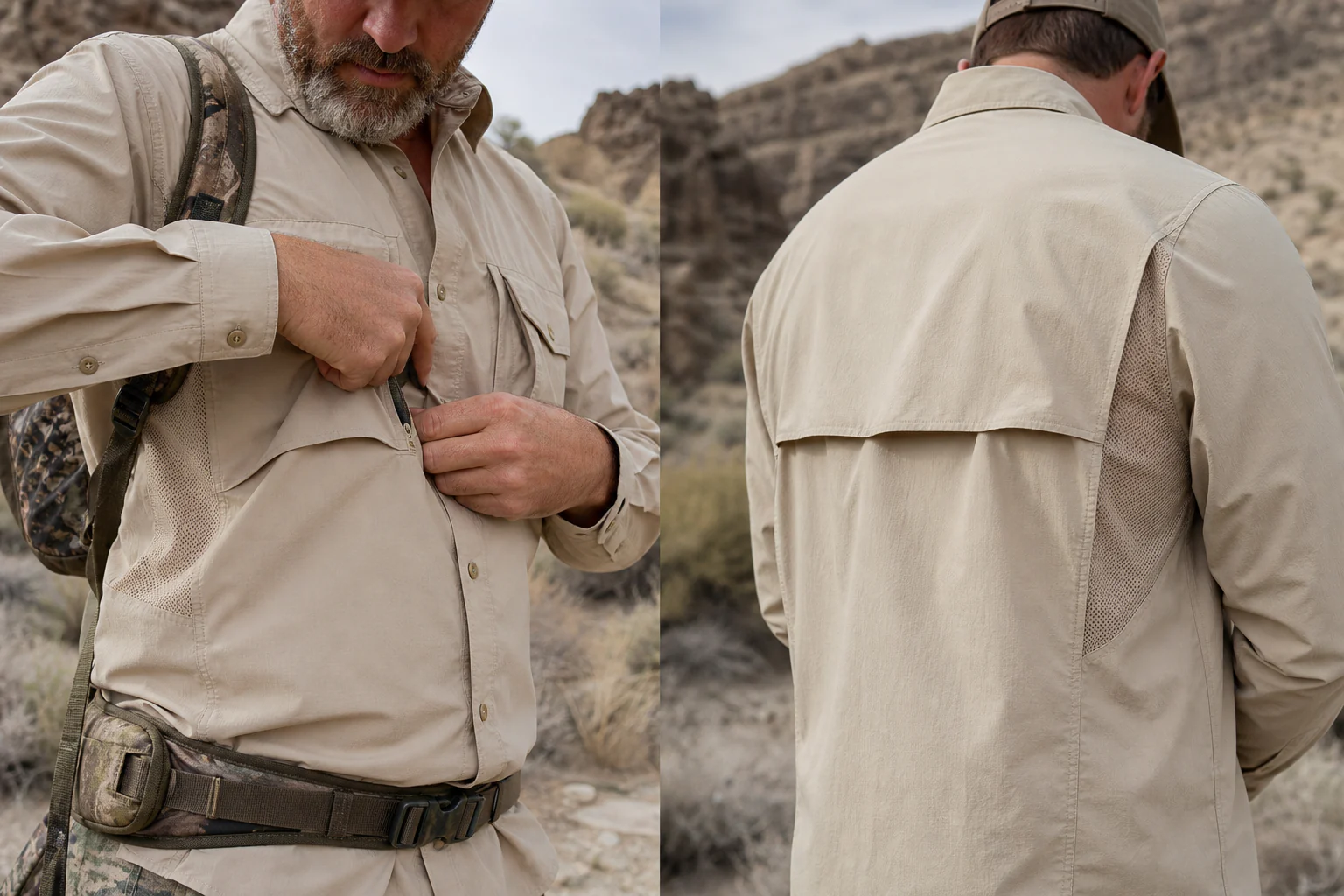
AIRFLOW
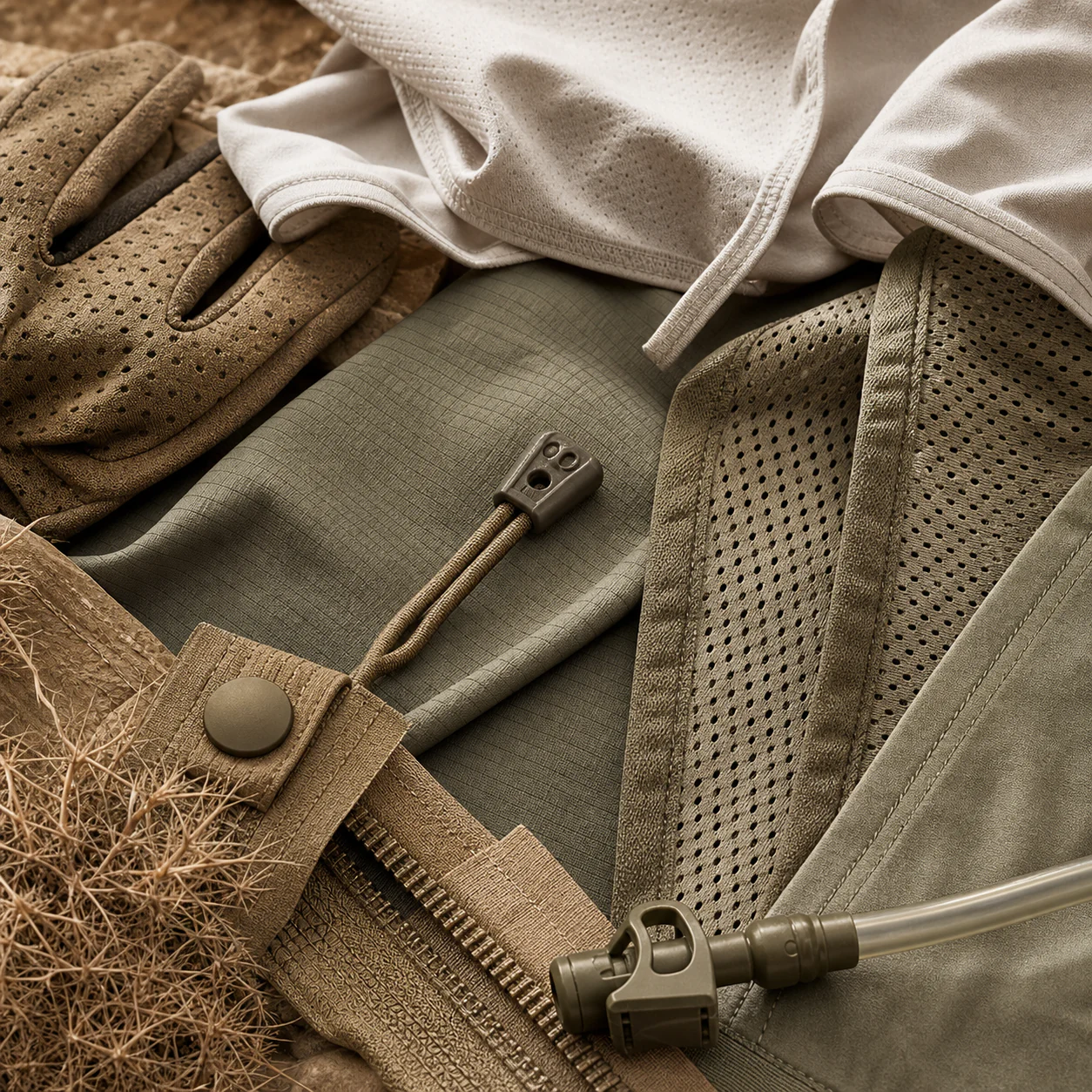
Airflow has to work around pack straps, pockets, belts, optics harnesses and movement. Mesh panels, back vents, chest vents and pocket structures need to be useful in the field and repeatable in production.
Product decisionEngineer ventilation as a garment system, not just a mesh insert.
Evidence questionCan airflow features be reviewed with the intended pack, harness and pocket load?
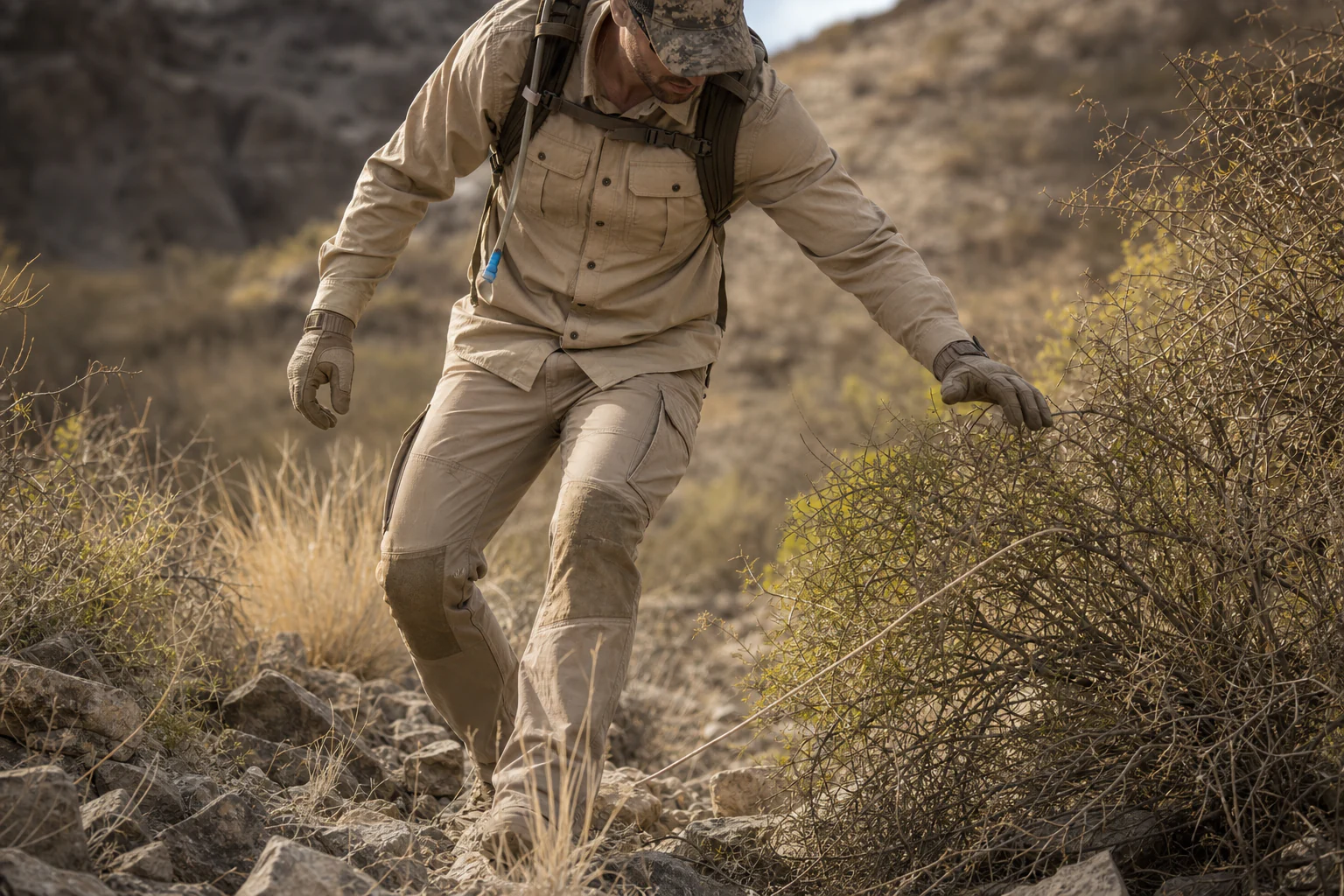
SCRUB / ROCK
Hot country still has abrasion: rock kneeling, thorn scrub, dust, dry grass, pack belts and repeated seat or knee contact. Protection should be targeted so the product remains breathable and light enough for heat.
Product decisionProtect the contact zones without sacrificing the heat-management brief.
Evidence questionWhich abrasion, tear, seam, wash and dust-exposure checks support the final claim?
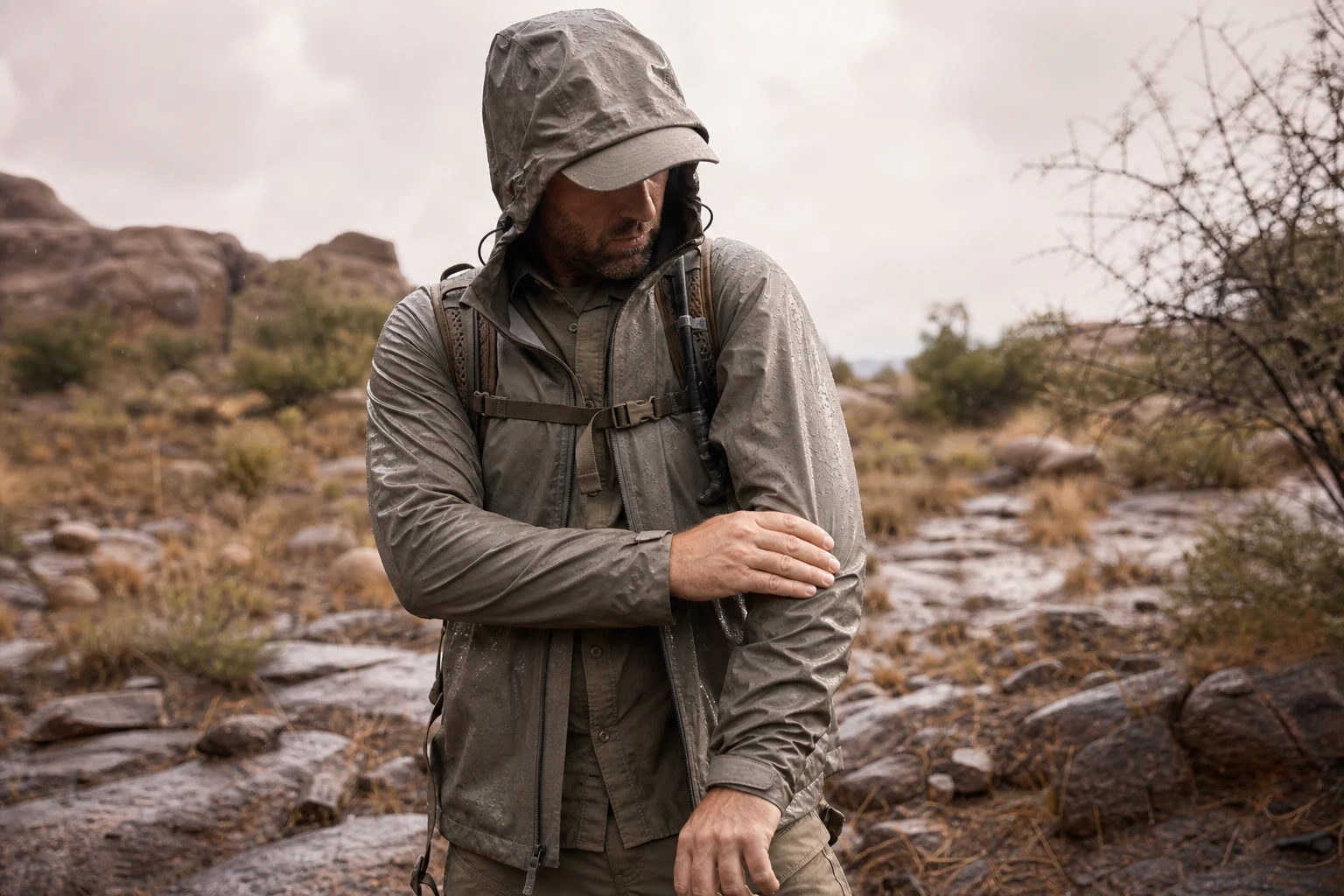
WARM RAIN
Hot regions can still bring sudden rain, humid storms or wet brush. A warm-weather shell should pack small, manage condensation risk, avoid heavy cold-weather construction and remain compatible with sun layers and hydration packs.
Product decisionDefine the warm-rain route before fabric names or protection claims are approved.
Evidence questionWhich material, seam, wash and garment-level checks support the final weather wording?
Hot-climate product system
Prioritize garments that solve sun coverage, airflow, walking output, hydration interface, scrub durability, warm rain and claim control before turning the range into SKUs.
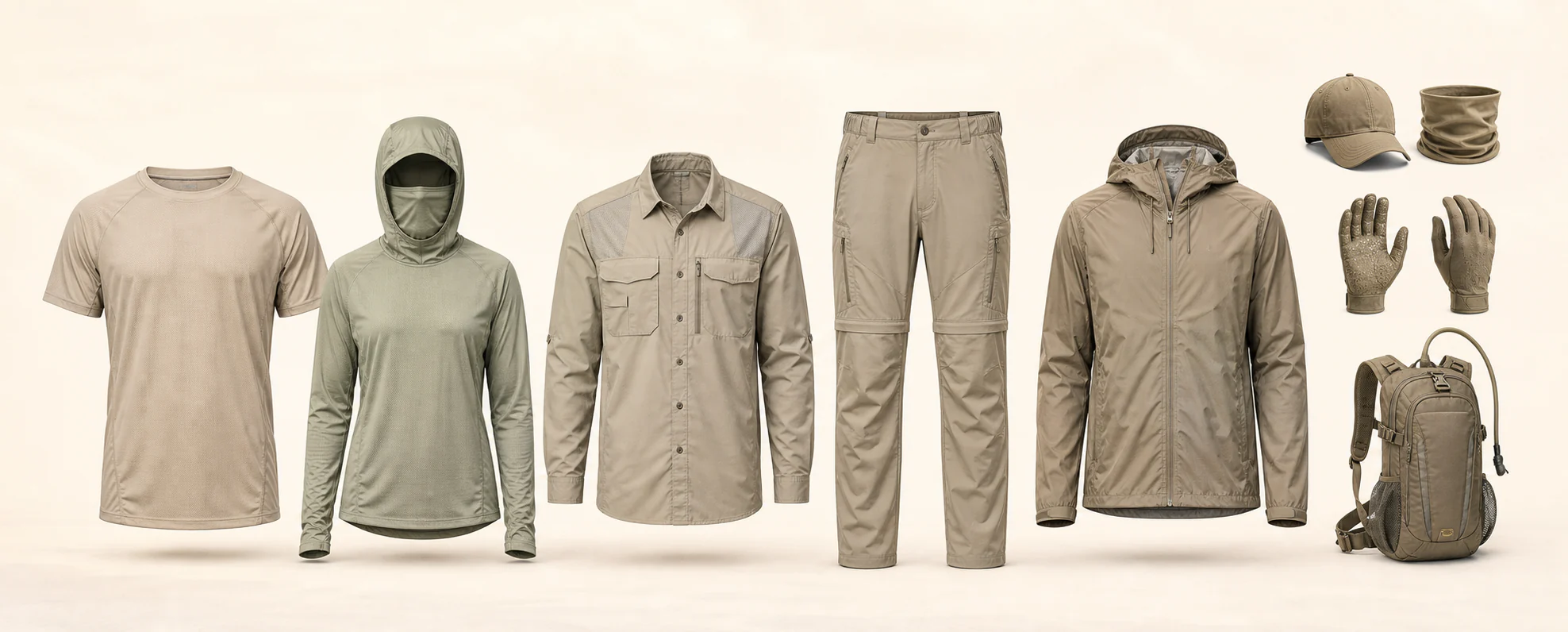
Lightweight moisture movement under sun layers
Coverage, collar and gaiter interface
Airflow, pockets and pack-strap clearance
Stretch, opacity and low-bulk scrub zones
Warm rain and wind route
Face, neck and hand coverage
Tube, pack, pocket and care interface
Materials, light colors and brand system
Choose the right route
OEM
Best when your team already controls approved tech packs, measurements, BOM, artwork and target requirements for the hot-climate range.
ODM
Best when the climate, market and product goals are clear, but the material route, coverage, venting, pack interface or evidence plan still needs definition.
Development sequence
Heat profile, terrain, market and product goals
Coverage, airflow, hydration, scrub and claim priorities
Lightweight fabrics, vents, patterning, trims and shell route
First hot-climate sample set
Distance movement, pack contact, airflow, coverage and wash behavior
Revised sample, size set or component updates
Evidence, labels, care and pre-production controls
Approved bulk plan and manufacturing handover
Claim-by-claim evidence plan
| Requirement | Evidence route | Sample stage |
|---|---|---|
| Heat management | Fabric, fit, venting, color, lining and wear-review plan | Material / prototype |
| Sun coverage route | Hood, cap, collar, gaiter, sleeve and glove interface review | Prototype / size set |
| UPF or UV wording | Only after approved material test and market wording review | Material / compliance review |
| Airflow and quick dry | Mesh, vent, fabric and wash-route review | Material / prototype |
| Scrub durability | Zone-based abrasion, tear, seam and snag review | Material / PP |
| Warm rain shell | DWR, coating or membrane route with seam and wash checks | Material / PP |
| Odor, insect or antimicrobial wording | Use only with product-specific evidence and legal review | Brief / compliance review |
Named methods, pass criteria and legal wording are agreed for the actual product and target markets. A light color, mesh panel, hood, gaiter, quick-dry fabric or shell does not prove every finished-garment claim by itself.
Explore testing and validationBuyer FAQ
You can start with one priority shirt, pant or sun hoodie, but the full heat system should still be mapped so airflow, coverage, pack contact, hydration access, shell layering and claim wording do not conflict later.
Hot-climate apparel puts more pressure on heat release, sun coverage, lighter colors, hydration-pack interface, sweat and wash behavior, low-bulk abrasion and careful claim language. Upland leans more toward walking cover and blaze visibility; backcountry leans more toward elevation, pack load and rapid weather change.
SSM can develop garments intended for tested sun-protection routes, but UPF or UV language should only be used after the selected material, construction, care route and target market requirements are reviewed and validated.
Those claims need a separate evidence and legal-wording route. We can plan the product architecture, but the final claim should match the actual finish, material route, test method, care route and selling market.
Send the climate profile, target market, terrain, product list, sun and face-cover needs, pack or hydration requirements, material references, size range, claim requirements and estimated quantities. Commercial details are confirmed after scope review.
Bring the heat profile
Share the climate band, terrain, target market, product list, coverage needs, pack or hydration setup, claim requirements and evidence expectations. We will help identify the next useful sample, specification or validation decision.