Season
Temperature band, precipitation and planned use window.
Now Accepting Orders for SS2026 — Sample turnaround in 7-10 days. Worldwide shipping available. Request a Sample Kit →
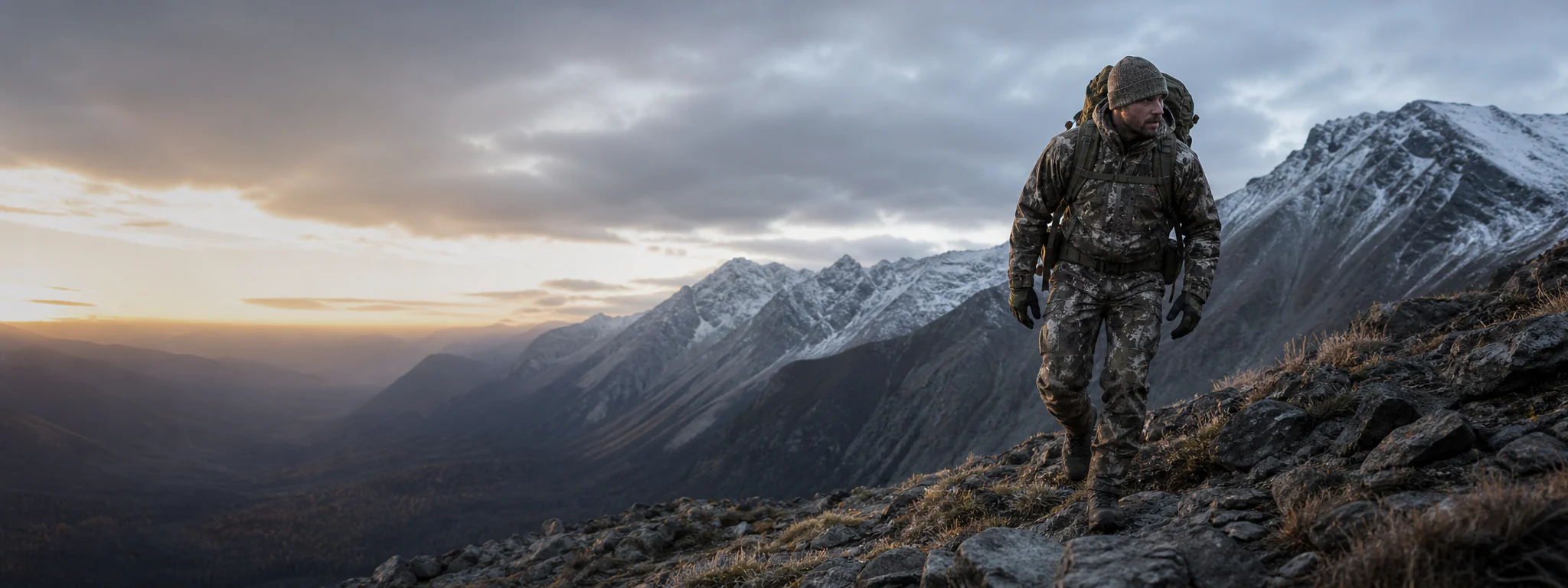
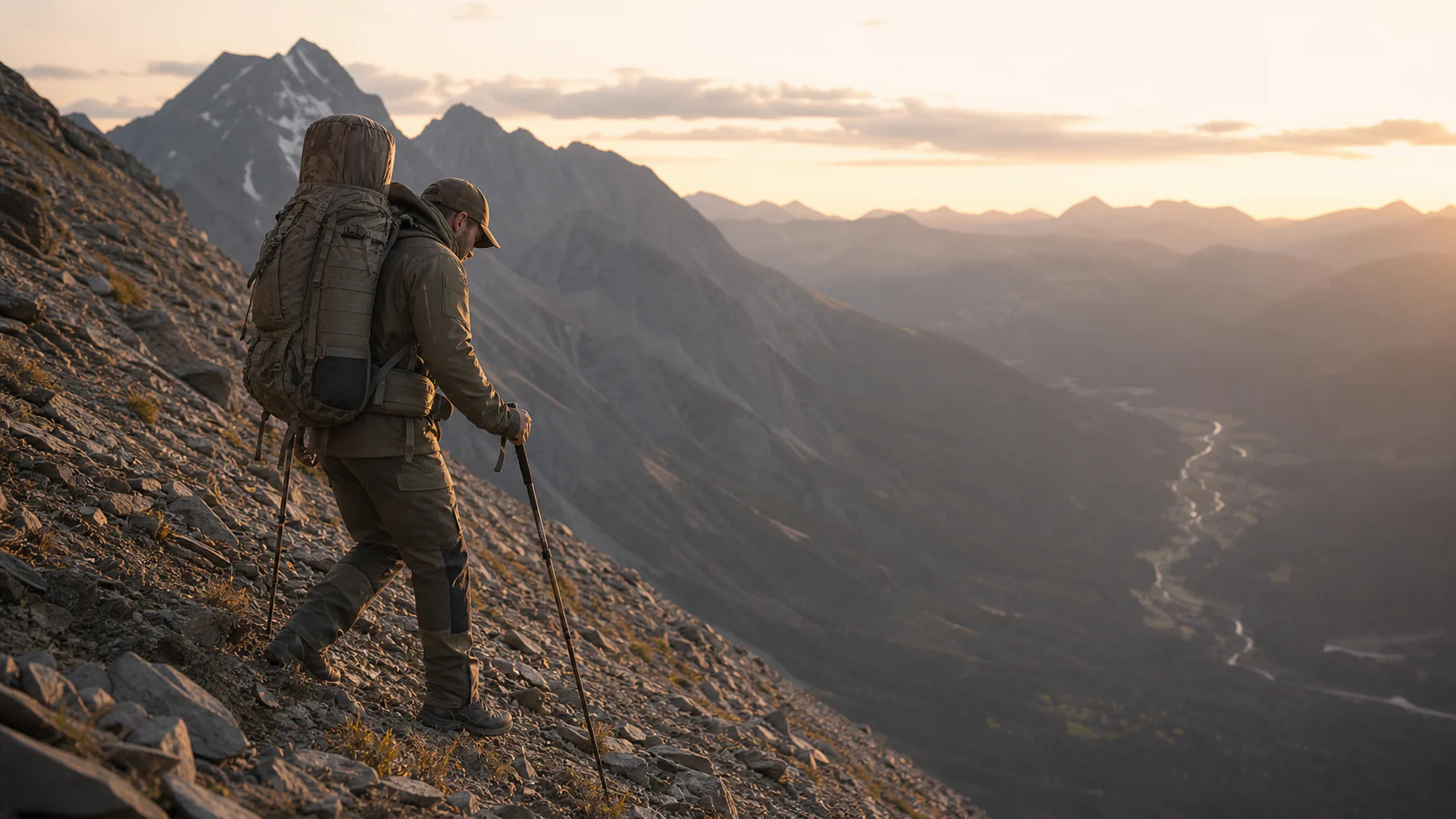
The vertical traverse
From trailhead movement to ridge-line weather and the loaded return, each field state creates a different product decision.
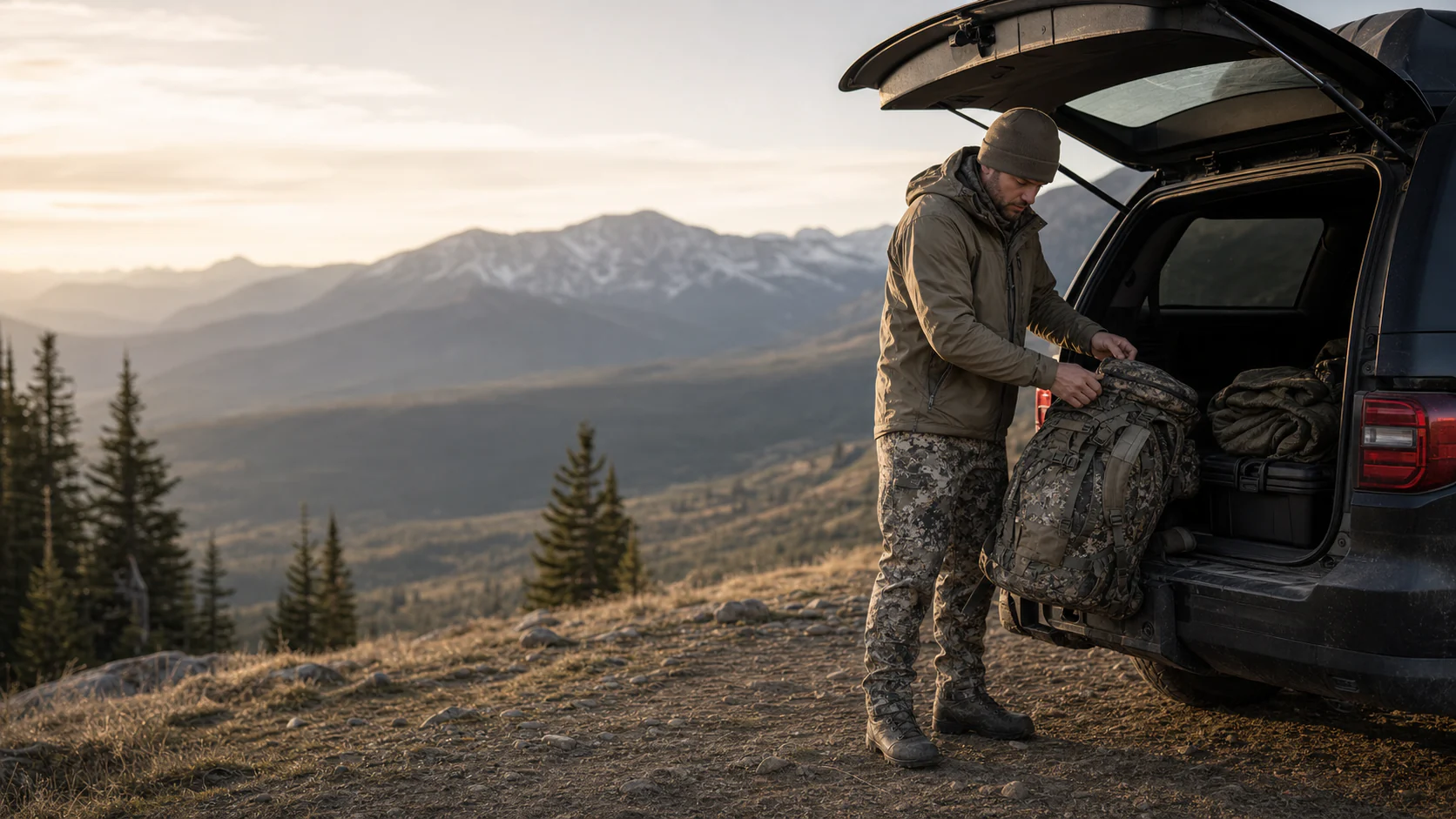
Buyer answer
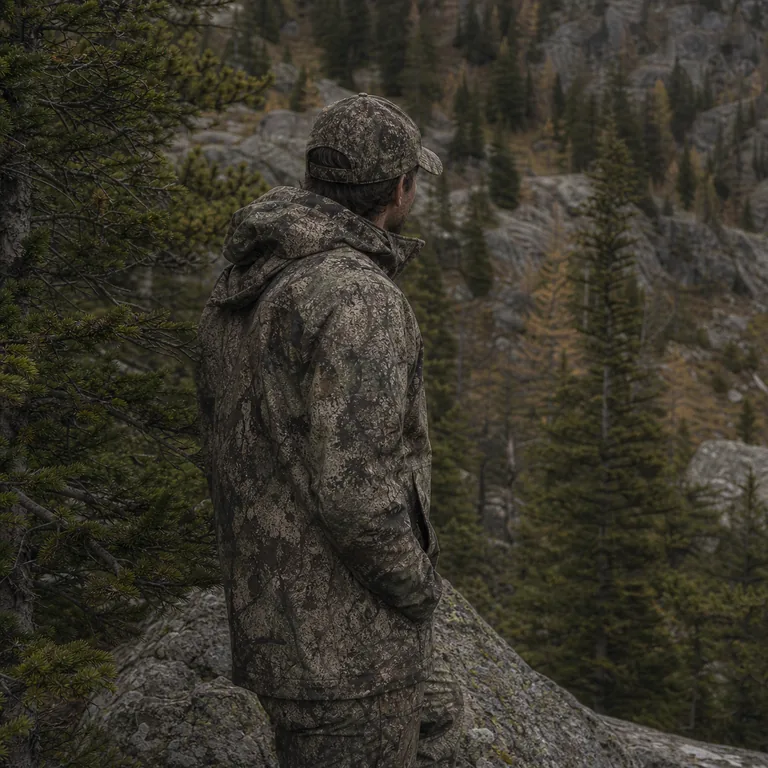
A backcountry hunting apparel program is a coordinated set of next-to-skin, active, insulating and protective garments developed for repeated movement, exposed stationary periods, carried load and changing mountain conditions. The brief defines how every layer fits, vents, packs, protects and interfaces before the bill of materials is approved.
Trailhead
Define the conditions that should drive every product, fit and evidence decision.
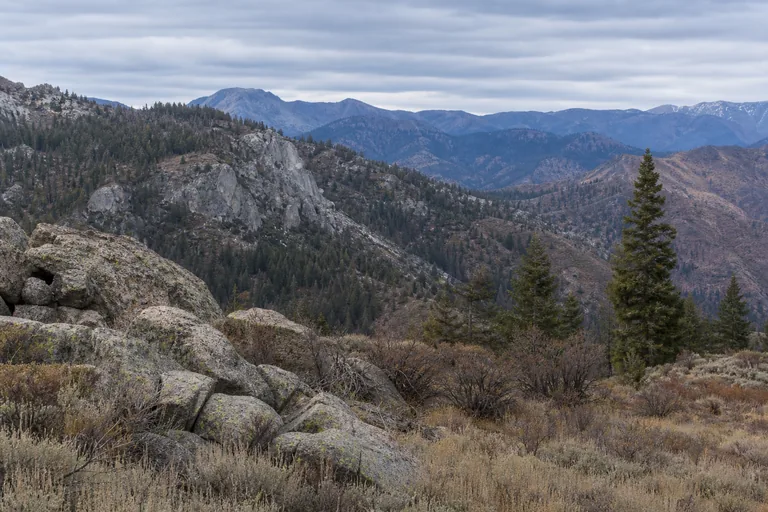
Temperature band, precipitation and planned use window.
Elevation, wind, rain, snow and time above shelter.
Ascent, stalking, glassing and stationary-time balance.
Carried weight, harness zones and pack-out requirement.
Rock, brush, repeated contact and abrasion priorities.
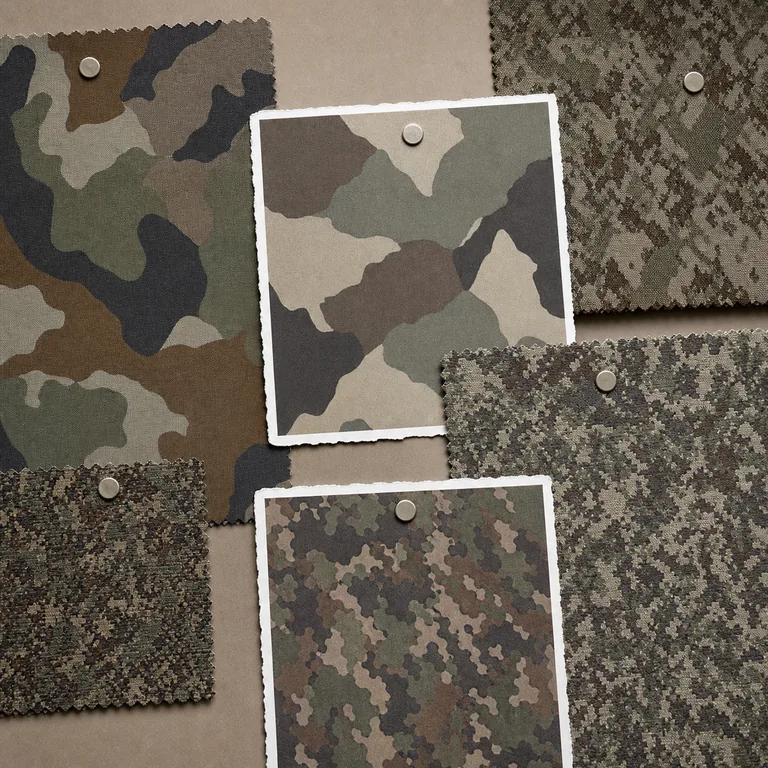
Selling countries, visibility rules and camo strategy.
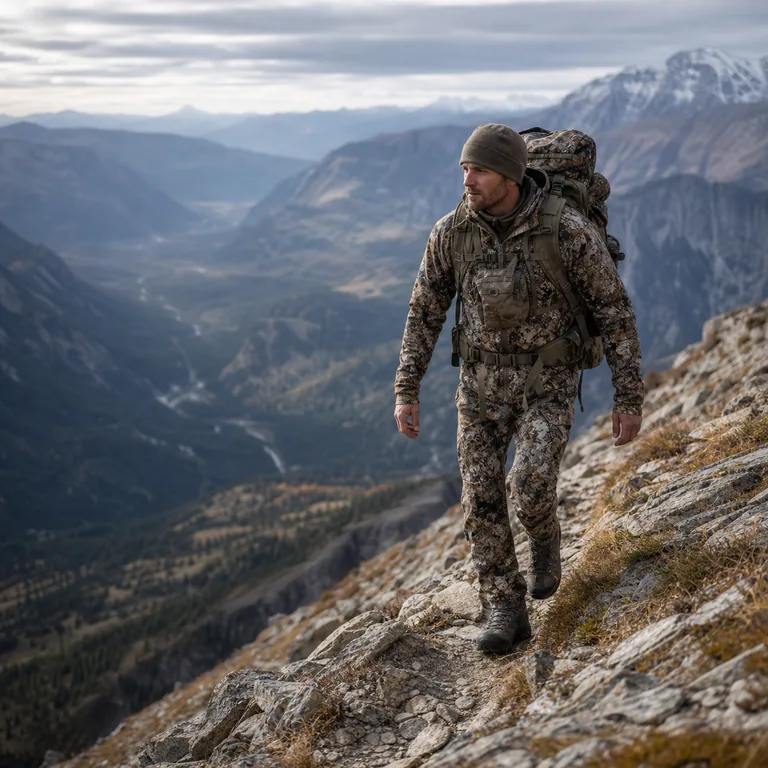
ASCENT
High-output movement shifts the brief toward moisture transfer, adjustable air exchange, compatible stretch and low bulk beneath the pack.
Product decisionPrioritize the layer jobs required during sustained output.
Evidence questionCan the system manage heat and movement without relying on one fabric label?
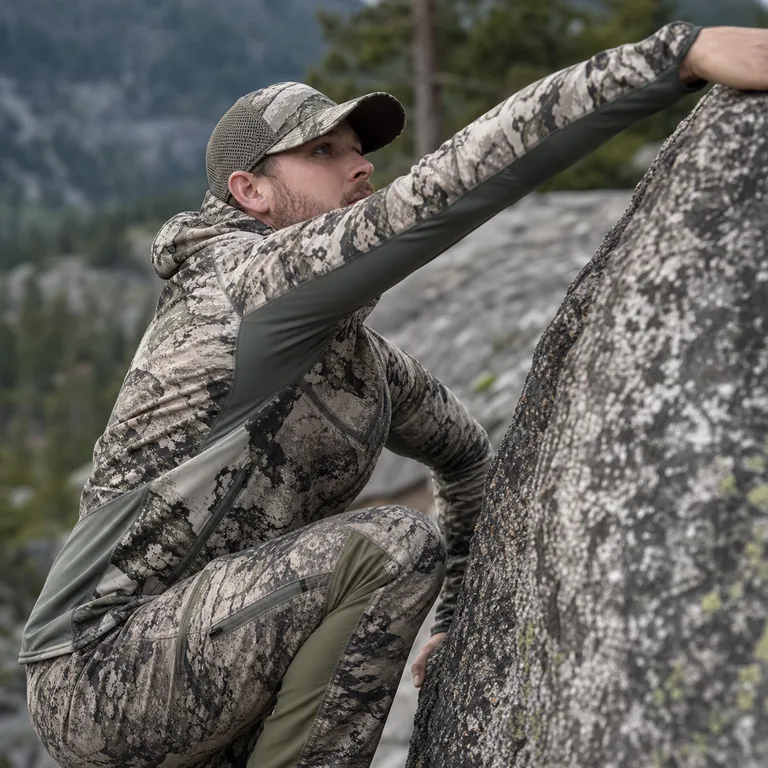
EXPOSURE
Ridge wind, rock, brush and pack contact create different failure paths. Protection should be placed where exposure and repeated load actually occur.
Product decisionIdentify the highest-contact zones before reinforcement is specified.
Evidence questionWhich material, seam and wear-review route supports the required end use?
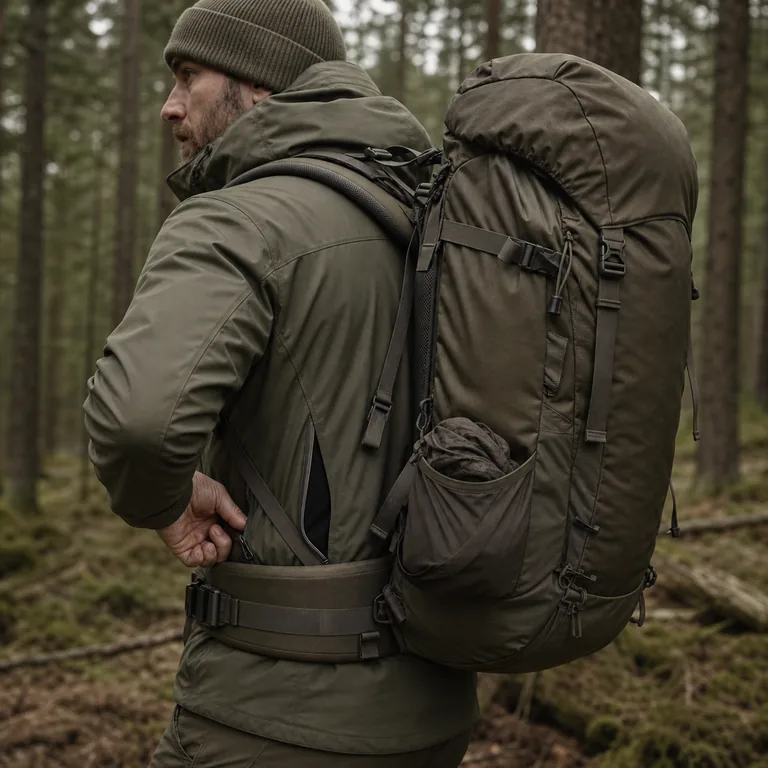
GLASSING
A system built only for movement can fail during exposed stationary periods. Static insulation, wind management and accessible adjustments need their own brief.
Product decisionSet the active-to-static transition the range must cover.
Evidence questionDo layered fit and closures still work when insulation is added?
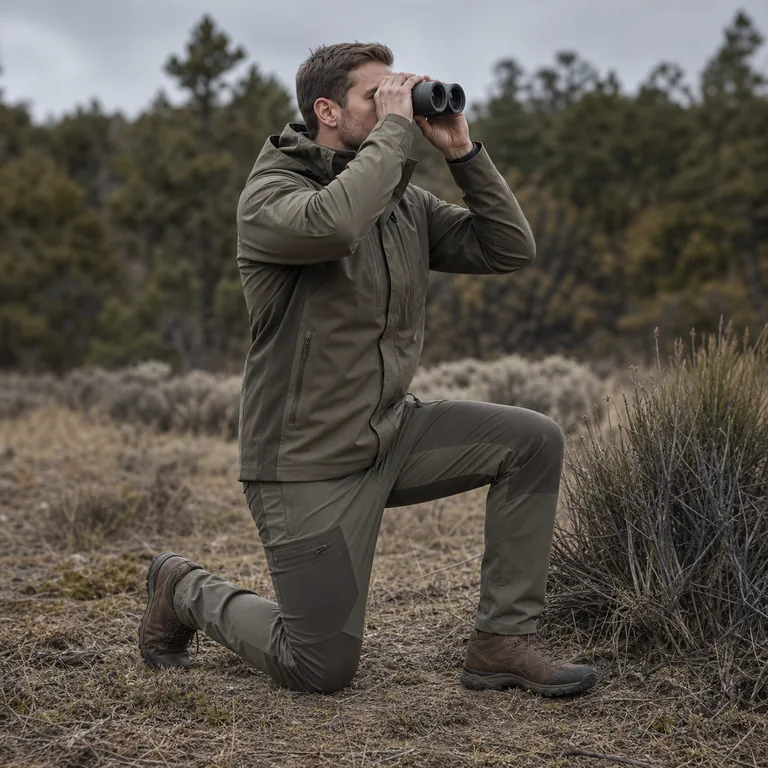
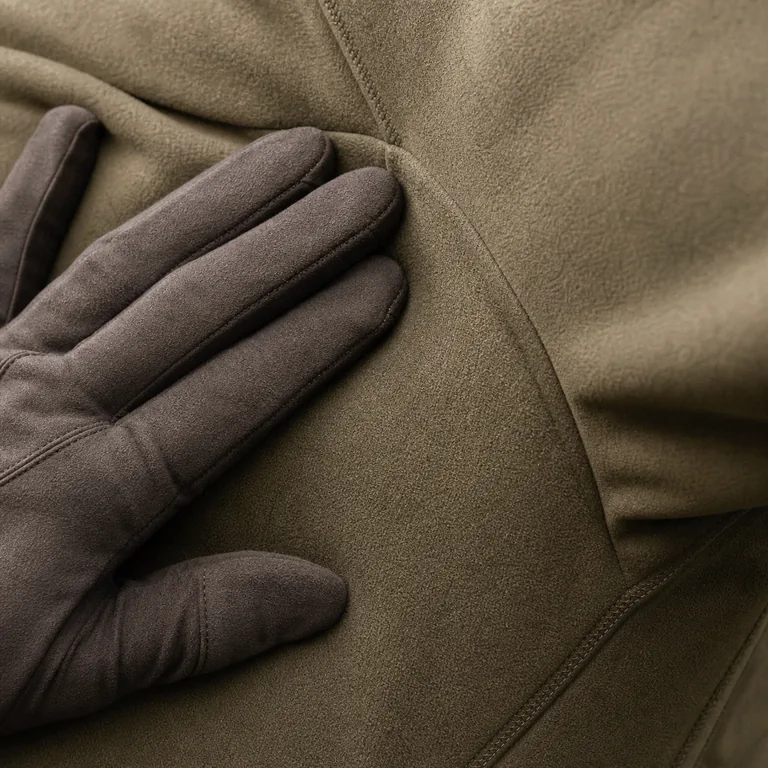
WEATHER
Weather protection is a finished-garment system. Face fabric, membrane route, seam strategy, openings, components and construction quality must work together.
Product decisionEngineer the complete weather system, not a membrane name alone.
Evidence questionWhich agreed rain, seam and component checks are required before approval?
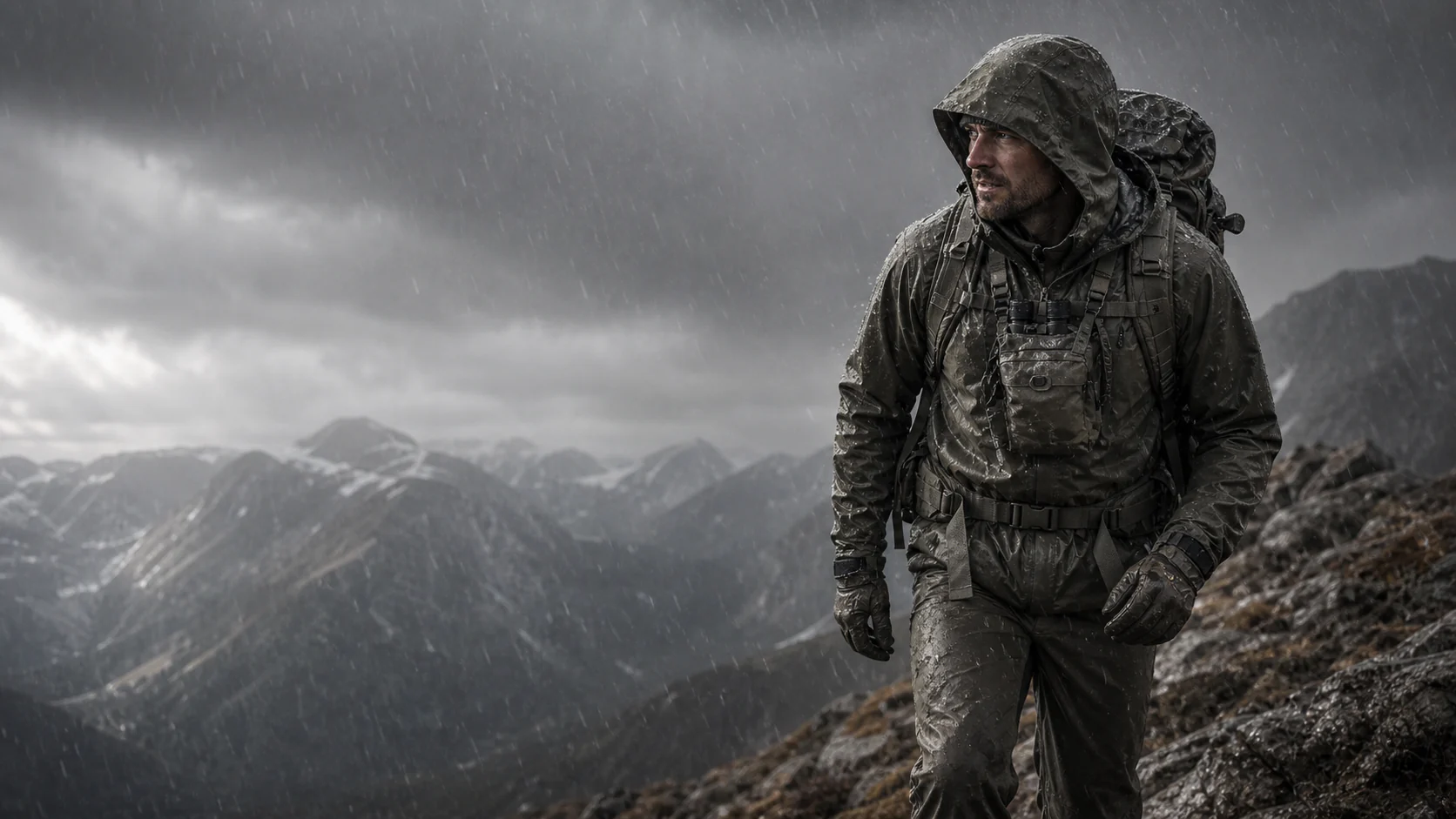
PACK-OUT
A loaded return amplifies pressure, heat, fatigue and range-of-motion demands. The garment and pack must be reviewed as one equipment interface.
Product decisionBuild for the heaviest planned load and longest required movement.
Evidence questionDoes the approved size set retain access and mobility under load?
The seven-part system
Prioritize the layers that solve the mission, then validate the interfaces between them.
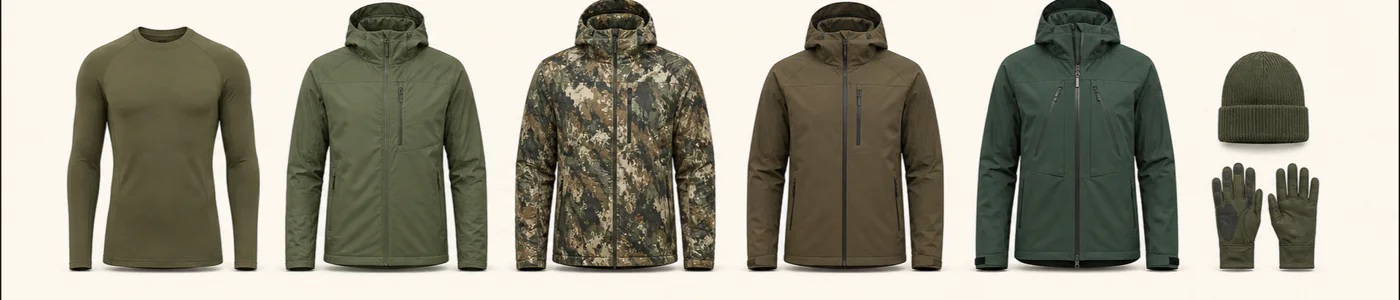
Moisture movement and next-to-skin comfort
Breathable warmth for sustained movement
Packable warmth for exposed stops
Mobility, venting and terrain durability
Fast protection with controlled air exchange
Weather insurance and sealing strategy
Headwear, gloves and interface pieces
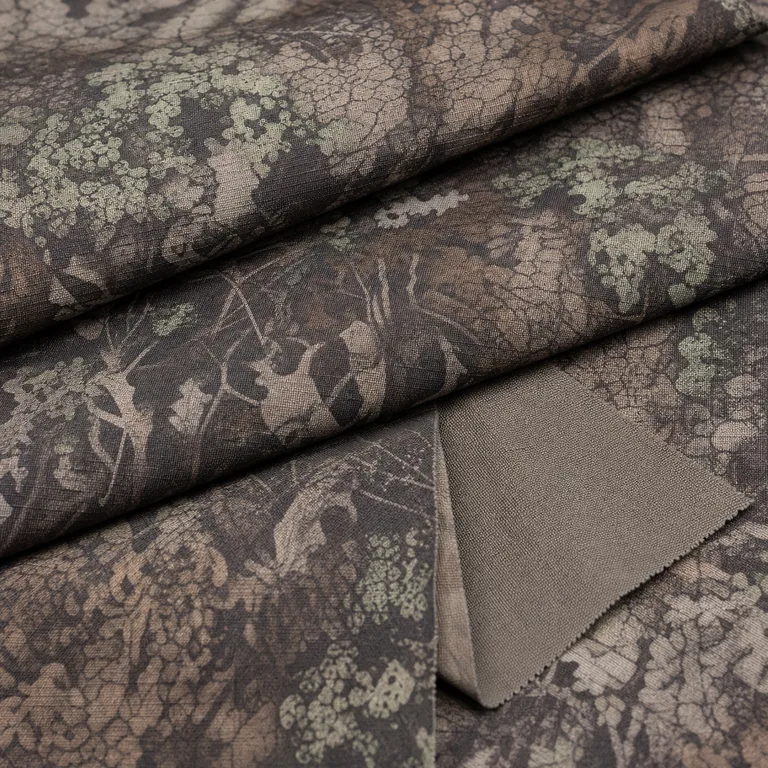
Materials, camo, trims and branding
Choose the right route
OEM
Best when your team controls the approved tech pack, measurements, BOM, artwork and performance requirements.
ODM
Best when the mission is clear but the range, material architecture, construction or evidence route still needs definition.
Development sequence
Mission, market and range priorities
Product roles and requirements
Materials, construction and BOM route
First development sample
Layering, fit, pack and movement
Revised or size-set sample
Evidence and pre-production controls
Approved bulk plan and handover
Claim-by-claim evidence plan
| Requirement | Evidence route | Sample stage |
|---|---|---|
| Weather protection | Agreed material and whole-garment method | Prototype / PP |
| Moisture and air exchange | Fabric comparison plus wear-context review | Material / prototype |
| Thermal management | Insulation package and layered-use review | Prototype / size set |
| Abrasion and tear | Selected method matched to end-use zones | Material / PP |
| Seam and components | Seam strength, pull and operation checks | Prototype / PP |
| Fit and pack mobility | Movement, equipment and size-set review | Sample / wear review |
Named methods and pass criteria are agreed for the actual product and market. Material results alone do not prove finished-garment performance.
Explore testing and validationBuyer FAQ
Yes. A priority jacket, pant or layer can start the program. Its fit and functional interfaces should still be mapped against the layers and equipment it must work with, so the first style does not create problems for the wider range.
OEM is best when your team already controls the approved tech pack, measurements, bill of materials and artwork. ODM adds support in translating the mission into product roles, material routes, construction proposals, prototypes and an agreed evidence plan.
We can review suitable sourcing routes against the approved brief. Final composition, construction, weight, finish, color, minimums, availability and test records are confirmed for the actual program rather than promised from a generic material list.
Yes, when your brand owns or is authorized to use the artwork. The program can cover repeat, scale, color separation, strike-off, fabric compatibility, panel placement and production artwork controls.
Commercial details are confirmed after product complexity, material route, sample status, quantity, branding, validation scope and delivery destination have been reviewed. This avoids quoting a technical program against incomplete assumptions.
Product brief
Share the market, season, terrain, activity profile, product list and claim priorities. We will review the brief and identify the next useful sample or specification decision.