Define the silhouette and block
Record rise, seat, thigh, knee, leg, hem, torso, shoulder, sleeve, and layering relationships for the relevant denim product.
Now Accepting Orders for SS2026 — Sample turnaround in 7-10 days. Worldwide shipping available. Request a Sample Kit →
Streetwear product family · Denim systems
Develop the block, denim construction and weight, wash direction, shade boundary, seam character, hardware, labels, measurements, and repeat controls as one finished-garment system.

Answer before specification
Jeans, jackets, shirts, shorts, and coordinated sets need product-specific blocks. Denim weight, stretch, weave, wash, thread, hardware, labels, and construction must be reviewed together because treatment can change shade, hand, dimensions, seam character, and component appearance.
02 / Development decisions
Each decision becomes part of the sample brief, approval record, or evidence request. Unknowns remain explicit instead of becoming silent assumptions.
Record rise, seat, thigh, knee, leg, hem, torso, shoulder, sleeve, and layering relationships for the relevant denim product.
Review fiber, weave, weight, stretch, recovery, rigid or comfort intent, shrinkage, surface, drape, and suitability for the planned wash.
Use physical panels or garments to define base shade, highs and lows, fade placement, abrasion, hand, seam effects, acceptable variation, and rejection limits.
Record buttons, rivets, zippers, thread, patches, labels, plating, attachment, artwork permission, care, and any wash-process compatibility.
03 / Decision matrix
Weight alone does not define denim performance. Confirm the actual material, sample, wash route, and measurement state for the reviewed style.
| Option or system | Best used to define | Controls to record |
|---|---|---|
| Rigid denim | Structured jeans, jackets, and workwear forms | Shrinkage, break-in, seam bulk, mobility, wash response, shade, and measurement state |
| Comfort-stretch denim | Closer or movement-led bottoms | Stretch direction, recovery, growth, heat and wash exposure, opacity, and grade rules |
| Lightweight denim or chambray | Shirts, overshirts, and warm-season layers | Drape, opacity, puckering, seam stability, collar and cuff behavior, and shade |
| Coordinated denim set | Jacket-and-bottom or shirt-and-short range | Wash-lot relationship, shade family, hardware, thread, labels, measurements, and pair approval |
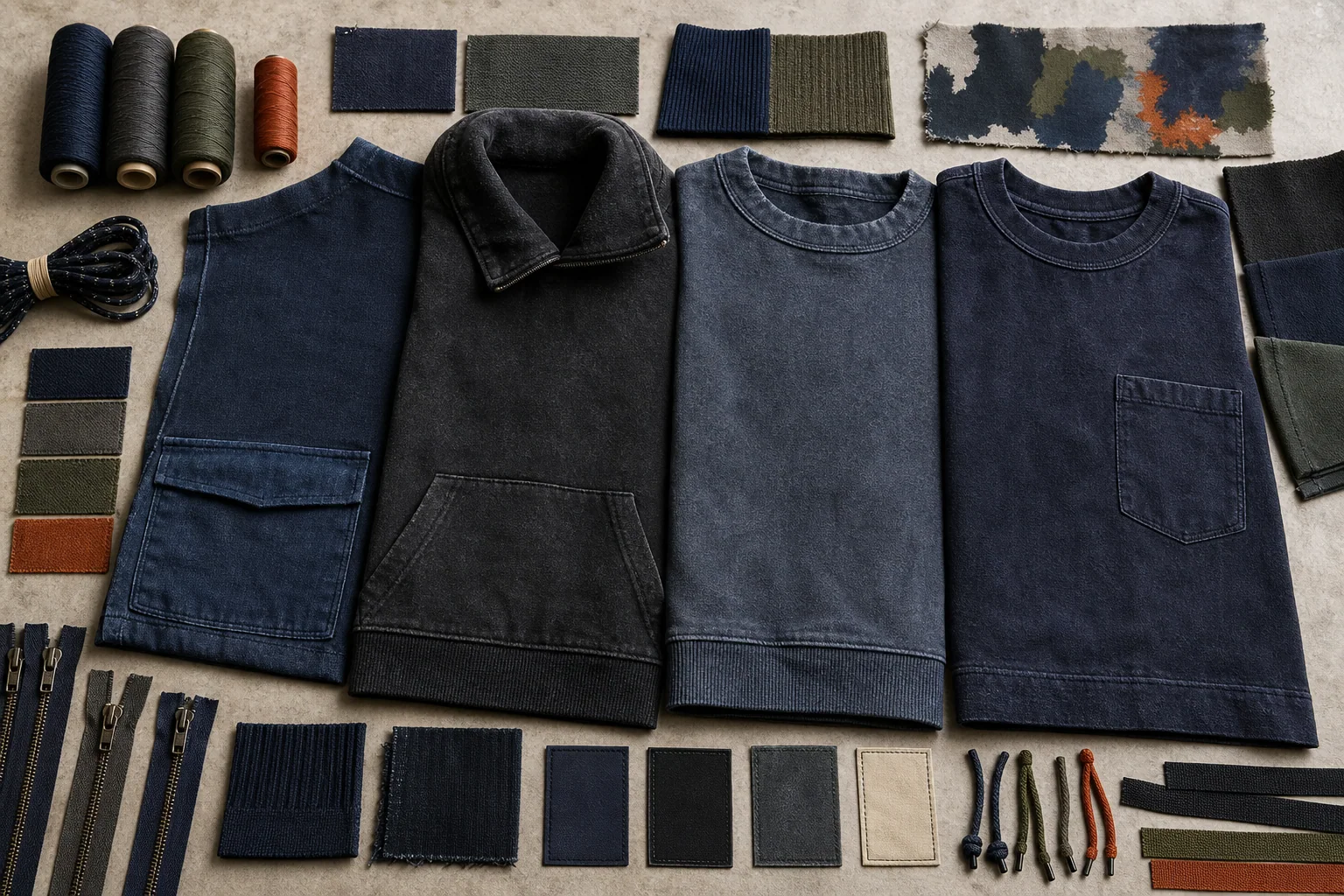
04 / Product anatomy
A digital color image cannot carry the full approval. Retain the physical shade and surface reference, measurement state, construction details, and component record used for bulk comparison.
05 / Failure modes
06 / Sample gates
Confirm product block and base denim
Approve hardware, construction, and development wash panels
Review complete washed sample and measurements
Lock shade range, care, grade rules, and repeat record
07 / Evidence boundary
Current SSM claims are supported by evidence available upon request. Any record should identify its source, date, method, specimen, result, applicability, and limitation. Generated imagery on this page is explanatory and is not presented as factory, client, material, or test proof.
Current commerce records
These are current merchandising and inquiry references with distinct media and product records. They do not by themselves prove every material, process, test, or capability described on this authority page.
08 / Connected authority
These links are live canonical routes. They carry the buyer from product scope into the material, surface, quality, or development decision that comes next.
09 / Buyer questions
Approve a physical panel or garment showing shade, contrast, placement, abrasion, hand, seam character, dimensions, and an acceptable variation boundary, then retain it as the comparison standard.
Not automatically. Wash and finishing can change shrinkage, hand, torque, stretch, recovery, and seam appearance. The approved block and measurements must name the intended finished state.
Use the current approved specification, retained wash and shade reference, material and component availability, measurements, care, inspection history, and a review of anything that changed.