Confirm substrate compatibility
Fiber, knit or weave, density, thread, rib, mixed panels, labels, hardware, and decoration can react differently to the same process.
Now Accepting Orders for SS2026 — Sample turnaround in 7-10 days. Worldwide shipping available. Request a Sample Kit →
Streetwear engineering guide · Surface development
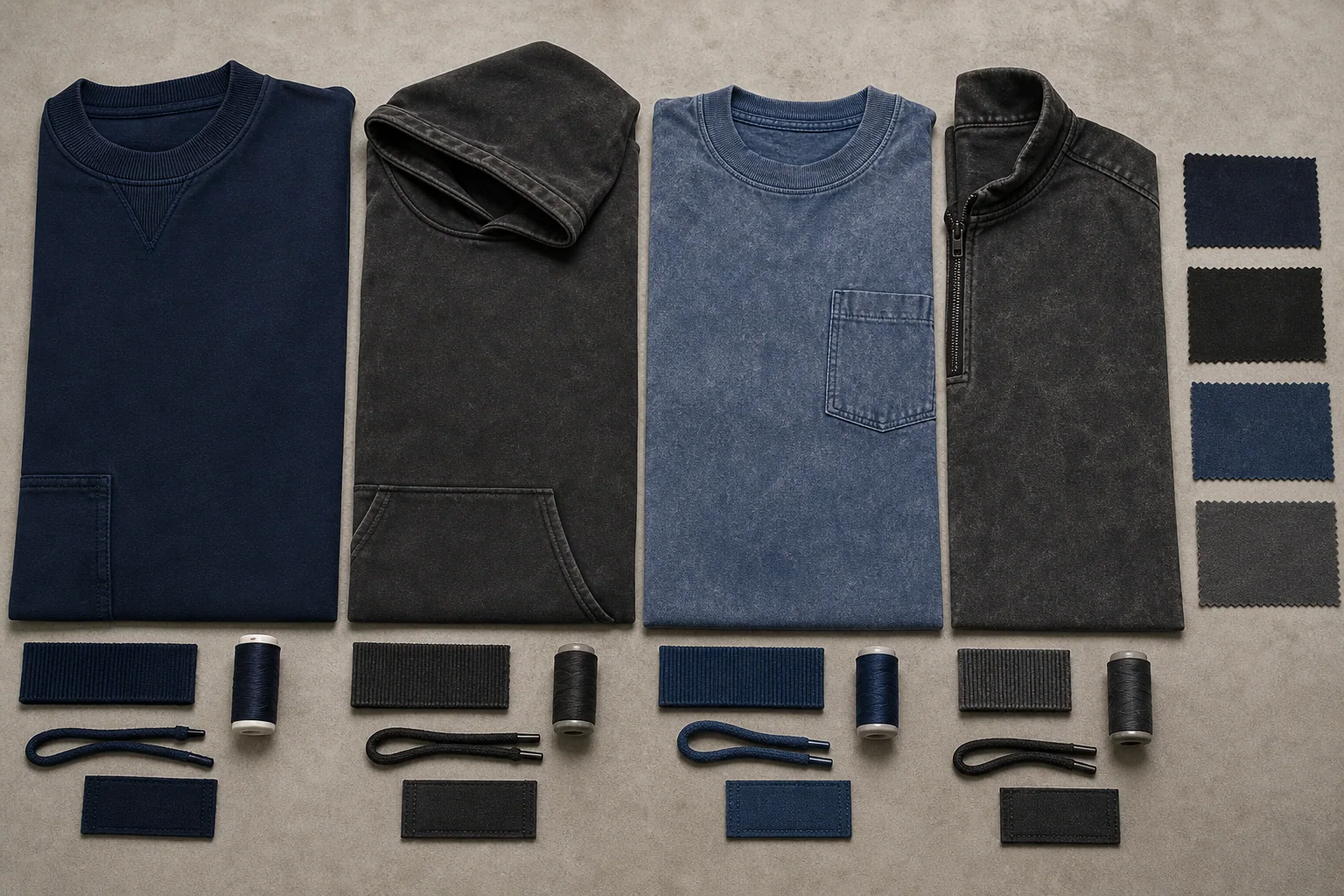
Garment dye, pigment effects, enzyme treatments, stone or mineral effects, fading, abrasion, distress, spray, overdye, and coatings can change shade, hand, shrinkage, seam appearance, labels, trims, graphics, and repeatability.
Answer before specification
Use a reference or controlled panel to record color family, contrast, placement, abrasion, distress, seam highs and lows, hand, measurement state, and acceptable variation. A verbal label such as vintage wash is not an approval standard.
02 / Development decisions
Each decision becomes part of the sample brief, approval record, or evidence request. Unknowns remain explicit instead of becoming silent assumptions.
Fiber, knit or weave, density, thread, rib, mixed panels, labels, hardware, and decoration can react differently to the same process.
Dye, wash, abrasion, print, embroidery, patch, label, and hardware steps need an agreed order because one operation can alter another.
Review shade family, highs and lows, placement, shrinkage, torque, hand, seam appearance, and measurement state.
Processes with natural or mechanical variation need a physical standard, shade boundary, location rules, and clear rejection conditions.
03 / Decision matrix
These are planning families. Exact chemistry, ownership, partner boundary, availability, care, and evidence are confirmed for the reviewed product.
| Option or system | Best used to define | Controls to record |
|---|---|---|
| Garment dye or pigment effect | Color-through-garment and lived-in surface | Fiber compatibility, shade, crocking, shrinkage, thread and trim response, and lot variation |
| Enzyme or softening treatment | Hand and surface adjustment | Strength, weight loss, shade, pilling, seam appearance, and dimensional change |
| Fade, spray, or abrasion | Localized contrast and wear story | Placement, intensity, edges, repeatability, operator or process boundary, and damage limits |
| Coating or special surface | Distinct hand or visual effect | Adhesion, cracking, transfer, breathability, care, aging, and material compatibility |
04 / Product anatomy
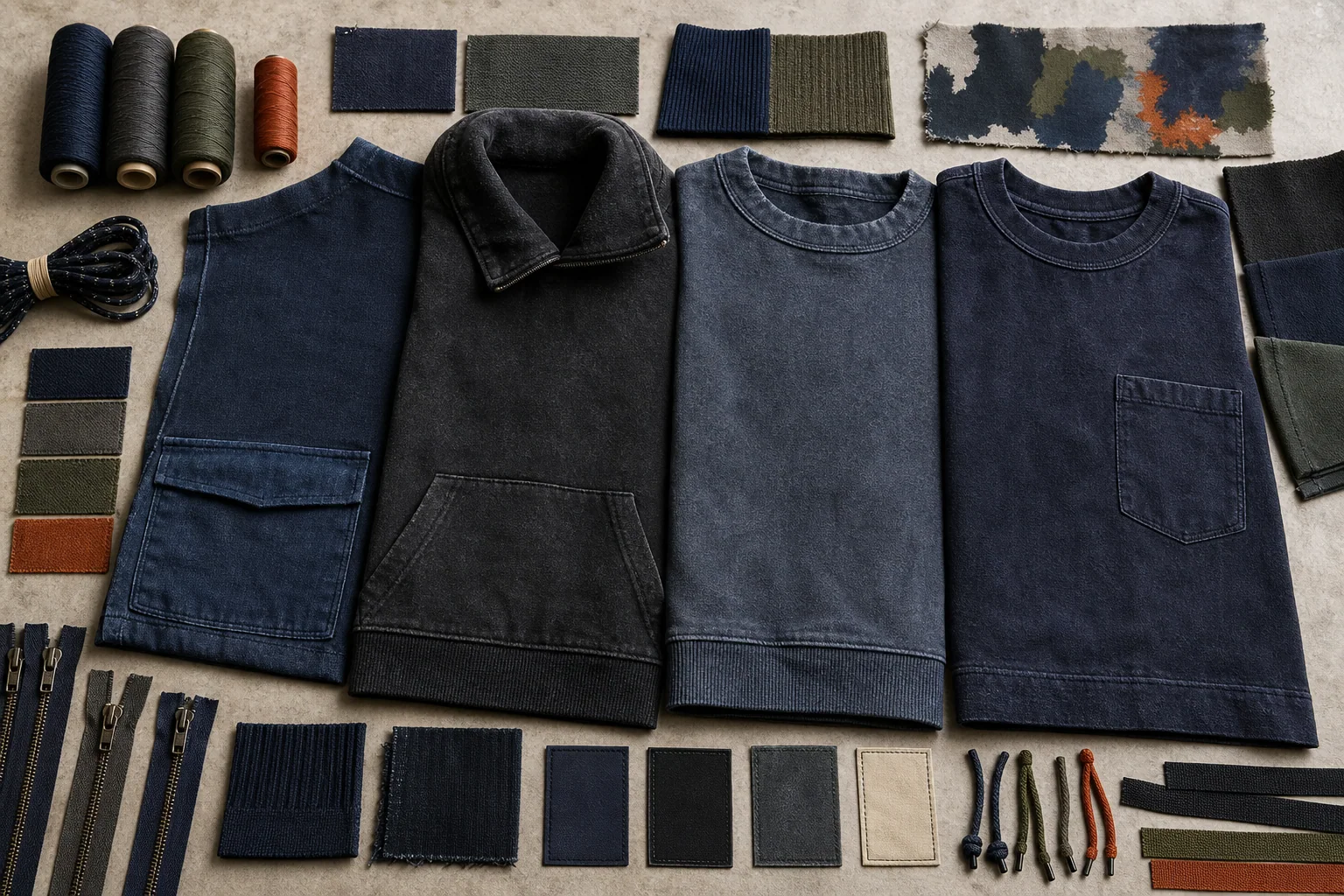
A process that works on the base fabric may alter thread, rib, labels, prints, embroidery, patches, hardware, or mixed panels. Approval must represent the intended complete garment.
05 / Failure modes
06 / Sample gates
Confirm target, substrate, and process boundary
Approve lab or development panels
Review complete treated garment
Lock shade range, placement, dimensions, care, and evidence
07 / Evidence boundary
Current SSM claims are supported by evidence available upon request. Any record should identify its source, date, method, specimen, result, applicability, and limitation. Generated imagery on this page is explanatory and is not presented as factory, client, material, or test proof.
Editorial depth
The authority page owns the product or process decision. These articles examine a narrower trend, method, specification, or sourcing question without duplicating the parent route.
08 / Connected authority
These links are live canonical routes. They carry the buyer from product scope into the material, surface, quality, or development decision that comes next.
09 / Buyer questions
It can communicate direction, but a production approval needs a physical panel or garment standard with shade, contrast, placement, hand, measurements, and acceptable variation recorded.
Chemistry, heat, abrasion, moisture, and sequence can alter ink, transfer, thread, patch edges, adhesives, labels, and the underlying garment surface.
Some effects naturally vary. The correct control is an agreed physical standard and acceptable boundary, not a promise of impossible visual uniformity.