Own one controlled BOM
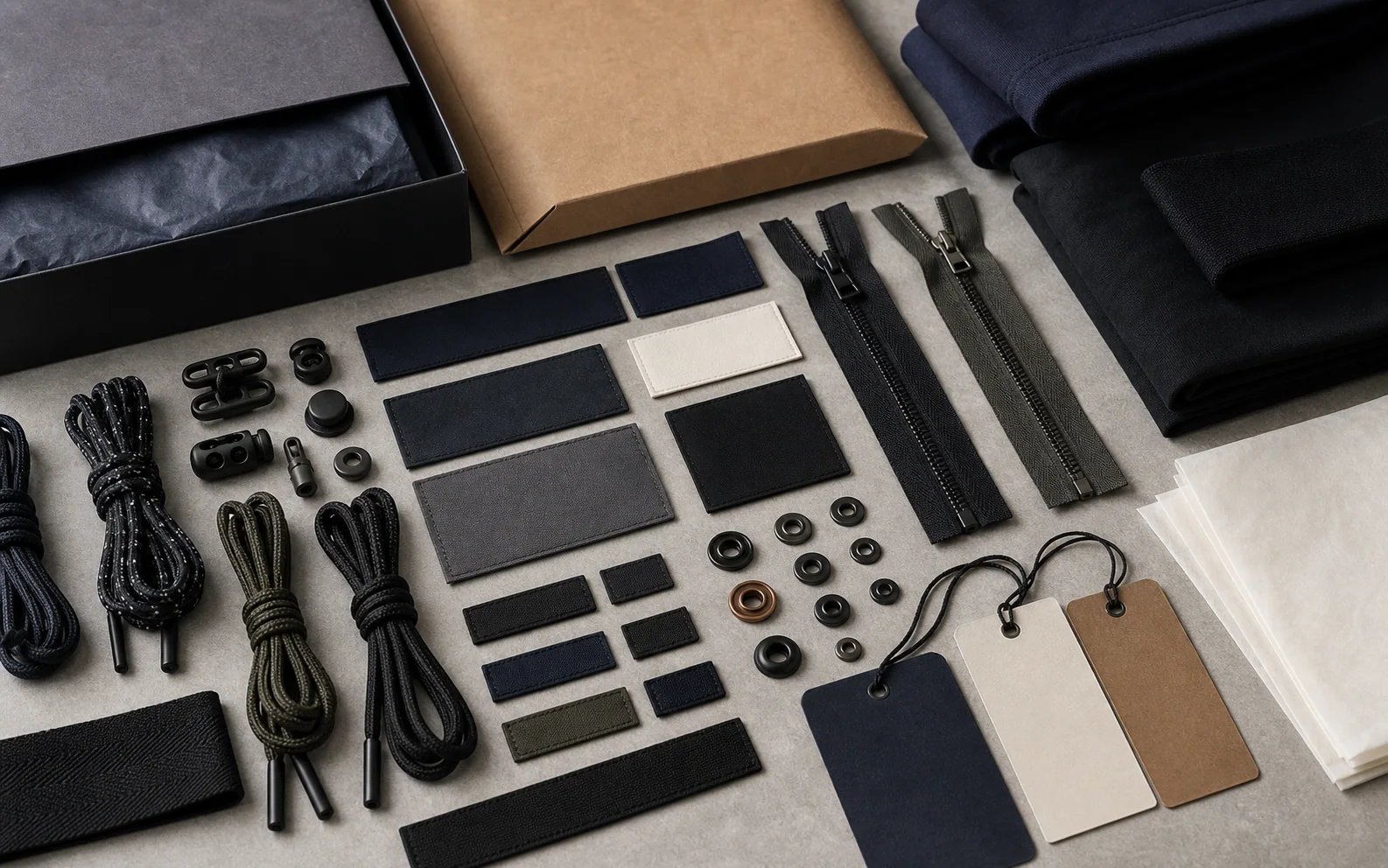
Record each label, trim, hardware, packaging component, supplier or sourcing boundary, artwork version, material, color, finish, size, placement, attachment, quantity, and approval state.
Now Accepting Orders for SS2026 — Sample turnaround in 7-10 days. Worldwide shipping available. Request a Sample Kit →
Streetwear engineering guide · Product identity and handoff
Coordinate main, size, care, composition, and origin labels; hangtags, patches, zippers, buttons, snaps, cords, and hardware; then connect packaging, barcodes, assortments, cartons, and shipping marks to the approved product.
Answer before specification
Brand artwork, label hierarchy, trims, and presentation express identity. Fiber composition, origin, care, safety, traceability, packaging, barcode, and destination-market inputs can carry separate buyer or legal requirements. SSM coordinates the reviewed record; the buyer must identify the target market and required standards.
02 / Development decisions
Each decision becomes part of the sample brief, approval record, or evidence request. Unknowns remain explicit instead of becoming silent assumptions.
Record each label, trim, hardware, packaging component, supplier or sourcing boundary, artwork version, material, color, finish, size, placement, attachment, quantity, and approval state.
Resolve main, size, care, composition, origin, batch or traceability labels, hangtags, patches, and any language or target-market inputs.
Review seam insertion, heat application, adhesive, embroidery, rivet, snap, zipper, cord, toggle, patch, and hardware compatibility with wash, wear, and user contact.
Define folding, tissue, polybag or alternative, warnings, stickers, barcode, SKU, size and color assortment, carton quantity, carton marks, and destination requirements.
03 / Decision matrix
Exact label and packaging obligations vary by product and market. Confirm current requirements with qualified market-specific advice before release.
| Option or system | Best used to define | Controls to record |
|---|---|---|
| Identity labels and patches | Brand, size, collection, and product identity | Artwork permission, version, material, color, finish, edge, size, placement, attachment, and care |
| Care, composition, and origin | Product information and market inputs | Buyer-approved content, language, fiber data, origin, symbols, permanence, location, and current target-market review |
| Closures and hardware | Function, adjustment, and visible detail | Specification, finish, shade, dimensions, supplier, attachment, strength, corrosion or care scope, and replacement |
| Retail and shipping pack | SKU presentation and logistics handoff | Fold, bag, warning, hangtag, barcode, assortment, carton, shipping marks, destination, and inspection |

04 / Product anatomy
A sample is incomplete when its labels, hardware, care information, barcode, assortment, or carton state differs from the intended bulk order. Review component versions and attachment on the physical product.
05 / Failure modes
06 / Sample gates
Confirm target markets and component BOM
Approve artwork, materials, colors, finishes, and suppliers
Review attachment, function, care, and physical samples
Lock SKU, assortment, packaging, cartons, and inspection record
07 / Evidence boundary
Current SSM claims are supported by evidence available upon request. Any record should identify its source, date, method, specimen, result, applicability, and limitation. Generated imagery on this page is explanatory and is not presented as factory, client, material, or test proof.
08 / Connected authority
These links are live canonical routes. They carry the buyer from product scope into the material, surface, quality, or development decision that comes next.
09 / Buyer questions
The final set depends on product and target market. Common records include brand, size, care, fiber composition, origin, and traceability, but current market-specific requirements must be confirmed before release.
Yes. Attachment, pressure, sharp edges, staining, corrosion scope, wash response, heat, movement, and user contact can depend on the final material and construction.
Before bulk release, with the final product, SKU, fold, labels, barcode, assortment, bag or alternative, carton quantity, carton marks, destination, and inspection criteria recorded.