Now Accepting Orders for SS2026Sample turnaround in 7 days. Worldwide shipping available.

Fabric system guide · Streetwear

Streetwear fabrics by silhouette, surface and wash response

Streetwear fabric selection begins with silhouette: body, drape, opacity and recovery shape the garment before decoration does. Heavyweight jersey, French terry and brushed fleece can share similar GSMs but have different reverse structures and wear. Compare construction, yarn, finish, shrinkage, rib compatibility and wash route, then approve the exact physical swatch with a garment trial.

Conditions before material names

Start with the operating brief

These paths are shortlist prompts. The selected grade still requires a physical swatch, garment prototype and agreed validation plan.

01

Structured oversized tops

Use a dense jersey that provides opacity and a standing drape without exceeding the comfort brief.

Consider: Heavyweight single jersey, Matching rib knitA higher GSM can also make a T-shirt hot or board-like; sample the intended pattern.
02

Trans-seasonal sweats

Use unbrushed loop-back terry for body without a fuzzy thermal reverse.

Consider: French terry, Matching rib knitLoop form, yarn system and compaction can make equal-weight terries behave differently.
03

Cold-weather sweats

Use brushed fleece where interior pile and warmth are desired.

Consider: 3-end brushed fleece, Matching rib knitEvaluate pilling, shedding and seam bulk before increasing weight.
04

Utility and technical streetwear

Select twill, denim, Taslan or ripstop according to structure, weather finish and movement.

Consider: Cotton twill, Denim, Nylon Taslan, High-tenacity ripstop, Reflective or light-reactive textileTechnical appearance does not establish tear, weather or reflective performance.

Layer and zone architecture

Put each construction where it can do a clear job

  1. 01
    main body

    Jersey body

    Control opacity, body, drape and print surface for tops.

    Heavyweight single jersey
  2. 02
    main body

    Sweat body

    Choose loop-back terry or brushed fleece according to reverse structure and season.

    French terry · 3-end brushed fleece
  3. 03
    reinforcement

    Openings and recovery

    Match rib repeat, shade, stretch, recovery and shrinkage to the body fabric.

    Matching rib knit
  4. 04
    main body

    Woven utility body

    Build structured cargos, overshirts and jackets with wash-appropriate woven fabrics.

    Cotton twill · Denim · Nylon Taslan · High-tenacity ripstop

Recommended systems to sample

Compare structure, weight and tradeoffs

Planning bands are editorial guidance, not stock specifications. Exact yarn, gauge, blend, finish, usable width, colour, shrinkage and wash results must come from the selected physical grade.

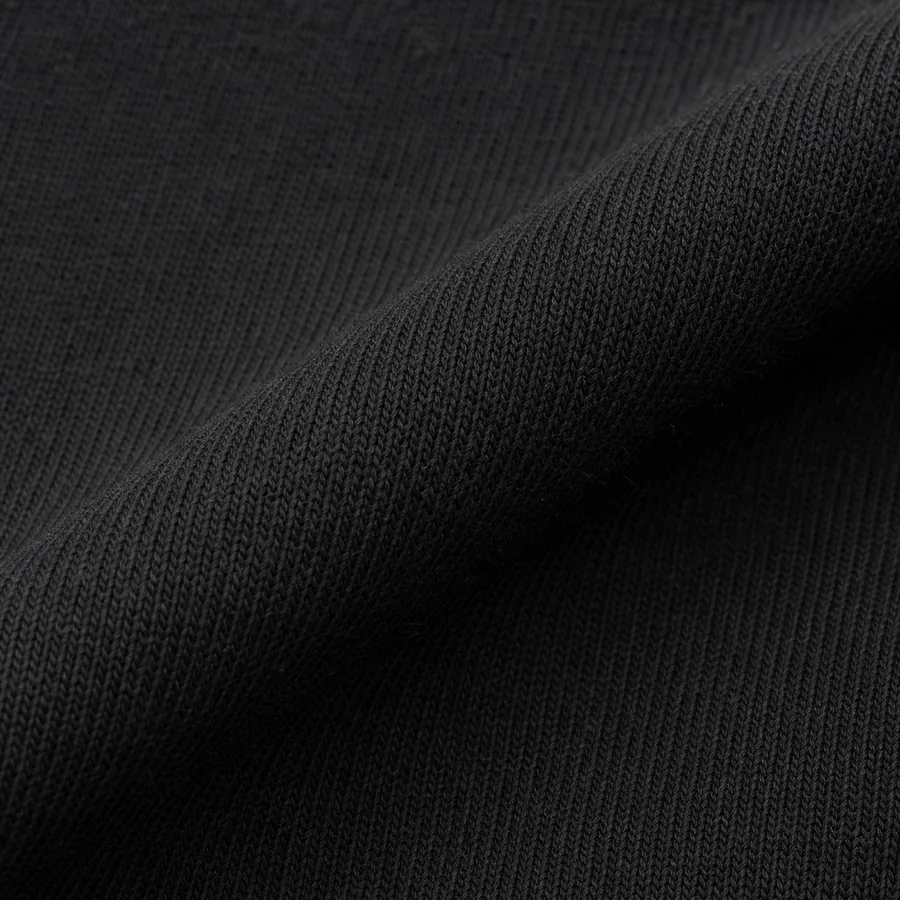
AI-generated representative macro of Heavyweight single jersey showing its visible face structure
Representative AI macro · face

Planning visual only; not an exact mill grade, colour standard or tested sample. Show dense face wales at real scale.

FAB-015Planning range

Heavyweight single jersey

Dense weft knit with face wales and reverse sinker loops.

Planning weight
230–320 gsm
Layer role
main body

Adds opacity and body for silhouettes that should hold shape instead of collapsing like lightweight jersey.

Boxy T-shirtsOversized long sleevesStructured jersey tops
Request this construction in a sample
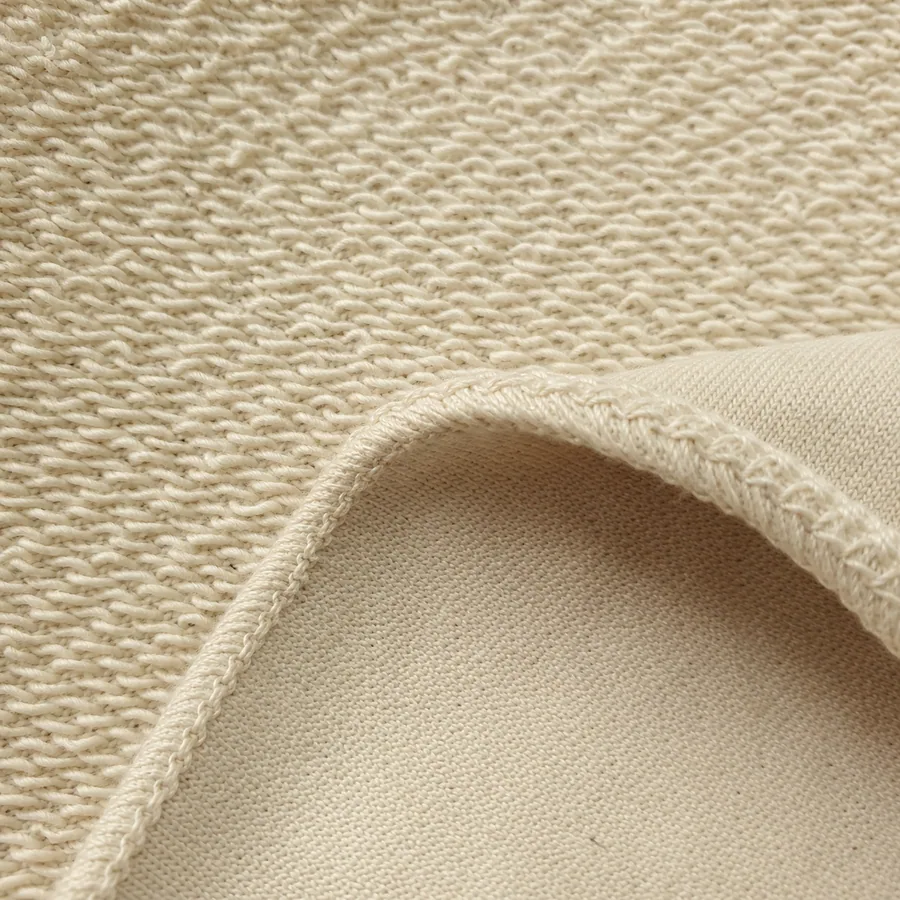
AI-generated representative macro of French terry showing its visible face structure
Representative AI macro · face

Planning visual only; not an exact mill grade, colour standard or tested sample. Show the smooth jersey face.

FAB-016Planning range

French terry

Jersey face with unbrushed loops or floats on the reverse.

Planning weight
230–460 gsm
Layer role
main body

The smooth face supports decoration while the unbrushed loop reverse gives body without a fleece nap.

Hoodies and sweatshirtsJoggers and shortsTrans-seasonal matching sets
Request this construction in a sample
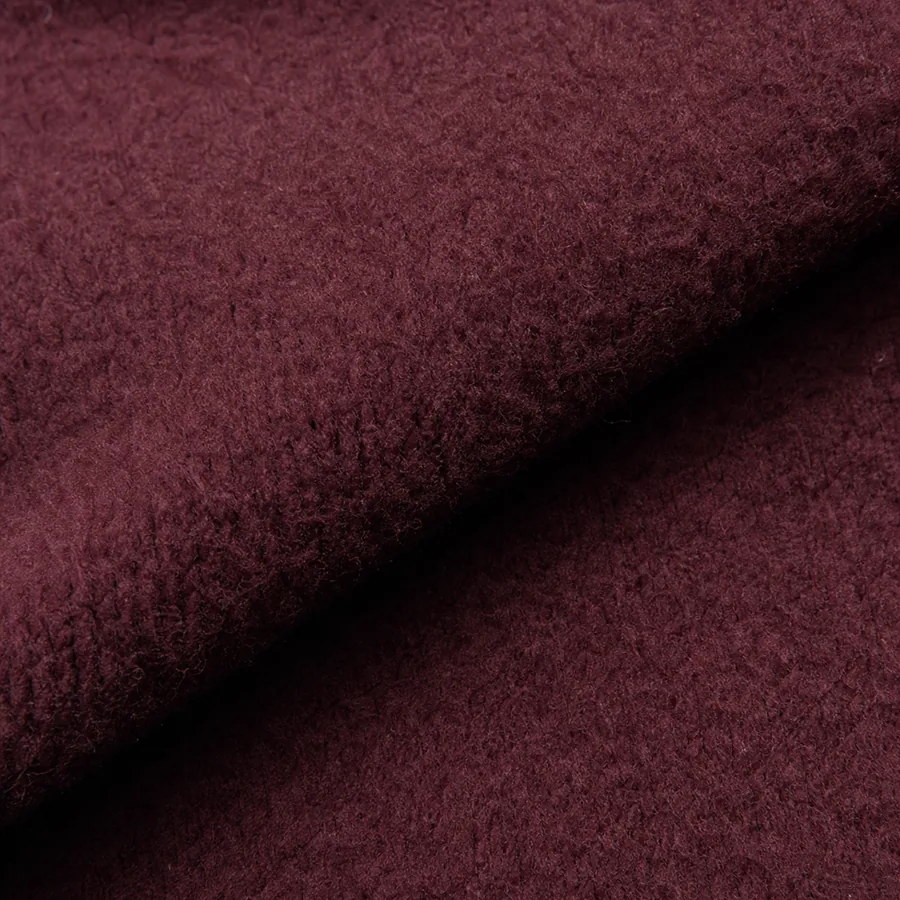
AI-generated representative macro of 3-end brushed fleece showing its visible face structure
Representative AI macro · face

Planning visual only; not an exact mill grade, colour standard or tested sample. Show the dense jersey face.

FAB-017Planning range

3-end brushed fleece

Jersey face with an inlay or back yarn raised by napping on the reverse.

Planning weight
280–460 gsm
Layer role
main body, midlayer

Provides body on the face and a soft raised interior for cold-weather streetwear.

Heavyweight hoodiesCold-weather sweat setsBrushed crewnecks
Request this construction in a sample
face

Show the true rib repeat and vertical columns.

FAB-018Planning range

Matching rib knit

1×1, 2×2 or engineered rib with alternating knit and purl columns.

Planning weight
220–420 gsm
Layer role
reinforcement, main body

Provides extensibility and recovery at openings while visually coordinating with the main body fabric.

CuffsWaistbandsCollars
Request this construction in a sample
face

Show diagonal twill ridges at accurate scale.

FAB-019Planning range

Cotton twill

2/1 or 3/1 diagonal woven construction.

Planning weight
200–330 gsm
Layer role
main body

Offers a recognizable diagonal surface, structure and a stable base for utility silhouettes.

Cargo trousersOvershirtsChore jackets
Request this construction in a sample
face

Show the indigo warp-faced twill.

FAB-020Planning range

Denim

Typically an indigo warp-faced 2/1 or 3/1 twill with lighter weft yarns.

Planning weight
8–14 oz/yd² (about 271–475 gsm)
Layer role
main body, reinforcement

Combines a strong visual twill with wash-development and ageing possibilities central to many streetwear programs.

JeansDenim jacketsOvershirts
Request this construction in a sample
face

Show the air-textured yarn surface and exact weave.

FAB-022Planning range

Nylon Taslan

Plain, twill or dobby woven made with air-textured nylon yarn.

Planning weight
90–220 gsm
Layer role
weather shell, main body

Air-textured yarn can give nylon a less glossy, more cotton-like surface while retaining low mass.

Track jacketsWindbreakersCargo shells
Request this construction in a sample
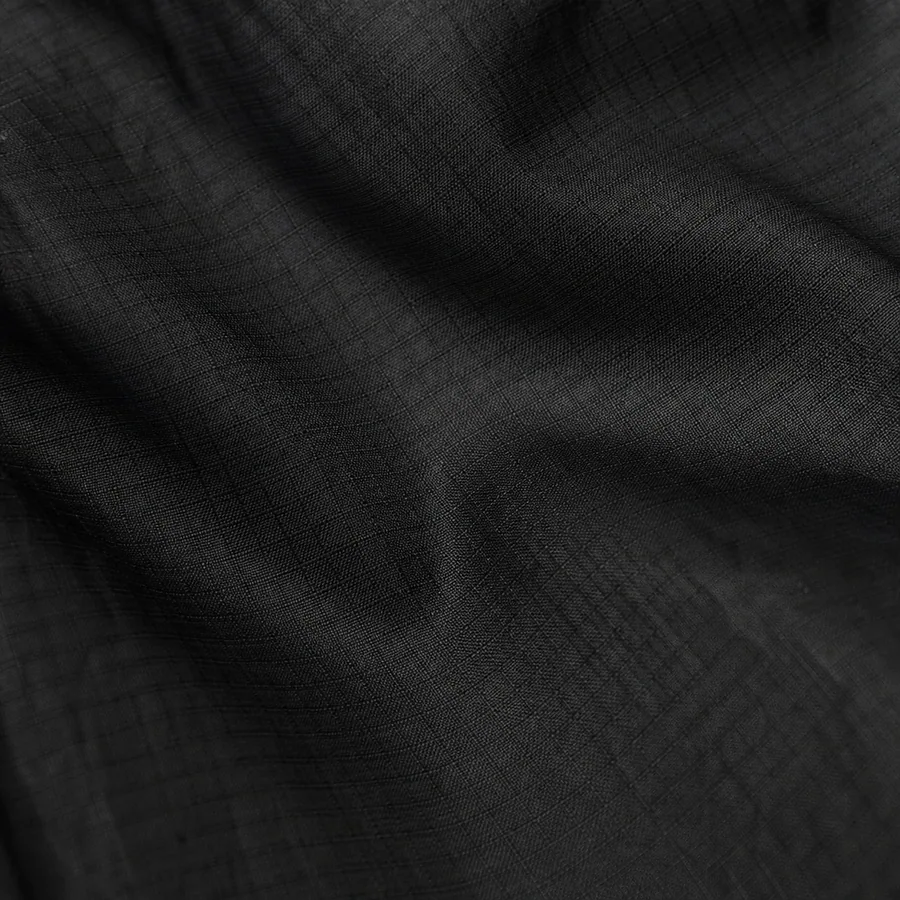
AI-generated representative macro of High-tenacity ripstop showing its visible face structure
Representative AI macro · face

Planning visual only; not an exact mill grade, colour standard or tested sample. Resolve the real reinforcement grid and yarn intersections.

FAB-012Planning range

High-tenacity ripstop

Plain weave with periodic reinforcement yarns forming a visible or subtle grid.

Planning weight
90–240 gsm
Layer role
weather shell, main body, reinforcement

A reinforcement grid can help control tear propagation while providing a clear technical surface structure.

Abrasion-zone panelsPackable shellsTechnical overshirts
Request this construction in a sample

Side-by-side decision support

Compare the shortlisted systems

Planning bands guide sampling conversations. They are not a production specification or a tested result.

Comparison of selected fabric constructions
Material systemPlanning weightConstructionWhy consider itTradeoffs to sampleEvidence state
Heavyweight single jersey230–320 gsmDense weft knit with face wales and reverse sinker loops.Adds opacity and body for silhouettes that should hold shape instead of collapsing like lightweight jersey.Can feel hot or rigid Torque and shrinkage remain possible GSM alone does not establish softness or qualityPlanning range
French terry230–460 gsmJersey face with unbrushed loops or floats on the reverse.The smooth face supports decoration while the unbrushed loop reverse gives body without a fleece nap.Reverse loops can snag Shrinkage and torque need development control Similar GSMs can have very different loop and yarn structuresPlanning range
3-end brushed fleece280–460 gsmJersey face with an inlay or back yarn raised by napping on the reverse.Provides body on the face and a soft raised interior for cold-weather streetwear.Pile can pill or shed Higher weight increases seam bulk and heat Brushing can change shrinkage and shade appearancePlanning range
Matching rib knit220–420 gsm1×1, 2×2 or engineered rib with alternating knit and purl columns.Provides extensibility and recovery at openings while visually coordinating with the main body fabric.Poor recovery creates growth Shade can differ from the body fabric Mismatched shrinkage distorts the garmentPlanning range
Cotton twill200–330 gsm2/1 or 3/1 diagonal woven construction.Offers a recognizable diagonal surface, structure and a stable base for utility silhouettes.Wrinkling, shrinkage and crocking depend on dye and finish Heavy grades add seam bulk Garment washes require a development trialPlanning range
Denim8–14 oz/yd² (about 271–475 gsm)Typically an indigo warp-faced 2/1 or 3/1 twill with lighter weft yarns.Combines a strong visual twill with wash-development and ageing possibilities central to many streetwear programs.Indigo crocking and shade variation require control Wash development changes dimensions and strength Stretch grades need recovery checksPlanning range
Nylon Taslan90–220 gsmPlain, twill or dobby woven made with air-textured nylon yarn.Air-textured yarn can give nylon a less glossy, more cotton-like surface while retaining low mass.Sound and snag resistance vary Water repellency is a finish, not permanent waterproofing Coatings change breathability and handPlanning range
High-tenacity ripstop90–240 gsmPlain weave with periodic reinforcement yarns forming a visible or subtle grid.A reinforcement grid can help control tear propagation while providing a clear technical surface structure.A grid does not guarantee high strength Coatings can increase stiffness and noise Fine grids are easy to misrepresent in generated imageryPlanning range
FAB-015

Heavyweight single jersey

Planning range
Planning weight
230–320 gsm
Construction
Dense weft knit with face wales and reverse sinker loops.
Why consider it
Adds opacity and body for silhouettes that should hold shape instead of collapsing like lightweight jersey.
Tradeoffs to sample
Can feel hot or rigid Torque and shrinkage remain possible GSM alone does not establish softness or quality
FAB-016

French terry

Planning range
Planning weight
230–460 gsm
Construction
Jersey face with unbrushed loops or floats on the reverse.
Why consider it
The smooth face supports decoration while the unbrushed loop reverse gives body without a fleece nap.
Tradeoffs to sample
Reverse loops can snag Shrinkage and torque need development control Similar GSMs can have very different loop and yarn structures
FAB-017

3-end brushed fleece

Planning range
Planning weight
280–460 gsm
Construction
Jersey face with an inlay or back yarn raised by napping on the reverse.
Why consider it
Provides body on the face and a soft raised interior for cold-weather streetwear.
Tradeoffs to sample
Pile can pill or shed Higher weight increases seam bulk and heat Brushing can change shrinkage and shade appearance
FAB-018

Matching rib knit

Planning range
Planning weight
220–420 gsm
Construction
1×1, 2×2 or engineered rib with alternating knit and purl columns.
Why consider it
Provides extensibility and recovery at openings while visually coordinating with the main body fabric.
Tradeoffs to sample
Poor recovery creates growth Shade can differ from the body fabric Mismatched shrinkage distorts the garment
FAB-019

Cotton twill

Planning range
Planning weight
200–330 gsm
Construction
2/1 or 3/1 diagonal woven construction.
Why consider it
Offers a recognizable diagonal surface, structure and a stable base for utility silhouettes.
Tradeoffs to sample
Wrinkling, shrinkage and crocking depend on dye and finish Heavy grades add seam bulk Garment washes require a development trial
FAB-020

Denim

Planning range
Planning weight
8–14 oz/yd² (about 271–475 gsm)
Construction
Typically an indigo warp-faced 2/1 or 3/1 twill with lighter weft yarns.
Why consider it
Combines a strong visual twill with wash-development and ageing possibilities central to many streetwear programs.
Tradeoffs to sample
Indigo crocking and shade variation require control Wash development changes dimensions and strength Stretch grades need recovery checks
FAB-022

Nylon Taslan

Planning range
Planning weight
90–220 gsm
Construction
Plain, twill or dobby woven made with air-textured nylon yarn.
Why consider it
Air-textured yarn can give nylon a less glossy, more cotton-like surface while retaining low mass.
Tradeoffs to sample
Sound and snag resistance vary Water repellency is a finish, not permanent waterproofing Coatings change breathability and hand
FAB-012

High-tenacity ripstop

Planning range
Planning weight
90–240 gsm
Construction
Plain weave with periodic reinforcement yarns forming a visible or subtle grid.
Why consider it
A reinforcement grid can help control tear propagation while providing a clear technical surface structure.
Tradeoffs to sample
A grid does not guarantee high strength Coatings can increase stiffness and noise Fine grids are easy to misrepresent in generated imagery

Garment-zone mapping

A product can use more than one fabric system

Map material changes to movement, exposure, abrasion, visibility and comfort zones instead of forcing one construction across the garment.

Oversized T-shirt

Dense jersey supports opacity and a boxy line, subject to comfort and drape approval.

Heavyweight single jersey

Hoodie and jogger set

Choose loop-back or brushed reverse, then develop a rib that recovers and shrinks compatibly.

French terry / 3-end brushed fleece / Matching rib knit

Cargo trouser and overshirt

Twill, denim and ripstop create different wash, surface and durability directions.

Cotton twill / Denim / High-tenacity ripstop

Light technical shell

Use textured nylon, reinforcement grids or reflective panels as verified construction choices, not just styling cues.

Nylon Taslan / High-tenacity ripstop / Reflective or light-reactive textile

Manufacturing implications

Construction must follow the chosen material

  1. 01

    Approve body fabric and rib together for shade, stretch, recovery and dimensional change.

  2. 02

    Run garment-dye, pigment, enzyme, acid or stone-wash development on the complete garment, including thread, labels, rib and trims.

  3. 03

    Record whether French terry is 2-end or 3-end and show the actual loop reverse rather than describing every sweatshirt knit as fleece.

  4. 04

    Check embroidery density, print cure temperature and transfer-film heat against shrinkage, pile and coating.

  5. 05

    For denim, retain oz/yd² alongside GSM and state whether the reference is raw, rinsed or fully washed.

Validation checklist

Ask what the test can—and cannot—show

Does the fabric deliver the target body and stability?Review

Pair measured mass with gauge, yarn, compaction, spirality and a garment drape review.

Fabric mass · Dimensional change
Will the surface remain acceptable after wear?Review

Use the method and endpoint appropriate to knit, woven, brushed or coated construction.

Pilling · Abrasion
Will colour and dimensions survive the selected wash route?Review

A bulk care test does not replace a garment-wash development trial.

Colourfastness · Dimensional change
Does rib return and stay matched to the body?Review

Compare relaxed width, extension, recovery and shrinkage against the body fabric.

Stretch and recovery · Dimensional change

Proof boundary

Planning guidance is not a supplier promise

Planning bands are editorial guidance, not stock specifications. Exact yarn, gauge, blend, finish, usable width, colour, shrinkage and wash results must come from the selected physical grade.

AI-generated close-ups are disclosed visual references. The approved production record must identify the physical swatch, exact supplier grade, test method, date and sample when those facts are available.

Buyer questions

Streetwear fabric FAQ

What GSM is best for an oversized T-shirt?Answer

There is no universal best weight. A 230–320 gsm planning band can suit structured heavyweight jersey, but yarn, gauge, compacting, width and pattern determine whether the result feels premium, rigid or excessively warm.

What is the difference between French terry and brushed fleece?Answer

French terry keeps visible loops or floats on the reverse. Brushed fleece raises the back yarn into a fuzzy pile. The surfaces, warmth direction, pilling risk and decoration behaviour differ even at similar weights.

Should hoodie rib use the same GSM as the body?Answer

Not necessarily. Rib should be chosen for repeat, recovery, shade and shrinkage compatibility. Its weight may differ while still being the correct match.

Can fabric imagery show how a wash will look?Answer

Only when it is based on a real washed physical reference. AI visualisation should not invent acid, enzyme or garment-dye results that have not been sampled.

Evidence register

Sources and interpretation limits

Sources support definitions, planning ranges, or test-method context. They do not verify an untested production fabric.

Fabric mass

ASTM D3776/D3776M or the method appropriate to the material

Measure mass per unit area on an identified, conditioned specimen.

Report the specimen, conditioning and method. Do not treat GSM as a quality, warmth or durability score.
Abrasion

ISO 12947 for suitable textiles, or a construction-appropriate alternative

Assess surface wear or breakdown using a defined abradant, load and endpoint.

Coated and laminated fabrics may require a different method; state endpoint rather than publishing an unqualified cycle count.
Pilling

ISO 12945 family or a declared equivalent

Evaluate surface fuzzing and pill formation under a defined method.

Publish method, cycle or stage, and rating scale with the result.
Dimensional change

ISO 6330 and ISO 5077 or a declared wash program

Measure length and width change after a stated care cycle.

Care cycle, drying method, number of cycles and measurement direction are part of the result.
Colourfastness

Relevant ISO 105 method by wash, rubbing, perspiration or light

Evaluate shade change and staining under a defined exposure.

Name the exact exposure method; one colourfastness result does not cover every use condition.
Stretch and recovery

A declared extension, growth and recovery method

Measure directional stretch and residual growth before and after a stated interval or wash program.

Record direction, load, hold and recovery time; fibre content alone does not predict bagging.
  1. ASTM InternationalASTM D3776/D3776M

    Fabric mass per unit area and sampling context.

    Limit: The public abstract supports method-level context only; a tested specimen does not establish an entire production lot.
  2. International Organization for StandardizationISO 12947-2:2016

    Martindale abrasion specimen breakdown for suitable textile fabrics.

    Limit: The stated scope excludes coated fabrics; choose a method appropriate to the exact construction.
  3. CottonWorks / Cotton IncorporatedSingle and double knits

    Structural distinctions among jersey, French terry and brushed fleece.

    Limit: Educational cotton-focused guidance, not an SSM specification or universal grade range.
  4. CottonWorks / Cotton IncorporatedDigital cotton fabric examples

    Example jersey, French-terry and fleece weights.

    Limit: Example digital materials are used to inform planning bands only.
  5. CottonWorks / Cotton IncorporatedDenim construction

    Warp-faced twill, yarn and denim construction vocabulary.

    Limit: Specific performance still depends on yarn, dye, finishing and wash development.
  6. CORDURA / INVISTACORDURA fabric FAQ

    High-tenacity nylon, authorized-mill and construction-family context.

    Limit: CORDURA is a trademark, not a generic synonym for all durable nylon.

Physical sample before bulk

Start with silhouette, not a fabric buzzword

Send the target fit, season, decoration, wash route and a reference garment or swatch. The sampling brief can then compare construction, weight and recovery in context.

Request a streetwear fabric sample