Engineer fit across the whole body
Define torso and rise balance, stance, reach, seat movement, limb articulation, layering allowance and grading before sealing the silhouette.
Skiwear development system — Apparel-only planning from mission brief to controlled standard. Explore Skiwear
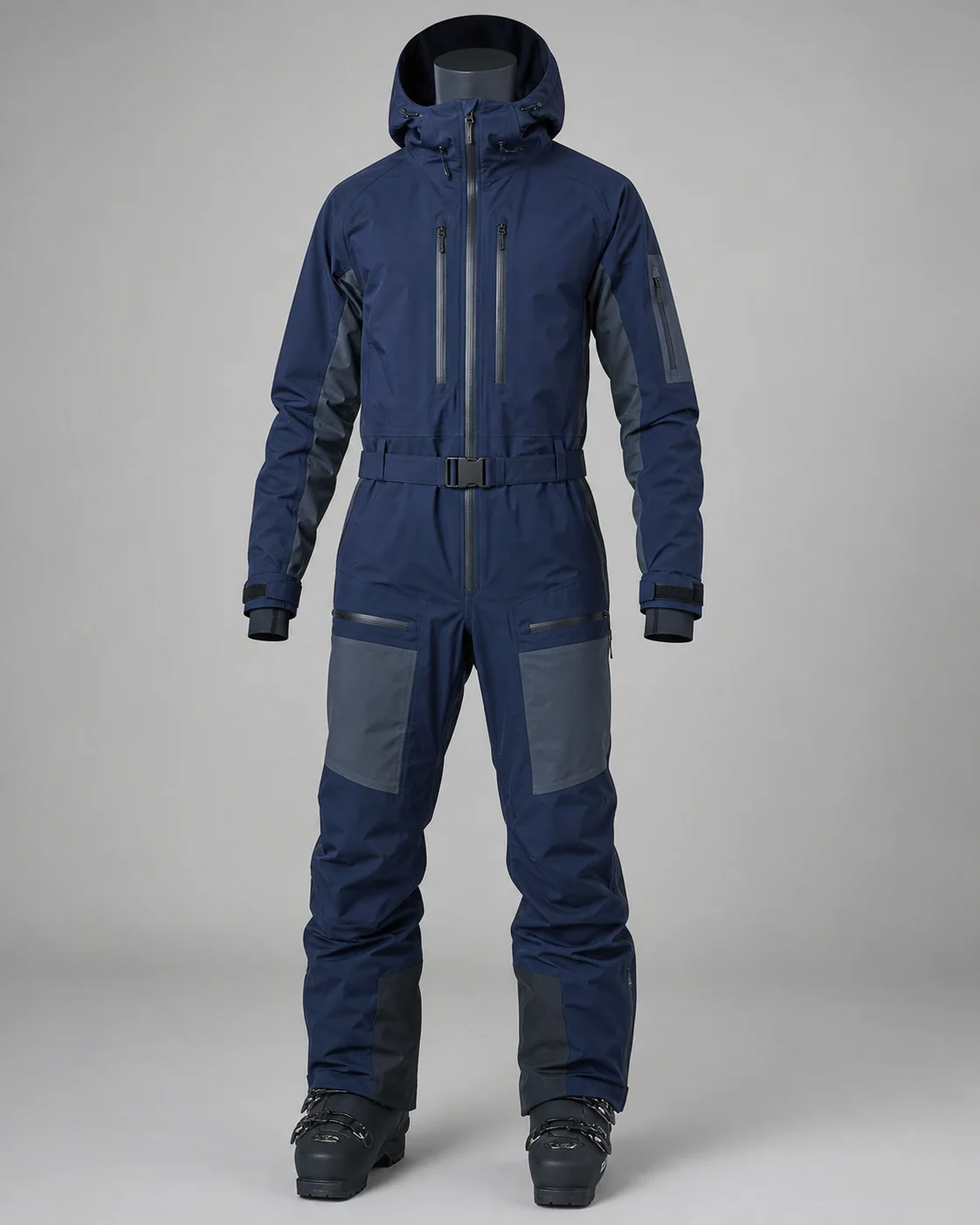
Ski Suit and One-Piece Development
One-pieces require joined decisions across torso length, rise, entry, closure, articulation, insulation mapping, mobility and silhouette. A flat sketch alone cannot prove the whole-body system.
Mission-to-product decisions
Define torso and rise balance, stance, reach, seat movement, limb articulation, layering allowance and grading before sealing the silhouette.
Resolve main closure, dressing, ventilation, pocket access, hood and collar, cuff, gaiter, waist adjustment and any required seat-access solution together.
Brief-to-Bulk control
User, discipline, conditions, layer role and intended market.
Construction, materials, fit, features, sizing, trims and care.
Fit, function, validation scope, evidence and recorded approval.
Approved specification, change record and reorder reference.
Evidence needed
A current SSM one-piece sample, toile and fit progression, closure and movement review, construction records and validation evidence are required.
Define the evidence planContinue the system
Direct answers
Torso length, rise and limb movement interact across one garment, so a local measurement fix can create a restriction elsewhere.
No. Seams, zippers, construction, workmanship and the condition of the assembled garment require their own agreed validation scope.
Include the discipline, user, climate, activity level, product family, layer role, fit, size range, target features, intended market, reference files and evidence requirements.
Bring us the mission—not just the product name
Share the intended discipline, user, climate, layer role, fit direction, size range, reference files and evidence expectations. The brief keeps this page context attached to your inquiry.