Know what is waiting for approval
Every gate should show buyer input, supplier output, open risk, approval owner and release condition.
Skiwear development system — Apparel-only planning from mission brief to controlled standard. Explore Skiwear
Brief-to-Bulk Control
Move through mission brief, feasibility, specification, material approval, prototype, fit and function review, validation, sealed standard, controlled output, inspection and reorder archive.
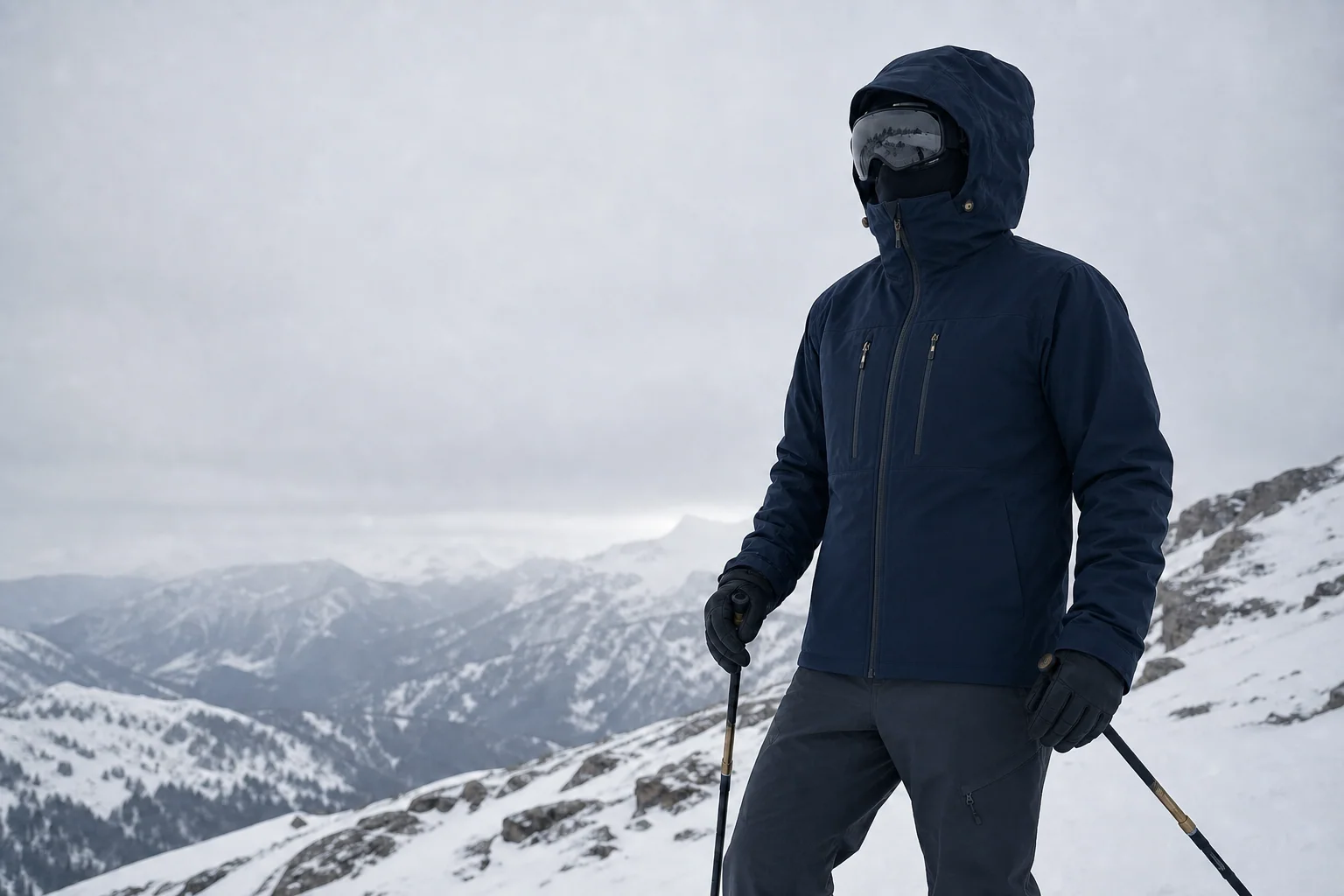
Mission-to-product decisions
Every gate should show buyer input, supplier output, open risk, approval owner and release condition.
A stage advances because the required decision is recorded—not because time has passed. Scope and calendar follow program review.
Brief-to-Bulk control
User, discipline, conditions, layer role and intended market.
Construction, materials, fit, features, sizing, trims and care.
Fit, function, validation scope, evidence and recorded approval.
Approved specification, change record and reorder reference.
Evidence needed
Real stage records, prototype comments, approvals, sealed references, inline and final records and reorder archives are required for operational proof.
Define the evidence planContinue the system
Direct answers
It is the approved specification and reference set used to control production and assess changes; its exact contents should be agreed for the program.
No. Seams, zippers, construction, workmanship and the condition of the assembled garment require their own agreed validation scope.
Include the discipline, user, climate, activity level, product family, layer role, fit, size range, target features, intended market, reference files and evidence requirements.
Bring us the mission—not just the product name
Share the intended discipline, user, climate, layer role, fit direction, size range, reference files and evidence expectations. The brief keeps this page context attached to your inquiry.