Separate source documents from product proof
A supplier specification describes the supplied material. Prototype and finished-garment claims require evidence tied to the assembled article.
Skiwear development system — Apparel-only planning from mission brief to controlled standard. Explore Skiwear
Material-System Planning
Treat face fabric, barrier, backer, lining, stretch, insulation, reinforcement, finish, seam tape, zippers and trims as a compatibility system tied to the product mission.
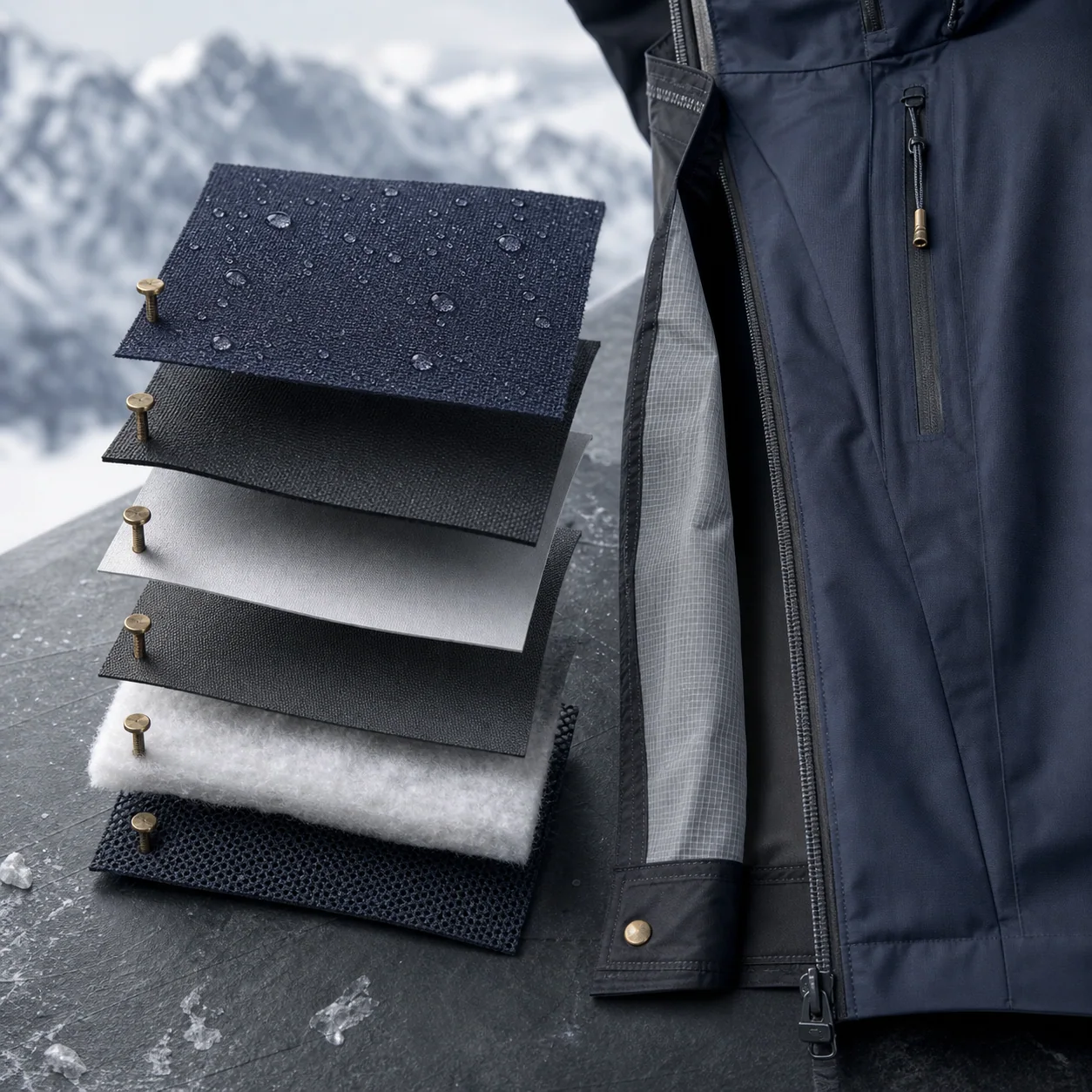
Mission-to-product decisions
A supplier specification describes the supplied material. Prototype and finished-garment claims require evidence tied to the assembled article.
Define protection, warmth, output, handfeel, stretch, weight, care, construction and evidence requirements before choosing a material by trade name or headline rating.
Brief-to-Bulk control
User, discipline, conditions, layer role and intended market.
Construction, materials, fit, features, sizing, trims and care.
Fit, function, validation scope, evidence and recorded approval.
Approved specification, change record and reorder reference.
Evidence needed
Supplier specifications, authorization, order-level documents, compatibility records and exact test reports are required for claim-bearing material statements.
Define the evidence planContinue the system
Direct answers
No. Those terms describe material architecture; selection still depends on use, components, assembly, comfort and validation.
No. Seams, zippers, construction, workmanship and the condition of the assembled garment require their own agreed validation scope.
Include the discipline, user, climate, activity level, product family, layer role, fit, size range, target features, intended market, reference files and evidence requirements.
Bring us the mission—not just the product name
Share the intended discipline, user, climate, layer role, fit direction, size range, reference files and evidence expectations. The brief keeps this page context attached to your inquiry.