Review likely failure points before approval
Evaluate curved and bulky seams, tape transitions, zipper ends, pocket bags, hood and collar junctions, cuff and gaiter assemblies and material changes.
Skiwear development system — Apparel-only planning from mission brief to controlled standard. Explore Skiwear
Construction-System Planning
Define lined, laminated, softshell and insulated construction through seam maps, compatibility, assembly choices, closures, reinforcement, articulation, pockets, hood, cuff, hem and gaiter details.
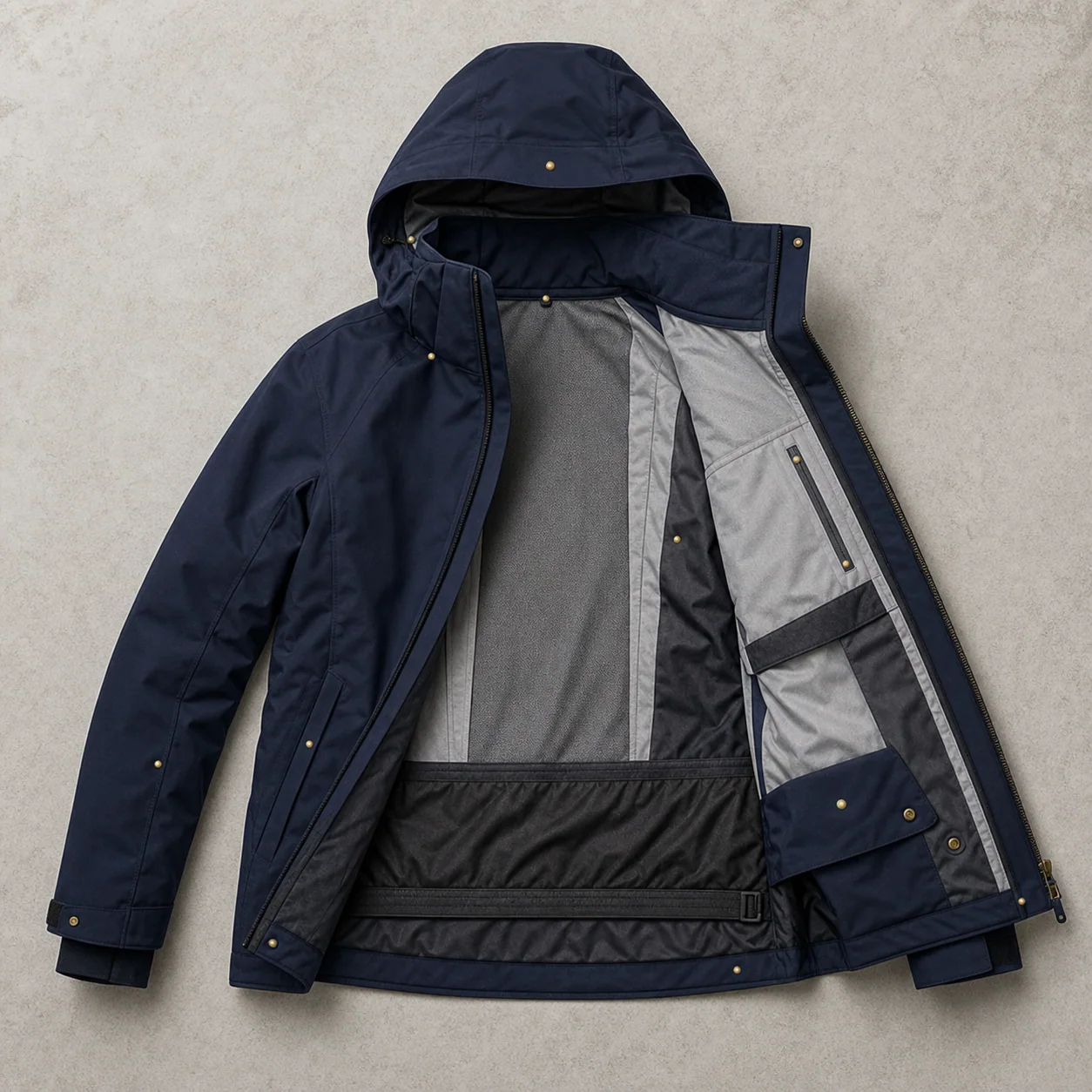
Mission-to-product decisions
Evaluate curved and bulky seams, tape transitions, zipper ends, pocket bags, hood and collar junctions, cuff and gaiter assemblies and material changes.
A seam or closure statement must match the actual fabric, design, process, condition and validation method used.
Brief-to-Bulk control
User, discipline, conditions, layer role and intended market.
Construction, materials, fit, features, sizing, trims and care.
Fit, function, validation scope, evidence and recorded approval.
Approved specification, change record and reorder reference.
Evidence needed
Inside-out SSM samples, exact equipment and settings, compatibility trials, workmanship records and test results are required before operational claims.
Define the evidence planContinue the system
Direct answers
No. Tape selection, fabric compatibility, seam design, application control, closures and the exact test article all matter.
No. Seams, zippers, construction, workmanship and the condition of the assembled garment require their own agreed validation scope.
Include the discipline, user, climate, activity level, product family, layer role, fit, size range, target features, intended market, reference files and evidence requirements.
Bring us the mission—not just the product name
Share the intended discipline, user, climate, layer role, fit direction, size range, reference files and evidence expectations. The brief keeps this page context attached to your inquiry.