Build an age-specific size architecture
Define the body data source, age or height reference, base size, points of measure, ease, growth allowance, grade intervals, size names, and selected size-set samples.
Now Accepting Orders for SS2026 — Sample turnaround in 7-10 days. Worldwide shipping available. Request a Sample Kit →
Streetwear product family · Age, safety, and market controls
Adapt tees, fleece sets, outerwear, bottoms, and coordinated products through defined age groups, size grading, movement, durability, care, trim safety, cord policy, labeling, and destination-market review.
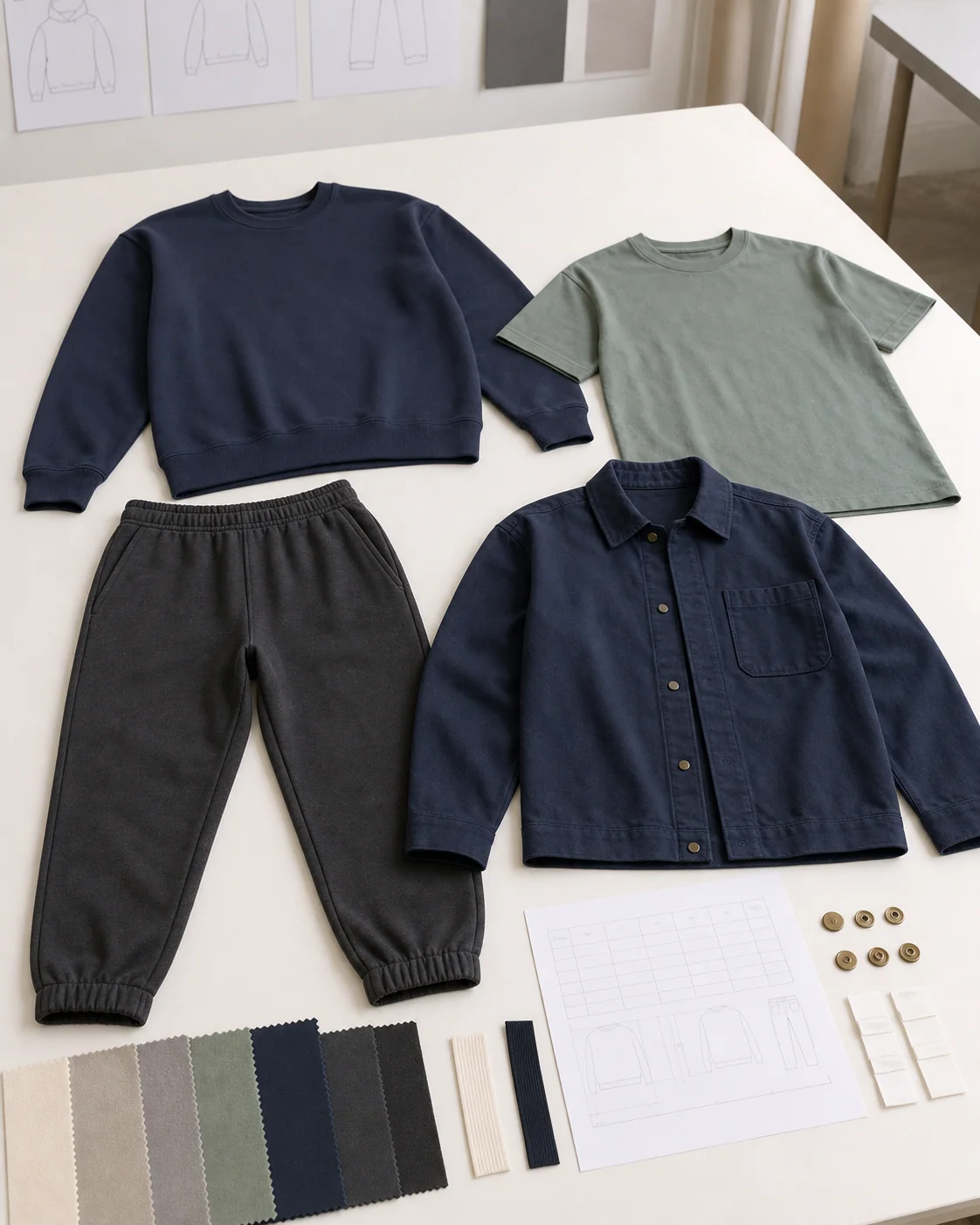
Answer before specification
Youth is not one fit block or one compliance category. The brief must identify intended age and wearer group, product type, size range, destination market, use, movement, layer position, materials, trims, cords, small or detachable components, care, labels, packaging, and the current requirements the buyer needs reviewed. This page supports development planning and is not legal advice or a universal compliance certificate.
02 / Development decisions
Each decision becomes part of the sample brief, approval record, or evidence request. Unknowns remain explicit instead of becoming silent assumptions.
Define the body data source, age or height reference, base size, points of measure, ease, growth allowance, grade intervals, size names, and selected size-set samples.
Map every cord, loop, toggle, zipper pull, snap, button, patch, label, elastic, decoration, detachable part, and attachment method against product, age, location, use, and destination-market requirements.
Check reach, sit, bend, stride, play, pocket use, seam load, reinforcement, stretch and recovery, abrasion, wash response, and comfort without treating adult construction as automatically suitable.
Record fiber and care data, origin, age or size marking, warnings where applicable, batch or production references, packaging, language, and buyer-approved target-market information.
03 / Decision matrix
This matrix identifies development questions, not a universal legal checklist. Current requirements must be confirmed for the exact age, garment, destination market, materials, trims, and intended use.
| Option or system | Best used to define | Controls to record |
|---|---|---|
| T-shirt or jersey top | Everyday base or graphic layer | Neck opening, head passage, shoulder balance, material hand, opacity, seam comfort, decoration, shrinkage, and care |
| Sweatshirt or fleece set | Warm coordinated layer | Neck and hood construction, cord policy, rib and elastic recovery, pocket openings, surface durability, shade, and size pairing |
| Youth bottom | Jogger, cargo, short, or relaxed trouser | Waist security, rise, movement, exposed cords or loops, toggles, pocket components, reinforcement, hem, and care |
| Outerwear or overshirt | Exterior layer with closures and trims | Layering ease, hood and neck zone, zipper and snap access, cord and snag risk, lining, warmth, visibility, labels, and use conditions |

04 / Product anatomy
The same cord, toggle, snap, zipper pull, elastic loop, patch, or decorative attachment can carry different risks depending on age, garment zone, length, strength, detachability, intended activity, and destination market. Approve the assembled physical product, not an isolated trim board.
05 / Failure modes
06 / Sample gates
Confirm age group, product, destination, use, and applicable review scope
Approve block, material, trim map, cord policy, labels, and test plan
Review physical base-size and selected size-set samples after care and movement
Release only against current buyer-approved records and applicable evidence
07 / Evidence boundary
Current SSM claims are supported by evidence available upon request. Any record should identify its source, date, method, specimen, result, applicability, and limitation. Generated imagery on this page is explanatory and is not presented as factory, client, material, or test proof.
External references
These official sources support the risk framework. Buyers remain responsible for confirming the current requirements that apply to the exact product and destination.
08 / Connected authority
These links are live canonical routes. They carry the buyer from product scope into the material, surface, quality, or development decision that comes next.
09 / Buyer questions
No. Youth development should use age- and size-appropriate body relationships, ease, head passage, rise, balance, movement, coverage, component placement, and grade rules, then verify selected sizes physically.
Cord risk depends on garment zone, age and size group, length, construction, attachments, intended use, and destination market. For example, current U.S. CPSC guidance identifies specific hazards and controls for drawstrings on children's upper outerwear. The exact market requirement must be confirmed for the reviewed product.
Provide the intended age and wearer group, size range, destination market, product and use, references, fit, materials, every trim or cord, decoration, care, labels, packaging, quantities, target window, and buyer compliance requirements.
No. Material, coating, component, attachment, cord, seam, label, care, and finished-product evidence have different scopes. The record must identify method, specimen, condition, result, date, applicability, and limitation.