Choose the body-specific block
Record bust, waist, hip, shoulder, back length, rise, seat, thigh, inseam, and balance points relevant to the garment and size range.
Now Accepting Orders for SS2026 — Sample turnaround in 7-10 days. Worldwide shipping available. Request a Sample Kit →
Streetwear product family · Body-specific fit
Develop tops, fleece, bottoms, dresses, sets, and outer layers through body-specific measurements, grading, stretch, recovery, coverage, movement, material behavior, and size-set evidence.
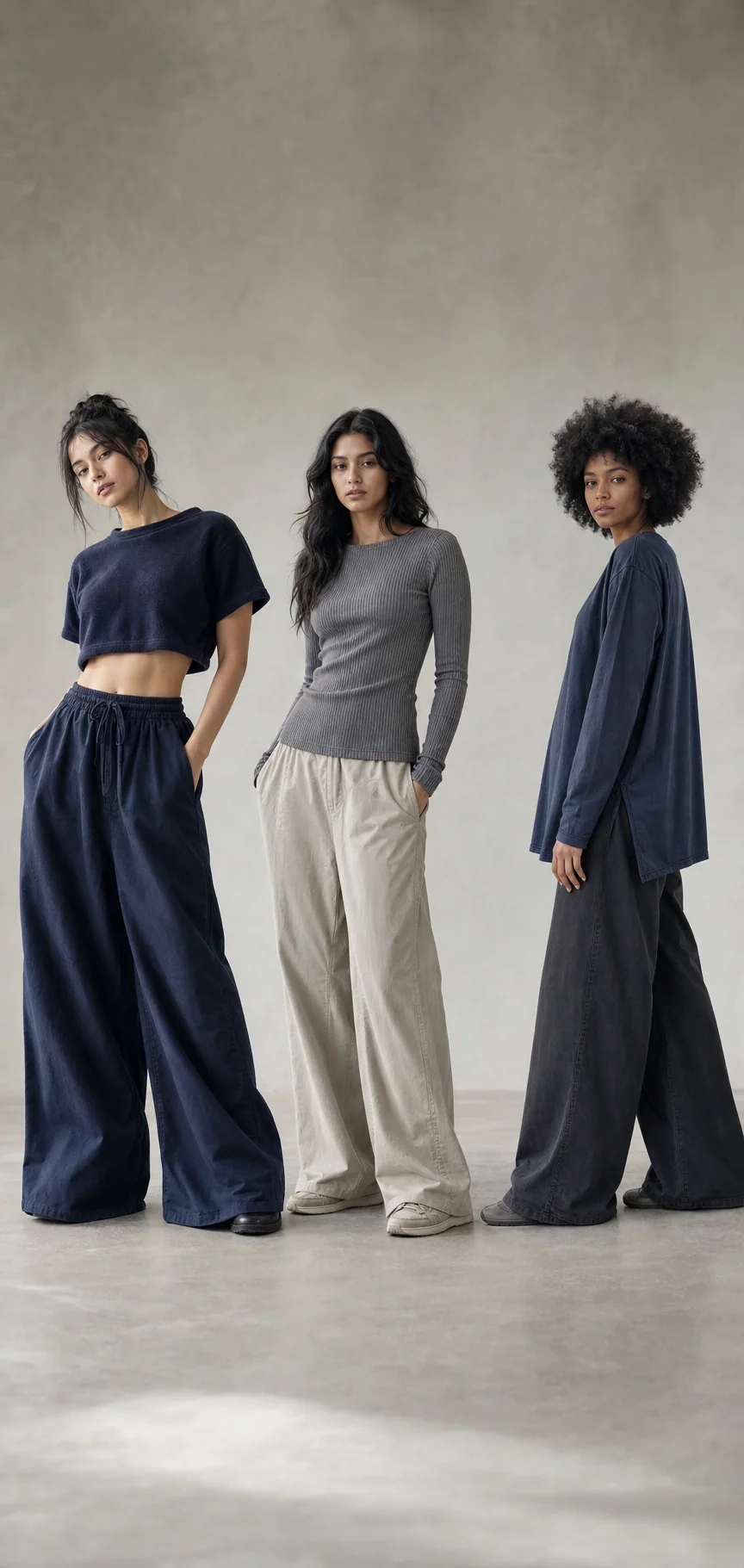
Answer before specification
The product should begin from the intended wearer, silhouette, size range, coverage, movement, layer position, and body-specific measurement relationships. Cropped, fitted, oversized, curved, high-rise, wide-leg, and outerwear forms each need deliberate blocks and grade rules.
02 / Development decisions
Each decision becomes part of the sample brief, approval record, or evidence request. Unknowns remain explicit instead of becoming silent assumptions.
Record bust, waist, hip, shoulder, back length, rise, seat, thigh, inseam, and balance points relevant to the garment and size range.
Review neckline, armhole, crop, hem, rise, pocket, opacity, under-layer, movement range, and the intended wearing context.
Control stretch direction and percentage, recovery, growth, opacity under extension, seam type, elastic, support, shrinkage, and care.
Evaluate the base size and selected sizes across the range for balance, ease, length, placement, movement, coverage, and consistent design intent.
03 / Decision matrix
The same labeled size can behave differently across materials and silhouettes. Approve measurements, grade rules, and physical fit evidence together.
| Option or system | Best used to define | Controls to record |
|---|---|---|
| Fitted stretch top | Close silhouette or base layer | Bust and waist shaping, stretch, recovery, opacity, neckline, hem, seam comfort, and grade |
| Cropped boxy fleece | Structured relaxed upper layer | Shoulder, body width, crop balance, sleeve volume, rib, hood or neck, and post-wash length |
| High-rise or wide-leg bottom | Waist-led statement silhouette | Waist and hip relationship, rise, seat, thigh, leg, pocket, movement, and hem |
| Body-specific outer layer | Jacket, overshirt, or coordinated set | Layering ease, bust and hip balance, shoulder, armhole, closure, movement, and size pairing |
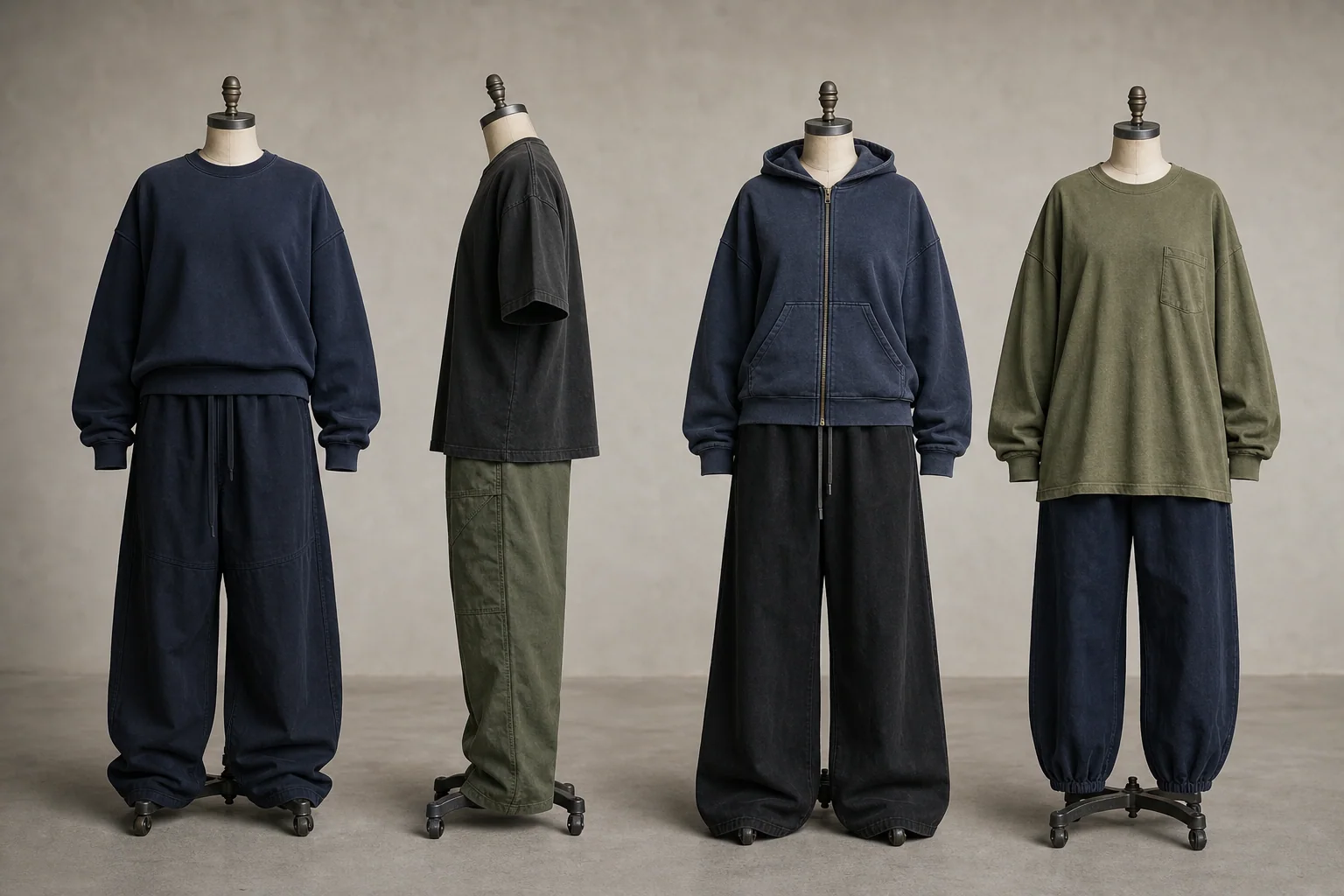
04 / Product anatomy
A garment can look correct while standing and fail during reach, sit, bend, stride, or after extended wear. Review the intended body, under-layer, motion, and care state.
05 / Failure modes
06 / Sample gates
Confirm wearer, silhouette, size range, and block
Approve material behavior and base-size fit
Review movement, coverage, care, and selected size set
Lock measurements, grade, placements, labels, and packing
07 / Evidence boundary
Current SSM claims are supported by evidence available upon request. Any record should identify its source, date, method, specimen, result, applicability, and limitation. Generated imagery on this page is explanatory and is not presented as factory, client, material, or test proof.
08 / Connected authority
These links are live canonical routes. They carry the buyer from product scope into the material, surface, quality, or development decision that comes next.
09 / Buyer questions
A product may intentionally use a unisex direction, but a women-specific fit should not be created by simple size reduction. Bust, waist, hip, shoulder, rise, balance, length, and grade relationships need deliberate review.
Some materials become more transparent under extension. Opacity should be reviewed at the intended color, stretch, construction, coverage, and under-layer conditions.
The base size and selected sizes across the intended range should be chosen according to risk. The review should verify that design intent, balance, coverage, movement, and placement survive grading.