Define exposure and activity
State climate, precipitation, wind, temperature, duration, intensity, movement, layers, user, and whether the product is everyday urban wear or activity-dependent.
Now Accepting Orders for SS2026 — Sample turnaround in 7-10 days. Worldwide shipping available. Request a Sample Kit →
Streetwear product family · Evidence-led protection
Define intended use before ratings: weather exposure, duration, movement, layers, shell and membrane system, seams, openings, insulation, ventilation, utility zones, care, and the evidence needed for each claim.
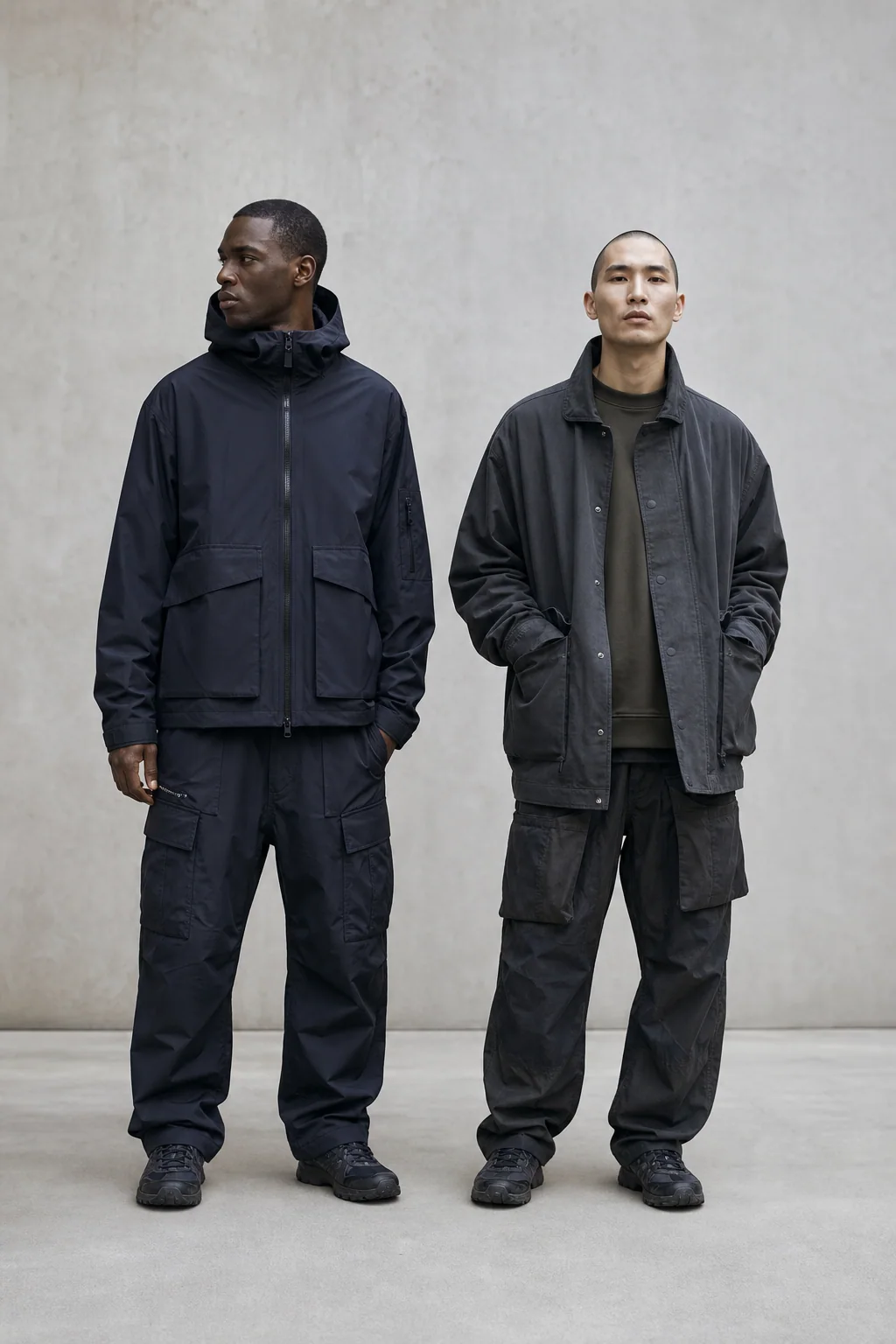
Answer before specification
Supplier fabric data, component results, seam tests, and finished-garment evidence are different. Every numerical or performance claim must name the method, specimen, condition, result, date, applicability, and limitation. Exact capability and any specialist partner boundary are confirmed for the reviewed product.
02 / Development decisions
Each decision becomes part of the sample brief, approval record, or evidence request. Unknowns remain explicit instead of becoming silent assumptions.
State climate, precipitation, wind, temperature, duration, intensity, movement, layers, user, and whether the product is everyday urban wear or activity-dependent.
Resolve face, membrane or coating, backing, lining, insulation, reinforcement, stretch, hand, breathability intent, care, and supplier evidence.
Review seam map, seam-sealing scope, hood, collar, zipper, flap, pocket, cuff, hem, ventilation, articulation, reinforcement, and mobility.
Agree which material, component, seam, or garment tests are required, by which method, on which specimen, and how results may be described.
03 / Decision matrix
These categories organize development; they do not promise a rating. Applicable evidence is reviewed before any public or label claim is confirmed.
| Option or system | Best used to define | Controls to record |
|---|---|---|
| Wind-resistant urban shell | Everyday exposed layering | Air-permeability scope, openings, hood, mobility, hand, noise, condensation, and care |
| Water-resistant utility layer | Short-duration light exposure | Material finish, seams, zipper and pocket paths, cuff and hem, care, and claim wording |
| Waterproof-dependent shell | Sustained weather exposure | Named methods, specimen scope, seam sealing, openings, hood, durability, care, and finished-garment applicability |
| Insulated technical layer | Warmth-led urban or activity use | Insulation type and distribution, cold spots, compression, moisture, mobility, laundering, and evidence scope |
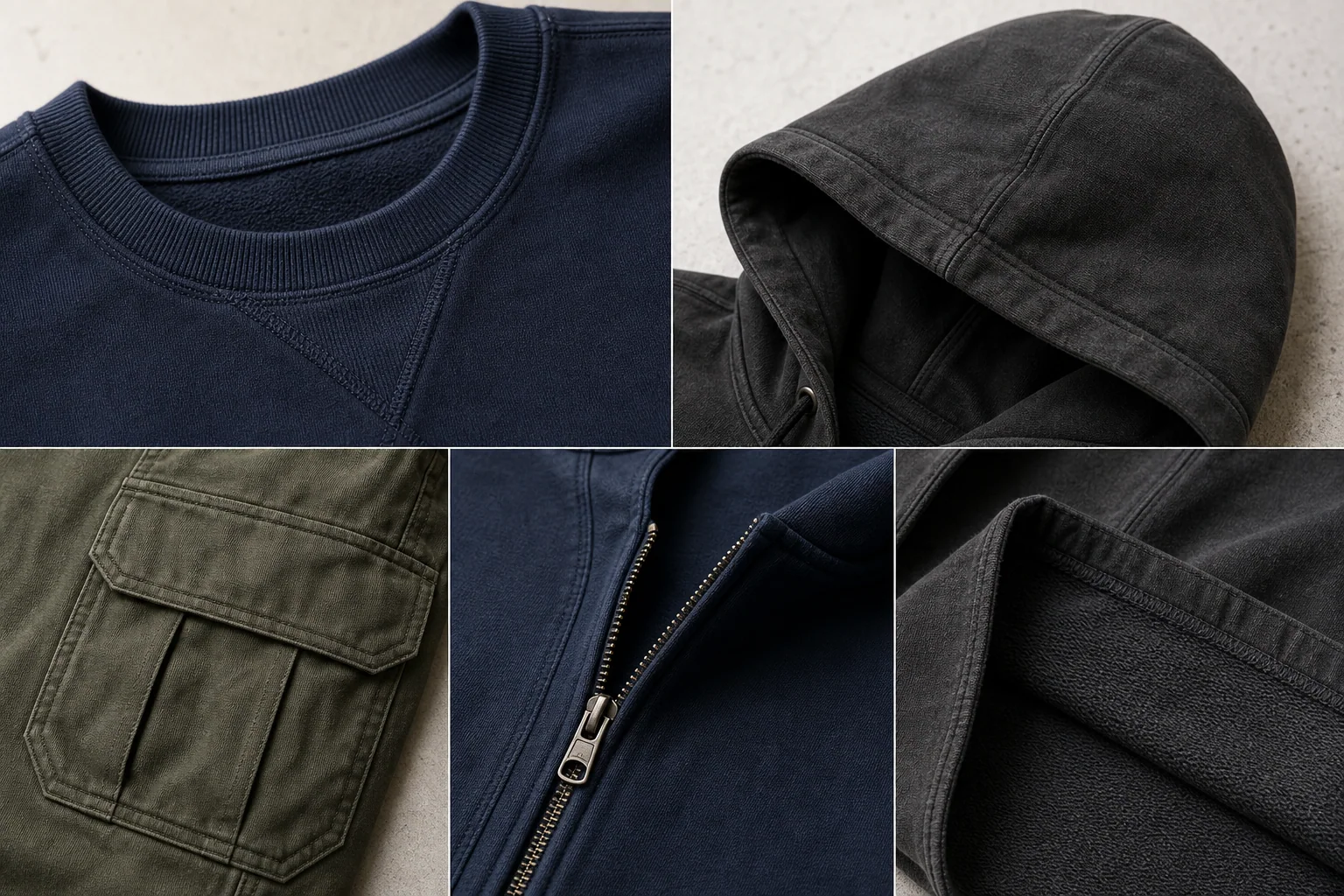
04 / Product anatomy
A high-performing material can still be undermined by seams, needle holes, zippers, pockets, hood geometry, cuffs, hem, ventilation, damage, contamination, or care history.
05 / Failure modes
06 / Sample gates
Confirm use conditions and capability boundary
Approve material, component, construction, and evidence plan
Review complete sample for fit, movement, openings, and care
Lock claims only to applicable current evidence
07 / Evidence boundary
Current SSM claims are supported by evidence available upon request. Any record should identify its source, date, method, specimen, result, applicability, and limitation. Generated imagery on this page is explanatory and is not presented as factory, client, material, or test proof.
Current commerce records
These are current merchandising and inquiry references with distinct media and product records. They do not by themselves prove every material, process, test, or capability described on this authority page.
08 / Connected authority
These links are live canonical routes. They carry the buyer from product scope into the material, surface, quality, or development decision that comes next.
09 / Buyer questions
Not by itself. Seams, needle holes, zippers, pockets, hood, cuffs, hem, ventilation, construction, damage, and care affect the assembled garment. Evidence must identify what was actually tested.
A useful record names the test method, specimen, condition, result, date, applicability, and limitation. Fabric, component, seam, and finished-garment results are not interchangeable.
No. Skiwear introduces its own weather, snow, thermal, movement, safety, hardware, and activity requirements. The intended use must be reviewed through the dedicated skiwear system.