Define the customer and collection
State intended wearer, market, product purpose, price context, launch priorities, product families, size range, colorways, and quantity direction.
Now Accepting Orders for SS2026 — Sample turnaround in 7-10 days. Worldwide shipping available. Request a Sample Kit →
Streetwear buyer program · Focused first collection
Make the intended customer, product count, fit, materials, artwork, quantities, size range, target market, evidence, and launch priorities explicit before sampling begins.
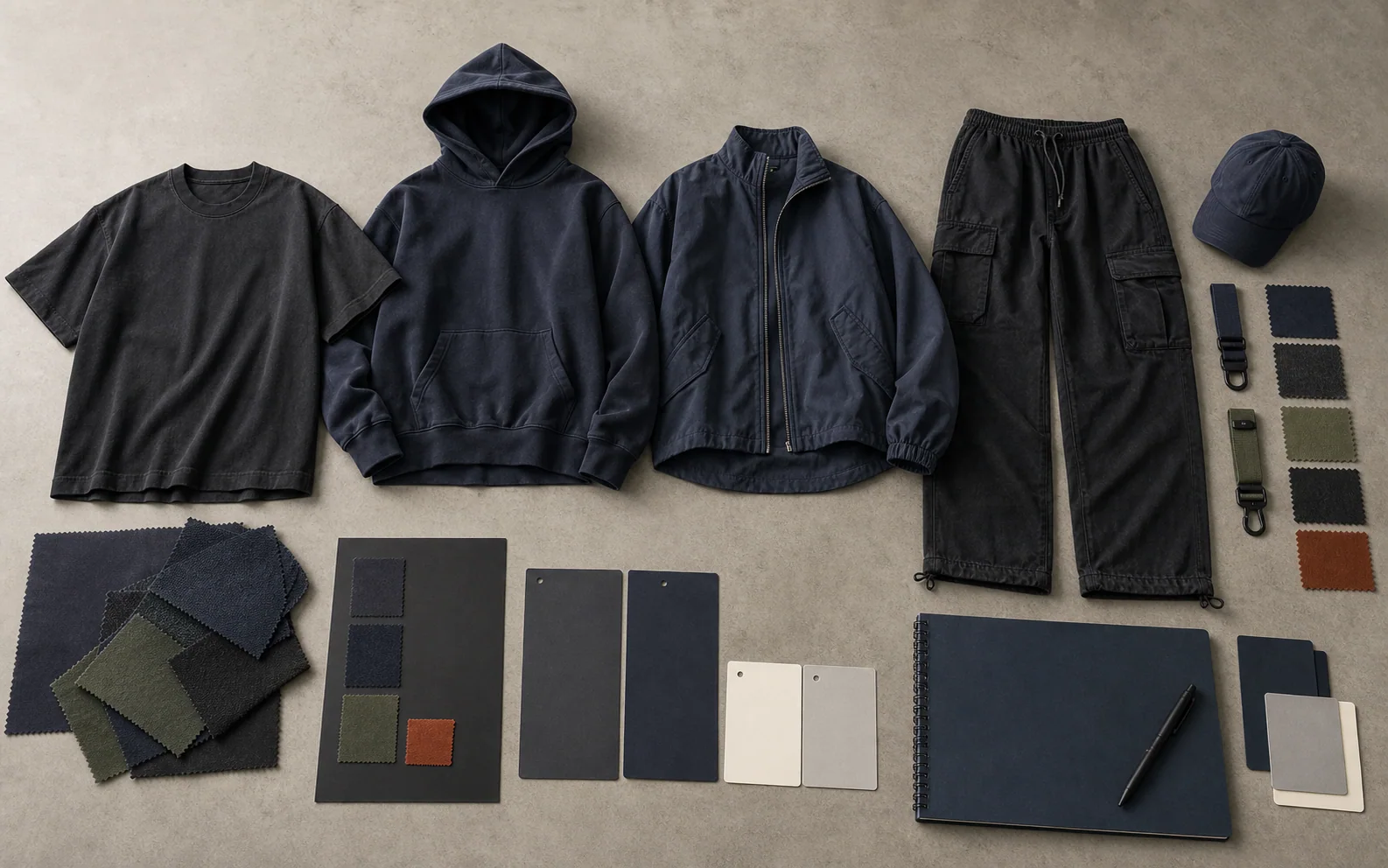
Answer before specification
Choose the few products that define the collection, share materials or trims where that supports the design, and resolve the highest-risk fit, wash, decoration, sourcing, and market decisions before adding styles. SSM's confirmed MOQ is 50 pieces; allocation across styles, colors, and sizes is reviewed with the brief.
02 / Development decisions
Each decision becomes part of the sample brief, approval record, or evidence request. Unknowns remain explicit instead of becoming silent assumptions.
State intended wearer, market, product purpose, price context, launch priorities, product families, size range, colorways, and quantity direction.
Prioritize the silhouette, material, wash, decoration, trim, or coordinated range choices that make the collection recognizable and carry the most risk.
Provide owned or permission-cleared references, sketches, measurements, artwork, color direction, quantities, target window, and a list of decisions still open.
Standard sample timing is 7-10 days and bulk production timing is 20-40 days after a workable brief and required inputs align; complexity, sourcing, testing, revisions, and approvals affect the confirmed schedule.
03 / Decision matrix
Exact commercial terms follow review of the product, quantities, size and color split, materials, custom components, development, tests, packing, market, and delivery needs.
| Option or system | Best used to define | Controls to record |
|---|---|---|
| Single hero style | Prove one defining product | Block, material, signature detail, decoration, size range, margin context, care, and repeat record |
| Two-piece set | Create a coordinated first look | Top and bottom blocks, shared material, shade, trims, placements, size pairing, and full-set approval |
| Small capsule | Build a coherent multi-product launch | Shared BOM opportunities, distinct fit records, color system, artwork hierarchy, quantities, and launch priority |
| Test-and-refine route | Resolve uncertain product decisions | Highest-risk sample questions, revision budget, evidence, approval owner, target window, and go or hold gate |
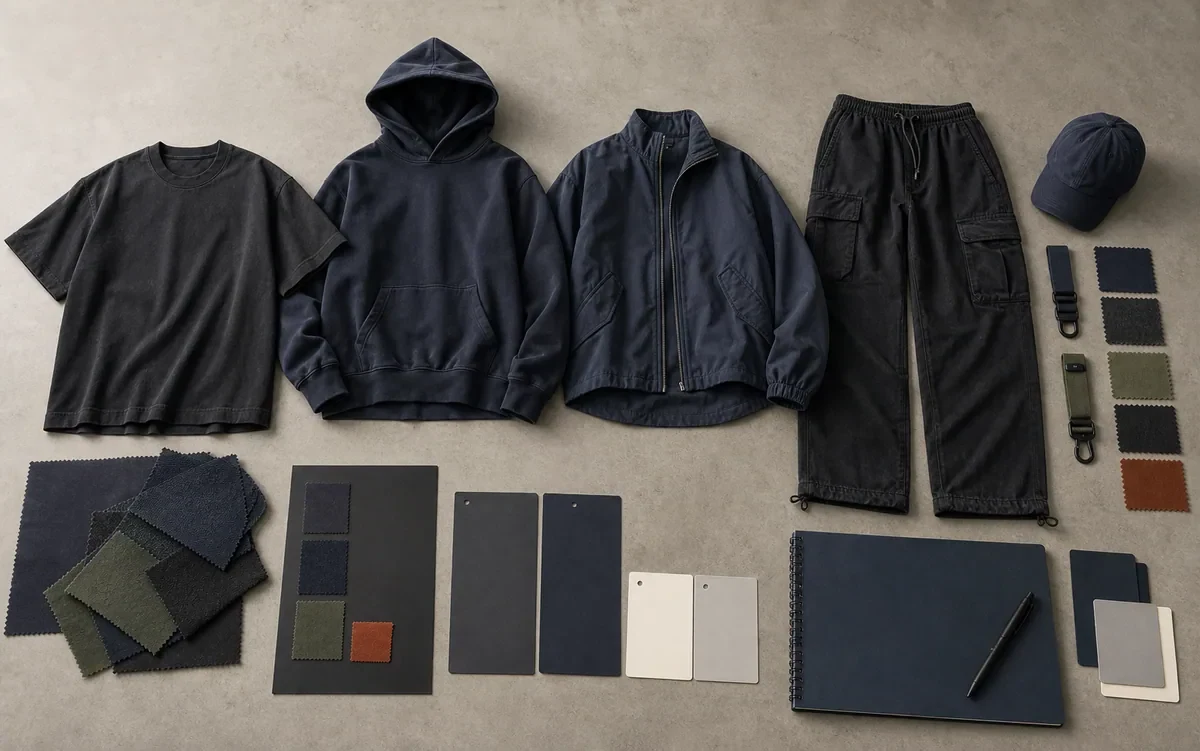
04 / Product anatomy
Unknown answers are acceptable when they are named. The development review should separate confirmed decisions, assumptions, open questions, buyer-owned inputs, SSM review points, and the next approval gate.
05 / Failure modes
06 / Sample gates
Collection and readiness review
Focused brief, input, and feasibility alignment
Sample, fit, material, decoration, and evidence review
Approved product record and bulk decision
07 / Evidence boundary
Current SSM claims are supported by evidence available upon request. Any record should identify its source, date, method, specimen, result, applicability, and limitation. Generated imagery on this page is explanatory and is not presented as factory, client, material, or test proof.
Editorial depth
The authority page owns the product or process decision. These articles examine a narrower trend, method, specification, or sourcing question without duplicating the parent route.
08 / Connected authority
These links are live canonical routes. They carry the buyer from product scope into the material, surface, quality, or development decision that comes next.
09 / Buyer questions
SSM's confirmed MOQ is 50 pieces. The exact allocation across styles, colors, and sizes and any material or custom-component minimums are reviewed with the brief.
Standard sample timing is 7-10 days and standard bulk production timing is 20-40 days after a workable brief and required inputs align. Complexity, sourcing, custom trims, wash, decoration, testing, revisions, and approvals can affect the confirmed schedule.
Not for an early review. Start with the intended customer and market, products, references you own or may use, fit, materials, artwork, quantities, size range, target window, and the decisions still open.
Yes, but the strongest first range usually prioritizes a few defining products and shared decisions. Feasibility, quantity allocation, materials, trims, development burden, and launch timing should be reviewed before scope is fixed.