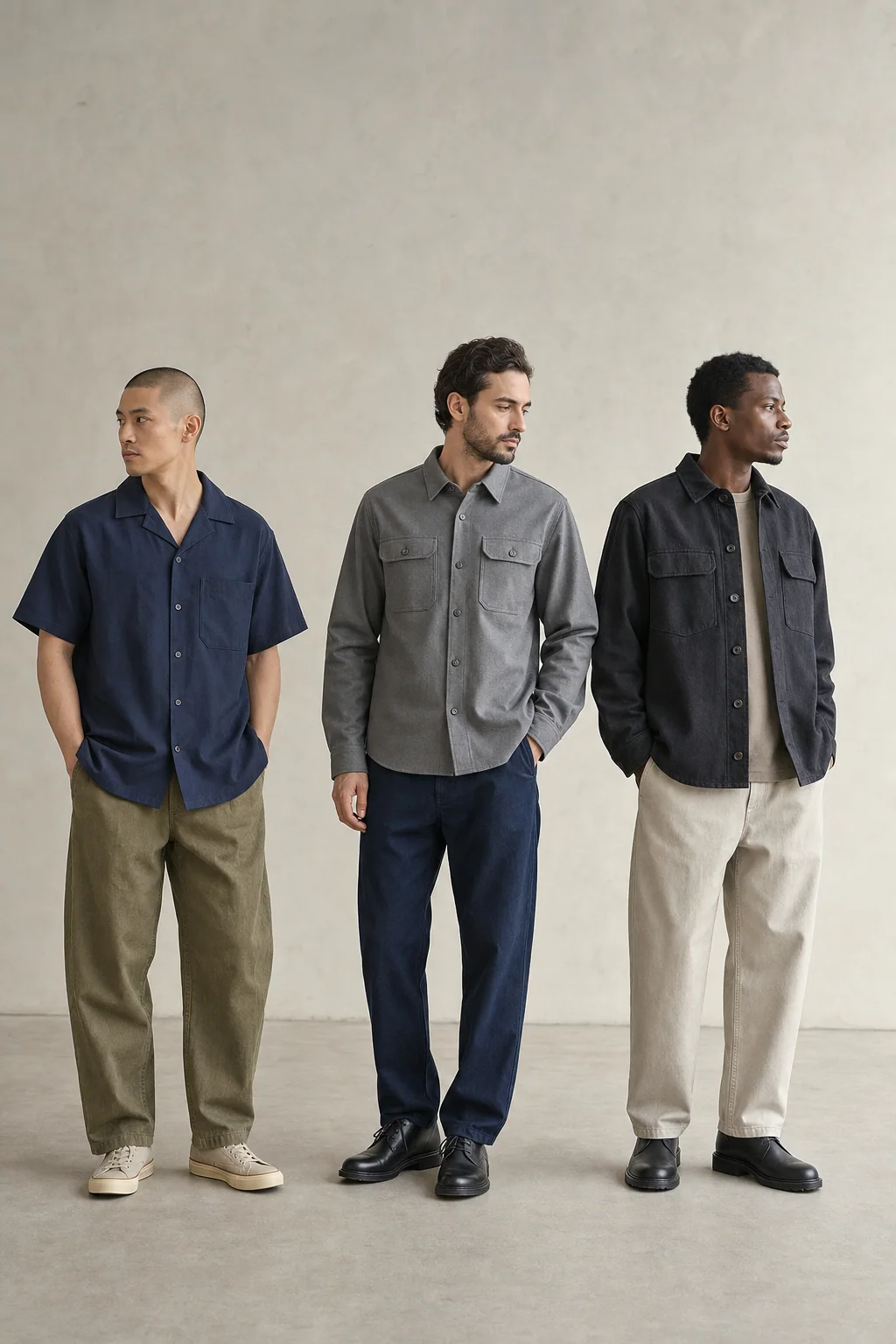
Set the layering fit
Record what is worn beneath, body and shoulder ease, armhole, sleeve volume, cuff opening, length, hem, and movement.
Now Accepting Orders for SS2026 — Sample turnaround in 7-10 days. Worldwide shipping available. Request a Sample Kit →
Streetwear product family · Woven layers
Develop camp shirts, poplin shirts, work shirts, flannel layers, lined overshirts, and shackets through weave, weight, collar, cuff, pocket, closure, layering fit, finish, and measurable construction.
Answer before specification
The intended layer position determines ease, armhole, sleeve, collar, cuff, closure, pocket capacity, hem, lining, and material weight. A shirt block cannot simply be made heavier and assumed to function as an overshirt.
02 / Development decisions
Each decision becomes part of the sample brief, approval record, or evidence request. Unknowns remain explicit instead of becoming silent assumptions.
Record what is worn beneath, body and shoulder ease, armhole, sleeve volume, cuff opening, length, hem, and movement.
Review fiber, weave, weight, density, surface, drape, opacity, stability, shrinkage, pattern, finish, and season.
Resolve collar and stand, placket, cuff, yoke, pocket, flap, topstitching, reinforcement, seam finish, and pattern alignment.
Confirm lining or interlining, buttons, snaps, zippers, labels, patches, thread, attachment, care, and component compatibility.
03 / Decision matrix
The final material and build depend on the target silhouette, season, care, and approved physical sample.
| Option or system | Best used to define | Controls to record |
|---|---|---|
| Camp or resort shirt | Relaxed lightweight top | Drape, collar roll, neckline, opacity, pocket placement, hem, and print or stripe alignment |
| Work shirt | Structured everyday layer | Twill or canvas behavior, reinforcement, pocket function, topstitching, shrinkage, and hardware |
| Overshirt | Midweight layering garment | Ease over base layer, shoulder and sleeve volume, closure, cuff, pocket load, and hem balance |
| Lined shacket | Outer-layer shirt-jacket | Shell-lining balance, internal access, seam bulk, warmth, mobility, hardware, and care |
04 / Product anatomy
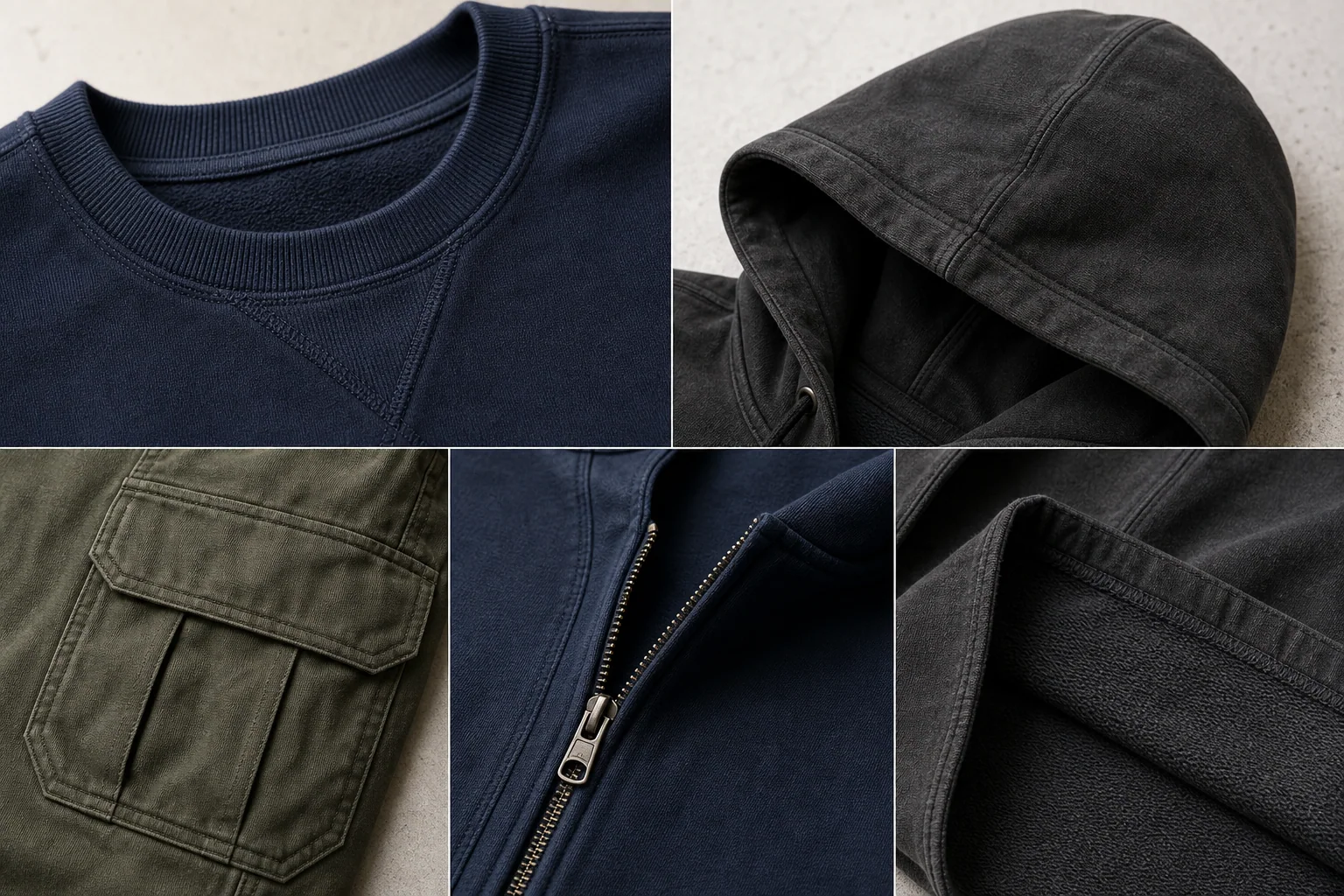
Collars, cuffs, pockets, plackets, yokes, and closures depend on interlining, seam allowance, reinforcement, notches, pattern matching, and clean internal finishing.
05 / Failure modes
06 / Sample gates
Confirm layer role, block, and material
Approve collar, cuff, pocket, closure, and internal build
Review washed or conditioned sample on body
Lock measurements, alignment rules, trims, care, and packing
07 / Evidence boundary
Current SSM claims are supported by evidence available upon request. Any record should identify its source, date, method, specimen, result, applicability, and limitation. Generated imagery on this page is explanatory and is not presented as factory, client, material, or test proof.
Current commerce records
These are current merchandising and inquiry references with distinct media and product records. They do not by themselves prove every material, process, test, or capability described on this authority page.
08 / Connected authority
These links are live canonical routes. They carry the buyer from product scope into the material, surface, quality, or development decision that comes next.
09 / Buyer questions
An overshirt is planned as a layer, with deliberate ease, armhole and sleeve volume, material weight, closure, pocket capacity, hem, and any lining or reinforcement.
The approved record should identify priority matching points, panel direction, pocket and placket alignment, tolerances, and any areas where matching is not feasible.
Yes. Fit and movement should be reviewed with the intended under-layer and in the relevant washed or conditioned state.