Define the measurement architecture
Record waist state, front and back rise, seat, thigh, knee, inseam, outseam, hem, and where each point is measured.
Now Accepting Orders for SS2026 — Sample turnaround in 7-10 days. Worldwide shipping available. Request a Sample Kit →
Streetwear product family · Block and movement
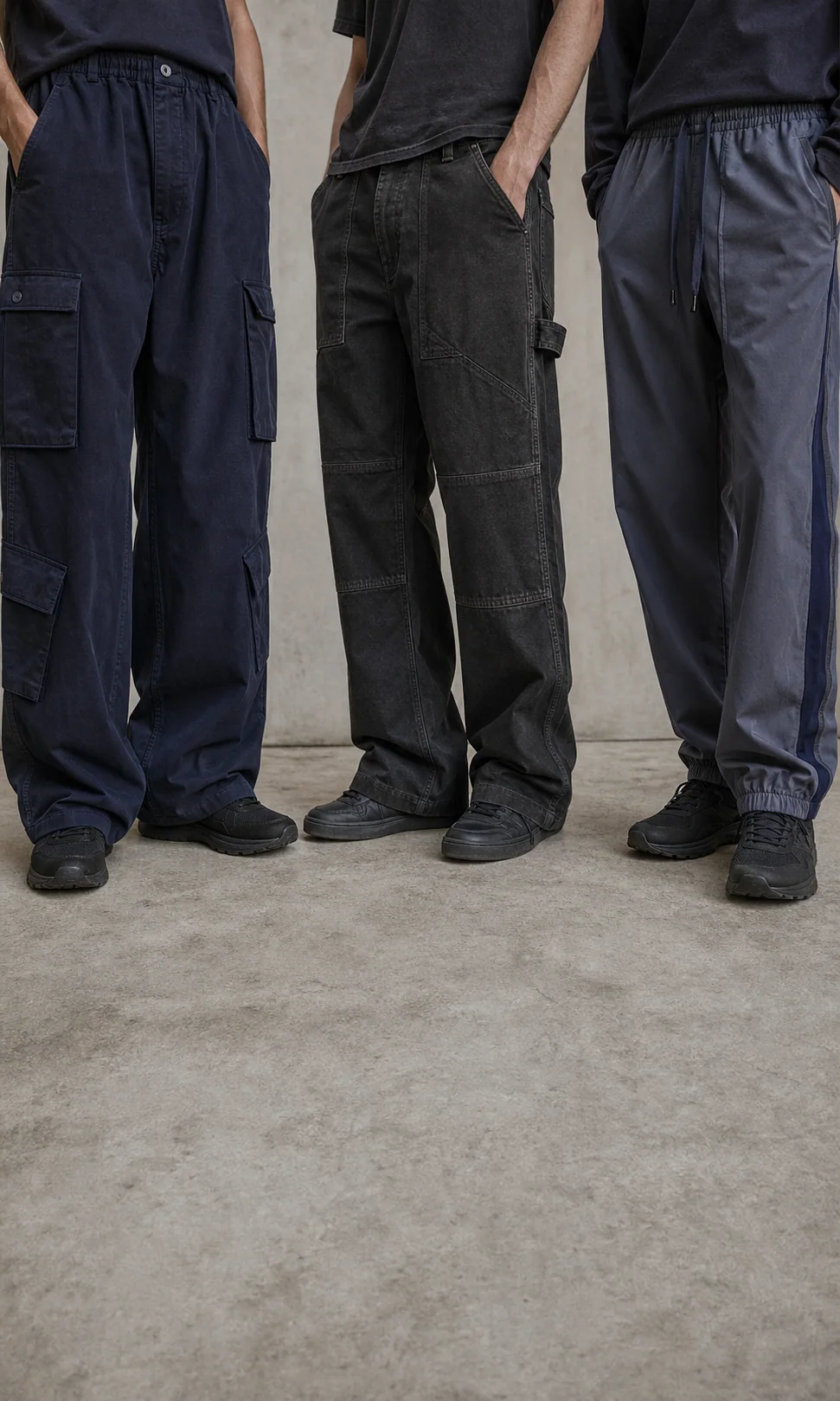
Define rise, seat, thigh, knee, leg shape, hem, pocket system, waistband, movement, reinforcement, material, and wash as one connected block.
Answer before specification
Straight, wide, relaxed, tapered, flared, stacked, articulated, and parachute forms require different relationships between rise, seat, thigh, knee, hem, fabric, and intended movement.
02 / Development decisions
Each decision becomes part of the sample brief, approval record, or evidence request. Unknowns remain explicit instead of becoming silent assumptions.
Record waist state, front and back rise, seat, thigh, knee, inseam, outseam, hem, and where each point is measured.
Cargo, carpenter, welt, patch, zip, and concealed pockets alter balance, bulk, reinforcement, sewing sequence, and appearance.
Fixed or elastic waists, drawcords, fly constructions, gussets, knee shaping, and hem adjustments need a clear functional intent.
Wash and finish can change rise, inseam, twist, shade, seam character, pocket position, and hardware behavior.
03 / Decision matrix
Material and pocket choices should support the block. A heavier or more rigid fabric can change comfort, drape, and usable pocket volume.
| Option or system | Best used to define | Controls to record |
|---|---|---|
| Cargo or utility pant | Storage-led streetwear | Pocket load, reinforcement, bulk, flap or closure, knee movement, and balance |
| Relaxed woven pant | Clean wide or straight silhouette | Rise, seat, drape, waistband, crease, hem, and post-wash measurement |
| Track pant or jogger | Soft or sport-derived bottom | Recovery, waistband, drawcord, cuff, knee growth, shade, and matching top |
| Articulated or convertible bottom | Utility and movement features | Panel geometry, zippers, reinforcement, range of motion, and hardware interaction |
04 / Product anatomy
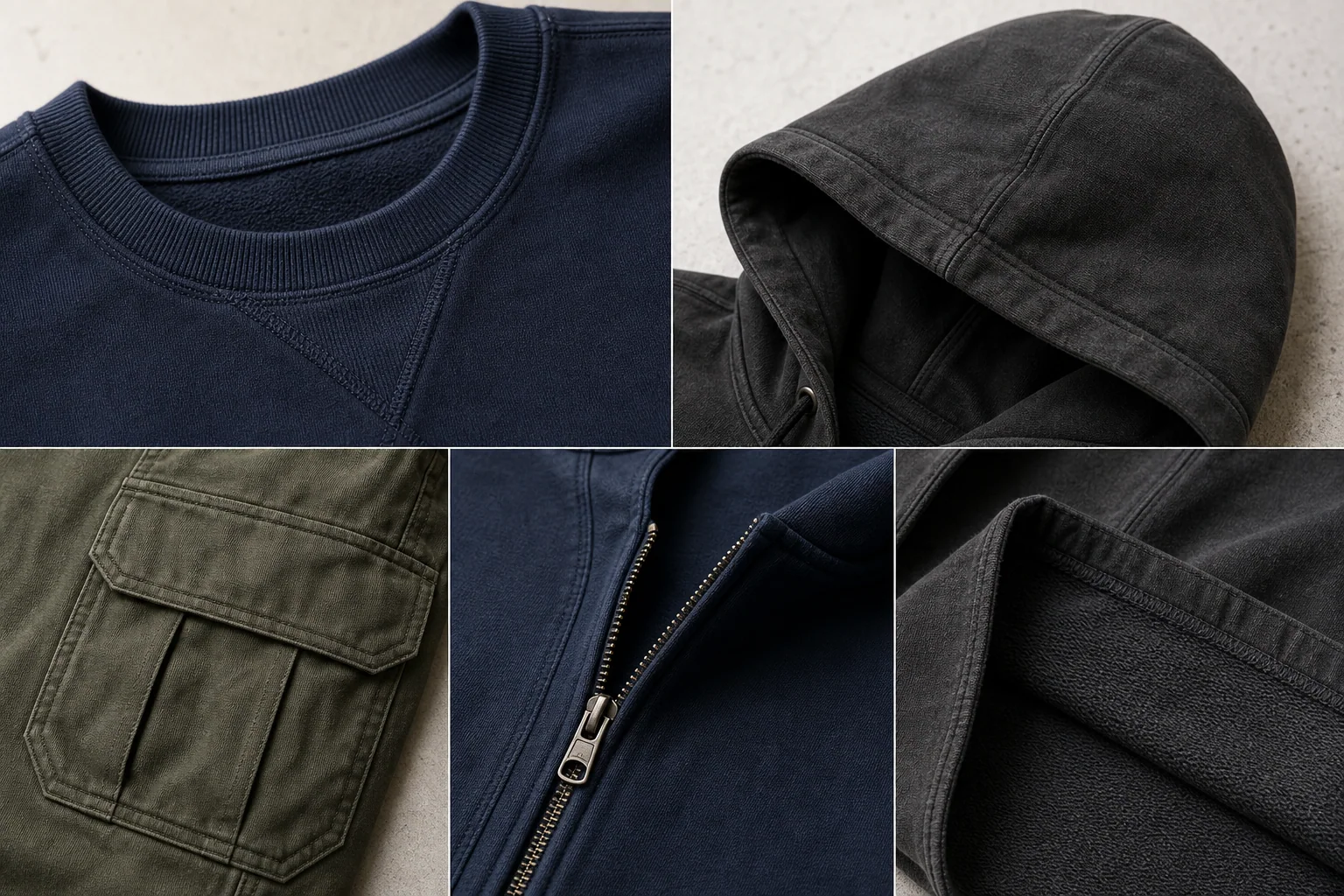
Pocket size and placement can change how the garment hangs and moves. Reinforcement should match the stress and the surrounding material, not be added as decoration alone.
05 / Failure modes
06 / Sample gates
Confirm bottom type, wearer, and block
Approve material, waistband, pocket, and hardware package
Review movement and post-treatment measurement
Lock grading, tolerances, care, and set compatibility
07 / Evidence boundary
Current SSM claims are supported by evidence available upon request. Any record should identify its source, date, method, specimen, result, applicability, and limitation. Generated imagery on this page is explanatory and is not presented as factory, client, material, or test proof.
Current commerce records
These are current merchandising and inquiry references with distinct media and product records. They do not by themselves prove every material, process, test, or capability described on this authority page.
Editorial depth
The authority page owns the product or process decision. These articles examine a narrower trend, method, specification, or sourcing question without duplicating the parent route.
08 / Connected authority
These links are live canonical routes. They carry the buyer from product scope into the material, surface, quality, or development decision that comes next.
09 / Buyer questions
Waist state, front and back rise, seat, thigh, knee, inseam, outseam, hem, and pocket positions should be defined with a consistent method and approved garment state.
Not automatically. Pocket load, attachment, reinforcement, bulk, drape, seam construction, and the intended silhouette determine the appropriate material and build.
The product record must name the measurement state. For washed or finished garments, the post-treatment state usually needs explicit approval and tolerances.