Choose yarn and gauge together
Review fiber, count, ply, twist, color, hand, availability, gauge, density, weight, drape, warmth, opacity, and care.
Now Accepting Orders for SS2026 — Sample turnaround in 7-10 days. Worldwide shipping available. Request a Sample Kit →
Streetwear product family · Machine-knit systems
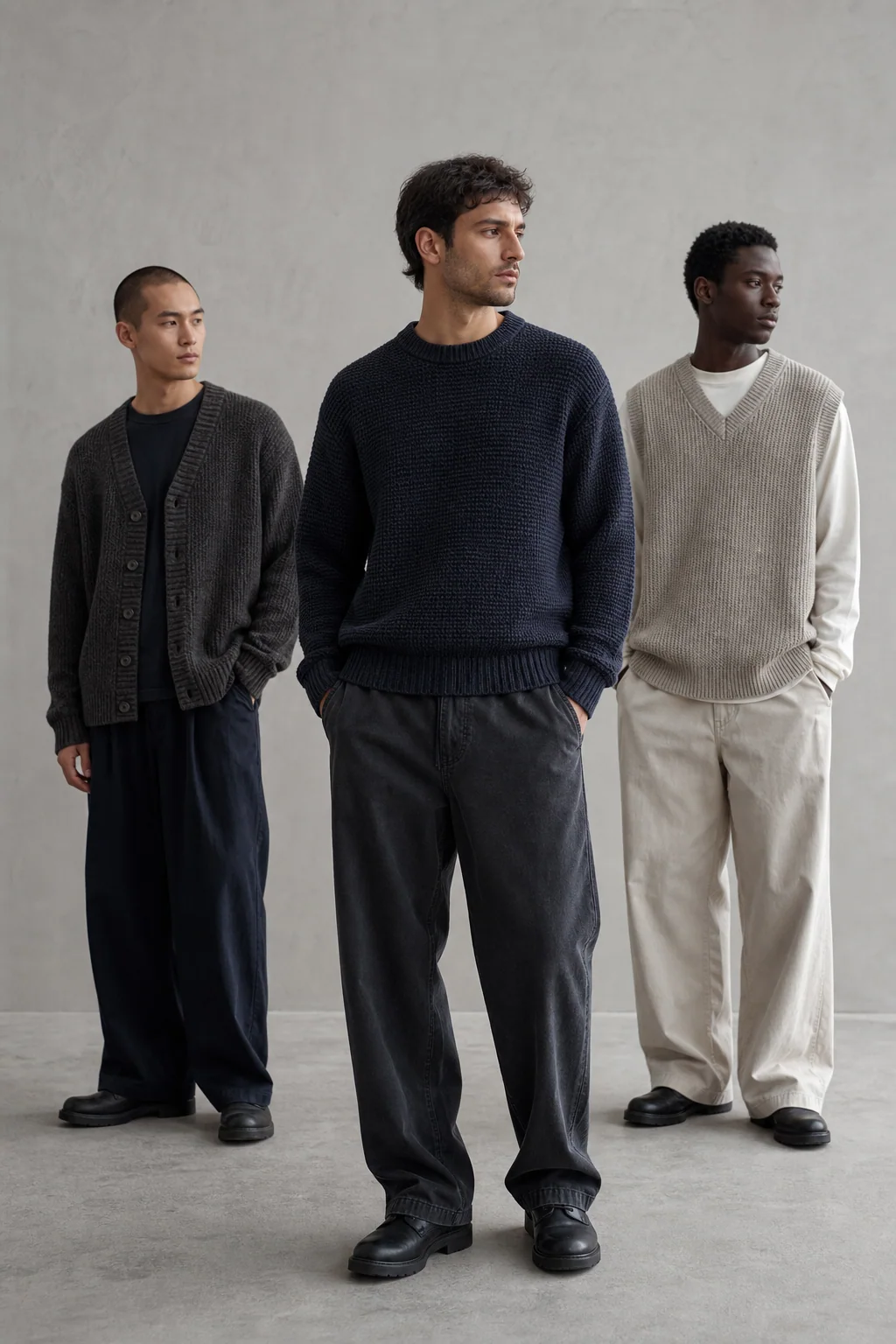
Define sweaters, cardigans, vests, and knit polos through yarn, gauge, stitch, silhouette, linking, rib, motif, color, hand, pilling, shrinkage, care, and measurements.
Answer before specification
Machine-knit garments differ from cut-and-sew jersey. Yarn sourcing, gauge, stitch programming, linking, shaping, washing, specialist machinery, and whether work is internal or completed through a qualified partner must be confirmed for the requested style before feasibility is stated.
02 / Development decisions
Each decision becomes part of the sample brief, approval record, or evidence request. Unknowns remain explicit instead of becoming silent assumptions.
Review fiber, count, ply, twist, color, hand, availability, gauge, density, weight, drape, warmth, opacity, and care.
Control body and sleeve shape, shoulder, neckline, length, rib dimensions, fully fashioned or cut-and-sew boundary, and grade rules.
Map jersey, rib, cable, jacquard, intarsia, texture, linking seams, floats, joins, motif scale, color changes, and reverse appearance.
Review dimensions, spirality, growth, recovery, pilling, shade, hand, seam behavior, motif stability, and the stated care process.
03 / Decision matrix
Capability, yarn availability, minimums, machinery, and partner boundaries are confirmed after the exact brief is reviewed.
| Option or system | Best used to define | Controls to record |
|---|---|---|
| Fine-gauge knit | Knit polos and cleaner lightweight layers | Opacity, stability, neckline, placket, linking, snagging, dimensions, and care |
| Mid-gauge sweater | Core pullover, cardigan, or vest | Yarn hand, density, rib recovery, shoulder, linking, pilling, shrinkage, and grade |
| Chunky or textured knit | High-volume statement layer | Weight, stretch, growth, seam load, motif clarity, abrasion, drying, and hanger distortion |
| Jacquard or intarsia program | Integrated multicolor artwork | Original artwork, repeat, color count, floats, joins, registration, reverse finish, and care |
04 / Product anatomy
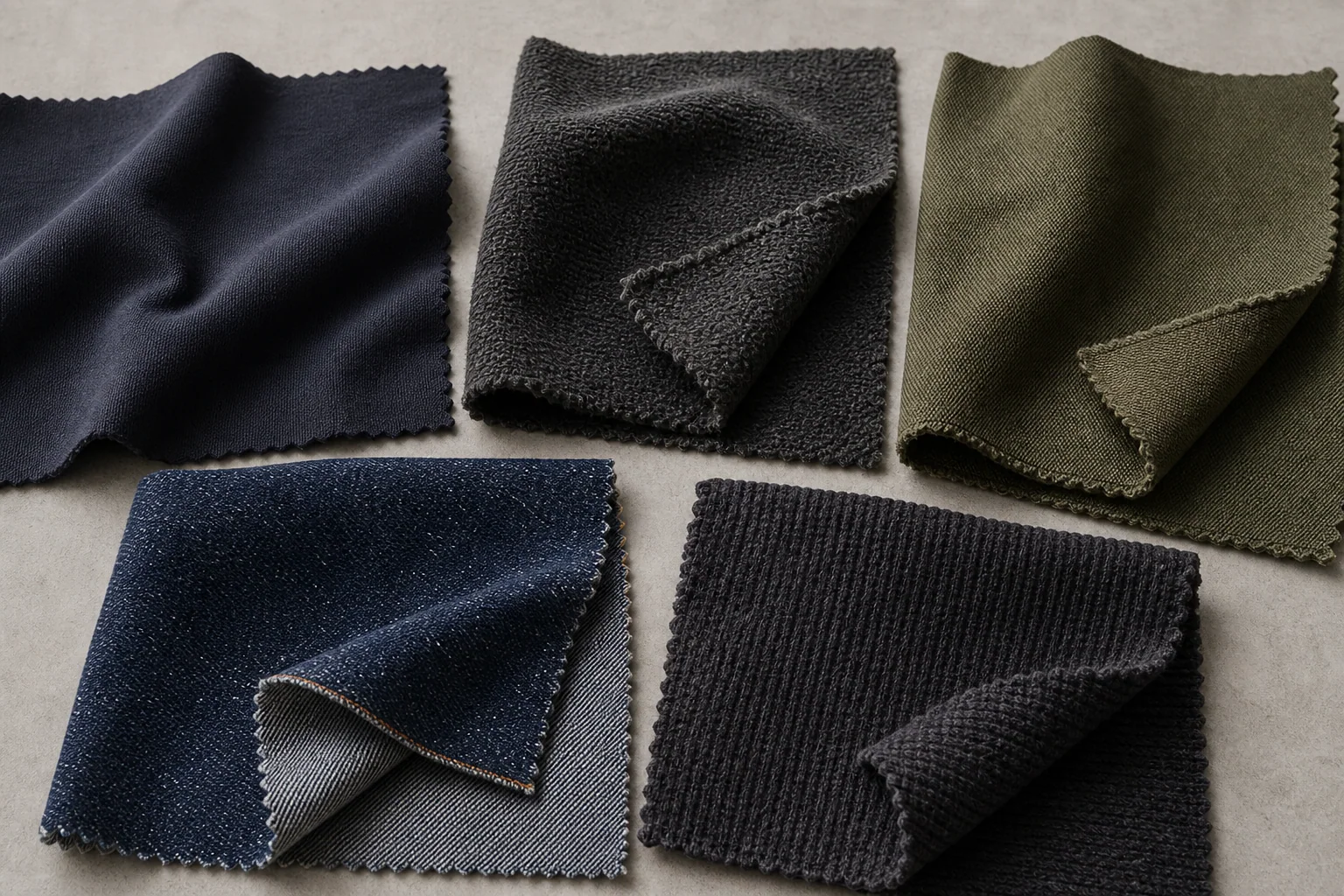
Gauge, stitch, shaping, linking, rib, motif, yarn behavior, and care determine the measurements and silhouette. They cannot be approved as isolated decoration choices.
05 / Failure modes
06 / Sample gates
Confirm item-specific capability and ownership boundary
Approve yarn, color, gauge, stitch, and development panel
Review linked garment after intended care
Lock measurements, motif, grade, labels, care, and repeat record
07 / Evidence boundary
Current SSM claims are supported by evidence available upon request. Any record should identify its source, date, method, specimen, result, applicability, and limitation. Generated imagery on this page is explanatory and is not presented as factory, client, material, or test proof.
08 / Connected authority
These links are live canonical routes. They carry the buyer from product scope into the material, surface, quality, or development decision that comes next.
09 / Buyer questions
No. Machine-knit garments are formed through yarn, gauge, stitch, shaping, and linking. Jersey is typically knitted as fabric and then cut and sewn. The correct production boundary must be confirmed.
Fiber, count, ply, twist, bulk, recovery, dyeing, and finishing can change density, weight, hand, stretch, growth, shrinkage, and the scale of knitted motifs.
After the item, construction, gauge, yarn, stitch, motif, quantities, care, evidence needs, and internal or qualified-partner production boundary are reviewed.