Confirm item and process capability
Identify pattern, blocking or shaping, panel count, brim or visor, crown, lining, knit boundary, seam, machinery, and internal or partner ownership.
Now Accepting Orders for SS2026 — Sample turnaround in 7-10 days. Worldwide shipping available. Request a Sample Kit →
Streetwear product family · Wearable textile accessories
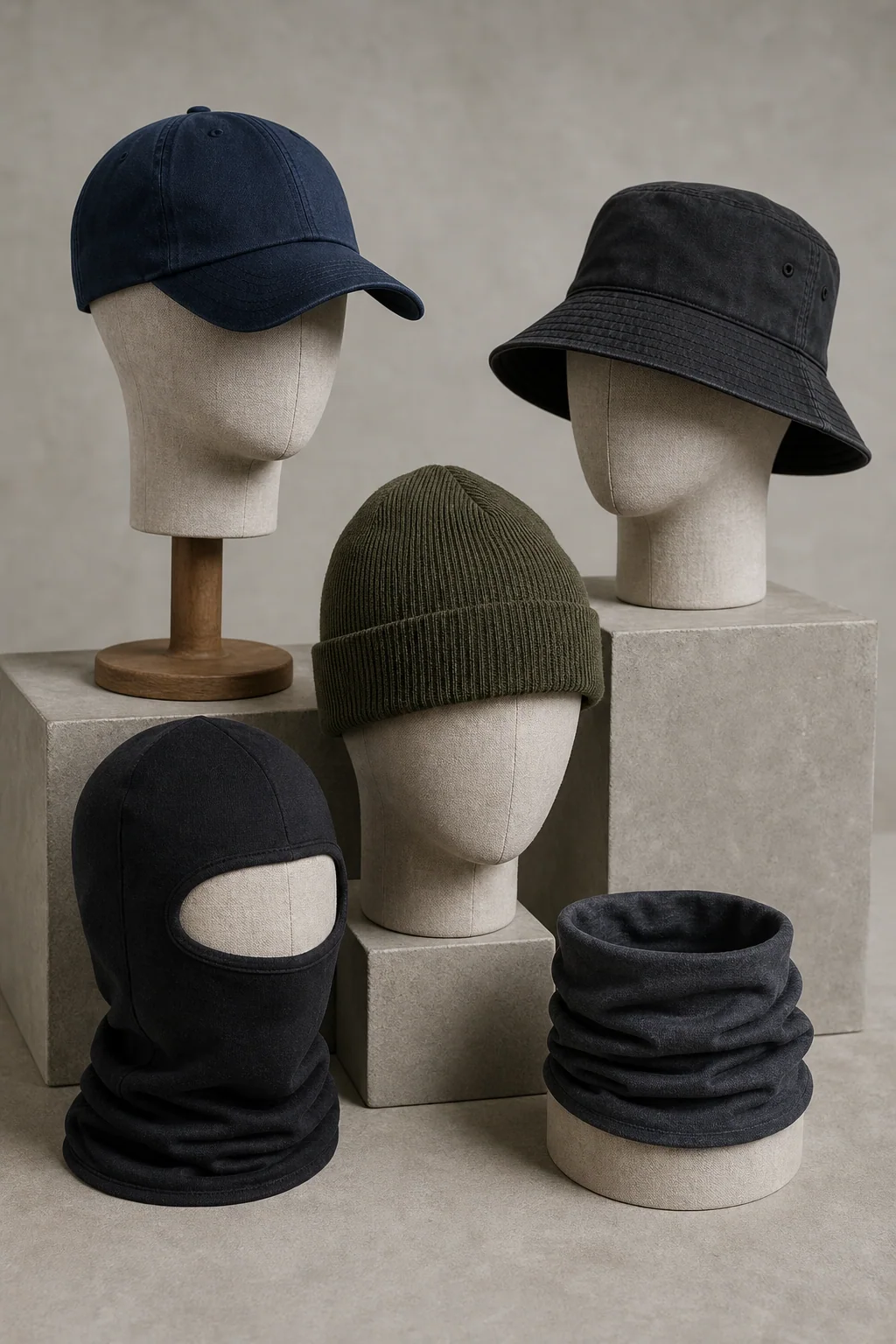
Coordinate caps, bucket hats, beanies, balaclavas, gaiters, and confirmed wearable textile accessories through item-specific capability, sizing, materials, specialist construction, decoration, trims, care, and packing.
Answer before specification
This route includes caps, bucket hats, beanies, balaclavas, gaiters, and other wearable textile items only after item-specific capability is confirmed. Footwear, bags, hardgoods, protective equipment, and specialist accessories remain excluded unless separately evidenced and approved.
02 / Development decisions
Each decision becomes part of the sample brief, approval record, or evidence request. Unknowns remain explicit instead of becoming silent assumptions.
Identify pattern, blocking or shaping, panel count, brim or visor, crown, lining, knit boundary, seam, machinery, and internal or partner ownership.
Record head circumference, depth, opening, coverage, stretch, recovery, closure range, elastic, cord, toggle, and grade or one-size logic.
Review shell, lining, sweatband, interlining, brim insert, yarn, rib, mesh, padding, reinforcement, hand, care, and component compatibility.
Embroidery, patches, prints, labels, and hardware must be checked for curvature, seam crossings, backing, pressure points, scale, placement, and care.
03 / Decision matrix
Exact machinery, process ownership, materials, minimums, and evidence are confirmed after the item-specific brief is reviewed.
| Option or system | Best used to define | Controls to record |
|---|---|---|
| Panel cap | Structured or unstructured headwear | Crown shape, panel seams, visor, sweatband, closure, fit range, eyelets, and decoration |
| Bucket hat | Soft brim lifestyle accessory | Crown depth, brim width and stiffness, topstitching, lining, reversible details, shade, and fit |
| Beanie | Stretch knitted headwear | Confirmed knit boundary, yarn, gauge, cuff, crown shaping, stretch, recovery, pilling, and care |
| Balaclava or gaiter | Close wearable textile layer | Coverage, opening, stretch, recovery, seam comfort, breathability intent, care, and destination use |
04 / Product anatomy
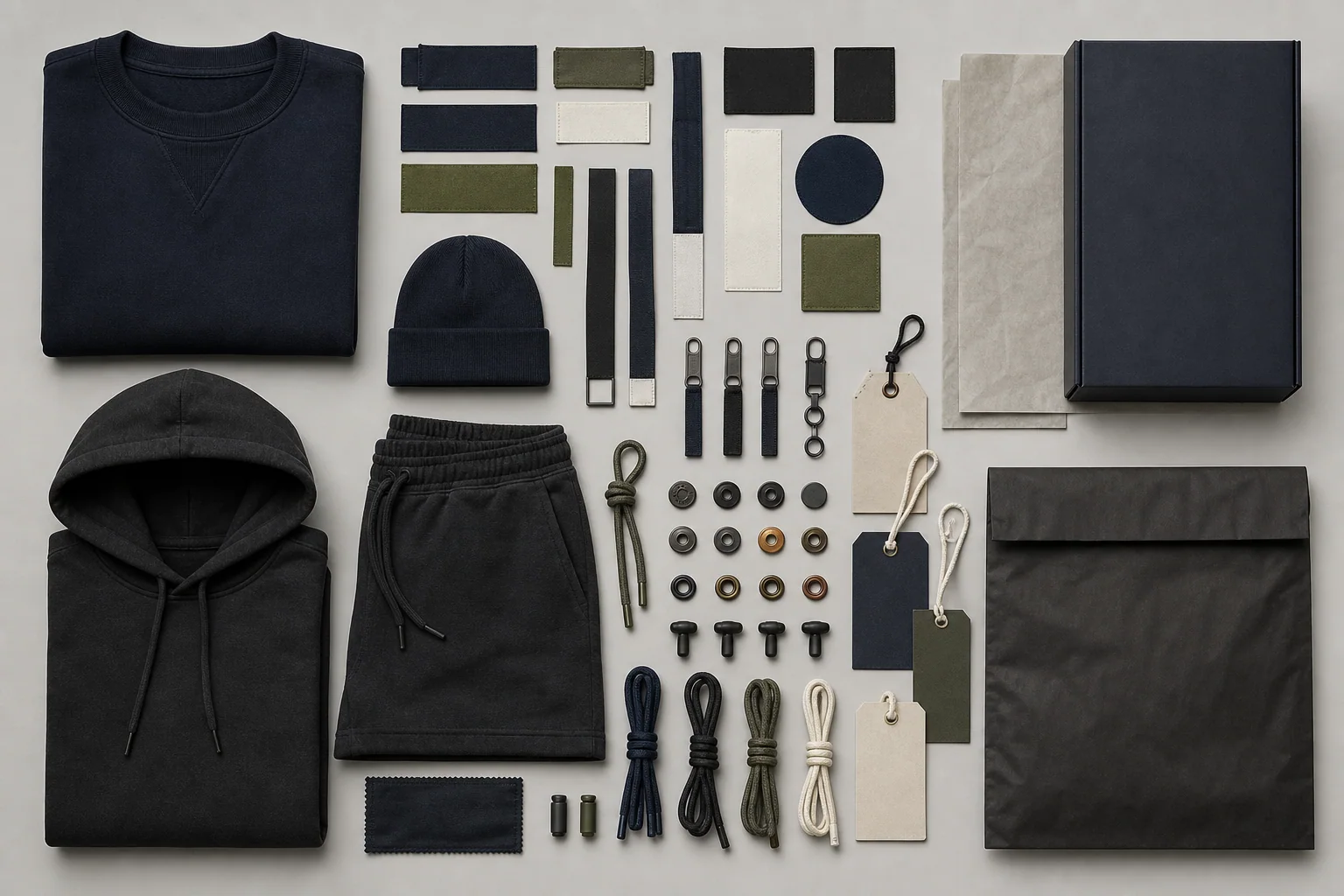
Flat panels change when curved, blocked, stretched, lined, or assembled. Review scale, position, symmetry, pressure, coverage, and comfort on the intended product and wearer range.
05 / Failure modes
06 / Sample gates
Confirm item-specific capability and category boundary
Approve material, structure, sizing, and trims
Review shaped sample, decoration, comfort, and care
Lock fit range, construction, labels, packing, and evidence
07 / Evidence boundary
Current SSM claims are supported by evidence available upon request. Any record should identify its source, date, method, specimen, result, applicability, and limitation. Generated imagery on this page is explanatory and is not presented as factory, client, material, or test proof.
08 / Connected authority
These links are live canonical routes. They carry the buyer from product scope into the material, surface, quality, or development decision that comes next.
09 / Buyer questions
No. It covers confirmed wearable textile accessories. Bags, footwear, hardgoods, equipment, and protective products require separate capability and evidence review.
It should name an actual circumference or fit range, depth, opening, stretch or adjustment method, and the intended wearer group rather than relying on an undefined label.
After the item, construction, materials, shaping, machinery, decoration, sizing, quantities, care, and internal or qualified-partner boundary are reviewed.