Treat ascent and descent as two use states
Map what the wearer produces, carries, opens, removes and adds during each state, then assign every garment a clear role.
Skiwear development system — Apparel-only planning from mission brief to controlled standard. Explore Skiwear
Ski Touring Apparel Development
Build touring apparel around air exchange, weather protection, stretch, articulation, venting, weight, packability, pocket and pack interaction and rapid layer changes.
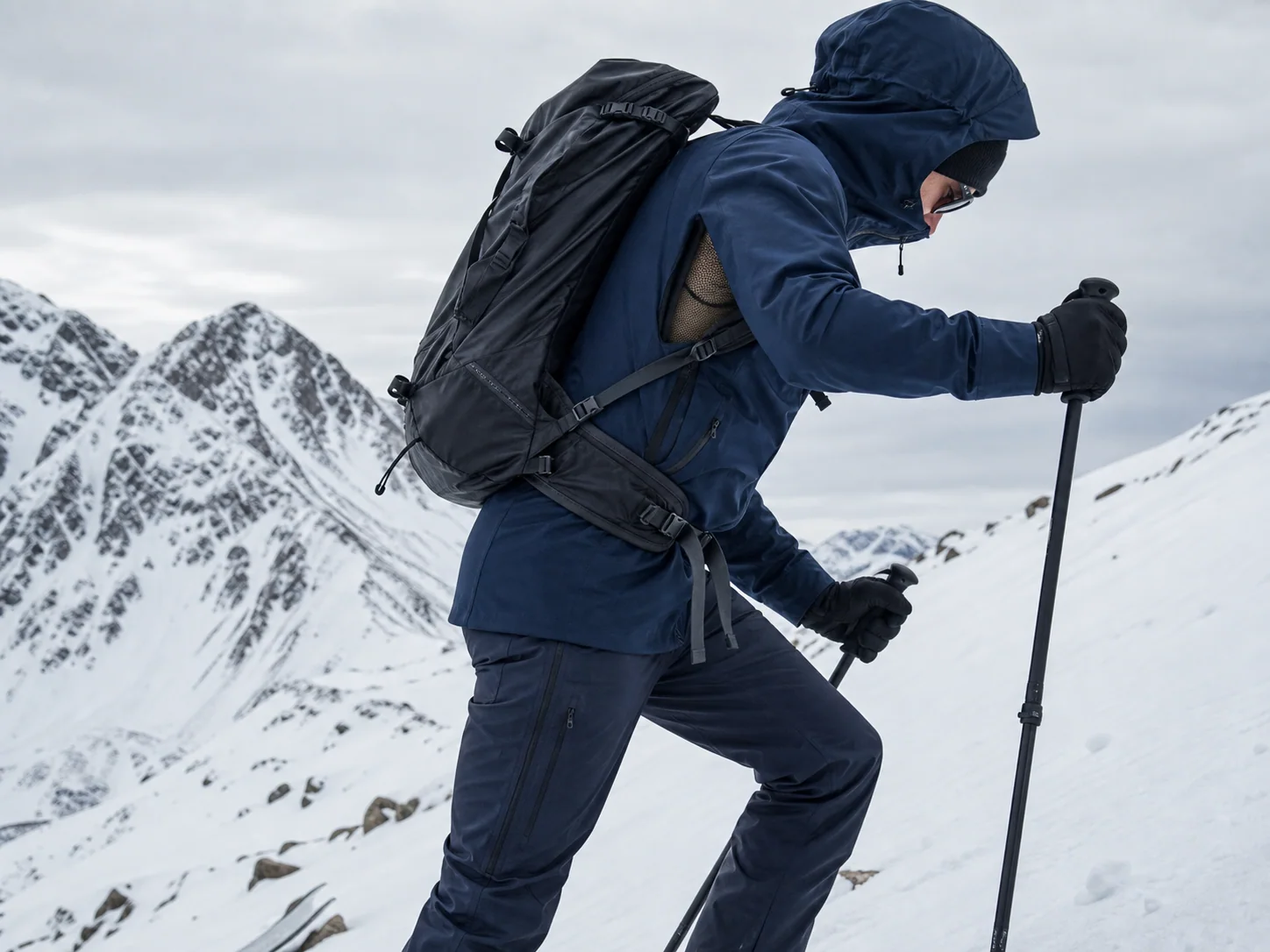
Mission-to-product decisions
Map what the wearer produces, carries, opens, removes and adds during each state, then assign every garment a clear role.
Review venting, selective reinforcement, layer-change sequence and pack interaction before approving pocket and closure architecture.
Brief-to-Bulk control
User, discipline, conditions, layer role and intended market.
Construction, materials, fit, features, sizing, trims and care.
Fit, function, validation scope, evidence and recorded approval.
Approved specification, change record and reorder reference.
Evidence needed
Touring-relevant SSM samples, weight and material records, movement review, pack-interface evidence and validation results are required.
Define the evidence planContinue the system
Direct answers
Compare expected weather, output, wind, precipitation, venting, stretch, weight and layering plan. The answer may differ across pieces.
No. Seams, zippers, construction, workmanship and the condition of the assembled garment require their own agreed validation scope.
Include the discipline, user, climate, activity level, product family, layer role, fit, size range, target features, intended market, reference files and evidence requirements.
Bring us the mission—not just the product name
Share the intended discipline, user, climate, layer role, fit direction, size range, reference files and evidence expectations. The brief keeps this page context attached to your inquiry.