Hot-climate and long-shift duty
Prioritise air permeability, opacity and care stability in lighter shirting.
Consider: Tropical uniform shirting, Polycotton uniform twillLower GSM does not guarantee cooling and can reduce opacity or tear resistance.Now Accepting Orders for SS2026 — Sample turnaround in 7-10 days. Worldwide shipping available. Request a Sample Kit →
Fabric system guide · Security uniforms
Security-uniform fabric should be selected against climate, shift length, mobility, laundering, colour retention and the actual duty risk. Lightweight shirting, durable twill and ripstop each solve different problems. Visibility, flame resistance and antistatic protection belong in a separate documentary track: no colour, weave or fibre description proves a protective garment without current material and system evidence.
Conditions before material names
These paths are shortlist prompts. The selected grade still requires a physical swatch, garment prototype and agreed validation plan.
Prioritise air permeability, opacity and care stability in lighter shirting.
Consider: Tropical uniform shirting, Polycotton uniform twillLower GSM does not guarantee cooling and can reduce opacity or tear resistance.Use a balanced twill or stretch twill for appearance, wear and mobility.
Consider: Polycotton uniform twill, Stretch uniform twill, Bonded softshellBlend ratio alone is not evidence of wash durability or comfort.Use ripstop or zone reinforcement where tear propagation and equipment contact matter.
Consider: Polycotton ripstop, Ballistic nylon, 3D spacer meshBallistic nylon is a construction name, not a claim of ballistic protection.Open a separate evidence pathway tied to the applicable hazard and garment system.
Consider: High-visibility background and tape system, FR or antistatic uniform system, Blaze-orange outer fabricDo not publish or quote certification until current reports match the exact fabric, trims and design.Layer and zone architecture
Balance heat release, opacity, appearance and repeated care.
Provide structured wear performance with the movement required by the role.
Add weather protection or warmth only after defining climate, activity and care.
Reinforce belt, pocket, knee and load-contact areas without overbuilding the full garment.
Treat background, tape, area and placement as one documented garment requirement.
Recommended systems to sample
The page supports early material briefing only. It does not claim SSM inventory, industrial-laundry approval, high-visibility certification, FR protection, antistatic protection or any laboratory result.
Show diagonal twill and actual colour.
2/1 or 3/1 woven twill developed for shirting, trousers, jackets or coveralls.
Offers a configurable balance of appearance, dimensional stability, comfort and wear for everyday uniform programs.
Request this construction in a sample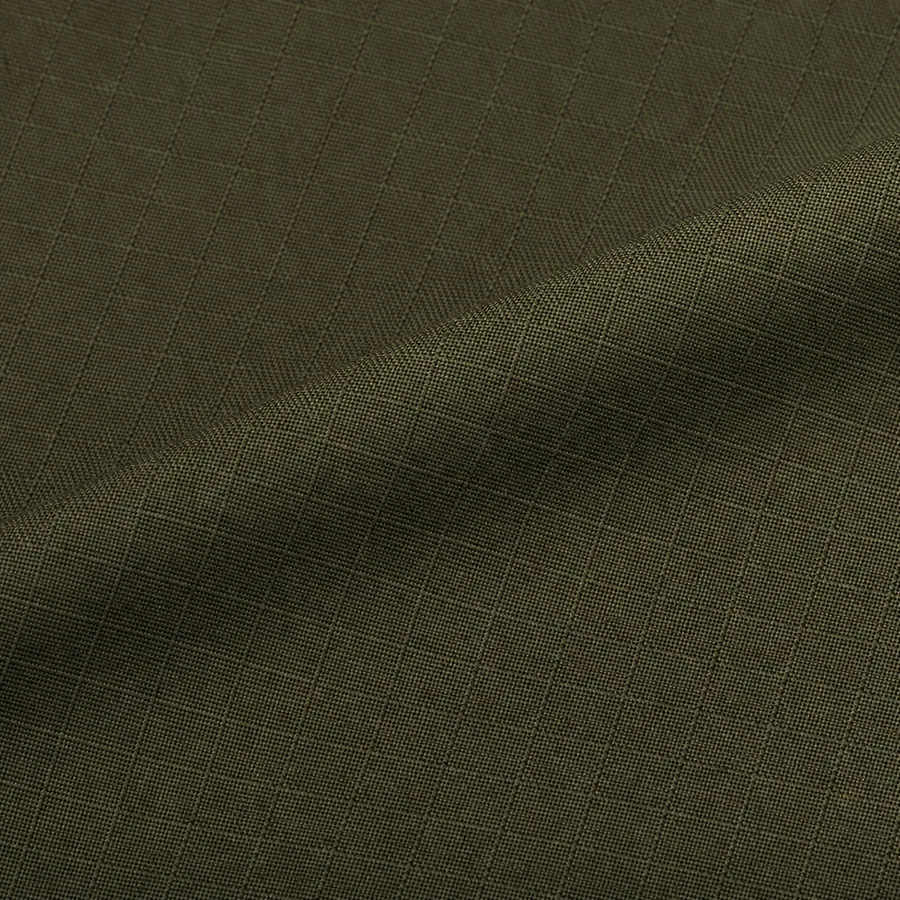
Planning visual only; not an exact mill grade, colour standard or tested sample. Show the reinforcement grid without exaggerating it.
Polyester-cotton woven with periodic reinforcement yarns.
Adds a reinforcement grid to a uniform-friendly blended woven construction.
Request this construction in a sampleShow the exact fine weave at true macro scale.
Light plain or twill woven selected for airflow, opacity and uniform appearance.
Prioritizes heat release and lower bulk for long shifts in warm conditions.
Request this construction in a sampleShow the twill or plain structure without visually faking stretch.
Uniform woven with elastane, PBT, textured yarn or mechanical stretch.
Adds movement and potential fit retention to a structured duty-uniform surface.
Request this construction in a sample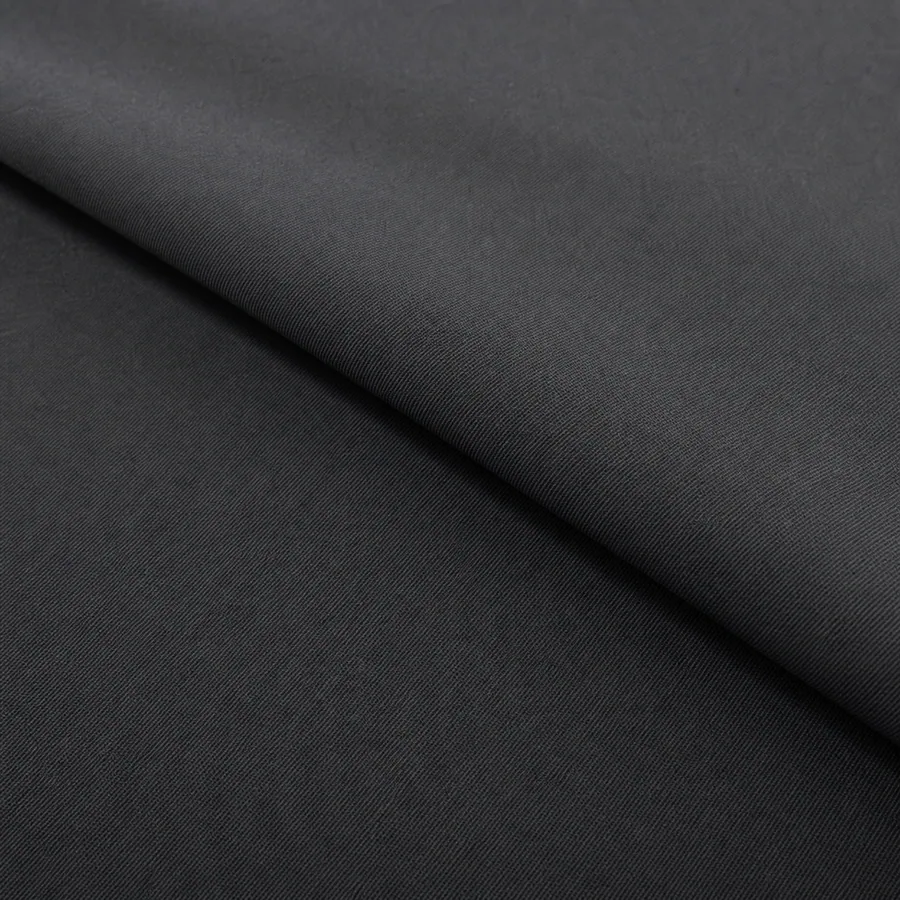
Planning visual only; not an exact mill grade, colour standard or tested sample. Show the exact woven structure and surface finish.
Stretch woven face bonded to tricot, fleece or a membrane-backed inner layer.
Balances movement, a controlled outer face and optional inner warmth in one material system.
Request this construction in a sampleUse colour-managed reference imagery for the background material.
Fluorescent background textile combined with a documented retroreflective material and garment layout.
Addresses conspicuity when a risk assessment and applicable standard require a complete high-visibility garment.
Request this construction in a sampleShow a neutral, source-matched textile macro only.
Inherent or treated protective textile combined with compatible seams, trims and garment design.
Protective systems belong in a separate evidence track when a formal risk assessment identifies a heat, flame or electrostatic requirement.
Request this construction in a sampleSide-by-side decision support
Planning bands guide sampling conversations. They are not a production specification or a tested result.
| Material system | Planning weight | Construction | Why consider it | Tradeoffs to sample | Evidence state |
|---|---|---|---|---|---|
| Polycotton uniform twill | 150–300 gsm | 2/1 or 3/1 woven twill developed for shirting, trousers, jackets or coveralls. | Offers a configurable balance of appearance, dimensional stability, comfort and wear for everyday uniform programs. | Blend ratio alone does not prove durability Hot-climate and winter duties need different weights Industrial-care claims require grade-specific documentation | Planning range |
| Polycotton ripstop | 180–250 gsm | Polyester-cotton woven with periodic reinforcement yarns. | Adds a reinforcement grid to a uniform-friendly blended woven construction. | Grid presence does not prove tear strength Some grades feel rigid or print through Wash and colour performance remain grade-specific | Planning range |
| Tropical uniform shirting | 110–190 gsm | Light plain or twill woven selected for airflow, opacity and uniform appearance. | Prioritizes heat release and lower bulk for long shifts in warm conditions. | Opacity can decline at low weight Snag and tear performance require checking Breathability cannot be inferred from GSM alone | Planning range |
| Stretch uniform twill | 200–300 gsm | Uniform woven with elastane, PBT, textured yarn or mechanical stretch. | Adds movement and potential fit retention to a structured duty-uniform surface. | Heat and chemical exposure can affect elastomer Residual growth can create bagging Stretch must be measured after the intended care cycle | Planning range |
| Bonded softshell | 240–380 gsm | Stretch woven face bonded to tricot, fleece or a membrane-backed inner layer. | Balances movement, a controlled outer face and optional inner warmth in one material system. | Softshell is not automatically waterproof Warm bonded grades may be unsuitable for high-output use Elastomer and bond durability need care-cycle checks | Planning range |
| High-visibility background and tape system | Supplier-specific | Fluorescent background textile combined with a documented retroreflective material and garment layout. | Addresses conspicuity when a risk assessment and applicable standard require a complete high-visibility garment. | A fluorescent fabric or reflective strip alone is not compliance Area and placement affect classification Laundering can affect colour and retroreflection | Planning range |
| FR or antistatic uniform system | Supplier-specific | Inherent or treated protective textile combined with compatible seams, trims and garment design. | Protective systems belong in a separate evidence track when a formal risk assessment identifies a heat, flame or electrostatic requirement. | High legal and safety consequence Appearance cannot communicate protection Treatment durability and component compatibility must be documented | Planning range |
Garment-zone mapping
Map material changes to movement, exposure, abrasion, visibility and comfort zones instead of forcing one construction across the garment.
Choose between lighter openness and more substantial uniform structure using opacity, airflow and care evidence.
Tropical uniform shirting / Polycotton uniform twillTwill supports a formal surface, ripstop adds a grid, and stretch twill addresses movement; results remain grade-specific.
Polycotton uniform twill / Polycotton ripstop / Stretch uniform twillUse softshell for mobile moderate-weather duty or a verified shell system for sustained precipitation.
Bonded softshell / 3-layer waterproof laminateProceed only through the applicable standard, documented material identity and complete garment design.
High-visibility background and tape system / FR or antistatic uniform systemManufacturing implications
Define domestic, commercial or industrial care conditions before specifying finish, colour and dimensional tolerances.
Assess pocket mouths, badge zones, belt loops, knees and equipment interfaces as separate wear zones.
Use mechanical or elastomeric stretch only after measuring recovery following the intended wash program.
Keep occupational high visibility, hunting blaze colour and decorative reflectivity as distinct requirements.
Do not combine everyday polycotton guidance with FR, antistatic or other protective claims in one undifferentiated card.
Validation checklist
State wash temperature, chemistry, drying route, cycle count and measurement direction.
Dimensional change · ColourfastnessMatch methods to the woven, coated or bonded construction and review high-wear garment zones.
Abrasion · Tear and tensileReport extension and residual growth by direction before and after care.
Stretch and recovery · Dimensional changeRequire current documentary evidence tied to the exact material and complete garment system.
High-visibility system · Heat and flame protectionProof boundary
The page supports early material briefing only. It does not claim SSM inventory, industrial-laundry approval, high-visibility certification, FR protection, antistatic protection or any laboratory result.
AI-generated close-ups are disclosed visual references. The approved production record must identify the physical swatch, exact supplier grade, test method, date and sample when those facts are available.
Buyer questions
The climate and garment decide. Rough planning bands run from about 110–190 gsm for hot-climate shirting to 200–300 gsm for many trouser and jacket directions, but weave, opacity, air permeability, care and durability must be reviewed with weight.
No. A reinforcement grid can help control tear propagation, but yarn, density, blend, finish and test direction determine the result. Compare verified grades using a declared method.
No. The standard addresses background colour, retroreflective performance, minimum areas and garment placement. Certification concerns the documented garment system, not an isolated swatch.
Only when current evidence ties the exact material and complete garment system to the applicable hazard standard. Colour, weight and fibre description are not proof.
Evidence register
Sources support definitions, planning ranges, or test-method context. They do not verify an untested production fabric.
Assess surface wear or breakdown using a defined abradant, load and endpoint.
Coated and laminated fabrics may require a different method; state endpoint rather than publishing an unqualified cycle count.Measure length and width change after a stated care cycle.
Care cycle, drying method, number of cycles and measurement direction are part of the result.Evaluate shade change and staining under a defined exposure.
Name the exact exposure method; one colourfastness result does not cover every use condition.Measure propagation tear or breaking behaviour in identified fabric directions.
State method, direction, conditioning and specimen state. A ripstop grid alone does not prove a strength value.Measure directional stretch and residual growth before and after a stated interval or wash program.
Record direction, load, hold and recovery time; fibre content alone does not predict bagging.Evaluate background colour, retroreflective performance, minimum areas and garment placement.
Certification applies to the documented garment system, not to an orange swatch in isolation.Evaluate protective clothing against stated heat and flame hazards.
Require current documentary evidence tied to the exact fabric, trims, seams and garment design.Martindale abrasion specimen breakdown for suitable textile fabrics.
Limit: The stated scope excludes coated fabrics; choose a method appropriate to the exact construction.High-visibility colour, retroreflection, material area and garment placement requirements.
Limit: A fluorescent swatch alone is not a compliant garment; current edition and market requirements must be reconfirmed.Heat- and flame-protective clothing requirements.
Limit: Never infer protection from appearance or fibre description; documentary evidence must match the exact fabric and garment system.A supplier example spanning multiple polycotton weaves and 150–300 g/m².
Limit: This is a supplier range, not proof of SSM stock, access or performance.Concrete examples of workwear blends, weaves, weights and catalogue filters.
Limit: Product-specific values and tolerances cannot be transferred to an unnamed fabric.Stretch-woven composition, mobility and outerwear use context.
Limit: Exact weights, finishes and test values vary by grade; no sourcing relationship is implied.Physical sample before bulk
Share the climate, role, shift, garment set, care cycle, colour and any documented hazard standard. The response can then separate routine uniform choices from evidence-gated protection.