Build a set-level BOM
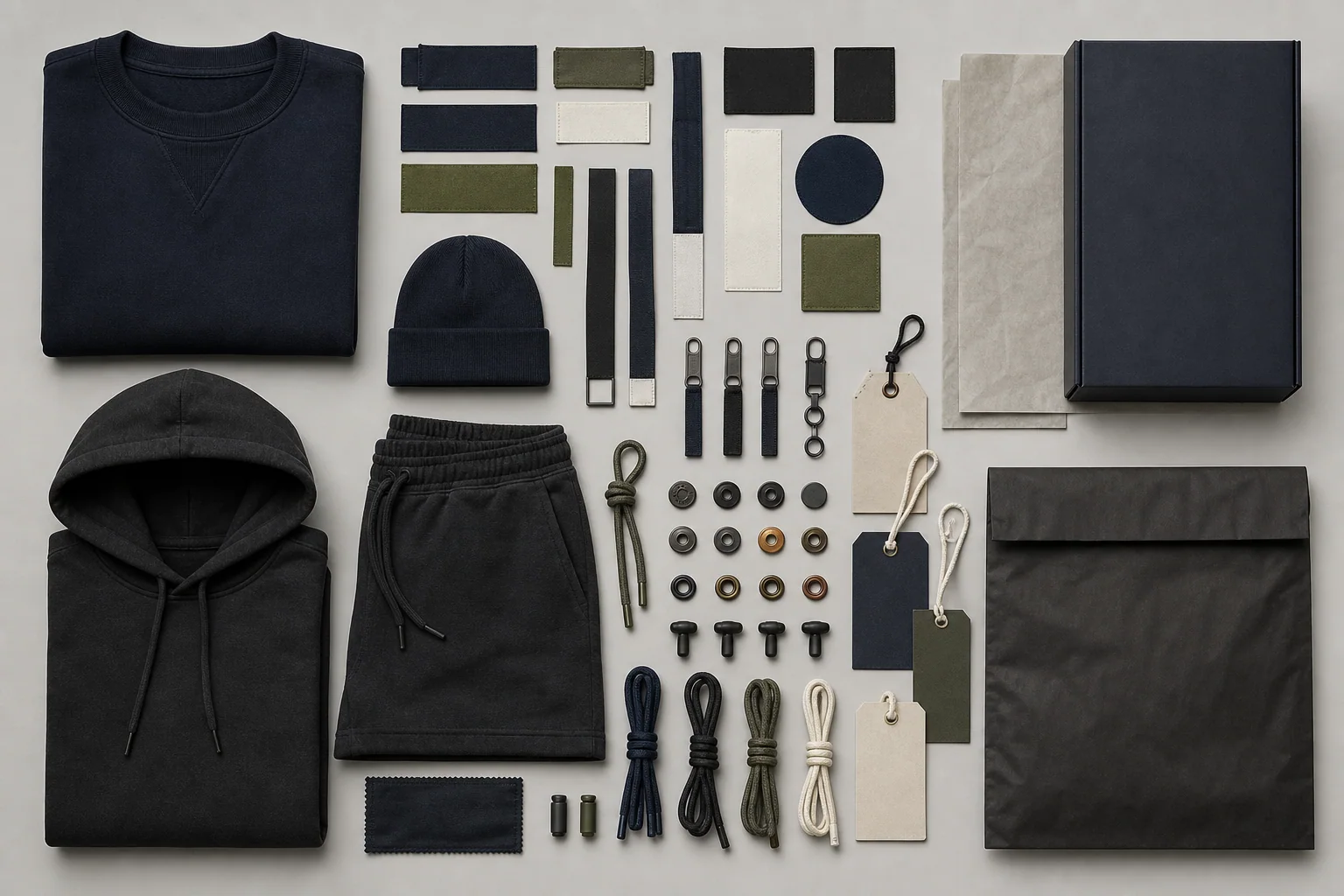
Identify shared and product-specific materials, colors, trims, artwork, labels, packaging, and approved alternatives.
Now Accepting Orders for SS2026 — Sample turnaround in 7-10 days. Worldwide shipping available. Request a Sample Kit →
Streetwear product family · Coordinated ranges
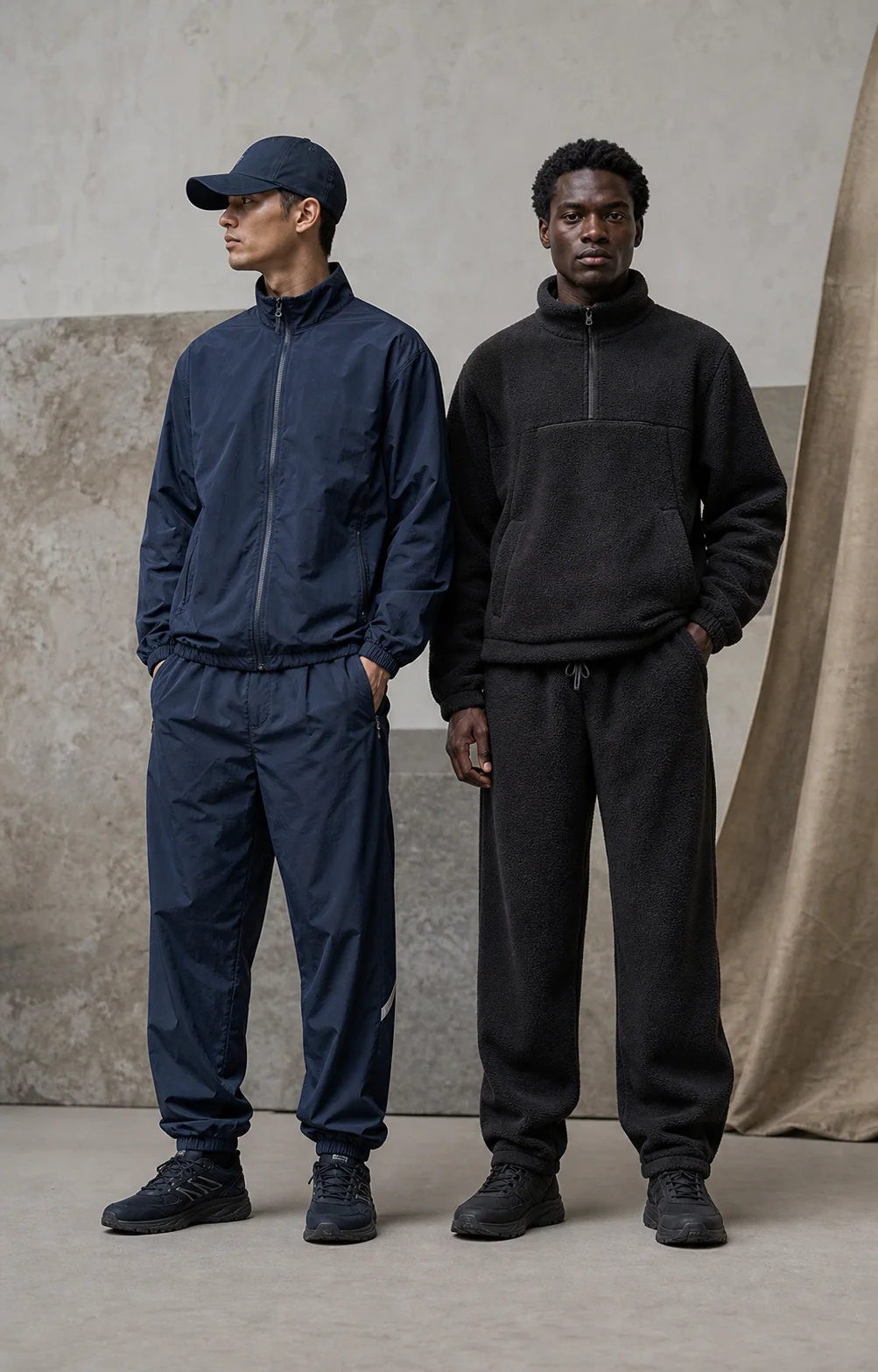
Plan fleece, nylon, tricot, woven-stretch, denim, or shirt-based sets as a shared color and branding system with product-specific blocks and construction.
Answer before specification
A set can share a color family, fabric story, trims, artwork, labels, and packaging while its top and bottom still need different weights, reinforcements, blocks, and construction solutions.
02 / Development decisions
Each decision becomes part of the sample brief, approval record, or evidence request. Unknowns remain explicit instead of becoming silent assumptions.
Identify shared and product-specific materials, colors, trims, artwork, labels, packaging, and approved alternatives.
Review top and bottom proportions, layer intent, ease, length, rise, leg shape, and size pairing as a complete look.
Record material lots, dye or finish state, rib, panels, thread, zippers, labels, and the acceptable relationship between pieces.
Graphics, embroidery, piping, panel lines, hardware, and labels should align visually when the garments are worn together.
03 / Decision matrix
A shared name such as tracksuit does not guarantee that both garments should use identical construction or weight.
| Option or system | Best used to define | Controls to record |
|---|---|---|
| Fleece set | Hoodie, crew, or zip top with bottom | Fleece and rib lots, shade, shrinkage, recovery, proportion, and decoration |
| Nylon or woven set | Light shell and track bottom | Surface, lining, openings, elastic, zipper, noise, shade, and panel alignment |
| Tricot or jersey set | Sport-derived lifestyle program | Drape, snagging, stretch, rib, piping, artwork, recovery, and care |
| Mixed-material set | Coordinated capsule rather than identical pieces | Color standard, wash interaction, trim family, labels, styling balance, and packaging |
04 / Product anatomy
Set quality depends on the relationship between garments: shade, scale, placement, trim, proportion, size pairing, and presentation should be visible in one approval review.
05 / Failure modes
06 / Sample gates
Confirm set architecture and shared identity
Approve product-specific materials and blocks
Review the complete decorated and treated set
Lock shade, placements, size pairing, BOM, and packaging
07 / Evidence boundary
Current SSM claims are supported by evidence available upon request. Any record should identify its source, date, method, specimen, result, applicability, and limitation. Generated imagery on this page is explanatory and is not presented as factory, client, material, or test proof.
Current commerce records
These are current merchandising and inquiry references with distinct media and product records. They do not by themselves prove every material, process, test, or capability described on this authority page.
08 / Connected authority
These links are live canonical routes. They carry the buyer from product scope into the material, surface, quality, or development decision that comes next.
09 / Buyer questions
No. A coordinated set can use related materials or different weights when the color, hand, function, trim, branding, and overall presentation are deliberately controlled.
The record should name the material, lot or process state, light or viewing condition where relevant, approved relationship, and acceptable variation across every component.
Yes, when the buyer program supports it. The size architecture, assortments, labeling, packing, and commercial implications must be explicit.